My go to for Vitamin C Supplementation: http://glutenfreesociety.org/DetoxCPowder
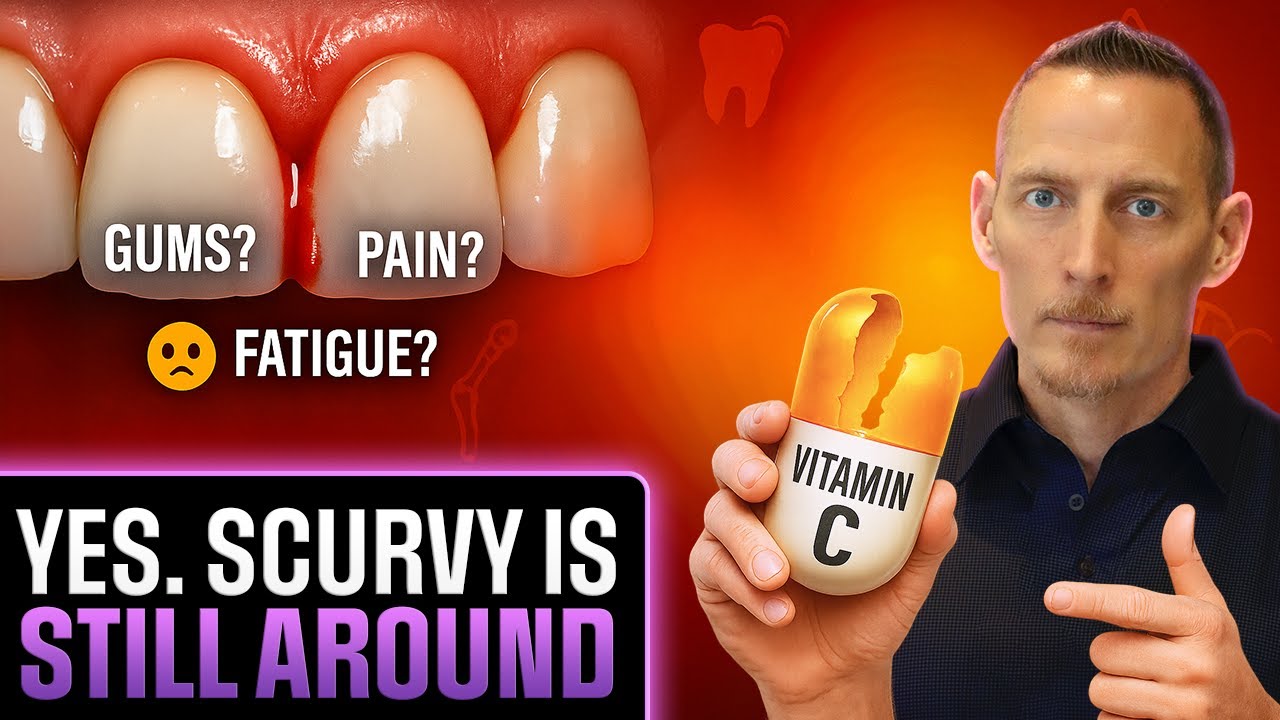
Most people think scurvy disappeared with the pirates — but Dr. Osborne reveals shocking new research showing vitamin C deficiency is still rampant today.
In this episode of *Doctor Osborne’s Zone*, you’ll learn why vitamin C is far more than an immune booster — it’s essential for collagen, neurotransmitters, detoxification, pain control, and even mental health.
Dr. Osborne breaks down:
* The *real symptoms* of vitamin C deficiency most doctors miss
* Why autoimmune and joint pain conditions are often misdiagnosed scurvy
* How stress, medications, and restrictive diets deplete vitamin C
* The link between vitamin C and cancer recovery, heart health, and pain relief
* Why measuring vitamin C in white blood cells is more accurate than serum testing
If you’ve struggled with fatigue, bleeding gums, slow healing, anxiety, or chronic pain — this episode could change your health story.
👉 **Watch now to understand how this one nutrient could be your missing link to real recovery.**
#VitaminC #Scurvy #DrOsborne #NutritionalMedicine #FunctionalHealth #GlutenFree #Autoimmune #NaturalHealing #HealthEducation
—
📱 Text the word “ZONE” here to join our VIP list: +1 (888) 870-9874
Gluten Sensitive? Take the quiz & Join Our Community ▶
Get my quick start guide on going gluten free: https://www.glutenfreesociety.org/how-to-go-gluten-free/
Nutritional Crash Courses Playlist: https://www.glutenfreesociety.org/nutrition
Get Gluten Free Supplements: https://www.glutenfreesociety.org/shop-home/
No Grain No Pain the Book: https://www.glutenfreesociety.org/NoGrainNoPain
Glutenology Masterclass (Ultimate Guide): https://glutenology.net/registration
To connect with Dr. Osborne visit:
On the web: https://drpeterosborne.com/
Facebook: https://www.facebook.com/DoctorPeterOsborne/
TikTok: https://www.tiktok.com/@drpeterosborne
Instagram: https://www.instagram.com/drosborne
Twitter: https://twitter.com/glutenology
Pinterest: https://www.pinterest.com/docosborne/
Podcast:
Apple Podcasts: https://podcasts.apple.com/us/podcast/dr-osbornes-zone/id1706389688?uo=4
Spotify: https://open.spotify.com/show/4Zdf07GgpRAVwlSsYvirXT
Amazon Music/Audible: https://music.amazon.com/podcasts/20d71b2e-3554-4569-9d5b-4259785cdc94
Google Podcasts: https://www.google.com/podcasts?feed=aHR0cHM6Ly93d3cuc3ByZWFrZXIuY29tL3Nob3cvNTkwNjcwNC9lcGlzb2Rlcy9mZWVk
iHeart Radio: https://iheart.com/podcast/119388846
Dr. Peter Osborne is one of the most sought after alternative and nutritional experts in the world. A Diplomate with the American Clinical Board of Nutrition, a graduate of Texas Chiropractic College, and a doctor of pastoral science, Dr. Osborne is one of the world’s leading authorities on gluten, nutrition, and natural health. He is the founder GlutenFreeSociety.org, one of the world’s largest informational sites on gluten sensitivity. In addition, he is the author of the best selling book, No Grain No Pain, published by Touchstone (Simon & Schuster). His work has been featured by PBS, Netflix, Amazon, Fox, U.S. News, Ney York Post, and many other nationally recognized outlets.
For collaborations please email: glutenology@gmail.com
Any information on diseases, treatments, nutrition, or other health related topics from this channel are for educational purposes only, and should not be considered a substitute for advice provided by your doctor or healthcare provider. Bottom line…if you have health issues, you should always seek professional medical guidance.
Products and supplements discussed in this video have not been evaluated by the FDA. They are not intended to treat, cure, or diagnose.
Dr. Osborne is an Amazon affiliate, and many earn from qualifying purchases.
For more information, visit us at https://www.glutenfreesociety.org/
or call 281-903-7527
Today on Dr. Osborne’s Zone, we’re going to be talking about a nutrient deficiency that has plagued pirates and sailors alike. We’ll be right back. You unlock this door with the key of compassion. Beyond it is another world, a world of science, a world of common sense, a world of sanity. You’re moving into a land of both empathy and ethics, of nutritional knowledge and empowerment. You’ve just crossed over to the Dr. Osborne zone. Mine. He’s out of his mind completely. Ross, I don’t know where. You’ve been out water a long time, haven’t you? What the m Rosson? You don’t got enough. How about food? Could you sit down, please? That scurvy dog. The movie Water World was actually trying to portray a character that had scurvy, and that’s what you just watched. Now, what is scurvy? It’s a disease state caused by vitamin C deficiency. And that’s the topic of today’s show on Dr. Osborne Zone. So, without further ado, let’s break vitamin C down. Now, it has several different functions. I like to refer to vitamin C as human duct tape because it’s so critical for so many different functions and without it, the body starts to fall apart. Hence, duct tape. But if we look at those functions here and just kind of summarize some of the key ones, it plays a role in the formation of dopamine through the metabolism of the amino acid tyrrosine. It plays a role in folate metabolism. Folate’s a B vitamin, vitamin B9 specifically. It plays a role in how we produce the neurochemical serotonin which regulates pain and happiness. Plays a role in collagen formation. Most people know vitamin C by this role. Um, we’ll dive a little bit more deeply into that shortly. It regulates cholesterol. It plays a role in immune cells and how they respond to threats. It helps with lysine metabolism also to help form collagen. It forms or helps in the production of carnitine. Interestingly enough, a lot of people today, not even so much keto, as carnivore, going on a carnivore diet. When you’re on a carnivore diet, one of the functions of carnitine is that you use it to shuttle fat so you can metabolize fat or burn fat as energy, which requires carnitine to do that. Um, but when you’re on a carnivore diet and you’re not eating adequate liver, what happens is you don’t get any vitamin C. And of course, vitamin C is necessary to form carnitine. And when you’re eating predominantly protein and fat, you need that carnitine shuttle to metabolize that fat. And this is one of the most common deficiencies we see in people on carnivore diets. Interestingly enough, because you get carnitine from eating animal meat, but I think it’s because the fat metabolism is the need for that is so great. We know that it’s important for adrenaline formation. The catacolamine adrenaline. We know that you need vitamin C to make bile acids and you also need vitamin C to form nitric oxide which allows blood vessels to dilate. So, lots of different functions from one nutrient and without it, uh, we’re in deep trouble. So, here is just a few kind of prettier summaries of the role of vitamin C. Um, and and a couple of other different things here. As you can see here, vitamin C plays a major role in the in the formation of antioxidants or antioxidant function. It scavenges free radicals. U, vitamin C is also very, very important. It’s not on here, but uh in the keelation and detoxification of heavy metal, especially lead. And so, um we we there number of studies that show that that people with vitamin C deficiency have higher lead and vice versa. People with higher lead deplete their vitamin C stores. We we as I mentioned before dopamine synthesis for noradrenaline, hormone synthesis as well as iron absorption, vitamin C enhances iron absorption. And so those of you uh who maybe have a diagnosis of hemocromattosis, which is a disease of iron metabolism, um you have to be cautious around higher doses of vitamin C intake. It’s not that you can’t use vitamin C, it’s just that you better monitor your iron levels and make sure that it’s not spiking you unnecessarily. And then of course collagen production as I mentioned earlier, carnitine synthesis, but also the regulation of gene and epigenetic erasers, gene expression, epigenetic erasers and other amino acids like lysine and arginine and tyrrosine plays a role in all of their um all of their metabolism and function. If we look at vitamin C’s functions in the immune system itself, you can see it’s got different roles. This review on vitamin C broke it down nicely in between innate immunity and adaptive immunity. And so you can see here with the neutrfils, this is your army, if you will, of your white blood cells. It enhances their migration and response to what’s called chemotaxis, which is when there’s a a stimulation or a damage, whether it’s inflammatory or infectious, it enhances the engulfment or the faggoytosis of microbes. So neutrfils have a kind of a Pac-Manlike effect where they will they will eat up microbes or their chemicals. It stimulates free radical generation and the killing of microbes through neutrfil stimulation and it supports caspace dependent apoptosis. So it helps with cell destruction in macroofagages. It enhances uptake and clearance. Vitamin C does. Vitamin C aids in the maturation and proliferation of natural killer cells. Many of you may have heard of these, but where are they very critically important is in basically in modifying or or destroying cancer cells. We also have the vitamin C regulation or differentiation of TH1 types of tea cells. So T- helpper cells generate CD8 memory tea cells activates something called FOX P3 which is a master uh transition factor regulates the activity of regulatory tea cells. So a lot of immune response or immune um immune regulation around vitamin C you can see down here it also helps to increase IGG production or levels as well. So vitamin C critical for immune function. As a matter of fact, one of the ways that many doctors uh believe that vitamin C should be measured is not in the serums. It’s common that you know serum levels. Uh it’s a simple blood test that can be done through lab core quest and um serum levels just measure quantitatively how much ascorbic acid is floating around in your blood at any given moment in time. But many researchers believe that it it should be measured in the white blood cell. And this is this diagram that I just showed you is one of the reasons why because vitamin C plays such a huge role in immune regulation. But we also believe that because white blood cells have a longer lifespan of about 6 months that measuring them in the white blood cells is a truer indicator of dietary uptake and um and and overall storage status of vitamin C as opposed to just looking at it in terms of serum. Okay, this was a really good review published a few years ago on kind of a a conglomeration of the different functions of vitamin C. Just simply put, so if you want to screenshot this, as I just showed you, the immune functions, catakolamine and neurotransmitters, this is dopamine, serotonin, and adrenaline. the production and maintenance of collagen. That’s for your muscles, tendons, ligaments, blood vessels. Many of your tissues in your body contain and need and survive and thrive uh with healthy collagen. And then as well the synthesis of cortisol and the endothelial vasoddilation and barrier function. So this has to do with nitric oxide. um um vitamin C’s role was elaborated or elucidated and and uh helping blood vessels dilate and helping to seal the barriers um and you know for example your bloodb brain barrier and your gut barrier your kidney has a barrier so very very important in that regard so now that you kind of understand the synopsis of functions of vitamin C that’s going to help you um with some of these other things as well. Now, what I just showed you was the functions. And so, if we look at where vitamin C is stored, some of the highest concentrations of where it’s stored, one of them is in your adrenal gland. And as as we just talked about, why the adrenal gland? Because adrenal glands use vitamin C to make cortisol and adrenaline, right? So, think of vitamin C as a major stress support. when you’re under a lot of chronic stress, whether it’s emotional, physical, or biochemical, you will burn through more vitamin C as a natural course, um to try to cope and adapt to that stress. And so cortisol and adrenaline are two of the main hormones that help you to do that. We know that vitamin C is concentrated in the liver and the brain, specifically in the in the liver. One of vitamin C’s functions is the regeneration of glutathione, which is the master antioxidant that helps the liver go through detoxification processes. In the brain, of course, there’s dopamine and serotonin uh neurochemicals that are critical for brain function. And so there are certain areas of the brain that have a lot more concentration of vitamin C storage and in the muscle as well. We know for example research in humans especially in athletes show that you know vitamin C supplementation reduces soreness and enhances their ability to continue to perform. We know that vitamin C deficiencies can increase damage to the tendons uh where which is the the area the the that area of the muscle the extension of the muscle that lacks a really great blood supply that attaches to the bone. And so tendonopathy or you know people that that have a kind of a predisposition to developing strength sprains in that way um have a greater risk of vitamin C deficiency oftentimes have vitamin C deficit. This is a diagram showing in a little bit more detail quantitatively how vitamin C is stored and what in which tissues and quantitatively how much. Um I want to point out this highlighted section. The human body contains one and a half grams of vitamin C. Um in essence about 20 milligrams per kilogram of body weight um and loses 3% of its vitamin C content per day. So that’s lost mainly through the kidneys. Plasma and lucasite levels of vitamin C reflect the amount absorbed from the digestive tract. As I was saying earlier, lucasytes a white blood cell. And so what I was saying was researchers think that looking at vitamin C in white blood cells a more accurate representation of vitamin C absorption and storage, making them important to consider when evaluating the bioavailability of vitamin C. So if we look at these tissues, you’ll see just from a a pure quantitative standpoint, we’ve got down here, these are white blood cells. So the lymphosy contains 3,800, the neutrfils, or rather the monocytes 3,100. Um the platelets almost 3,000 at 2790. And then we come up here and we can see the adrenal glands, as I mentioned before, the stress stress response organ and then the neutrfils um at 1350. Um and then from there it just kind of goes down. You see brain 800 to 900 and these are micro moles per liter is the dosing here and then um of course skeletal muscle 2 to 300 spleen liver pancreas combined 600 to 900. This shows you where vitamin C works, right? So where it’s more highly concentrated is a general rule is where it’s not to say that in air in tissues where it’s less concentrated, it doesn’t have a function, but in those key areas, we see a lot of its functionality play out. Now that being said, let’s talk about the symptoms of vitamin C deficiency. So now you kind of understand some of its functions. Let’s talk about symptoms. So, I’m going to I’m going to show you a lot of research, human research, because I think it’s important that um that we make this about people, not animals as much. But some of the common symptoms, bleeding gums, anemia, this is especially iron anemas or iron deficiency anemas, muscle and tendon degeneration or or pain. Uh varicose vein formation or what are called skin petici where you have broken blood vessels around the follicles in the skin. um slow healing, recurring infections, as I mentioned before, heavy metals, heavy metal toxicity. So, these are some of the symptoms that we know people with vitamin C deficiency can develop. And it’s not just those. I want to elaborate and expand on this. So, let’s pull up some additional research. I like the title uh of this of this paper which is the troubling rise of scurvy. And the reason I like that title is because what are we commonly told by our doctors? Scurvy doesn’t exist. And in the modern world, there’s no such thing as scurvy. Um and the reality is I see scurvy in my own practice couple times a week. Um, and I and I don’t have a high volume practice. It’s not like I’m in the ER or or in a clinic where I see 50 people a day. I might see seven or eight people a day in my practice. And I see scurvy a couple times a week. Um, as as defined by low ascorbiccorbic acid levels in the bloodstream, but also as defined by clinical findings. So, the troubling rise of scurvy, meaning that that this disease does exist. And when your doctor gaslights you and says, “Oh, there’s no such thing as scurvy in America.” Um, ask for more, ask better, especially if you find yourself in the pickle of having some of these symptoms. So, here we go. An introduction. In the era of modern medicine, scurvy has been thought of as a rare disease of ancient times because of improved emphasis on diet and nutrition. However, isolated case reports are plentiful. If you if you want to go online and do some Google searching in in the National Library of Medicine, you’re going to find more than you can possibly read um as far as case reports on vitamin C deficiency scurvies. And that’s what these authors of this paper are talking about. And so in this particular study, they they they were looking at the rise of scurvy over time. And so they found that the incidence of scurvy increased over the study period from 8.2 2 people per 100,000 in 2016. Meaning what this means is 8.2 people were diagnosed with scurvy uh out of every 100,000 people in the year of 2016 to an increased 26.7 per 100,000 in 2020. So that is in is in essence it’s it’s a more than a 300% increase in diagnosis in a 4-year period of time. What they found was that patients with scurvy were more likely to be younger, male, and in the lowest income cortile. They were also obese. A majority, 64.2% had a conccommatant diagnosis of autism spectrum disorder. They also had common presenting muscularkeeletal reports including difficulty walking, knee pain, and lower limb deformity. Now, I want to highlight some things. One of the commonalities with people with autism, we look at autism, is they have um well, we’ll just say texture issues with food. And so they are many of them, many autistic kids, young young men so to speak, are very very meticulous about what they will eat. And so it’s interesting that these researchers are finding that, you know, 64% of these scurvy cases are in autistic kids because texture issue. A lot of these kids won’t eat fruits and vegetables in adequate quantities, which is where we predominantly find vitamin C. So, at any rate, I think it’s alarming to see to see researchers finding a 300% increase in scurvy, although I don’t think it’s really an increase. I think what it is is I think it’s just maybe awareness. Um, more doctors are are waking up to the fact that nutrition is important. And I think we need to expand that much much more. I think if we do, we’re going to find that scurvy is actually a common disorder today, not an uncommon disorder. Um let’s look at at this case study here. So 72 or rather 74 year old Caucasian female presented with a history of acid reflux, irritable bowel syndrome and presented with a three-month history of persistent painful mouth ulcers or oral ulcers and recurrent episodes of joint pain of what what they called non-specific arthralgas which is basically joint pain. Um she was referred to rheatology and had an extensive workup and that demonstrated that she had positive protein titers um suggesting rheumatoid arthritis. They gave her steroids, a medrol dose pack um which only led to modest improvement although her oral lesions persisted. Additional autoimmune testing demonstrated that she was reactive to gluten. She had gluten antibodies. That’s what this antiglyin here means. and that she also had positive anti-tissue translutaminase. So basically in this case she was reactive to gluten. Um they they found that her gastric anstrm her small bowel and colon demonstrated benign small bowel mucosa with normal architecture. So why why is that important? Because this woman is reacting to gluten without villis atrophy. So she normal architecture means she doesn’t have damage to her small intestine that shows or that that hallmark celiac disease. And so a lot of times when doctors don’t find this, this is kind of a hallmark key finding for them to be able to diagnose celiac disease. In this case, she didn’t have it. Um but she did have antibbody reactions to gluten. She also had positive HLA HLA DQ28 genotyping which is a hallmark for gluten sensitivity as well. So enough evidence there, you know, depending on the doctor, there’s enough evidence there to help that woman go or to help that woman make that woman understand she needs to be on a gluten-free diet. Her vitamin C levels were undetectable and they diagnosed her ultimately with scurvy, which was the right diagnosis. um two months after the initial vitamin deficiency was identified um her clinical response was noted with improvement in her oral ulcers. So giving her vitamin C where the steroids wouldn’t wouldn’t take care of the oral ulcers the vitamin C uh correction of the of the vitamin C deficiency did uh as well she had resolution of her petici which are little hemorrhage uh blood vessels in the skin and modestly improved joint pain. She was able to eventually transition to oral highdose vitamin C once more compliant with a gluten-free diet. So in her case, what was going on? She was eating gluten and of course with gluten you get damage to the small intestine. So we got gluten damaging the small intestine and and in this case where does vitamin C get absorbed? It’s important to understand that part. Vitamin C gets absorbed in the area where gluten does some of its most damage which is the distal small intestine. So this what this does is gluten damages the small intestine. It reduces absorption of vitamin C. And so in this woman’s case and and what these authors, these doctors reported is that oral vitamin C wasn’t enough. It wasn’t correcting her vitamin C deficiency well enough because she was still eating gluten and gluten was damaging the area of her small intestine that I that absorbs vitamin C. So what they did was they bypassed her gut by IVing her vitamin C to get her clinical response. But really ultimately for this woman, it was the gluten-free diet that most likely led to the reduction of inflammation in the intestines that allowed her to absorb oral vitamin C. You can see here at the end, the patient also had a notable psychiatric history with prior diagnosis of depression, anxiety, and recurrent panic attacks, which may have served as a risk factor for vitamin C deficiency. Why? Panic attacks, anxiety, psychiatric disease. Well, what does vitamin C produce? One of the things it makes or helps you make is dopamine. Deficiency in dopamine and also helps you make serotonin. Deficiency of these can cause anxiety and panic attacks. And so that that could have been part of why, you know, they were thinking vitamin C as well based on that history. And then you see here, it’s likely that her celiac disease and RA were largely responsible for her early symptoms, whereas later symptoms to include easy bruising were due to scurvy. Scurvy can mimic rheumological disease, meaning vitamin C deficiency can cause the same symptoms um that present in patients that have rheumatoid arthritis and spondyl arthritis and other forms of autoimmune arthritis. And so um scurvy is again scurvy can mimic rheumological disease especially when arthralgias civitis which is synenovial fluid inflammation or manifestations imitating cutaneous vasculitis occur. Why is that important? Because if you have been referred to a rheatologist, let’s say you’ve got joint pain and you’ve got swelling in your legs and you’ve got u easy bruising and little rashes that are appearing on your skin and you don’t know why and you get referred to the rheatologist and when you go to the rheatologist, they’re going to spend several thousand dollars in in in money. They’ll bill your insurance, but they’re going to spend that money on this tremendous workup. But how many of you have ever been to a rheatologist and had your vitamin C levels checked? I mean, vitamin C levels, checking vitamin C levels in the blood costs about $80. It’s not very expensive, and it might be the solution. Um, and it might not be a ruminological disease. You might not actually have an autoimmune disease because, think about it like this. If you get misdiagnosed, instead of spending $80 on a vitamin C test to confirm uh or or disprove or prove scurvy, what do they do when you give when you get the diagnosis? The first thing doctor’s going to want to do is put you on biologics if you have an autoimmune pain arthritis disorder. Biologics cost thousands of dollars a month, but they also contribute to cancer in the long run. Um, and if you don’t get biologics, you’re going to get other medications like methtrixate. Methate causes leaky gut and folate deficiency. And um and I basically just it shuts down your ability to synthesize new DNA and RNA. So you it it reduces pain and it reduces the progression of autoimmune arthritis. But the consequence of it is is is actually quite bad long term. And then your other option really is steroids. And as we’ll talk about here in a little bit, steroids deplete vitamin C. So, if you actually don’t have an autoimmune arthritis, but you have a vitamin C scurvy mimicking an autoimmune arthritis and they put you on steroids, you’re just going to make your your scurvy worse. Okay, let’s look at another case study on this. And notice we always see this term in a lot of a lot of these. We see a rare presentation of scurvy in a well- nurse patient. You see that with every case report of scurvy. They’ll talk about how rare, but there’s so many case reports. And as I showed you earlier, we see that incremental rise in the ability of doctors to recognize how much scurvy’s increasing. You see here, the prevalence of vitamin C deficiency varies worldwide. Um, with the United States reporting rates as low as 7%. Now, I point that out because 7% of the population has scurvy according to reports in the US. 7%’s not a small number. Um when you talk about celiac disease or gluten related uh intestinal interopathy, this is 1% of the population and we have, you know, gluten-free food aisles and so much information out there about gluten um many of you are just are just frustrated by it because um because you don’t believe that anybody should have gluten sensitivity or or be gluten intolerant, but 1% of the population has it for sure. But what we’re saying here is that 7% have scurvy. But doctors will look for celiac disease. They will measure it. But very rarely will they ever look for scurvy. Um when when it’s 700% more common than celiac disease. You see, humans lack the capacity to synthesize ascorbic acid. But this organic substance is essential to the human diet due to its role as a co-actor in many metabolic processes. The most important being collagen synthesis. This is one of the hallmarks for for the symptoms associated with with vitamin C deficiency. Um because collagen is the basis for your connective tissue, your blood vessels, um which is tuna media and tunica adventicia of the blood vessels and then osteoblasts which are bone building cells. So your protein in your bone is collagen. um and bone. So bone remodeling is dependent on vitamin C. So in individuals who eliminate foods high in ascorbic acid from their diet or suffer from malabsorptive GI conditions like celiac disease, vitamin C deficiency can present with classical scurvy symptoms. Without dietary ascorbic acid, collagen fibbrals are not properly formed leading to symptoms of deficiency. We’ll talk about about those here. Actually, let’s just go ahead and highlight a few of them. Classic symptoms include um muccooutaneous petici. This is like um hemorrhaged uh tissue, poor wound healing, slow healing, echimosis which like pulling of the blood under the skin, hypercarattosis. So, if you ever take your arms and run them across the back of or your arms, your hands, and rub them across the back of your of your upper arms, uh, if that’s skin is nice and smooth, you’re in good luck. But a lot, what I see a lot clinically, especially in kids, is there’s big bumps on the back of the arms right here. Um, and then if you look at it, they’re super red and they look a little bit inflamed. That’s called hyperfollicular kerattosis. And so that’s this symptom here, hypercarattosis or hypercarotic papules, pap papules or hyper felicular kerattosis. These are all just different ways to say it. Corkcrew hairs, so little coiled hairs, gingerville swelling, so the gums swell and start bleeding. So if your gums are bleeding when you’re brushing your teeth, that’s like a hallmark that vitamin C may be a problem. Uh deficiency may be a problem for you. And then rheumatologic problems include muscle and soft tissue, hemorrhaging and painful arthrosis or arthritis. You see a recent reports of patients with unresolved symptoms were found to have GI coorbidity such as inflammatory bowel disease and celiac disease suggesting a malabsorptive ideology for scurvy. And this is what I was just showing you the case study of the woman with celiac disease ultimately was diagnosed. Um, if you’ve got inflammatory bowel disease and you’re not monitoring your vitamin C, you should be because if you’re if you’re if you have a disease that damages the bowel itself, um, you’re going to you’re going to reduce your capacity to absorb the vitamin C and then from that reduced capacity suffer the potential consequences. Here’s here’s what hypervalicular kerattosis looks like. If you we can blow in up on this picture here, but you can see these these red spots um that are they’re elevated on the skin. And if you look in there even closer, you can see little coiled hairs. Um those are what are called corkcrew hairs. And then here’s kind of a blown out version. And you can see down in the leg echimosis where that blood is pulling. Um so you know this, you see this area right here is just blown up right here. But um that’s what it can look like on the skin. And it doesn’t always look this severe. Sometimes it starts out milder and it progresses and it gets worse. You see here in this case, vitamin C deficiency masquerading as vasculitis in a patient with Crohn’s disease. Patients diet was nearly exclusively made up of highly processed fast food with no fresh fruit or vegetables. We think about who who that there’s a current diet that’s become very popular which is the carnivore diet. And know um some people swear by the carnivore diet because they feel better on it. And I’m not this isn’t not me saying those people are wrong. Their experience is absolutely right in their situation. I I think one of the longer term risks of a carnivore diet done wrong is scurvy. Uh and and I’ve seen I’ve seen cases of that in in actual patients being on a carnivore diet for extended periods of time. Um because there are no fruits and vegetables on a on a strict carnivore diet. And so, um, it’s such a popular diet right now, I would just say those of you following carnivore, get your vitamin C levels checked. Now, if you’re eating liver, you’re going to get some vitamin C from liver. But if you’re if you’re just strictly eating meats and you’re and you’re not eating really anything else, I mean, there’s a little vitamin C in eggs, there’s a little vitamin C in liver, but outside of that, there’s really not much vitamin C in animal foods. So, just be aware of it and and get it checked. Um you see here rash on the lower legs, mild gingible hemorrhage and enlargement and muscle soreness were among this man’s symptoms. Anemia and undetectable vitamin C levels were discovered in those laboratory studies. The skin sample itself revealed follicular hypercarattosis which is what I was just talking about. Misdiagnosis. So so if they had not looked for vitamin C deficiency in this particular situation, this is their their thought. Misdiagnosis might result in unneeded treatments and medical expenses. Scurvy must be diagnosed as soon as possible because it might cause gastrointestinal or intracerebral hemorrhage and death. Scurvy can kill. I think it’s important that you understand that if it’s if it’s left undiagnosed and it progresses, you can die from it. Okay, here’s another one. um mucco uh or musculutaneous manifestations of scurvy. This was a man in his 20s, six-month history of worsening left leg pain, weakness, swelling, and stiffness which limited his mobility. He had generalized anxiety disorder. There’s that anxiety again. Vitamin C, it’s very very common for reduction in vitamin C to cause anxiety. Uh and this gentleman also had food allergies. The examination demonstrated left leg edema. So that with vitamin C deficiency, your your legs, your lower legs can swell and retain more water with echimois. And so you can see that here that’s in this diagram right here. That’s that pulling of blood underneath the skin uh of the thigh and ankle and diffuse lower extremity peticial rash. So all this right here is that peticial rash. It’s what it’s it’s that rash that breaks out on the skin. And the reason that rash happens is because the tiny blood vessels in the skin are made out of collagen. And without vitamin C, that collagen is easy to break and rupture. And so it leads to this damage in the skin. Okay, let’s look at another case study. This one you can see scurvy mimicking spinal arthritis in a young man. Well, spinal arthritis is what I was talking about earlier. This is an autoimmune arthritis and and the general treatment is methtoresate and or biologics, steroids, pain medications or what are called disease modifying antiromatic drugs um all with tremendous consequence. Right? So in this case it was it was scurvy. It wasn’t actually an autoimmune condition but it was actually scurvy. 20-year-old male admitted to the department because of walking inability and back pain. You say vitamin C deficiency cause back pain. Absolutely. It causes back pain. And sometimes it it it doesn’t lead to the severity. Sometimes it’s it’s so like there are levels of deficiency and and and so the the lower and the longer and the lower your levels are the more you get collagen disruption and damage that can manifest as muscularkeeletal pain i.e. in this case back pain. Um and and this gentleman here MRI showed bone marrow edema. This is another finding of vitamin C deficiencies is edema in the bone marrow of the sacro iliac joints in multiple slices and edema of both femoral heads. So on MRI if you if you’ve got you know perryostial edemia or perryostial edema that might be scurvy that might be vitamin C deficiency. Some inflammatory characteristics of the back pain in radologic findings were suggestive of axial spondaloarthritis which is this disease here. Physical examination showed peticial rash and bruising in both arms and marked underweightness. Um his past medical history disclosed scurvy as well. Vitamin C supplementation completely resolved every clinical manifestation while he was hospitalized. We found low vitamin C levels um 02 milligrams uh basically per uh 100 milliliters. any any really anything with vitamin C anything less than 0.4 4 milligrams per deciliter uh in the blood is is considered low. Uh and if you get below 02, it’s it’s really that’s when they start considering scurvy. They also in this gentleman found high C reactive protein, which is a a protein released when there’s inflammation. So we only we prescribed only adequate vitamin C supplementation in a balanced diet. After one month, low back pain completely resolved and the patient was able to walk. The echimosis and bruising disappeared. After 7 months, MRI of the sacral iliac joints and the femeral heads was normal with complete resolution of edema. So in this case, this guy could have gone on to a rheatologist and been pumped full of toxic medications for many, many years. U but he had a smart group of doctors that recognized that his problem wasn’t autoimmune disease. His problem was vitamin C deficiency. Okay, let’s talk about some the diseases linked to vitamin C deficiency. Obviously, scurvy, we’ve been talking about that for the past 10, 15 minutes or so, but also bone loss. Your bones require collagen as the back as the backbone, so to speak, of your bone. It the collagen matrix is what pulls minerals in and allows your bone to harden. that the collagen is the part of the bone that keeps your bone strong and elastic and resilient. And so without vitamin C, you can actually develop bone loss. And and this is also true. You can develop OA osteoarthritis. It’s the arthritis. They they generally doctors diagnose as a result of people getting older. They say, “Oh, you’re getting older. It’s normal to have the arthritis.” But osteoarthritis can actually be caused by vitamin C deficiency as well. Cancers, and we’ll talk a little bit more about that. atherosclerosis. Remember, vitamin C helps to dilate the blood vessels, but it also acts as an anti-inflammatory in the in the actual vascular lining. Type two diabetes, high blood pressure, schizophrenia, all been linked and we can thank um the great work of Abram Hoffer, Dr. Hoffer. If you haven’t read his work on schizophrenia, if you have a schizophrenic in your family or struggle with schizophrenia yourself, I strongly encourage you to go look up Dr. Abram Hoffer and his books on treating schizophrenia with high doses of vitamin C. Um, okay, let’s look at vitamin C and disease. So, I thought this was an interesting metaanalysis. This was recently published a few years ago. Vitamin C can shorten the length of stay in the ICU. This was a metaanalysis where they took multiple trials. Um, and these are all human studies, folks. So a number of controlled trials have previously found that in some context vitamin C can have beneficial effects on blood pressure infections, bronco constriction, atrial fibrillation which is in the heart, acute and acute kidney injury. However, the practical significance of these effects is not clear. The purpose of this analysis was to evaluate whether vitamin C has an effect on the practical outcomes, the length of stay in the intensive care unit and the duration of mechanical ventilation. They identified 18 relevant control trials with 2004 patients. And here’s what they found. In 12 trials with 1766 patients, vitamin C reduced the length of the ICU stay on average by 7.8%. In six of the trials, orally administered vitamin C in doses of 1 to three grams per day reduced the length of ICU stay by 8.6%. In three of the trials in which patients needed mechanical ventilation for 24 hours, vitamin C shortened the duration of mechanical ventilation by 18.2%. So given the insignificant cost of vitamin C, even an 8% reduction in ICU stay is worth exploring. So um vitamin C, I mean it’s it’s pennies on the dollar. There’s no there’s no downside really to to administering vitamin C, but the upside uh in in um ICU is definitely is definitely there. I agree. It should be explored more because it’s the benefits are probably greater if they played with the doses. I thought this was also interesting. So, the history of scurvy and the use of vitamin C in critical illness. So this was a review and this is findings of of human research trials um and what they found in hospitalization. So here’s what they found with vitamin C, you know, sick patients, critically ill patients taking vitamin C. It reduced heart damage, mocardial damage. It improved myioardial stunning. It reduced vasopressor demand. It reduced atrial fibrillation. And it improved microirculation in the lungs. Vitamin C reduced the duration of mechanical ventilation. It reduced the risk for alvolar inflammation and pneumonia. Vitamin C inhibited bacterial growth. It increased microbial killing. It increased endothelial barrier function and it improved antioxidant scavenaging. In the kidneys, it reduced fluid demand and increased urine production. Uh in the brain, it it increased the protection of neurons from oxidative stress. It reduced infarct volume after eskeeia. And then in the blood it um reduced capillary plugging and it reduced sepsis induced drop of thrombocytes. So a lot of benefits there in patients hospitalized by taking vitamin C. Let’s look at this next one. prolongation of survival times of terminal cancer patients by administration of large doses of escorbate. Um so this was actually a study done over a number of years in two hospitals in Japan and what they found the average time of survival after the date of designation is terminal. So these were again terminal cancer patients. Um were 43 days for 44 low ascorbate patients and 246 days for 55 high ascorbate patients. So so terminal patients without vitamin C lived for 44 days and high vitamin C patients lived for 246 days. Three of the highest scorbate patients were still alive. their average survival being 1550 days um by the end of that study. Similar effectiveness of escorbate was also observed in the chemioa kosen hospital where they found average survival times were 48 days in non vitamin C patients and 115 days for highest scorebait patients. one of the highest scorebait patients was still alive. His survival being 250 day 15 days. In addition to the increase in survival times, the administration of large doses of the scorbate also improve their quality of life. I mean, we’re talking if we’re talking about a a terminal cancer patient, I mean, we want their quality of life to be improved. And when we talk here shortly about vitamin C’s impact on pain and its ability to reduce the need for opioid medications while still maintaining good pain management, this is part of that quality of life because terminal cancer can become very very painful. And vitamin C uh it’s it’s it’s hypothesized that vitamin C plays a role in opiate uh metabolism. Let’s see here. Here’s another this is a big review study on neutrauticals effective for muscularkeeletal health and cognitive function. I just wanted to highlight here this was a a a pretty broad review and they were looking at different micronutrients vitamins and minerals to see if they had improvements if there were if there were improvements in both muscularkeeletal health so muscles and bones as well as brain function. And so they found a total of 16 nutrients with good science showing that these nutrients played a good role in improvement of muscular skeletal health and and brain function in older people. And of course vitamin C was one of those nutrients. And so I just want to highlight that there were other nutrients involved here like omega-3 zinc and vitamin K and potassium and um and B6 and B12. But vitamin C is what we’re talking about today. So here’s what I was talking about earlier with vitamin C and pain. Um, so look here, epidemi epidemiological evidence has indicated an association between suboptimal vitamin C status and spinal pain. Showed you that earlier in in a case study, but this is also true in general. Accumulating evidence indicates that vitamin C administration can exhibit analesic properties. Meaning vitamin C is a painkiller. That’s what analesic means in some clinical conditions. So surgical trauma infectious disease in cancer patients are those conditions where there’s good research. A number of recent clinical studies have shown that vitamin C administration to patients with chronic regional pain syndrome um also known as reflex sympathetic distrophe also known as dautonomia the chronic regional pain syndrome um it decreased their symptoms acute herpetic and post-erpetic neuralgia so if you’ve ever had shingles um vitamin C administration reduces the pain is also diminished with highdose vitamin C administration so furthermore cancer related pain is decreased with highdose vitamin C contributing to enhanced patient quality of life. That’s what we’re just talking about here in herein we propose a novel analesic mechanism for vitamin C as a co-actor for the biosynthesis of uh amidated opioid peptides meaning vitamin C may playing a role in producing natural endogenous peptides that act as opioids in the body. It is well established that vitamin C participates in the amidation of peptides through acting as a co-actor for pepidoglycine alpha amidating monooxygenase. The only enzyme known to amidate the caroxal terminal residue of neuropeptides and peptide hormones. Support for our proposed mechanisms comes from studies which show a decreased requirement for opioid analesics. There’s a lot of studies that show that when you put patients on higher dose vitamin C, they need less opioids to control their pain. And this is postsurgical. There are postsurgical studies, there are cancer patient studies that that show this. Again, that highdose vitamin C reduces the need for pain medication. Overall, vitamin C appears to be safe and effective adjunctive therapy for acute and chronic pain relief in specific patient groups. What I see clinically a lot is people that have actual rheumatoid arthritis and it’s not been very controlled by their medication. What we tend to do is we give them high doses of vitamin C plus queretin and there’s a synergism and when I say high doses I mean five plus grams per day orally and with coretin it’s four grams a day orally and this combination in my experience seems to not doesn’t work for 100% of of patients with with rheumatoid arthritis, but for a large percentage of people that we see, I I’ I’d venture to say 40 to 60%, it works tremendously well at helping control their pain um while you’re trying to figure out what’s what’s, you know, what’s triggering the autoimmune response. Okay. Um I pulled this from the Lionus Pauling Institute um from Oregon State University on vitamin C and mortality. And so there’ve been a number of studies that show that vitamin C supplementation actually improves uh or reduces the risk of of mortality. And this study of 77.7,000 adults with 5 years followup they found a small decreased risk of total mortality. Another metaanalysis of 14 studies found an incremental 100 milligrams a day increase in vitamin C was associated with 11% lower risk of all cause mortality. Another meta analysis in 2014 of 10 studies in almost 18,000 women with breast cancer found a lower risk of total and breast cancer specific mortality with high supplemental and dietary vitamin C intake. So there’s good evidence out there on vitamin C improving or reducing the potential for death. So this study here on high vitamin C for um patients a patient with myinia gravis and Crohn’s what they found people at the highest risk for vitamin C deficiency are those with inadequate intake. Um, of course, alcohol is going to deplete uh vitamin C, malnutrition, poor diet, psychiatric disorders. A lot of medications that are given to psychiatric patients can reduce or inhibit vitamin C. Um, restrictive eating habits, food insecurity, and then malabsorptive, you know, GI inflammation. In this particular case report, they had a 26-y old woman with Crohn’s colitis. She also had myastinia gravis, which is an autoimmune disease um that affects the muscles um through the acetylcholine um connection to muscles. And she also had juvenile rheumatoid arthritis. I don’t know why they’re calling it juvenile when when she’s 26, but nonetheless, um she presented with frequent bruising, epistasis, and excessive bleeding from small cuts and who was found to be deficient in vitamin C. Um her plasma levels initially normalized with oral vitamin C supplementation, but bleeding symptoms eventually returned despite highdosese oral supplementation with 2,000 milligrams daily. I would say that’s you probably could have gone very easily with her 5,000 and could have potentially corrected that, but they opted to do intravenous supplementation um to help her and it and it did. I would I would surmise that because she had Crohn’s disease, the inflammation of the intestines was causing oral malabsorption, the oral dosing of vitamin C that they were giving her. Here is another case report of scurvy vitamin C deficiency masquerading as reactive arthritis. So you can see the petiki here in the image. You can see some of the corkcrew hairs and the image blown up. But the points of this, you know, these these doctors basically their their final points were patients with scurvy often pose a diagnostic dilemma because their presenting symptoms can lead physicians down a laborious and costly road of unnecessary testing, including testing for vasculitic disease, infectious disease, and rheumatological workups. The diagnosis of scurvy is clinical and typically is based on signs such as pervascular hemorrhage, bleeding gums, anemia, impaired wound healing, and echimosis on the setting of vitamin C deficiency with rapid resolution with supplementation. Now, I think it’s important to just highlight something here really quickly, and that is how many of you have gone to the doctor recently or lately where the doctor didn’t even look at you or the doctor didn’t do a physical exam. They just maybe sat over near you and, you know, looked at the computer screen while you were talking and typed in some notes. These doctors are emphasizing the importance of scurvy being a clinical diagnosis. Here’s what that means. You don’t need to run a bunch of lab tests to diagnose scurvy. You just have to look at the patient. You have to look at, you know, look at their feet and look at their ankles and look at their skin. Um, look at the hair growing out of their arms. Look at their inside their mouth and the oral cavity to see do they have swelling in the gums. It’s a clinical diagnosis. You can make the diagnosis in the clinic without having to run a lot of tests. And vitamin C is so inexpensive and so easy to take. uh it could be a tremendous solution again without going down the rabbit hole of looking for you know esoteric autoimmune disease. Okay, this this was a study actually published in 1976 in the national um the national proceedings of of science and um or the procedure of national academy of science by Lionus Pauling. Those of you that may or may not know who Lionus Pauling is, he was a famous doctor, Nobel Prize winner who um was known for using high doses of vitamin C. Um and in one of the f one of the inlife interviews that he did was a was a reporter trying to pick at him and he said, “Dr. Pauling, you know, what about all the critics who say that taking vitamin C is so bad and so wrong?” And Lionus Pauling’s retort was, you know, everybody keeps telling me that highdose vitamin C is a bad thing, but here I am, uh, an elderly man still working in my lab, still publishing, and still doing research. Um, and and a large part of it is because of the vitamin C. Well, this is this was a publication that he put out and in his cancer patients and you see cancer patients significantly depleted of ascorbic acid. And in our opinion, this de demonstrable biochemical characteristic indicates a substantially increased requirement utilization of the substance to potentiate these various host resistance factors. Meaning that people with cancer need more vitamin C to help fight the cancer. So the result of a clinical trial are presented in which a 100 terminal cancer patients were given supplemental vitamin C as part of their routine management. Their progress is compared to that of a thousand similar patients treated identically but who received no supplemental escorbate. The mean survival time is more than 4.2 times as great for the vitamin C group more than 210 days as for the controls that were 50 days. So the people that didn’t get vitamin C live for 50 days. The terminal patients the non the terminal patients who got vitamin C live 210 days. I mean, think about that in terms of um well, I mean, I mean, how do you how do you put a price on that? I mean, you know, over 150 extra days of life at the end of your life just just with vitamin C, something so simple as vitamin C. Why isn’t every cancer center in the country exploring this more? Well, the simple answer in my opinion is there’s no money in vitamin C. you can’t it’s not patentable. So you can’t you know it when you can’t patent a medicine generally gets put on the back burner. And I and I think that’s part of what’s happened with vitamin C. I really like this story. This was actually a researcher who um who wrote in uh to the American Journal of Public Health in the 80s because she was reading in her books and reading her articles, you know, as researchers did in the 80s before there were computers. It was all, you know, it was all dusty books and and and and um and magazines or rather journals. But um what she was reacting to was the ink, the pollution in the ink in the journals and it was affecting her eyes and so she wrote in about her story. Um anyway, this is this is part of it. Studies have been reported recently which suggest that there may be increased dietary requirements forcorbic acid as a result of oral contraceptive use, smoking. Um, other reports have attributed depleted escorbate levels to such diverse factors as stress, infection, collagen disease, aspirin use, andor, key word here, environmental pollutants. I mean, this is in the 80s. And of course, environmental pollution is has gotten a lot worse since then because we’re exposed to so many more toxic compounds and chemicals today than we ever have been. But we’re also being exposed to radiative damage, you know, from the use of 5G and 4G and and um and Wi-Fi connections. I mean, they’re so prevalent in our life today when they weren’t in the 80s. I mean, hardly at all. So, so this this doctor says, “Two years ago, my eyes began to tear and smart hurt when exposed to newsprint, photocopied materials in the print in certain books, things which a college professor is in constant contact. When exposed to fresh newsprint fresh xeroxed materials or exhaust fumes, my eyelids exhibited a spasm-like blinking so that they almost shut. This involuntary blinking made driving difficult and hazardous. Now, she went to an opthalmologist and she received different treatment. She was tested for different allergies and none of that really worked very well for her. She was aware that ascorbic acid with its antioxidant properties has a protective effect against various pollutants. However, I had initially viewed vitamin C supplementation as unnecessary as so many do. So many people think, oh, you know, it’s just expensive urine. U considering my supposedly adequate dietary intake, nevertheless, at this point, because medicine had failed her, she decided to begin taking a conservative level of additional vitamin C, just 500 milligrams a day. Within a week, she noted progressive improvement. at this writing, still taking the supplement. I’m almost asymptomatic. So, 500 milligrams a day, took a problem that um her opthalmologist couldn’t help her with and and resolved it. Seems like a simple solution. She said, “It seems reasonable that for a variety of reasons, individuals may experience depleted tissue levels of ascorbic acid and thus could benefit from conservative vitamin C supplementation. patients or patient levels of ascorbic acid should perhaps be monitored more routinely was her recommendation. Tests which measure cellular levels i.e white blood cell or lucasite saturation are probably more indicative of actual tissue reserves and serum levels. Um and then the note at the end the editor’s note such individual observations have sometimes led to the gener to to the generation of hypotheses and rigorous studies which serve to advance knowledge. So this is just her writing in this woman was a was a doctor and a reg registered dietician and a PhD. She was a professor of human biology uh in at Wisconsin Green Bay just writing about her experience fixing her eye problem with 500 milligrams a day of vitamin C. You see here rheumatic manifestations of scurvy. This was three case reports um in a large urban medical center over a six-month period of time. Um three patients presented with symptoms including fatigue, papuric rash, synovitis with eusion so swelling uh synenovial joints, anemia and marketkedly elevated ESRthy cedmentation rate which is marker for inflammation. They also had elevated C reactive protein which is also a marker blood marker for inflammation. One patient presented with severe pulmonary hypertension. Careful nutritional history revealed a diet deficient in vitamin C. Interesting there. This this phrase careful nutritional history. How many of you been to a doctor and they took a nutritional history from you? You know, raise your hand or comment below. Um, it’s my experience. The vast majority of patients I see have never had careful nutritional historyries taken on them by the time they end up in my office. Uh but any but nonetheless nutritional history revealed a diet deficient vitamin C examination revealed examination. How many of you have not had an examination? Examination is part of the job of the doctor revealed hemosis skin finding characteristics of scurvy and deficiency in vitamin C on lab analysis. Symptoms resolved with vitamin C supplementation. While scurvy is usually described in poorer countries, individuals who have psychiatric disorders or alcoholics with poor nutrition, it can occur even in otherwise normal populations in affluent countries. Meaning it’s not as rare as all the doctors are trying to tell you. Such patients often present to rheumatologists with rheumatologic symptoms and awareness of the disease is necessary to make the proper diagnosis. So, we’ve talked a lot about rheumatological disease and vitamin C. Let’s talk a little bit about heart disease. In this case, right-sided heart failure and pulmonary hypertension. This was a seven-year-old boy with autism. Um, he had a very restricted diet and presented with poly arthralgia, so joint pain in multiple sites. He had gingervel hyperplasia or swelling and he had uh pulling of the blood under the skin along with fatigue. His condition included pulmonary hypertension and right-sided heart failure completely resolved with vitamin C supplementation. Pediatricians should have a high index of suspicion for scurvy in children with nutritional selectivity. In essence, this was another autism patient who obviously was was was peculiar about the diet. And be aware that it can manifest with cardiac symptoms. So vitamin C correcting right-sided heart failure in this case study effect of vitamin C supplementation on blood pressure. This is a metaanalysis of a lot of different trials. Um what they you see here 29 different trials that met eligibility criteria. Here’s what they found. You know in in the trials um what they found was reduction with vitamin C a reduction in systolic and diastolic blood pressure. So with systolic blood pressure almost a reduction almost five points 4.85 um mill uh millimeters um and then for the diastolic 1.67 and then conclusion in shortterm trial in short-term trials vitamin C supplementation reduced blood pressure systolic and diastolic both long-term trials on the effects of vitamin C supplementation on blood pressure and clinical events are needed. I agree. It’s hard to get money to fund trials on nutrition because the people funding the trials can’t patent the vitamin C and corner the market. It’s part of why patent medicine is so blatantly uh disappointing and and has disappointed the health of of of Americans because really all the money goes to studying drugs that you know come at a consequence but very little goes to studying the nutrition which is what cornerstone of health is built on. Let’s talk about things that can cause vitamin C deficiency. So you can see here this is just a list of medications that can do it. So PPIs, proton pump inhibitors, drugs that block stomach acid, aspirin and other insaides, non-steroidal anti-inflammatory drugs. It’s drugs like ibuprofen. Ladies, if you take neproxin for your cycle, cramps and pain, you should know that you’re blocking vitamin C uptake with that. Ladies, birth, same thing here. Not to pick on you all, but birth control pills. And this includes non I mean this also includes estrogen. And those of you who are on estrogen replacement therapies, I’m not I’m not saying stop your medicines. I’m just saying if you’re on these medications, get your vitamin C levels checked. If you take diuretics for blood pressure, we just showed you that that giving vitamin C lowered blood pressure. But taking diuretics reduces vitamin C. So by default, you take the diuretic long enough and you cause a bad enough vitamin C deficiency. Could you therefore not affect vitam blood pressure in the opposite direction? If you take steroids, we know steroids deplete vitamin C. If you take heperin or cumin, blood thinners can also deplete vitamin C. So if you’re on these medications, screenshot that and have a conversation with your doctor. We’ll pull a few studies out on this for you. You see here, ASA, acetto salicylic acid, this is aspirin, produced erosions. Now we know that aspirin can cause erosions in doses as low as 7.5 milligrams per day and a baby aspirin is about 85 milligrams a day. So that’s you know 11x the dose required to cause erosion. So we know that aspirin causes gastric erosions, mucosal erosions and so um leading to a marked increase in chemoluminescence, lipid peroxidation and myoperox peroxidase activity basically inflammation. It also resulted in a suppression of gastric blood flow meaning it reduced the blood flow to the gastric tissue. intragastric vitamin C levels super o also reduced vitamin C levels in the stomach superoxide dismutase and glutathione perox peroxidase activity so why is that important that taking aspirin blocked vitamin C block superoxide dismutase and glutathione these are powerful antioxidants that offer protection the addition of vitamin C significantly attenuated gastric damage and reversed the effects of aspirin on these parameters So look, if you’re going to take the aspirin, take the vitamin C um to offset the damage. That’s what this study is talking about. So aspirin induced damage uh vitamin C protects against aspirin induced damage due to its antioxidizing activity. Now again, keep in mind that vitamin C is depleted by aspirin and you can also take vitamin C to protect yourself from the damage that aspirin can cause to your intestine or to your stomach. Okay, this one on vitamin C pain and opioid use disorder. So, a lot of you have asked me historically, “What can I take if I’m addicted to medication to help get off that medication and reduce the potential for side effects?” And and so, if you’re addicted to opioids, if you’re one of those people that have been prescribed pain medications for a really long time, you’ve been on pain management and you’re just trying to work your way down out of the medication, vitamin C is one of one of the best things you can do um to help with that. You see here a powerful antioxidant anti-inflammatory agent involved in glutathione recycling. That’s vitamin C. A co-actor in adrenal steroid production and catakolamine production. That’s adrenaline production and cortisol production. Vitamin C supports the synthesis of serotonin. Modulates synaptic dopamine and glutamate and may also enhance the synthesis of endomorphins and endorphins. Endo. What are endomorphins and endorphins? They’re pain blockers. Natural pain blockers. and vitamin C helps you make them. In animal models, vitamin C reduces and prevents opioid drug tolerance and physical dependency. It irreversibly inactivates opioid stereospecific binding while increasing the anti-noseptive effects of pain medications. Um basically it basically improves how well pain medication works. So you don’t need to take as much. In clinical trials, vitamin C has been proven safe and effective in acute and chronic pain relief, including ambulatory, surgical, and oncol oncological, that’s cancer, settings. Vitamin C may temper the need for opioids, which raises the question of whether it can help reduce the risk of opioid use disorder, the people getting addicted to opioids. High frequent doses of vitamin C may also abort cravings and opioid withdrawal symptoms in those with opioid use disorders and has better tolerability than other treatments. I mean, you can go to treatment centers and they can pump you full of all kinds of drugs, but vitamin C, in my experience, um, is where it’s at. Proton pump inhibitors reduce the bioavailability of dietary vitamin C. After 28 days of 40 milligrams of omerazol, the mean plasma vitamin C level had fallen 12.3%. We have shown that a short course of omerazol will cause a reduction in the plasma vitamin C level of healthy volunteers. This decrease in plasma vitamin C is independent of dietary intake of the vitamin and indicates reduced bioavailability. So going back to just research showing that medication depletes the vitamin C. Okay. Other causes of vitamin C deficiency. So we know certain medications can do it. But obviously poor diet. If you’re following what we call SAD standard American diet, you know, high proc high level of processed food, you know, if you eat a lot of carbohydrates, a lot of refined sugars, this is going to deplete vitamin C. We know that mold toxicity can drive up vitamin C uh or not drive up vitamin C, drive down vitamin C. You need vitamin C to defend yourself from the mold poisoning. So the mold mold toxins then themselves will um your your vitamin C will will basically sequester to mold toxins and try to neutralize them. They’re they’re they’re tremendous free radicals and oxid oxidative substances. So you’ll burn through your vitamin C. So if you’re in mold, you know, you might one, you might find a benefit of taking vitamin C just to help you navigate it, but two, you’re probably because of the toxicity, you’re probably being depleted of it. We know that smoking causes vitamin C deficiency, we know that petroleum exposure, how many of you use petroleum based chemicals like gels and lotions, and we rub that stuff all over your skin as a moisturizer? Uh, nonetheless, we’re also being exposed, you know, through aerosolization, gasoline and and prochemical byproducts and plastics and everything else. We know that alcoholism and alcohol depletes vitamin C. Uh, we know that heavy carbon monoxide exposure um can cause it. We know that stress, stress is a big one for a lot of you. Um and again stress it doesn’t matter what kind of stress chronic stress will deplete your vitamin C with these studies were done originally in goats and animals and they found that goats under stress goats can make vitamin C. Most mammals can make vitamin C they don’t have to eat it. Humans unfortunately aren’t one of them. Um, but in goats, goats can make their own vitamin C and and so one of the things they researchers do is they put goats under stress and they measure how much vitamin C the goats make in response to the stress. And when you put goats under intense stress, they’re making 15 to 20 grams of vitamin C a day. And that that’s to help them cope and adapt and deal with that stress. Um, I’m a big fan of vitamin C. When you’re under stress, I take vitamin C. When I’m under intense stress, I take more. Um, usually I I’ll take it to bowel tolerance, which is just in divided doses. So, that’s enough vitamin C. Usually, it’s a,000 to 2,000 milligrams every several hours over the course of the day under when you’re under intense stress, provided your bowels don’t start run becoming runny. You don’t you don’t want to take so much that you’re causing diarrhea. Antibiotics will deplete vitamin C. As we mentioned earlier, pain medications deplete vitamin C and heavy metal toxicity. So, particularly lead um good research on lead and actually good research too on aluminum causing vitamin C deficiency as well. Now, I’ll just show you this was um uh just pulled off of PubMed, but these are just some other additional things to take into consideration with vitamin C. Um elderly people, not because being older makes you more susceptible, but because generally the accumulation of bad diet over time amplifies in in the elderly. And then what happens with the elderly is the average in the US the average elderly person’s on five plus medications and many of these medications are depleting their vitamin C. Alcohol use disorders, anorexia and cancer. We’ve mentioned food allergies, especially if you have um a restricted diet. You know, many of you in mold go carnivore because it’s the diet that makes you feel the best. And so, you know, that’s a restricted diet that has a potential to to lead to vitamin C deficiency. So, as I mentioned earlier, if you’re if you’re doing a restricted diet where you’re eating a lot more meat and a lot more animal products, but not a lot of fruits and vegetables, monitor your vitamin C. Uh, unsupplemented parental nutrition. So, if you’ve been in a hospital with a tube, you know, pumping nutrition into your body. um restricted diet secondary to inflammation and bowel disease or GI reflux. So if you’re on like a a diet where you’re limiting certain foods that might be rich in vitamin C because it bothers you or inflames you smoke or tobacco products as I mentioned medications such as oral contraceptives aspirin and domethasin tetracycline that’s antibiotic and then corticosteroids and then those of you with renal failure and where that really plays out is many of you don’t have to have full renal failure to to increase your risk for vitamin C deficiency. You just have to have reduced renal function and and a good part of the population does because you know 50 to 60% in the US are obese or overweight with metabolic problems, metabolic syndrome. And what what this translates to is you got high blood sugar. And one of the things about glucose in high quantities is it damages the kidneys. This is why so many longstanding diabetics end up on dialysis because they the blood glucose the glucose has just decimated their kidneys over a long enough period of time. But before you’re on diialysis, there’s years and years and years that your kidneys can take abuse. But it doesn’t it it doesn’t mean they’re working efficiently. And when you have kidneys that aren’t working well, um, one of the things that can happen is you lose nutrients through them. All right, let’s talk about how do we get how do we eat vitamin C, mainly fruits and vegetables. I mean, these are your big your big sources. I’ve listed some of the powerhouse foods here. Um, probably one of the biggest, you know, pound-for-pound is kiwi. Although what’s not on this list is acai, uh, berry, which is high in vitamin C as well. Moringa’s high in vitamin C as well, not on this list. But again, there there’s a theory about vitamin C and humans ability to see in color, and that’s that most foods that are rich in vitamin C are vivid colors. the the oranges, the yellows, the blues, and the purples. Um, these these starkly differently colored fruits and vegetables. We believe that humans there because humans lost the ability to um to or or maybe not lost the ability, but didn’t have the ability to produce their own vitamin C from glucose. developed color vision so that they could seek out vitamin C. Again, this is a theory. They developed it to find sources of vitamin C. So, um interesting theory. I don’t know how true it is. I don’t know how it could be proven or disproven, but I I I do find that that’s a nice tidbit. Okay, let’s talk about vitamin C. I mentioned how do you test? Well, I mentioned some testing before, but how do you test for vitamin C? If you want your doctor to measure it, pretty much the only way they’re going to do that is they’re going to do what’s called a serum test. And if you’re looking at reference ranges, a general reference range is like 04 up to two and that’s um milligrams per deciliter and that’s in the blood. Um and as I mentioned before, if you’re less than if you’re 0.2 or less, you know, this would be scurvy. And so, um, that’s a simple one that anyone can request if you’ve got insurance, if your doctor’s real willing to run it. Like I said, it’s about an $80 test. Even if you were to come out of out of pocket and pay for it, might be worthwhile doing. I I do see quite a bit of serum vitamin C deficiencies because it’s something I do measure. Now I also I I measure it but I prefer and I also measure what’s called INA intracellular uh nutrient analysis where we’re looking at the functionality of lymphosytes the white blood cells with vitamin C. And so this is an outcomes test is not really a reference range. It’s more along the lines of a test that measures the function of the cell in response to administration of vitamin C. So we give the cell vitamin C and if the functional outcome of the cell improves, we know the cell’s going to um do better if we if we give vitamin C. So then we we know the patient’s going to do better if we give them vitamin C. But this is in my opinion a much more accurate way to assess vitamin C. Now, there’s urinary tests that can be done, too. There’s also lucasite or white blood cell tests that can be done as well, but um finding a doctor to do to do that, you’re going to you could ask for it, you could request, but you’re you’re going to hit a stone wall most likely. This one you won’t hit a stone wall with. This one you can do. You can even do it online direct to consumer, especially if you go through like gluten-free society. We offer an INA that people can run that measures, you know, not just vitamin C, it measures, you know, more than 50 nutrients, but vitamin C is one of them. But that’s the way we would test. And in terms of supplementation for vitamin C, you know, there’s um there’s different forms of vitamin C. There’s um there’s just straight up ascorbic acid, but problem with that is that for some people is it irritates the stomach and and so it’s not generally very recommended. Then there’s estr and eststerified vitamin C. Usually when you when you find a supplement like this, it’s usually got other bioflavonoids like coretin in it or rutin or speritin. Um, and that’s not a bad it’s it’s a pretty good form. There’s there’s some research that shows that there’s some enhancement to bioavailability, but but to tolerability. And then there’s also ascorbic acid, which I prefer ascorbic acid, but the key the caveat here is that it’s buffered. I like buffered. When you buffer it with minerals, um, what ends up happening is is is this part goes away. You don’t irritate the stomach because you buffer it. And so it doesn’t tend to create any kind of side effect or problem. The other reason I like it as a ascorbic acid in the buffer form is because generally you can take it as a powder and it’s not so tart or bitter um and it goes down real easy with a little bit of water. You can take it in pill form too, but powder form is going to be in my opinion more effective because in the capsules your your stomach still has to break down, your intestine still has to break down, but in the powder form it’s just going straight in. Now you’ll also find out there some liposals. I’m not I’m not sold too terribly much on the liposomaals. I just haven’t seen them be more effective than pure escorbate buffered. But also a lot of your liposomals the way they the way they liposalize them is they use corn derivative and I’m not a fan of that. Um those of you who know me and my in my work no grain no pain. I don’t like to use products that contain grains including corn. And so it’s one of the issues here I where I don’t really care for a lot of the liposomaals on the market. Most of them do contain corn as part of the process. Even if the label doesn’t say corn on it, if you call them and ask them how they’re producing their liposomaal, there’s corn in that process. So um ideally this is my favorite. Now in terms of doses, there’s a range of dosing for vitamin C. I think a pretty safe place to be for most people. um you know it was about 500 milligrams a day. Keep in mind that the RDA um in the US at least the US RDA for vitamin C for men is like 90 milligrams a day. And there have been many many researchers that have said this is way under the mark. This is and I think for women it’s 75 milligrams a day. And I agree. I I think these are under the mark. I don’t think it’s enough. And there’s enough ample data and enough long-term data and trials that show that when people do more than that, when people are in the 3 to 500 milligram range a day of vitamin C, there’s a lot of benefits that come with that that far beyond these these 90 to 75. Now, it used to be lower. It was raised um several years ago. And and remember how these were originally formed? the original US RDAs were formed um based on how much was necessary to not have full-blown scurvy. And so you have to understand that when it you know if we’re talking about scurvy by the time a person develops scurvy the vitamin C deficiency has been going on for a while and but there’s a there’s a prodal period between health scurvy and then in the center somewhere there’s what we call kind of preclinical disease where maybe you don’t have the full-blown hemorrhaging under the skin or the hyperfollicular kerattosis. and the bleeding gums. U but maybe what you have is you have a pronicity to injury. Your collagen is becoming weaker because there’s not enough vitamin C to support healthy collagen formation. So maybe just bruise easier. Um or maybe your gums bleed sometimes, but it’s not as severe as like the full-blown illness. Maybe you didn’t develop the severity of pain, but again, there’s these preclinical um there’s this preclinical area. And so this this is where I I think most humans should be is 3 to 500. Now you could supplement that. You could eat it with your food. I think ultimately you should eat some in your food. Um that’s what food is for. But you might consider supplementation in this range. This is a pretty kind of modest um supplementation. So that being said, we talk about therapeutic. How do you get therapeutic with vitamin C? There’s a couple different things that you can do therapeutically. One’s called a flush. What’s known as a vitamin C flush. And this is where you take approximately six grams, I know it sounds like a lot, six grams of vitamin C um every 15 minutes until your bowels start moving basically until diarrhea. And for most people that that are in generally pretty decent health, it takes about four doses. So s it takes about 24 grams. Um and and for many it takes a lot less, but this these are just generally on average. And then for really sick people, we’ll see it, you know, 40 plus. But um t doing this as an exercise kind of gives you an idea for what your maximum upper intake could be if you if you just wanted to to take more vitamin C. So excuse me. So the way the way we look at this is let’s say it took you 10 grams 10 grams to flush. Then you would then take 75% of that 10 gram. So that’ be 7.5 10 7.5 grams per day. If you’re trying, this is like if you’re trying to be super aggressive. If you’re trying to be super aggressive with your vitamin C and take a really high dose regimen, what are the side effects? If you get too high, you’re going to start having a lot of gas and bloating and potential um loose bells. So, you don’t want that. So, if you know, if you do this and and you start doing this, what sometimes happens is as you saturate your tissues with vitamin C, you less becomes better, right? So, maybe you don’t quite need that 7.5 anymore. And so over time, over the course of two to three, four weeks, you need less uh because your bowels start to become uh bloy and and loose. So at any rate, that that’s where if you want to go really high dose therapeutic, maybe you’re trying to support yourself going through cancer, maybe you’re trying to support yourself going through some type of autoimmune arthritis. So you can get real aggressive with it, but but the way you would way you would do your dose because dosing is different for everyone is you is you try to do a calibration by doing a vitamin C flush first and at six grams every 15 minutes until you have diarrhea and then whatever that amount whatever that amount turned out to be um you would multiply it by 75% and that’s would be your daily dose then for the next several weeks and then um and then pay attention and then you can do a recalibration of this and usually what happens S is the dose comes down with time. You don’t need as much over time. Now, if you do that, be aware, you know, that you need to stay home and have a toilet close by because this is this process takes for most people takes about anywhere from 3 to 8 hours. And I’ve seen it take longer and and I’ve seen it take longer in really really sick people where where it’s taken 20 24 hours. I I think the most I’ve ever seen it take a person was over 150 grams to actually complete the flush. Um and they couldn’t but they they couldn’t take six grams every 15 minutes the way they Anyway, that it’s another matter. But my point is um stay home, be next to a toilet, and if you vomit while you’re trying to do this, just stop the flush. Don’t don’t push past that. That’s one of the other side effects that can occur. So don’t push yourself beyond that. Um, outside of that, there are a number of different studies that explore different therapeutic ranges of doses of vitamin C ranging anywhere from 500 milligrams a day to 5,000 milligrams a day. I think the the powers that be make the claim that 2,000 milligrams a day is the upper tolerable level. But I mean, clinically, that doesn’t pan out. 2,000 is nothing when you’re talking about a sick person who um you’re using vitamin C to try to support. So, the upper tolerable intake here at 2,000. So, if you want to play it safe, just don’t go above 2,000. But if you want to explore a little bit higher, I recommend you do a vitamin C flush, calibrate your dose, and take that 75. Now, when you’re taking that 75%, um this again, in the case, let’s say it took you 10 grams. And so 75% would be 7.5 grams. You don’t take all 7.5 grams at once. The way you would space that out is you’d space that out over the course of the day. Typically in three to four divided doses. So you divide that by three or four and you take, you know, anywhere around one to one and a half grams of vitamin C every several hours. One of the things we do know about vitamin C is that when you get into doses above, you know, if you if at at 3 to 500 g milligrams, you absorb almost 100%. But when you go above 500, that incrementally the absorption goes down, right? So above 500 milligrams the rate of absorption drops and I think I don’t quote me on this but I think it’s at a,000 milligrams in a single dose you’re actually absorbing about 60 to 70% of that thousand milligrams. So just know that um that some of it’s going to come out of you. And remember vitamin C is an osmotic a lot like magnesium. It it loosens it pulls water into the bowel, which is why if you take high doses in short periods of time, you’ll have diarrhea. But some people use vitamin C as a laxative as well. They use it as a if they’re having constipation problems, maybe um trouble going to the bathroom on the regular, using vitamin C or using magnesium as an osmotic uh can be an effective way to to to push your stool through you. So, at any rate, I hope that’s helpful for you. It’s always best to work with the doctor. Honestly, if you’re if you’re doing higher doses if you’re staying around these smaller doses, it’s not a big deal. But if you’re going into the higher dose realm, you know, ideally you want to work with somebody who can guide you through that, who’s got some experience and can share with you, you know, what to expect. Ultimately though, test don’t guess. If you aren’t sure whether or not vitamin C is the right move for you, um you know, consider getting with your doctor and getting a test done to explore whether or not um taking it is something that is worthwhile for you or at the end of the day, it’s pretty safe at these doses and um it’s really inexpensive as a supplement. So, um there you have it, a breakdown on vitamin C. I hope you enjoyed this course. You can check out some of my other classes on vitamin C here. I’ve done other dives into other parameters of vitamin C. We could write archives of novels about vitamin C and human health. So, check those out here. And if you want to watch more of my nutritional crash courses, you can check those out right here as well. I’ve got an entire library from A to Z on vitamins and minerals that you can learn more about. Hope this show is helpful for you. Do me a favor, hit that subscribe and like button down below. And make sure if you have a family member that could benefit from this information, share this with them. Together we can spread the word and help save a 100 million lives. Take care and we’ll see you in the next show. Thanks for tuning in to the Dr. Osborne Zone. Don’t forget to share, like, and subscribe for more content like this. And make sure you come back next Tuesday at 6 PM Central Standard Time and Thursday at noon for more episodes.