
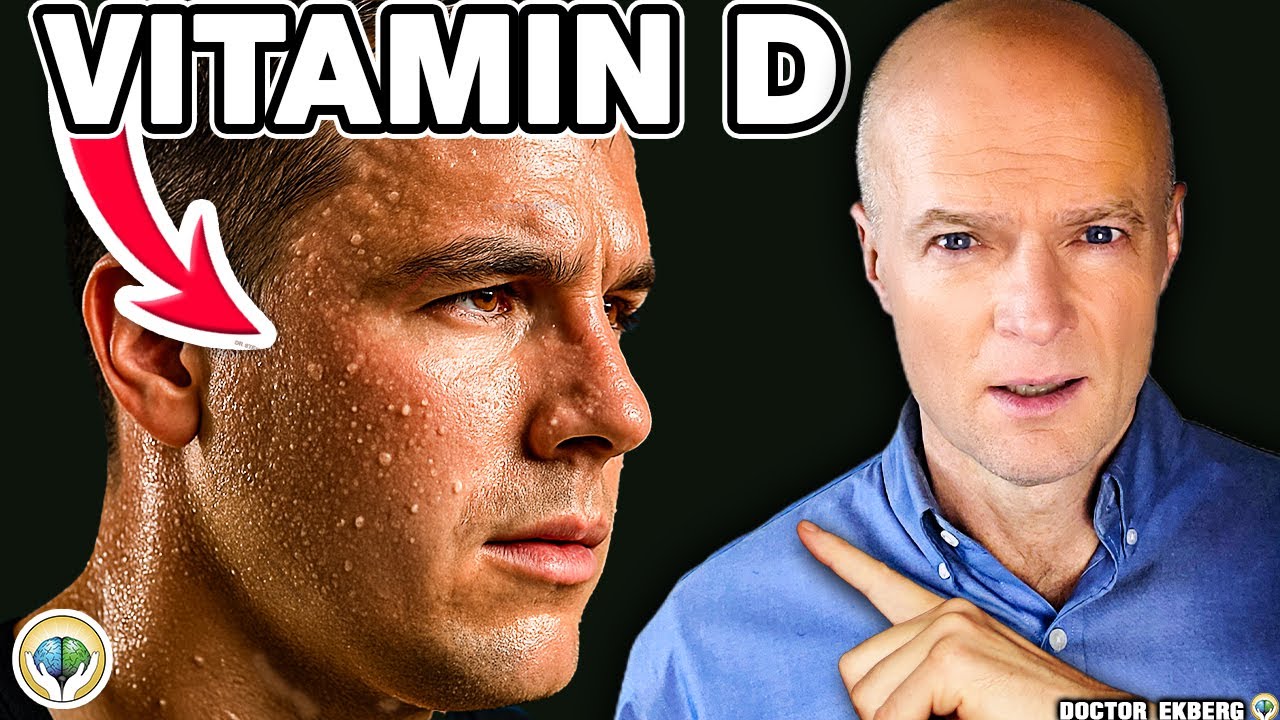
Get the Highest Quality Electrolyte https://euvexia.com . Have you even wondered if you are deficient in Vitamin D? Here are some signs that most people don’t think about.
🔴Blood Work Course https://www.drekberg.shop/products/ultimate-blood-work-course-by-dr-sten-ekberg
🔴 MASTER YOUR HEALTH BY SUBSCRIBING https://www.youtube.com/DrEkberg?sub_confirmation=1
🔴 Join this channel to get access to perks:
https://www.youtube.com/channel/UCIe2pR6PE0dae9BunJ38F7w/join
Watch more life saving videos…
🔷 #1 Vitamin D Danger: https://www.youtube.com/watch?v=oz7u92mifPI&list=PLpTTF6wMDLR79E3-ijN_r6e8XkU4nQNyl
🔷 Top 10 Vitamin D Foods: https://www.youtube.com/watch?v=uyUoK71uATU&list=PLpTTF6wMDLR79E3-ijN_r6e8XkU4nQNyl
🔷 10 Warning Signs Your Liver Is Toxic: https://www.youtube.com/watch?v=l7KdLPN3pVM&list=PLpTTF6wMDLR79E3-ijN_r6e8XkU4nQNyl
Welcome to Signs and Symptoms by Dr. Sten Ekberg; a series where I try to tackle the most important health issues of the day in a natural and safe way. If you have suggestion for the next topic leave your comment below. Remember to make your comments positive and uplifting even if you disagree with something that was said by me or others.
🔷 Signs and Symptoms Series: https://www.youtube.com/watch?v=EuL7t_B7jc8&list=PLpTTF6wMDLR79E3-ijN_r6e8XkU4nQNyl
🌿 This is a Holistic Health Channel that focuses on all aspects of Natural Holistic Health and Wellness featuring Olympic decathlete and holistic doctor, Dr. Sten Ekberg with Wellness For Life. Learn to master holistic health, stay healthy naturally, live longer and have quality of life by learning how the body really works. Doctor Ekberg covers and explains health in an easy to understand way. There will be health tips like how to lose weight, what to eat, best nutrition, low carb diet, cold hands & feet, holistic health tips, pain relief, lower blood pressure, reverse diabetes naturally, reduce stress, how to exercise, thyroid issues, keto diet explained, brain health tips, stretches & more from a real doctor.
▶️ CONTACT INFO
Dr Sten Ekberg
Wellness For Life
5920 Odell St
CummingGA 30040
http://www.DrEkberg.com
THANK YOU FOR WATCHING, COMMENTING, SUBSCRIBING & LIKING. Let us know if you have any health questions in the comment section below the video. The goal of this channel is to educate you in easy to understand terms on what true holistic health is.
All clips used for fair use commentary, criticism, and educational purposes. See Hosseinzadeh v. Klein, 276 F.Supp.3d 34 (S.D.N.Y. 2017); Equals Three, LLC v. Jukin Media, Inc., 139 F. Supp. 3d 1094 (C.D. Cal. 2015).
Typical legal disclaimer (doctor occupational hazard): This is not medical advice, nor can I give you medical advice. Sorry! Everything here is for informational purposes only and not for the purpose of providing medical advice. You should contact your doctor to obtain advice with respect to any particular health issue or condition. Nothing here should be construed to form an doctor patient relationship. You should not make any change in your health regimen or diet before first consulting a physician and obtaining a medical exam, diagnosis, and recommendation. Always seek the advice of a physician or other qualified health provider with any questions you may have regarding a medical condition. Wellness For Life and Dr. Sten Ekberg are not liable or responsible for any advice, course of treatment, diagnosis or any other information, services or product you obtain through this video or site. Also, some of the links in this post may be affiliate links, meaning, at no cost to you, I may earn a small commission if you click through and make a purchase. But if you click, it really helps me make more of these videos!
#WellnessForLife #MasterHealth #DrEkberg #DrStenEkberg #HealthAndWellness #Doctor #HolisticDoctor #RealDoctor #HealthChampions #keto #ketodiet #weightloss
Everyone probably knows that vitamin D helps
with calcium and strong bones, but most people don’t realize that vitamin D acts more like
a hormone. And when you don’t have enough, it can cause some very strange things like sudden
sweating, crawling sensations in your legs, or even unexplained anxiety. Hello, health
champions. Today we’re going to talk about the 10 weirdest signs of a vitamin D deficiency and
we’re also going to cover some of the mechanisms so that you really understand how far-reaching
and critical this vitamin or hormone is. So when we talk about vitamin D, we typically talk about
things like immune system support, strong immune function, and if you don’t have enough, then
you might get frequent infections. Classically, even before that, we talked about vitamin D
related to bone health and it was the classic sign of something called rickets. If kids grew up
really bow-legged, if their bones didn’t calcify properly, then that was because they had a severe
vitamin D deficiency. And also today, we know that it’s related to osteoporosis. But bone health
goes so much further. So vitamin D can actually be associated with bone, tooth or even with back
pain. So when vitamin D is low, then we’re not able to absorb calcium as efficiently. But we have
to have calcium in the bloodstream. Calcium is a signaling molecule. So if we don’t have enough,
it’s much more important we we have it in the blood than in the bone. So the parathyroid which
is a tiny gland up on the front of your neck it’s going to release a hormone called parathormone
which will pull calcium from the bone so that we always maintain proper levels in the bloodstream.
But now as we’re losing calcium, as we’re losing strength of the bones, now we might end up with
bone pain, tooth pain, or even back pain. But more than that, vitamin D actually also signals for the
osteoblasts. Those are the cells that make bone. Those are the cells that form strong bone from
collagen and protein and calcium and phosphorus. So with less vitamin D, there’s going to be less
stimulation of these osteoblasts in addition to the fact that we don’t have enough calcium.
And now what’s going to happen is we could have unexplained bone fractures. And because
of this poor bone formation, we might also end up with slow healing of bones. But vitamin D also
helps move calcium and phosphorus into the teeth. So when vitamin D levels fall now we could end up
with weak dentine and weak enamel. But vitamin D also helps move calcium and phosphorus into the
teeth. So if vitamin D levels fall now we could end up with weak dentine and enamel and as a
result we could actually get gum disease and tooth sensitivity or tooth pain as a result of low
vitamin D. And sign number two is muscle weakness because vitamin D helps transport calcium into
the muscles. So yes, we need a signal from the nervous system. We need an electrical signal to
the muscle. But then to cause the actual muscle contraction, we have to have that calcium activate
the muscle fiber. And with low vitamin D, we’re not going to have as much calcium. And as a result
now we could end up with some muscle weakness. And those are going to affect mostly what’s called
the proximal muscles. Proximal means close to and we’re talking about close to the trunk, close
to the center of the body. And those are usually the large muscles like the upper leg, like your
thigh muscles, your glute muscles, hip muscles, things like that. the big muscles that help
you climb stairs and stand up and so forth. So, if they weaken, you could have a hard time lifting
things. You could have a hard time standing up from a chair or climbing stairs. And sign number
three is depressed mood. So, even though we call it a vitamin, vitamin D is actually much more of a
hormone. It acts more like a hormone because most vitamins they are sort of like catalysts. They’re
co-actors. They just help a reaction move forward. Whereas vitamin D being a hormone acts much more
like a signaling molecule. And one thing that it does in terms of mood and brain is that it helps
regulate two neurotransmitters called dopamine and serotonin. And dopamine is our moving
towards something neurotransmitter. It’s our motivation. It’s our desire. Whereas serotonin
is more of a feel-good, more of a satisfaction neurotransmitter. And there are receptors for
both of those neurotransmitters in the prefrontal cortex. That’s the area in the front of the
brain where we have our executive function, our humanity, our motivation. but also in the
hippocampus and the limbic system. Hippocampus is an area of the limbic system that have to do with
memory and emotional regulation. So vitamin D is involved with the regulation of mood, motivation
and emotional balance. So when vitamin D falls low, we could find ourselves much more likely to
be irritable and to have a depressed mood and a lack of interest. Sign number four is excessive
sweating on the head or the scalp, primarily in the hairline. And this is a very well-known,
very classic sign both in infants and in adults. So back in the day before we ran a bunch of tests
and before we had sophisticated testing available, they would actually ask the new mothers how their
babies were doing shortly after birth. And if they had head sweating, then that was a sign that
they were actually vitamin D deficient. So if we’re low on vitamin D, then we’re going to be
low on calcium. And this is going to cause an increased firing and a hyper excitability of
the autonomic nervous system. Your fight light response and your feed breathe responses. So when
your vitamin D is low, we already said that that means your calcium is also going to be low. And
calcium is a super important signaling molecule. When calcium is low, that’s going to increase
the firing of your autonomic nervous system of your stress responses. So that means if we have
a hyper excitability of your stress response, now what can happen is you basically can get
excess sweating without having an actual stress response or without actually doing any exertion.
And the primary ways that this would show up would be damp hairline like you’re sweating in the scalp
or in the hairline and also that you find you have night sweats. Sign number five is a craving for
sunlight or feeling better instantly after it. So if you feel bad and then you get some sun exposure
and you find yourself almost immediately that you have improved mood, you have more calm and more
focus. This is more than just a psychological response because it could feel so good with the
sun that you just relax, but it’s much more than that. And it’s a real biochemical response. And
this is really interesting how the body works because the sun exposure, the UVB frequency of
light does stimulate vitamin D synthesis, but it’s not going to happen that quickly. So, it’s
what they call a neurochemical reflex. And the brain is basically anticipating. It’s predicting.
So the brain has a predictive regulation system that it gets this sunlight and it knows what’s
about to come. So it makes you feel good already even if there’s several hours before that vitamin
D actually kicks in. And there are many many other examples of how the body works that way with this
predictive response system. For example, if you have a type 2 diabetic who takes a little bit too
much insulin or even a type 1 diabetic who is on a pump maybe and they get too much insulin and their
blood sugar drops too much, they get hypoglycemic and the first thing you’re supposed to do is to
give them some sugar or some orange juice or candy bar or something to raise their blood sugar. And
when you do, very often they will come to they’ll feel better. If they were totally passed out, they
might wake up. If they were just laded and feeling terrible, they might feel better instantly, like
within a couple of seconds. And there’s no way for the orange juice or the sugar or the candy
bar to actually get to the brain in that amount of time. So, it’s a predictive response. Same
thing if you’re so hungry, we’re so starved, maybe you’re even shaking, you’re that hungry, and
you just take one bite of food, that first bite of food, and as soon as you have it in your mouth,
you feel better, even though it’s going to be quite some time before any of that food actually
gets distributed into the system. Number six is fatigue and low energy. So, how does that work?
Well, few people know that vitamin D actually affect the mitochondria. They help regulate the
mitochondrial enzymes. And mitochondria are those little inclusion things in our cells. We could
have hundreds or we could have thousands of these little things in our cells. And they actually make
all of our energy. So if vitamin D isn’t there to regulate these enzymes now we lose mitochondrial
efficiency. It’s like an engine that just has less power all of a sudden. And as a result we get
less of the ATP production. And ATP of course is the body’s energy currency that we don’t run
on calories, we run on ATP. We take fuel and we oxidize it and we turn it into ATP or adenosine
triphosphate. So again with less efficiency we’re going to output less ATP and we’re going to find
we have early fatigue. We get tired much faster. But since every cell in the body runs on ATP, this
could also affect the brain. Of course it will affect the brain. So we could also find ourselves
with sluggish thinking and a lack of motivation. Number seven is hair shedding or alopecia areata
and that means baldness. Alopecia means baldness and areata means that it comes out in patches.
It’s very unlike the male pattern baldness that you see with yours truly. But here it’s like big
patches, big big bald spots in the middle of the hair. And the mechanism is twofold. So vitamin
D regulates the hair follicle cycles. So there’s three phases to hair growth. They have the growth
phase, they have the resting phase, and then the shedding phase. And with low vitamin D, the hair
follicle could get stuck in the resting phase. And if it gets stuck there, then it can’t move
into shedding or regrowth. it just kind of sits there and hair gets brittle and falls out. And the
second way that vitamin D is involved with hair growth is that vitamin D regulates autoimmunity
or immunity in general. But part of that is autoimmunity responses. So with a low vitamin
D, if your immune system gets dysregulated now, your immune system could start attacking your own
tissues, including hair follicles. So by bringing more vitamin D in, you could actually calm down
the immune system and lessen that autoimmune attack as well as you could improve the growth by
restoring the proper regulation of these phases. So increasing vitamin D in this case may or
may not help because it’s going to depend on how far progressed the disease process is. If the
follicles are still somewhat viable, if they still have a little bit of life left in them, then there
is a chance that you can reverse this process. But there is sort of a point of no return. Sign
number eight is restless legs, which can be described as a crawling sensation in your legs at
night. And again, there’s two ways that vitamin D influences this mechanism. And one is through
dopamine because dopamine is a neurotransmitter. It’s an emotional signaling molecule. And just
like it helps us move toward a desire, it also helps directly with movement. And the classic
disease that involves dopamine is Parkinson’s. It’s a movement disorder when we don’t have enough
dopamine. So, with less vitamin D, there’s going to be less dopamine like we talked about before.
And now there’s going to be a type of misfiring in the nervous system. And this misfiring is going
to make it feel like your legs need to move. Even though you’re in bed maybe and you’re trying to
rest, you get this crawling sensation and this irresistible urge to move your legs. And this is
made a little bit worse by the fact that dopamine naturally decreases as at night because it has to
do with movement and we’re not supposed to move at night. And the second mechanism has to do with
calcium. Again, low vitamin D leads to low calcium which leads to overexcitability, a little bit of
irritation of the nerves. And this in turn can cause some involuntary contractions and twitches
in the legs. Number nine is poor concentration or brain fog. And again, we have to appreciate
how different vitamin D is, how far-reaching its effects are. And it’s more of a hormone than a
vitamin. You could even call it a neuro steroid. So a steroid is a growth hormone. It’s a hormone
that makes things grow like testosterone for example. But this is for your brain and vitamin
D is critical for both brain communication for sending the proper signals and for repair. So
vitamin D controls calcium and when we have enough vitamin D then we can make the proper
signals. we can make clean fast signals that communicate properly. But when vitamin D levels
suffer now, we can get sort of an erratic behavior of this calcium. It the inflow and the signaling
is less well controlled. It’s a more random and we can liken this to a noise, a neural noise in
the nervous system. And as a result of this, you could get forgetfulness and you could experience
reduced clarity and focus. So that part is about the signaling. But you could also make a case for
vitamin D being a steroid. Has to do with repair and growth. And that’s because vitamin D also
drives BDNF, brain derived neurotrophic factor, which is like miracle grow for your brain. So
with less vitamin D, there’s going to be less BDNF and less neuroplasticity. And neuroplasticity
is the brain’s ability to make new connections, to reshape itself, to make new pathways for signals
to go. And every time that you learn a new skill or you recover from something strenuous that did
damage to the brain, you’re using neuroplasticity to reshape it. You can’t learn anything. You
can’t adapt to anything without neuroplasticity. So vitamin D can be so far reaching that when
vitamin D levels are low, you could actually have reduced learning, reduced adapting, and reduced
recovery. And the 10th weird sign of a vitamin D deficiency is chronic pain. And in the peripheral
nervous system, in the PNS, vitamin D helps maintain accurate signals. So we have receptors in
the periphery that send signals into the central nervous system and then in the central nervous
system vitamin D binds to brain and spinal cord receptors to modulate the pain to turn up and down
our experience of that pain. So with low vitamin D we can actually get like a double whammy here.
On the one hand, we can have a hyper sensitivity in the peripheral nervous system. So out in your
fingertips, on your skin, every part of the body, you have receptors, pain receptors, and it’s
not called pain yet. It’s called nociception. It’s just a signal that could be interpreted
as pain. But for the same level of stimulus, for the same pressure, for the same intensity,
the peripheral nervous system could start sending stronger signals. So we get hyper sensitivity at
that level. But then in the central nervous system that interprets this and turns it into pain,
we could turn that part up also because we have these receptors in the brain and spinal cord that
are not as well regulated. And on top of that, we could increase the duration of the experience of
pain. So all of these would strongly contribute to chronic pain syndromes. But there’s even one more
way that this could contribute to chronic pain. And that is that with a decreased vitamin D level,
we also have less suppression of some inflammatory markers, some cytokines like interleukin 6 and
TNF alpha. And if we have less inhibition there, we get more systemwide inflammation and more
irritation of these peripheral nerve endings. So this is often called a central sensitization that
we get a global increase in pain, an experience of more pain everywhere in the body. But it’s because
of a central mechanism. And like we said before, with less vitamin D, we’re going to have less
serotonin, our feel-good neurotransmitter. And serotonin is actually involved with mood and pain
inhibition. So, here’s one more way that a low vitamin D level contributes to chronic pain.
So, vitamin D is definitely something that’s worth looking into as far as supplementing. And
a safe level is usually 2,000 IUs to 5,000 IUs. But if you take it long term, it’s definitely
worth checking it. Get it tested once in a while because you do not want to get too high. Vitamin D
is something that is toxic when you have too much. So there are some supplements out there where
they’re selling you units of 10,000 per capsule. And that is not something that you want to take
long term because the likelihood of toxicity is very high. If you enjoyed this video, you’re going
to love that one. And if you truly want to master health by understanding how the body really
works, make sure you subscribe, hit that bell, and turn on all the notifications so
you never miss a lifesaving video.