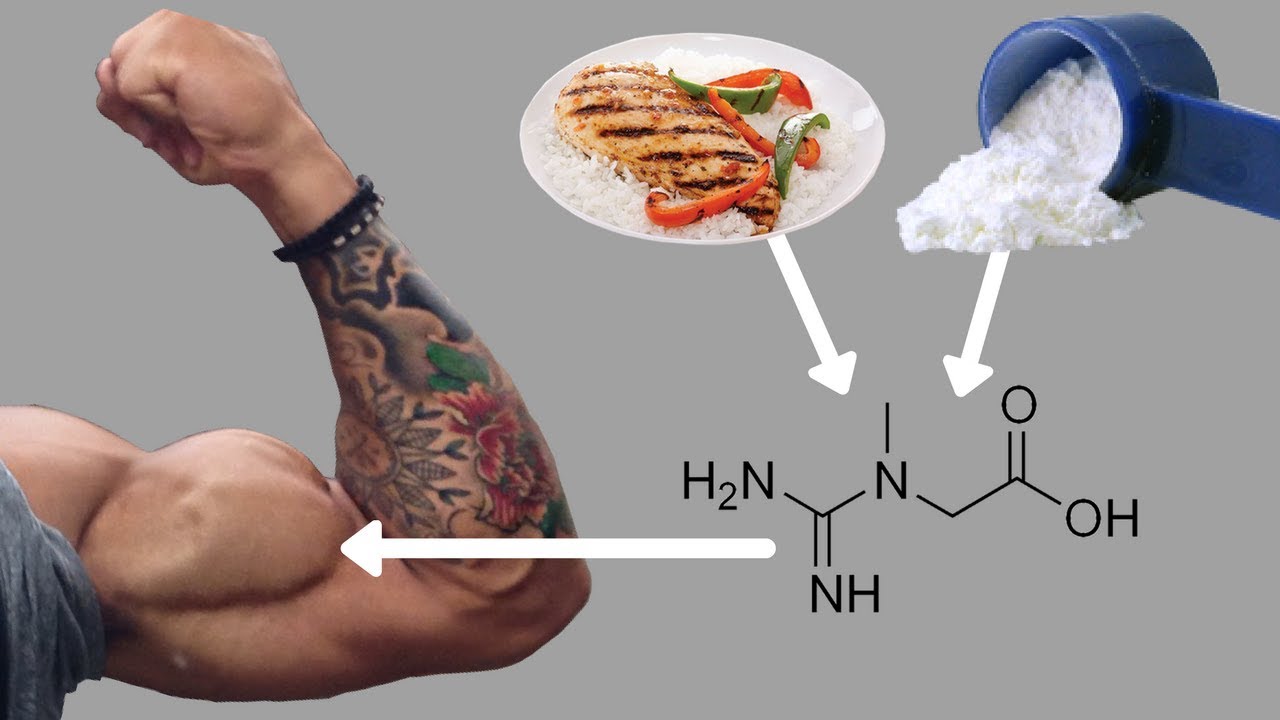
Creatine is one of the few supplements out there that is actually well-backed by research in terms of its effectiveness. However, there’s a lot of confusion out there as to how to take creatine and how creatine works. In terms of “what does creatine do”, it simply allows a faster regeneration of ATP in our muscles. Since ATP is the main form of energy for our muscles, this enables us to perform an extra rep or two during our training. As for the best creatine to take and how to use creatine effectively, stick to creatine monohydrate and take your creatine with your post-workout meal. There seems to be a slight benefit to taking creatine post-workout, and it actually drastically improves its effectiveness by taking creatine with carbohydrates and protein. Now as for whether creatine causes hair loss or other side effects, research is inconclusive at the moment. Long-term creatine supplementation does not cause any adverse health effects but may increase DHT which is a hormone that accelerates male pattern baldness in those who are susceptible or have it in their family history. Thus, those who are susceptible may want to consider that. But more research is definitely needed – the findings aren’t as serious as many people make it out to be.
Creatine Article (BUILTWITHSCIENCE.COM):
https://builtwithscience.com/how-to-use-creatine/
You can browse around my website and read the articles I do have up (I’ll be adding more articles on a regular basis). Also, give me a follow on my social media platforms if you haven’t already, as I post informative content there on a more regular basis (links below). Thanks again! Cheers!
Science-Based Programs:
https://builtwithscience.com/bws-free-fitness-quiz/gender?utm_source=Youtube&utm_medium=Video&utm_content=Description%20box&utm_campaign=Creatine%20for%20muscle%20growth%20Feb%2011%2F2018
https://www.instagram.com/jayethierfit/
https://www.facebook.com/Jeremyethierfit/
STUDIES:
Creatine Benefits:
https://www.ncbi.nlm.nih.gov/pubmed/12945830 https://www.ncbi.nlm.nih.gov/pubmed/14685870 https://www.ncbi.nlm.nih.gov/pubmed/10410846?dopt=Abstract https://www.ncbi.nlm.nih.gov/pubmed/20181066?dopt=Abstract
Creatine Responders/Non-responders:
https://www.ncbi.nlm.nih.gov/pubmed/15320650/
Best type of creatine:
https://www.ncbi.nlm.nih.gov/pubmed/19387397
What to take it with:
https://www.asep.org/asep/asep/kreider2.pdf
http://www.physiology.org/doi/abs/10.1152/jappl.2000.89.3.1165
When to take it:
https://jissn.biomedcentral.com/articles/10.1186/1550-2783-10-36 https://www.researchgate.net/publication/266138342_Creatine_timing_on_muscle_mass_and_strength_Appetizer_or_Dessert
Loading vs non-loading:
https://www.ncbi.nlm.nih.gov/pubmed/17908288/
Cycling not needed:
https://www.ncbi.nlm.nih.gov/pubmed/12701816?dopt=Abstract
Creatine no side effects:
https://jissn.biomedcentral.com/articles/10.1186/s12970-017-0173-z#CR8
Creatine hair loss study:
https://www.ncbi.nlm.nih.gov/pubmed/19741313
Music:
Soundcloud.com/lakeyinspired
out of all the supplements out there creatine is one of the few that is actually well backed by research in terms of its benefits for those who lift weights several studies have proven its Effectiveness in helping slightly improve the rate of strength and long-term muscle gains while also improving other factors like anaerobic capacity and power output therefore there is no question that creatine can be slightly beneficial in those that respond to it but what’s less well known is how exactly to take it to maximize its Effectiveness and if there are any potential side effects so in this video will cover just that but before we get started it’s important to know how creatine works in the first place to keep it simple when we lift weights we use ATP which is the main energy source for our muscles creatine improves strength gains by enabling a faster regeneration of ATP and ultimately allows us to perform that extra rep or two when we’re lifting weights and although creatine is naturally found in the body and in various protein sources we can increase our muscle creatine contents by supplementing with it it’s also important to know that the literature has found that some people respond well to creatine whereas others don’t respond at all research seems to suggest that responders typically have a high percentage of type 2 muscle fibers and a low initial muscle creatine content whereas non-responders typically have the opposite as for how to tell if you’re a non-responder or not in a non-clinical setting it’s pretty difficult to do if you are a responder studies show that your weight should increase more than usual after a month or so of supplementation due to the water retention effects of creatine in the muscles so I would suggest trying it out and monitoring how your strength and weight changes over the next few months and seeing if this increase is greater than usual now that we understand how and why creatine Works let’s take a look at how we can maximize its Effectiveness by looking at the following factors despite all the marketing gimmicks out there claiming that different forms of creatine are more effective research has concluded that this simply isn’t the case researchers from this review article state that claims that other forms of creatine are more effective are currently unfounded one exception though is something called polyethylene glycosylated creatine which was found in one study from the Journal of strength and conditioning research to provide the same effects as creatine monohydrate in terms of strength gains but with 75 percent less of the dose needed indicating that it’s more efficiently absorbed by the body but as with many things more research is needed to clarify this finding therefore I’d suggest for now save your money and stick to creatine monohydrate the only case I would recommend experimenting with a buffered form of creatine like creatine HCL or a micronized form as if the monohydrate version upsets your stomach since these other forms might help with that you’ll hear a lot of people say that it doesn’t matter what you take your creatine with but the literature seems to prove otherwise as seen in this graph from a study by Kreider and colleagues muscle creatine levels are elevated to a much greater extent when creatine is taken with carbohydrates or with carbohydrates and protein compared to taking it alone in fact you can see how taken it with carbs and protein almost doubles the creatine absorption when compared to taking creatine alone the study by steam jet L found the same and thus recommends taking creatine with around 47 grams of carbs and 50 grams of protein for enhanced creatine retention so ideally you want to take it with a meal or Shake consisting of adequate carbs and protein for the best results [Music] again most people seem to think it makes no difference when you take your creatine but research does seem to oppose this view two recent studies compared pre versus post-workout creatine ingestion they found that there was a slight yet non-significant benefit to taking creatine post-workout as opposed to Pre-Workout in terms of its ergogenic effects So based on this and the fact that people tend to have a large post-workout shake or meal consisting of the adequate carbs and protein needed to enhance creatine uptake I’d advise that you take it post-workout for the possible additional benefits so there’s three protocols for taking creatine one you can load creatine by taking around 20 grams per day for five to seven days and then ingest three to five grams a day after that to maintain that elevated creatine stores or two you can take three to five grams of creatine every day right from the start which will gradually increase your muscle creatine levels studies show that both protocols provide the same effect in terms of raising muscle creatine content but the loading protocol does it faster so what’s really up to you which one you choose the third option is to cycle creatine by going on and off of it which doesn’t appear to be superior to the other methods nor is it necessary since studies show that your natural creatine stores don’t seem to decrease or compensate in any way by long-term supplementation of creatine [Music] since creatine became a popular supplement in the 1990s there’s been over a thousand studies conducted on Creatine in all of these studies including studies where subjects of all ages took high doses of creatine daily for up to five years the only consistently reported side effect from creatine supplementation has been weight gain due to water retention in the muscles however researchers have noted that in some individuals stomach cramping can occur when creatine is supplemented without sufficient water diarrhea can occur when too much creatine is taken at once therefore I’d suggest ensuring that you are staying hydrated and that you space out your creatine intake throughout the day especially during the loading phase If you experience any stomach discomfort now let’s address if creatine can cause hair loss this whole idea stems from one 2009 study that showed creatine supplementation increase the levels of the hormone DHT in male rugby players since DHT can accelerate hair loss in those with a history of male pattern baldness is hypothesized that create team may accelerate baldness and those who are susceptible to it but this whole idea is based on just this one study which is yet to be replicated or even shown to have an effect on male pattern baldness at all so in my opinion those without a history of male pattern baldness don’t need to worry about this whereas those who do is something you might want to consider but again the evidence really is inconclusive at the moment so to sum the video up here are the key takeaways one thing I want you to keep in mind though is that like all supplements creatine is just a very small piece of the puzzle your nutrition and your training should be your priority as these are much more important factors when it comes to what will actually deliver your results supplements should be the very last thing you consider thanks for watching guys I hope you enjoyed the video and found it useful for those who have been following me for a while you may have actually noticed that I’ve already covered creatine as one of my first videos but I just wanted to redo it and add some more research into it and just make the video a little bit better so I hope you guys were able to learn something new from it and as always you can find the written summary of of this video on my website builtwithscience.com and also leave a link to it in the description box down below for those who are interested and want to check it out and if you enjoyed this video please don’t forget to give it a like leave a comment down below and also subscribe to my channel if you haven’t already I would really appreciate it and you can also give me a follow on Instagram as well where I’ll be posting informative content on a more regular basis anyways thank you guys so much for all your support I’ll see you next time foreign foreign