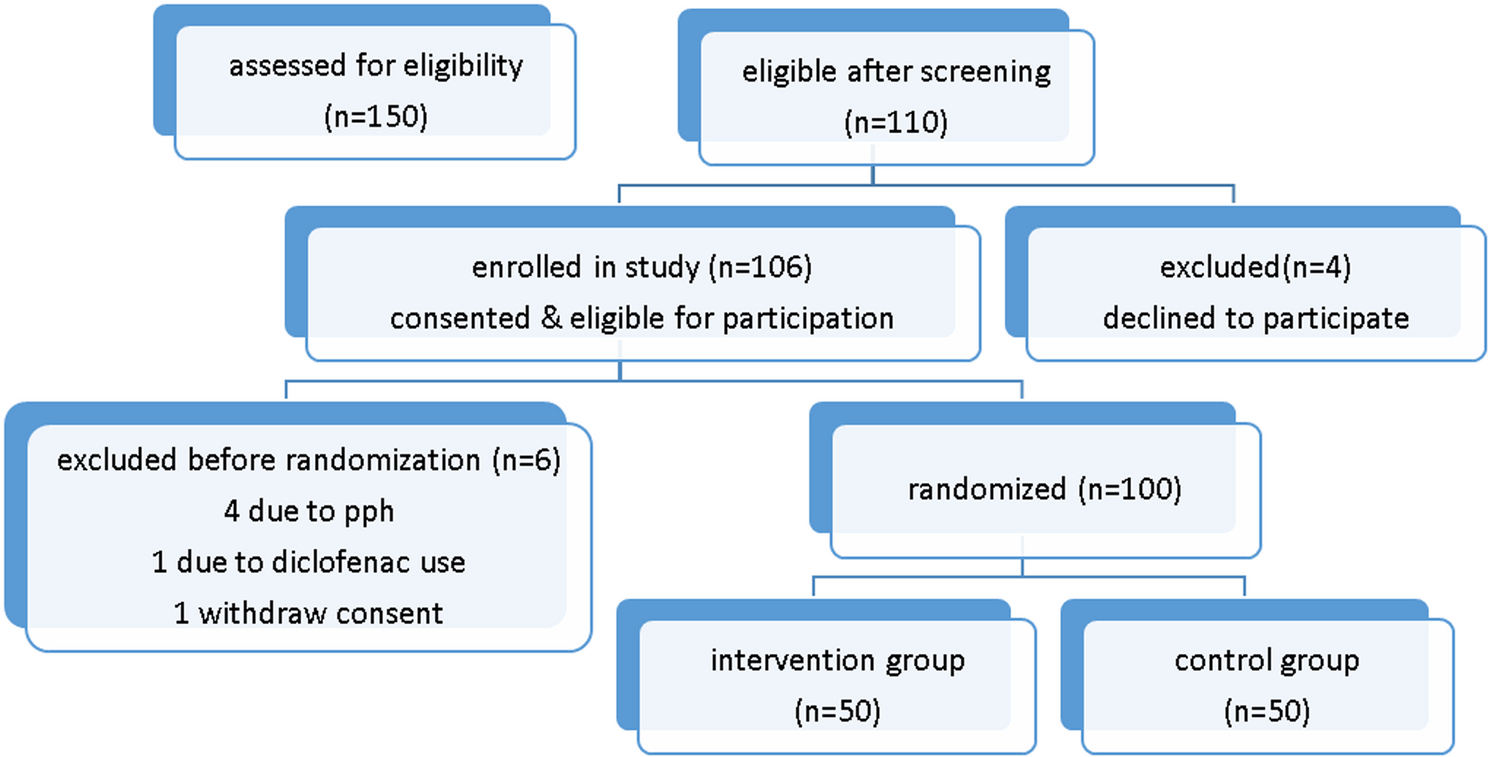
This study demonstrated that combined supplementation with vitamins E and D was associated with a significant reduction in both the intensity and duration of postpartum pain. Although pain levels decreased over time in both groups—likely due to natural postpartum recovery—the intervention group showed a statistically significant greater reduction starting after the second dose, indicating a potential cumulative or time-dependent effect of the supplementation [20]. The analgesic properties of vitamin E observed align with previous findings in primary dysmenorrhea, where it reduces pain by inhibiting arachidonic acid release and prostaglandin synthesis through antioxidant mechanisms [21]. This provides a plausible explanation for its effect on postpartum uterine pain, which similarly involves prostaglandin-mediated pathways. Consistent with Vilvapriya et al. (2018) [22], who reported pain reduction over three menstrual cycles, these results support the hypothesis that vitamin E influences uterine smooth muscle contractions. Additionally, plant-based interventions such as Triticum sativum, rich in vitamin E, have demonstrated beneficial effects on postpartum pain without adverse outcomes [23].
A distinctive feature of this trial was the combined administration of vitamins E and D. Given vitamin D’s known anti-inflammatory and immunomodulatory properties, co administration may enhance analgesic efficacy, although the possibility of synergistic effects warrants further exploration. The delayed onset of a statistically significant effect highlights the importance of investigating optimal dosing schedules, absorption kinetics, and pharmacodynamics.
Practical implications
The supplementation regimen (vitamin E 100 IU + vitamin D 400 IU, started 2 h postpartum every 8 h for eight doses) was safe, affordable, and feasible in postpartum care. This approach could be particularly useful in low-resource settings or where reducing NSAID use is desired. Effective pain control may improve maternal mobility, sleep, mood, breastfeeding, and mother-infant bonding, while potentially lowering pharmacologic analgesic use. Recent reviews support nutritional and complementary methods for postpartum pain management but highlight the need for more high-quality trials [24, 25].
Limitations and future directions
The current study’s 48-hour follow-up period hinders evaluation of longer-term outcomes such as functional recovery, sustained pain relief, psychological well-being, and any delayed adverse effects. The combined supplementation design prevents distinguishing the independent effects of vitamins E and D, and therefore cannot confirm whether synergistic mechanisms are at play.
Unmeasured confounders—such as maternal mental health, sleep quality, nutritional status, and prior pain experience—could influence pain perception and analgesic requirements, which the study did not account for systematically. Additionally, the absence of biochemical confirmation (e.g., serum 25‑OH‑D and α‑tocopherol levels) limits understanding of actual absorption, adherence, and dose–response relationships.
Recent reviews of vitamin D in the perinatal period indicate potential mood-related benefits, particularly for depressive symptoms, though current RCTs remain limited and of variable quality. This further underscores the importance of integrating mental health assessments and longer-term follow-up in future studies.
Future investigations should consider
Factorial trial designs (e.g., separate arms for vitamin E, vitamin D, combination, and placebo) to clarify independent versus synergistic effects.
Biochemical monitoring of serum vitamin levels to confirm biologic uptake and explore dose–effect relationships.
Extended follow-up (ideally beyond the immediate postpartum, e.g., up to 6–12 weeks or longer) to assess functional recovery, mood, breastfeeding success, and safety.
Larger, well-powered samples, possibly stratified by population characteristics (e.g., nutritional status, baseline vitamin levels, mode of delivery).
Direct comparison with standard analgesics in scheduled dosing designs to evaluate relative efficacy, safety, and feasibility.