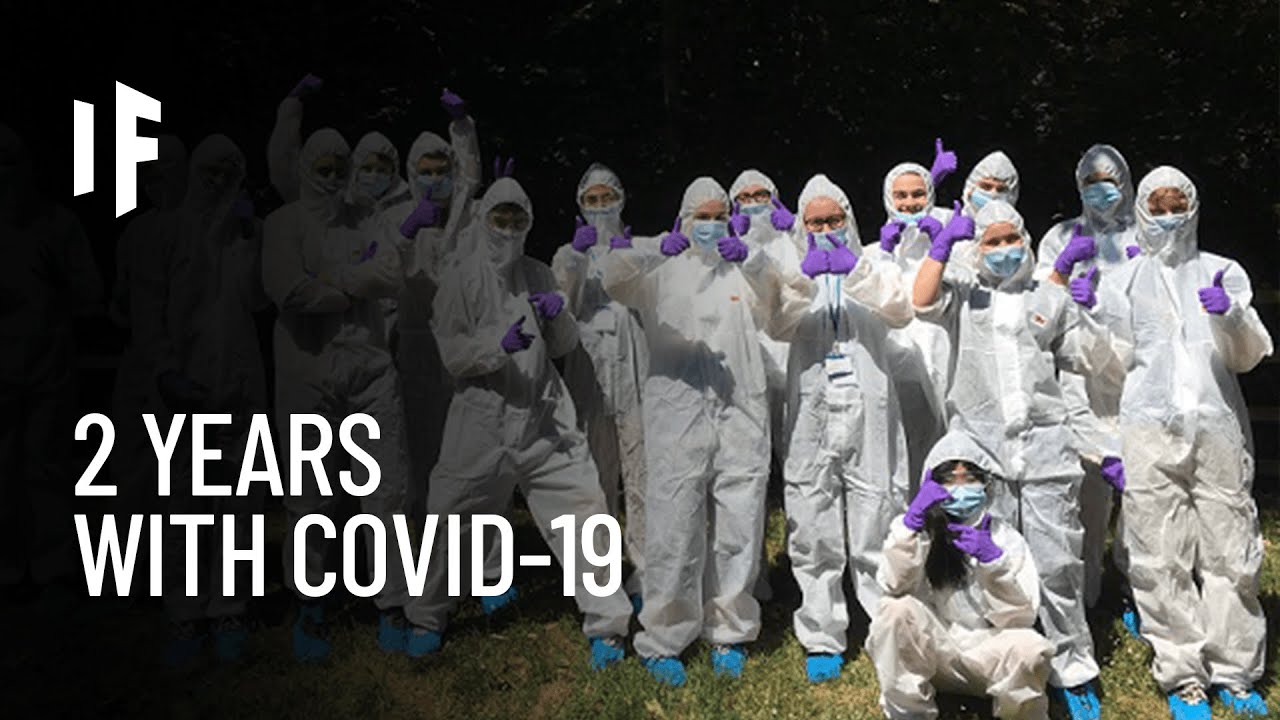
COVID-19 has affected the entire world. It’s infected millions, and killed hundreds of thousands. Not only that, but it’s also changed the way we live, work, and interact with others. But when will things finally get back to normal? For some people, that might not be until a vaccine is developed, which could take up to two years, or more. What will your life be like until then? What would this vaccine do to your body? And when will things start to go back to normal?
Transcript and sources: https://whatifshow.com/what-if-it-takes-two-years-for-a-covid-19-vaccine/
Subscribe to our second channel called “How to Survive”: https://bit.ly/how-to-survive-by-what-if
Can you translate this episode into another language? Add subtitles and we will link your YouTube channel in the description: https://www.youtube.com/timedtext_video?v=o8JGsBDY1xI
Watch more what-if scenarios:
Planet Earth: http://bit.ly/YT-what-if-Earth
The Cosmos: http://bit.ly/YT-what-if-Cosmos
Technology: http://bit.ly/YT-what-if-Technology
Your Body: http://bit.ly/YT-what-if-Body
Humanity: http://bit.ly/YT-what-if-Humanity
T-shirts and merch: http://bit.ly/whatifstore
Suggest an episode: http://bit.ly/suggest-whatif
Newsletter: http://bit.ly/whatif-newsletter
Feedback and inquiries: https://underknown.com/contact/
What If elsewhere:
Instagram: http://bit.ly/whatif-instagram
Twitter: http://bit.ly/whatif-twitter
Facebook: http://bit.ly/facebook-whatif
What If in Spanish: http://bit.ly/YT-Spanish-what-if
What If in Mandarin: http://bit.ly/YT-Chinese-what-if
Podcast: http://bit.ly/yt-what-if-show-podcast
IMPORTANT: This video is not intended to be a substitute for professional medical advice, diagnosis, or treatment. Always seek the advice of your physician or other qualified health provider with any questions you may have regarding a medical condition. Never disregard professional medical advice or delay in seeking it because of something you have seen on this channel. If you think you may have a medical emergency, call your doctor, the ambulance or the police immediately. Underknown does not recommend or endorse any specific tests, physicians, products, procedures, opinions, or other information that may be mentioned in this video. Reliance on any information provided by Underknown is solely at your own risk.
What If is a mini-documentary web series that takes you on an epic journey through hypothetical worlds and possibilities. Join us on an imaginary adventure through time, space and chance while we (hopefully) boil down complex subjects in a fun and entertaining way.
Produced with love by Underknown in Toronto: https://underknown.com
COVID-19 has affected COVID-19 has affected COVID-19 has affected the entire world. It’s infected millions, and killed hundreds of thousands. Not only that, but it’s also Not only that, but it’s also changed the way we live, work, and interact with others. When will things finally get back to normal? When will things finally get back to normal? For some people, that might not be until a vaccine is developed, which could take up to two years, or more. A COVID-19 vaccine will try to train our immune system. The idea is to harmlessly show the virus to your body to help recognize and fight it. So when you encounter the disease in real life, your body will know how to fight COVID-19. Right now, we know the genetic code of the virus, which is extremely helpful for developing a vaccine. But scientists still have a lot to learn, which is why experts think we may not see a vaccine for up to two years. So what will our lives be like until then? If the COVID-19 pandemic continues for another two years, don’t expect things to completely
go back to what you’re used to. But you won’t be locked in your home for another two years either. It’s likely that with most of the world It’s likely that with most of the world being under quarantine, new cases of COVID-19 will reduce. And when that number decreases enough, governments may choose to
open their economies back up. Some governments may choose to do this sooner than they should, so people can go back to work, and ease the unemployment problem. Something you might see in retail stores are disinfecting robots. Some will be able to clean with disinfectant while others will have UV light attachments, as that’s a potential way to kill COVID-19 on surfaces. Even with most stores reopening, don’t expect to be in any crowded malls or restaurants right away. Reopening businesses will be a slow process. As we see in grocery stores right now, the number of customers allowed in at one time will likely be limited. You may also have to wait in line before you can go inside. And while you’re in these stores, it will still be important to maintain a physical distance of at least 2 meters, that’s 6 feet. Handshakes, hugs, and any other forms Handshakes, hugs, and any other forms of touching in public will no longer be normal. What will likely be normal is everyone wearing masks. They may even become fashionable, as brands will hope to earn money on the fact that everyone will need one of these if they want to go out. And if you have to travel in the next two years, expect to take even more precautions. Airports are beginning to test full-body disinfection devices. These are meant to disinfect a user within 40 seconds. Killing any viruses you might have on your skin or your clothes. And before you board your plane, you may have to take a rapid COVID-19 blood test. These will produce test results in just 10 minutes before you board your plane. People who definitely won’t be traveling will be those who have a pre-existing condition as they’ll need to be especially careful. Without a COVID-19 vaccine, they’ll still have the highest risk of
dying if they catch the disease. If the economy slowly starts to reopen, and we don’t see an uptick in
the number of new cases, you can expect to see more stores reopen, and even public spaces like parks and beaches. Not only that, but there’s a chance schools could reopen as well. Eventually, they may even become an essential service. Social distancing etiquette, and learning how to wash your hands properly, will start to become part of the school curriculum. But even with all these reopenings, don’t expect to go to any concerts or sporting events. Since large crowds make it easier for COVID-19 to spread. Since large crowds make it easier for COVID-19 to spread. You can look forward to all that after you’ve been vaccinated. And if you’ve been working from home all this time, you might continue to, even after the vaccine is available. Your company may realize that there’s no need for office space anymore. But what about the people
who still can’t go back to work? Remember, when stores do reopen, they’ll have fewer customers in the store, and they’ll also have fewer employees. Millions of people will still be
out of work due to their health, or their company not being able to rehire them. This will further expand the need to create a universal basic income. This allows people to get a set amount of money each month, regardless of whether or not they’re working. But this is if everything goes according to plan. Right now, how to safely restart our economies is still largely a mystery. A second wave of COVID-19 could happen if governments and people aren’t careful enough. If we do see a second wave, all governments around the world may begin to track their citizens with bank records and phone usage in order to stop the spread. They could find out who to test if they know who’s been outside
more than they should have been, or who’s been in large gatherings. Now, if we don’t see a second wave of COVID-19, this way of life could be our world’s new normal, at least until we’ve all been vaccinated. And we’re hoping this happens in less than two years. According to the World Health Organization, more than 70 teams of doctors and scientists are working to develop a COVID-19 vaccine. Some are being tested in humans right now. Once we know a vaccine works, we’ll need to make a lot of it, and distribute it around the world. After that, hopefully, the
world can go back to normal. I wonder if there’s a better way to fight off COVID-19, other than a vaccine? Maybe we could use UV lights? But we’ll leave that story for another WHAT IF.