Cod liver oil
comes from fish liver and therefore contains environmental toxins. Is cod
liver oil or capsules with fish oil still a healthy way to get enough vitamin
D?
Experts
disagree.
Recommends highly purified vitamin D supplements
Senior physician Anne-Lise Bjørke-Monsen at Førde Central Hospital does not recommend cod liver oil, even though it also contains omega-3 fatty
acids, which are often linked to positive health effects.
“What you need
in the winter months is vitamin D. I would recommend taking it as a purified
vitamin supplement rather than taking cod liver oil,” says Bjørke-Monsen.
She points
out that cod liver oil contains environmental pollutants, and she is sceptical
about whether we need the extra omega-3 fatty acids.
In the summer,
the body produces vitamin D when our skin is exposed to the sun. But from
October to April, many in Norway need vitamin D supplements, according to Helsenorge.no, the
Norwegian national health portal.
Few sources of
vitamin D are found in food. Helsenorge.no states that the most important food
sources are fatty fish, cod liver oil, and vitami- D-enriched milk and
margarine.
The Norwegian
health authorities emphasise taking cod liver oil.

Fatty fish is a source of vitamin D.
(Stock photo: Shutterstock / NTB)

Anne-Lise Bjørke Monsen recommends a purified vitamin D supplement rather than cod liver oil.
(Photo: Private)
Environmental pollutants exceed tolerance limit by up to
332 per cent
Bjørke-Monsen
has previously co-authored an article
in the Journal of the Norwegian Medical Association about environmental pollutants in cod liver oil.
The researchers
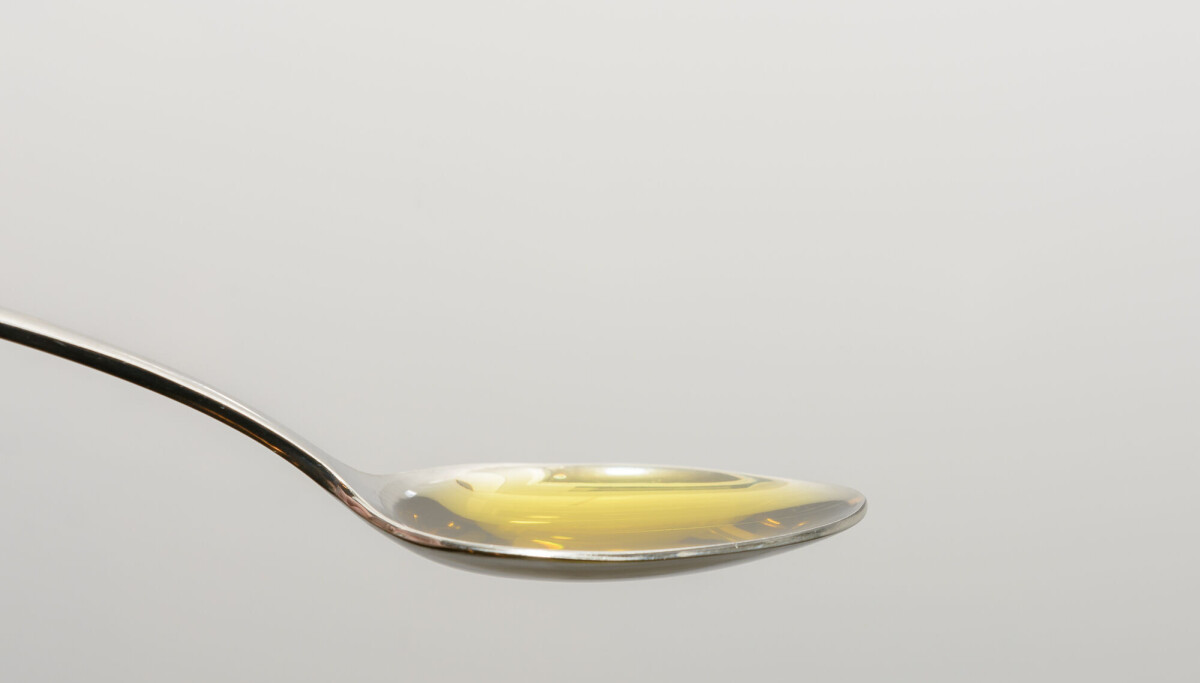
point out that the recommended amount of cod liver oil for children and adults
is five millilitres a day. That’s a large teaspoon or a child’s spoon. Children therefore ingest more environmental pollutants relative to body weight than adults.
The researchers
calculated that a one-year-old child would ingest between 43 and 332 per cent of
the tolerable weekly intake of these toxins, depending on how much contamination the cod liver oil contains.
“For young
children, cod liver oil is a significant source of environmental pollutants,” says Bjørke-Monsen.
We ingest twice the recommended amount of environmental pollutants
The particular environmental
pollutants in question are dioxins and dioxin-like PCBs, called dl-PCBs.
Food is the main source, especially fish and shellfish, followed by dairy products and meat.
“Norwegians’ intake is above the tolerable weekly intake,”
says Helle Katrine Knutsen, a toxicologist at the Norwegian Institute of Public
Health.
Norwegians are therefore consuming too much – actually twice as much as they should.
The amount of environmental pollutants we’re ingesting
The limit for
the maximum amount of environmental pollutants we should ingest per week is set
at 2 pg TE (picograms of toxic equivalents) per kilogram of body weight.
The
median intake for Norwegians, however, is 5.5 pg TE per kilo of body weight
per week, according to the Norwegian
Scientific Committee for Food and Environment. The median is the middle
number in a series of numbers that are sorted in ascending order. In this case,
the median is the Norwegian who is in the middle if everyone in Norway stood in
a row sorted by the amount of environmental pollutants ingested.
Cod liver oil accounts for around one quarter

Helle Katrine Knutsen works with risk assessment of environmental pollutants at the Norwegian Institute of Public Health.
(Photo: Simen Gald / Norwegian Institute of Public Health)
On average,
marine oils are the source of 5 per cent of the weekly intake of this type of environmental toxin, Knutsen explains. In 4-year-olds, it is 7.6
per cent and in 2-year-olds, 11 per cent.
The amount of cod
liver oil taken by the average Norwegian does not make much of a difference,
since their intake is already over the recommended limit.
But not
everyone takes cod liver oil. How much does cod liver oil add to the
contaminant intake level for those who
do?
If you are an
adult and follow the dosage on the bottle, you will get about a quarter of the
recommended maximum weekly intake of dioxins and dl-PCBs from cod liver oil,
says Knutsen – assuming average contamination levels.
For a two-year-old,
cod liver oil contributes as much as the rest of the child’s diet.
Cod liver oil therefore exposes us to environmental toxins even though it is purified, Knutsen summarises.
Levels vary between products
The Norwegian Institute
of Marine Research regularly measures environmental pollutants in fish oils on
behalf of the Norwegian Food Safety Authority.
In 2022, they
tested ten marine oils (link in Norwegian) sold as dietary supplements. None of
them contained environmental pollutants above the limit values set in Norway
and the EU, says researcher Bente Nilsen at the Institute of Marine Research.
There were low levels of heavy metals in the oils. For dioxins and dl-PCBs, the levels were
well below the legal limits.
But the amount
of environmental pollutants in the products depends on both the raw material
used and how well the oil is purified.
Cod liver oil is a Norwegian tradition
Community
medicine expert Haakon Eduard Meyer is sceptical about discouraging the use of cod liver oil.
Vitamin D is
produced when UVB rays from the sun hit the skin. But not in winter.

It’s easy to get too little vitamin D in winter, says Professor Haakon Eduard Meyer.
(Photo: University of Oslo)
“In the middle
of winter there’s no production, even on a bright sunny day, because the UVB
rays are filtered out in the atmosphere,” he says. “So we can eat
food that contains vitamin D. But only a few foods are rich sources of vitamin
D. Fatty fish is the traditional good source, followed by products that are fortified
with vitamin D.”
It’s a good
idea to take supplements if you tend to eat too little of these foods, according to Meyer.
Meyer is a
professor at the University of Oslo’s Department of Community Medicine and Global Health and a senior medical officer at the Norwegian Institute of
Public Health.
“When it comes
to vitamin D, a multivitamin tablet and cod liver oil accomplish the
same thing. You don’t have to take cod liver oil, but it’s a tradition in the
Norwegian diet. And the fact that people are used to taking it has value,” he says.
If people stop
taking cod liver oil, the question is whether they would replace it with
another source of vitamin D, says the professor.
Sceptical about being too strict
“I’m sceptical
about being too strict when it comes to cod liver oil,” says Meyer. “We know that a
good number of people get too little vitamin D, and I think it’s wise to get some of the long-chain omega-3 fatty acids as well. Then we have a
product that provides both.”
But you should not take more cod liver oil than what is stated on the bottle, he says.
Quite a lot of
Norwegians take cod liver oil.
“We need to
have good arguments if we say that people shouldn’t take it. I don’t think we
have that. There’s a lot of focus on environmental pollutants, and this is being monitored,” says Meyer.
So is cod liver
oil really that dangerous? What do these environmental toxins actually do to us?
What are dioxins and dl-PCB?
A group of 29 environmental contaminants that act the same
way in the body. They are fat-soluble organic pollutants and are stored in fatty
tissue.
In 2018, the EU
Food Safety Authority set a new tolerable intake level for these substances. It is two
picograms (2pg) of toxic equivalents (TEQ) per kilogram of body weight per
week, which is a method of measuring the overall toxicity of the various
substances.
The risk of
ingesting dioxins and dl-PCBs has
been assessed by the Norwegian Scientific Committee for Food and Environment (VKM). The environmental toxins are found especially in fish. VKM has also
conducted a risk-benefit
assessment of fish in the diet.
“It’s the next generation that’s affected”
Dioxins and
dl-PCBs are persistent, fat-soluble organic toxins that accumulate in the food chain.
You don’t
notice the symptoms yourself if you ingest too much of these substances, says
toxicologist Knutsen.
The main
problem lies in what the mother has ingested throughout her life, according to
Knutsen.
“It’s the next
generation that’s affected,” she says.
Foetuses
and baby boys who are exposed to dioxins and dl-PCBs may have reduced sperm
quality, explains Knutsen.
Tooth enamel in
children may be affected, as can the level of thyroid hormones in newborns,
according to VKM (link in Norwegian).
Health
authorities nevertheless recommend fish oil to pregnant women. If pregnant women eat
fatty fish less than two or three times a week, they should be advised to take
vitamin D supplements in the form of cod liver oil or another supplement, the Norwegian
Directorate of Health states on its website (link in Norwegian).
“Yes, cod liver
oil can be used as a source of vitamin D and omega-3 fatty acids for pregnant
women who do not eat enough fatty fish,” Thomas Berg at the Norwegian
Directorate of Health tells Science Norway.
You can read
the directorate’s entire response about environmental toxins in cod liver
oil in the fact box further down.

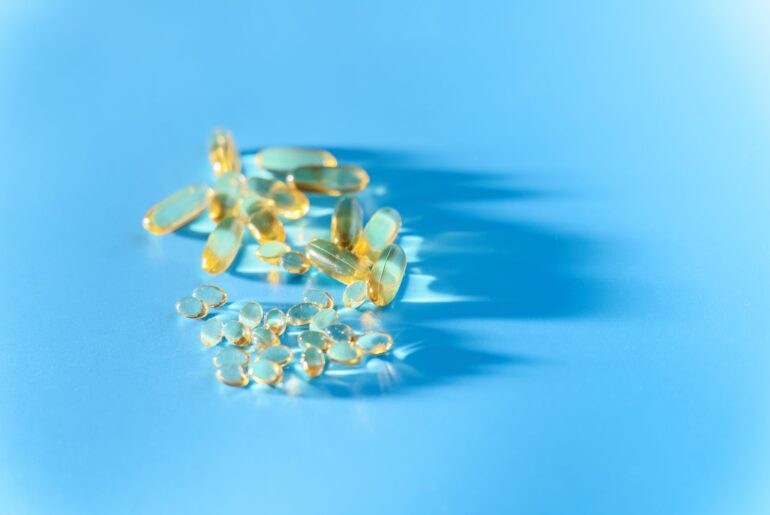
Fish oil is a popular dietary supplement in Norway. Here are various cod liver oil products from several manufacturers, both liquid oil and capsules.
(Photo: Wolfmann / Wikimedia Commons / BY-SA 4.0)
Recommends avoiding certain types
Fish oils that are not purified can have
very high levels of fat-soluble organic environmental toxins, says Bente Nilsen at the
Institute of Marine Research.
Sometimes
researchers discover fish oils with illegally high levels of pollutants, she
says. In those cases, the Norwegian Food Safety Authority will have the manufacturer
withdraw the product from the market.
According to Nilsen, well-known brands are generally safe. But she recommends
avoiding certain types of oils in which the highest levels of
toxins have repeatedly been found – especially oils made from the liver of the rabbit fish, also called rat fish.
“We have also seen that many of the marine oils with the highest levels of pollutants are
cold-pressed oils, which may be labelled ‘extra virgin’ or ‘handcrafted’,” she says.
Möller’s analyses show low and stable levels
Tone
Hagerup-Lyngvær works with quality assurance at Orkla Health, which produces Möller’s
Tran, a brand of fish oil.
“In Möller’s Tran, these
substances are purified in several steps to ensure very low levels. The
purification process is continuously monitored and verified through regular
tests at independent, accredited labs,” she says.
The levels are
well below both the EU’s limit values and the GOED industry standard,
according to Hagerup-Lyngvær.
“The figures in
the Journal of the Norwegian Medical Association article show variations in cod
liver oil in general based on historical analyses, including products with much
higher values than what is found in Möller’s Tran,” she writes in an email to Science Norway.
“Möller’s own
analyses show low and stable levels, and the exposure from our products at the
recommended dose is well within the tolerable limits defined by EFSA,” she adds.
Hagerup-Lyngvær
points out that the product Min Første Tran (my first cod liver oil) has
had among the lowest measured levels in its category in independent studies.
“Analyses
conducted for Möller’s over time show that we are in the lower range of the
tolerable limit for children for all cod liver oil types. Norwegian marine products generally have lower levels than the European average, and Möller’s
Tran does not contribute to consumers exceeding the TWI (tolerable weekly intake),” Hagerup-Lyngvær writes.
She points out
that vitamin D supplements and cod liver oil cover different needs, since cod
liver oil also contains the omega-3 fatty acids EPA and DHA.
What the Norwegian Directorate of Health says
Thomas Berg,
senior communications adviser at the Norwegian Directorate of Health, writes in
an email that the health authorities recommend that people take a child’s spoonful (about two teaspoons) of cod liver oil or other vitamin D supplements.
“If you take
cod liver oil, you should not take other supplements that contain vitamin D or
omega-3 fatty acids. We do not recommend cod liver oil for children under two
years of age,” he writes.
“Is taking
cod liver oil healthy and recommended, even if it contains some environmental toxins?”
“Most foods
contain some pollutants, including cod liver oil and fish. It’s therefore important to balance the disadvantages from toxins with other health
benefits. When it comes to fish, the public health benefits of eating 300
to 450 grams of fish per week outweigh the disadvantages, but we of course
believe that the levels of environmental toxins should be as low as possible. A study by
the Norwegian Scientific Committee for Food and the Environment shows that many
people in Norway ingest more toxins than the current limit values, but this
limit is also exceeded even without eating fish and seafood. It’s also
important to follow warnings from the Norwegian Food Safety Authority about
certain types of fish and seafood and fish from contaminated areas.”
At least 200
grams of the fish we eat per week should be fatty fish, according to Berg.
“Cod liver
oil is suggested as a source of vitamin D for pregnant women. Is this safe
considering that it will contribute to the intake of dioxins and dioxin-like
PCBs while the foetus is in the womb?”
“Yes, cod liver
oil can be used as a source of vitamin D and omega-3 fatty acids for pregnant
women who do not eat enough fatty fish. Both fish and cod liver oil may contain
some environmental toxins, but the products are purified, and the levels in
cod liver oil are within the permitted limit values set by regulations.
Cod liver oil can therefore be used, even during pregnancy.”
Stock photo at the top of the article: Shutterstock / NTB.
———
Translated by Ingrid P. Nuse