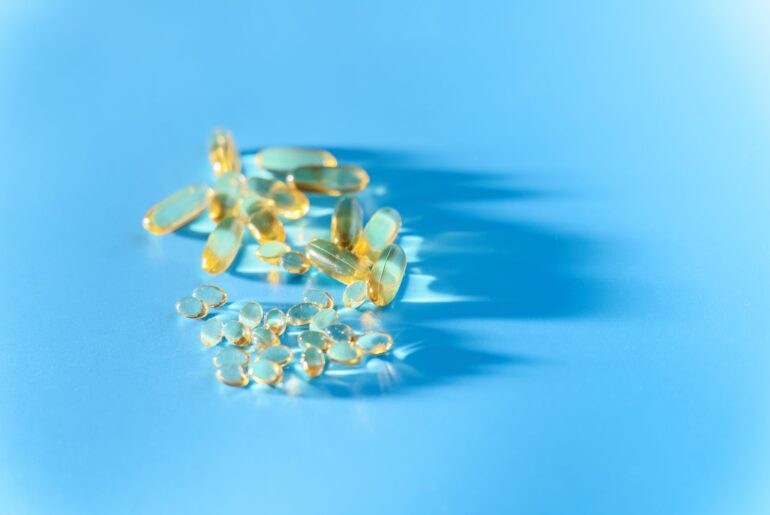
Researchers estimate chewable supplements reduced the risk of bone fractures by 10% in one year for some participants
Giving adolescents living with HIV high-dose Vitamin D and calcium supplements can help improve their bone density and reduce the risk of fractures, a new study suggests.
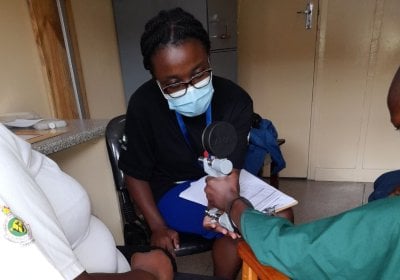
The trial involved 842 adolescents aged 11-19 years old from HIV clinics in Harare, Zimbabwe, and Lusaka, Zambia, all of whom knew their HIV status and had been taking antiretroviral therapy.
It found that, in those with insufficient vitamin D, bone mineral apparent density in the spine increased by 41% more over one year in the group taking the supplements than in the group that did not take them.
The researchers estimate that taking the supplements reduced the risk of bone fractures in this group by 10% over one year, with potential further benefits beyond that.
The trial was conducted by an international consortium including the London School of Hygiene & Tropical Medicine (LSHTM) , the Biomedical Research and Training Institute (BRTI) (Zimbabwe), University Teaching Hospital Lusaka (Zambia) as well as the Universities of Bristol and Oxford (United Kingdom) and Research Centre Borstel in Germany. The results are published in The Lancet Child & Adolescent Health.
HIV can have substantial negative impacts on how children’s bodies develop, including stunting growth, delaying puberty, decreasing muscle mass and causing low bone density, which increases the risk of bone fractures.
Previous studies in high and middle income countries suggested high doses of Vitamin D can improve the bone density and muscle power of children and adolescents with HIV. The researchers set out to test whether a high weekly dose of Vitamin D (20,000 international units) combined with a daily dose of calcium carbonate (500mg) could help improve the bones of adolescents with HIV in Africa where children tend to get less Vitamin D from their diet and where 90% of children with HIV live.
The Vitamin D and calcium carbonate supplements were taken orally in the form of chewable tablets, chosen as a cheap and safe intervention, for 48 weeks as part of a randomised, double-blinded placebo-controlled trial. Using a technique known as Dual-Energy X-ray Absorptiometry, the team focused a fine X-ray beam on participants’ spines to measure any changes to bone density.
Professor Rashida Ferrand of the London School of Hygiene & Tropical Medicine (LSHTM) and of the Biomedical research and Training Institute, Chief Investigator of VITALITY, said: “There has been increasing recognition of the substantial adverse effects of HIV on skeletal health in children. This is the first trial in Africa that provides evidence for a cheap, safe and feasible intervention to minimise these effects during adolescence- a period of rapid growth- which we anticipate will translate into benefits across the life course.”
Dr Vicky Simms of LSHTM, a co-author of the study, said: “People reach their maximum bone mass in their early 20s, and a high level of peak bone mass at that age reduces the risk of fractures throughout life and into old age, so adolescence is a key opportunity to build bone. Levels of vitamin D which might be sufficient for an adolescent in Europe without HIV are suboptimal for adolescents living with HIV in Zimbabwe and Zambia.”
Publication
Ferrand et al. Impact of high-dose vitamin D and calcium carbonate supplementation on bone density in adolescents living with HIV: a randomised controlled trial. The Lancet Child & Adolescent Health. DOI: 10.1016/S2352-4642(25)00301-3
/Public Release. This material from the originating organization/author(s) might be of the point-in-time nature, and edited for clarity, style and length. Mirage.News does not take institutional positions or sides, and all views, positions, and conclusions expressed herein are solely those of the author(s).View in full here.