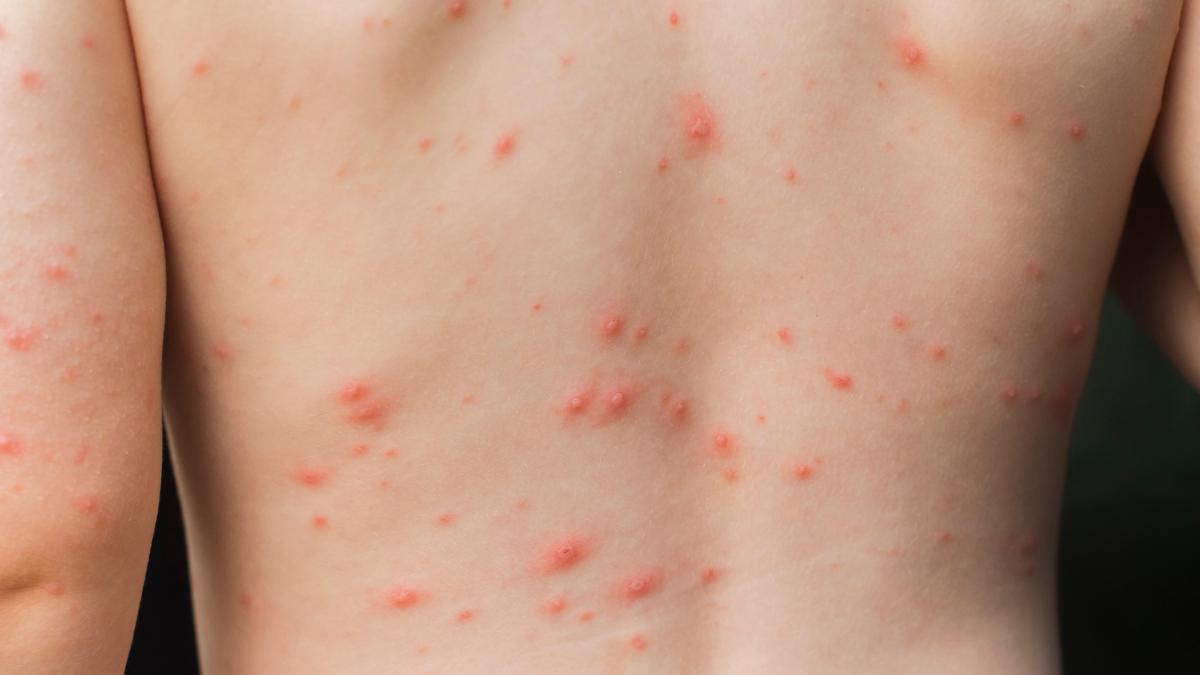
A childhood chickenpox infection — once a British rite of passage — is poised to become a thing of the past, as experts believe the country may reach herd immunity within a decade.
A chickenpox vaccination programme is beginning across the UK, and will be offered alongside the MMR jab (measles, mumps and rubella), in an immunisation called MMRV.
Dr Hannah Emmett, a consultant epidemiologist at the UK Health Security Agency (UKHSA), has said that data from modelling and other countries where the jab has already been introduced suggests that routine infections of the virus could soon be largely wiped out.
• NHS rolls out chickenpox vaccine for the first time
“We have evidence that a two-dose schedule — that’s what we’re implementing in the UK — would offer around 97 per cent effectiveness for children. That’s a really high level of effectiveness,” she said.
“We have modelling studies that we did in the UK that informed the decision to bring in this programme and those showed that we’d expect to see around a 90 per cent reduction in cases of chickenpox at five years into the programme and around 95 per cent reduction a decade into the programme,” Emmett added.
About 50 per cent of children will get chickenpox by their fifth birthday, and 90 per cent will have had it by the age of ten. While for many the virus is mild, it can make immunocompromised children very ill, and sores from the rash can become infected, leading to hospital admissions.
The vaccination against varicella zosta, the virus that causes chickenpox, has already been rolled out in several countries, including Canada and Germany.

Vaccine uptake is at a 15-year low
PATRICK T FALLON/AFP
“Another really reassuring thing from Germany’s experience [of introducing the vaccine] is they saw a reduction in cases who weren’t eligible for the vaccine because of their age. They saw a reduction in those age groups as well which implies that we’re really reducing how much is transmitting in the community — that’s your herd immunity effect,” Emmett said.
The vaccine will be offered with the present MMR jab, and the combined jab will be known as the MMRV. But for the UK to reach this level of immunity, children need to have the vaccination in the first place.
“We’re looking at the 90 to 93 per cent [vaccine uptake] mark … to meet that modelling estimate. We have seen a year-on-year decline in vaccine uptake in the UK,” Emmett added.
The uptake of the MMR vaccination has now plummeted to a 15-year low, with experts warning that herd immunity could be endangered should uptake slump any lower.
Nearly one in five children starting primary school last year were not fully protected against several serious diseases, the UKHSA reported. Uptake of both doses of the MMR jab has fallen to its lowest since 2009-10, and only 83.7 per cent of five-year-olds are fully protected.
Some 91.4 per cent of babies were given the six-in-one vaccine in 2024-25, but this was still well below the 95 per cent target recommended by the World Health Organisation to achieve herd immunity.
“I think this is a really positive moment to remind parents of the vaccine offer and there were catch-up programmes for this,” Emmett said. “It recharges some interest in vaccination and gets people booking their appointments when they’re offered.”
The vaccination could also provide more long-term benefits. The varicella zosta virus also causes shingles. Shingles is also characterised by a nasty rash, and often rears its head when the immune system is compromised in older adults.
Shingles happens when the varicella virus “reactivates” in the body. “You can’t get shingles if you’ve not had chickenpox, so we would expect to see in the fullness of time — but bearing in mind we’re looking at decades down the line here — that the cohort of children who aren’t getting chickenpox now will not get shingles when they are adults. That’s another fantastic benefit of the programme,” Emmett said.
Children born on or after January 1 last year will be offered two doses of the MMRV vaccine at 12 and 18 months. Children born between July 1, 2024, and December 31, 2024, will be offered two doses, one at 18 months and a second at three years and four months.