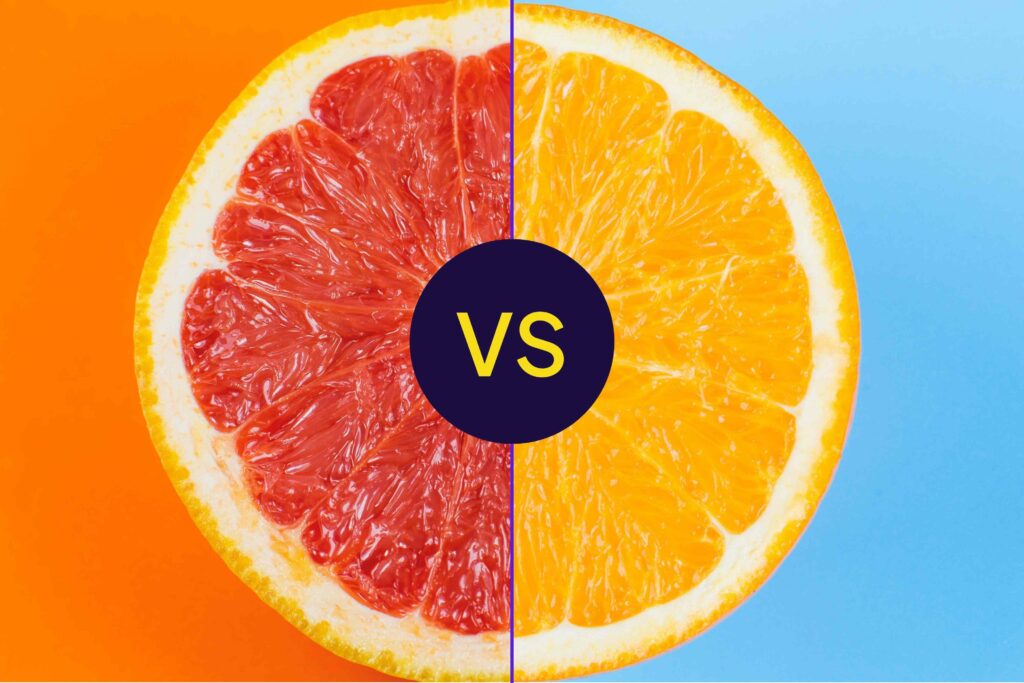
Both grapefruit and orange are citrus fruits rich in vitamin C, fiber, and antioxidants. Eating the two fruits regularly can support your immune system and overall health. However, grapefruit can interact with some medications.
Oranges win for vitamin C content. One medium orange provides about 83 milligrams, while half a grapefruit offers 39 milligrams.
The daily recommended intake of vitamin is 75 milligrams for women and 90 milligrams for men. That means one orange delivers about your entire daily requirement for vitamin C.
Both fruits are rich in vitamins, minerals, and fiber. Here’s how they compare:
Fiber
Oranges provide more fiber per serving. One medium orange contains about 2.8 grams of fiber, while half a grapefruit offers about 1.3 grams. Both amounts contribute to your daily fiber needs, which range from 25 to 38 grams per day.
Fiber supports healthy digestion and helps you feel full longer. Fiber-rich diets may lower heart disease risk by helping manage cholesterol and blood sugar levels.
Calcium
Oranges provide more than four times the calcium of grapefruit. One medium orange contains about 60 milligrams of calcium, while half a grapefruit has about 14 milligrams. Both of these amounts provide less than 10% of your daily needs, but can still contribute to your overall intake.
Your body needs calcium to build and maintain strong bones and teeth. Calcium also helps your muscles and nerves work properly.
Potassium
Oranges provide slightly more potassium than grapefruits. A medium orange has about 232 milligrams compared to 175 milligrams in half a grapefruit.
Adult men need 3,400 milligrams of potassium daily, while women need 2,600 milligrams. That requirement rises to 2,900 milligrams during pregnancy.
Your body relies on potassium for heart health. It helps maintain healthy blood pressure and enables proper communication between your nerves and muscles.
B Vitamins
Oranges contain more B vitamins overall, including higher amounts of thiamin, niacin, and folate. Both fruits provide small amounts of B6, riboflavin, and pantothenic acid.
B vitamins support energy metabolism, helping break down carbohydrates, proteins, and fats. Folate is particularly important for cell growth and DNA formation, while thiamin and niacin support nervous system health.
Oranges and grapefruits offer several benefits for heart health and disease prevention.
Heart Health
Oranges and grapefruits may support your cardiovascular system by helping manage cholesterol levels and reducing inflammation.
These fruits may reduce LDL cholesterol, often called “bad” cholesterol, and total cholesterol numbers. Lowering these levels helps prevent artery blockages that can cause heart attacks and strokes.
A recent study found that drinking orange juice daily for 60 days affected more than 1,700 genes. These genes influence blood pressure, inflammation, and metabolism. These changes could benefit long-term heart health.
Antioxidant Protection
Oranges and grapefruit are packed with antioxidants that protect your cells from damage caused by free radicals. Free radicals are unstable molecules associated with chronic disease.
In addition to vitamin C, oranges and grapefruit contain other beneficial antioxidants. Oranges are rich in hesperidin, a plant compound with anti-inflammatory properties. Hesperidin may also help lower blood pressure and cholesterol levels. Grapefruit contains naringin, another plant compound with anti-inflammatory effects.
Immunity Support
Oranges and grapefruit support your immune system primarily through vitamin C and folate. These nutrients help your body fight off infections and stay healthy.
Vitamin C helps various immune cells function properly and ensures you maintain strong immune defenses. Research suggests that vitamin C could help you recover more quickly from the common cold.
Folate also plays a role in immune function. This B vitamin is essential for DNA and protein synthesis. Without enough folate, your immune cells cannot grow and divide or fight off infections as well as they should.
One of the most critical differences between grapefruit and orange is medication interactions. Oranges are generally safe for everyone, but grapefruit requires caution if you take certain medications.
Grapefruit contains compounds called furanocoumarins. These compounds block an enzyme in your body called CYP3A4, which helps break down medications in your digestive system. When the enzyme is blocked, too much of the drug stays in your body, increasing the risk of side effects.
Grapefruit can also prevent drugs from entering cells, reducing their effectiveness. This commonly affects fexofenadine (Allegra), an antihistamine.
Check with your doctor before eating grapefruit if you take prescription medications. Common drugs that interact with grapefruit include:
Statins used to lower cholesterol
Blood pressure medications like calcium channel blockers
Immunosuppressants used to prevent organ rejection
Anti-anxiety drugs like buspirone
Corticosteroids like budesonide