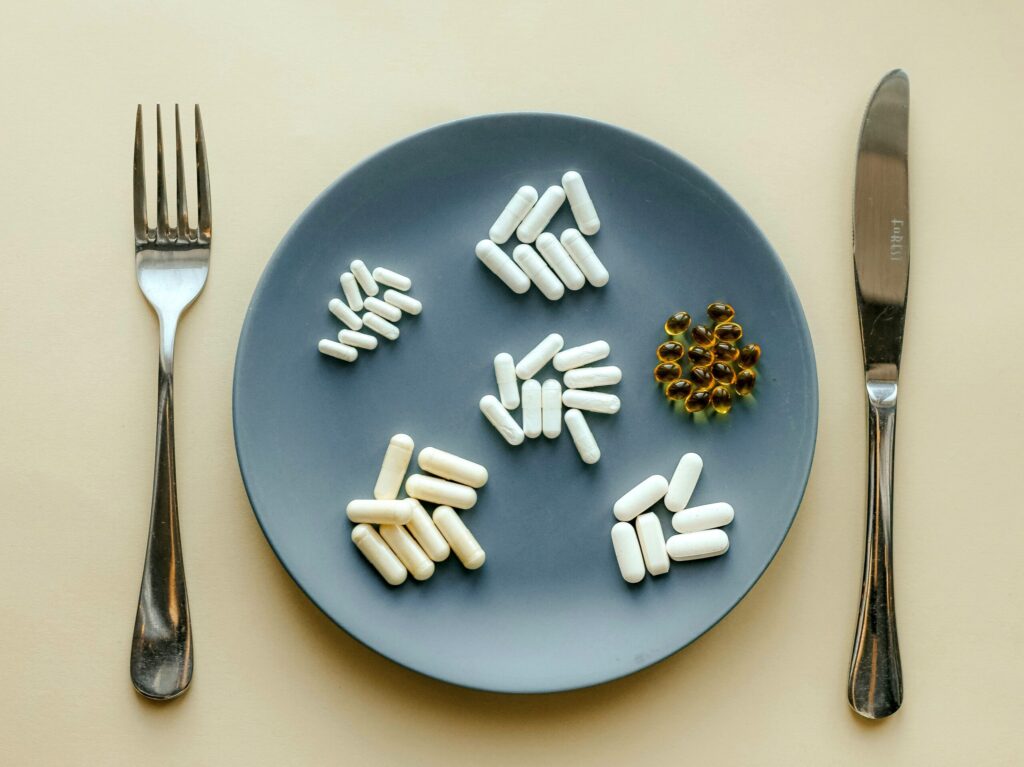
Whether it’s on TV commercials or posts by social media influencers, dietary supplements are marketed as a daily need to maintain optimal health, or as a quick fix for a range of ailments and conditions, from hair loss to weight management.
And although dietary supplements like vitamins can benefit some people, including older adults, pregnant people and individuals at risk of nutrient deficiencies, there’s little evidence that they benefit the average healthy person. Some supplements may contain contaminants that are harmful, and some may interact with prescription or over-the-counter medications.
However, these products continue to grow in popularity, including a surge during the COVID-19 pandemic.
A 2023 study published in Nutrients finds that the COVID-19 pandemic led to a significant surge in the use of dietary supplements globally, mainly for their perceived immune-boosting effects, even though there’s very little known about how effective these products are against COVID-19.
One reason for the persisting popularity of supplements in the U.S. is that it’s “just ingrained into the American society that we should be able to go and treat ourselves when we have health issues, and not have to necessarily get the advice or prescriptions from doctors,” says Dr. Pieter Cohen, an associate professor at Harvard Medical School and a national expert on dietary supplements.
Because the Food and Drug Administration does not approve dietary supplements before they’re marketed, there is no complete list of supplements sold in the U.S. There are between 80,000 to 100,000 different supplements available to consumers in the U.S., according to an estimate by the agency.
The future of supplement regulation under the current administration is still unclear. The FDA could introduce new regulatory hurdles that may not be welcomed by the industry, according to an article in Axios, published in October. Meanwhile, news reports in December suggest that the FDA may relax a warning label rule for supplements, according to NBC News.
If you’re reporting on the topic, it’s important to inform your audiences about the promises, limitations and potential harms of over-the-counter supplements.
Below, we’ve gathered credible sources of information, fact-checked data and peer-reviewed research studies to help you with your reporting. We address the following topics:
The questions are followed by two pieces of advice for journalists, five research studies about dietary supplements and more reporting resources.
What are dietary supplements?
The term “dietary supplement” was defined in the Dietary Supplement Health and Education Act of 1994 as “a product intended for ingestion that, among other requirements, contains a ‘dietary ingredient’ intended to supplement the diet.”
The term “dietary ingredient” includes:
Vitamins and minerals, such as multivitamins, individual vitamins, calcium, and iron.
Herbs and other botanicals, such as echinacea and ginger.
Amino acids, such as tryptophan and glutamine.
“Dietary substances” that are part of the food supply, such as enzymes and live microbials (commonly referred to as “probiotics”).
Concentrates, metabolite extracts, or combinations of any dietary ingredient from the categories listed above.
Dietary supplements may have two types of ingredients:
Dietary ingredients, listed above.
Other ingredients, such as fillers, binders, preservatives, sweeteners and flavorings.
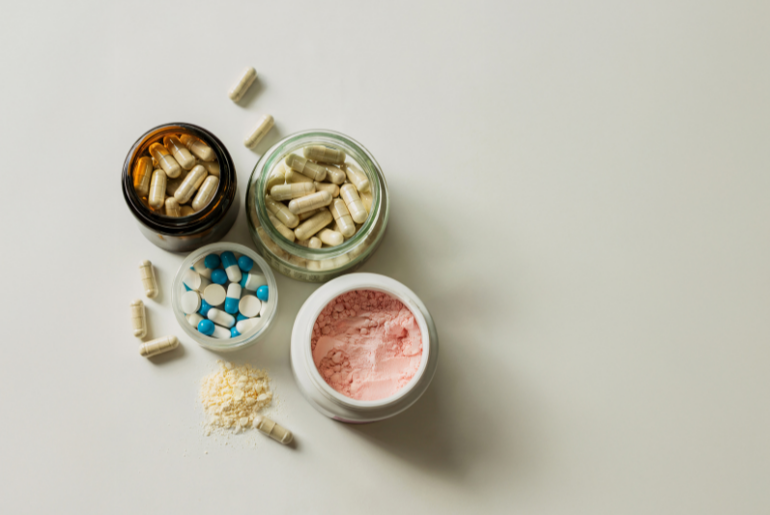
Dietary supplements may be found in many forms, such as pills, tablets, capsules, gummies, softgels, liquids, powders, teas and bars. Topicals or inhaled products are not supplements.
What are some key supplement use statistics in the U.S.?
The use of dietary supplements has been on the rise in the U.S., increasing from 50% of adults and children in 2007 to 56% in 2018, according to a 2022 survey study published in the Journal of Nutrition.
A 2024 study analyzing data from the 2011 to 2018 National Health and Nutrition Examination Survey, including a total of 12,529 participants, found that more than 70% of the respondents took dietary supplements daily. Nearly 40% said they had been taking supplements for more than five years, and 67% said they were “highly adherent to at least one supplement.”
The U.S. dietary supplements market size was estimated at $64 billion in 2024 and is projected to reach $124 billion by 2033, according to a market analysis report by Grand View Research.
The global value of the dietary supplements market was estimated to be around $152 billion in 2021, and expected to grow to $300 billion by 2028, according to a 2023 study, “A Global Overview of Dietary Supplements: Regulation, Market Trends, Usage during the COVID-19 Pandemic, and Health Effects,” published in Nutrients.
How are supplements regulated and how are the regulations enforced?
The Dietary Supplement Health and Education Act of 1994 is the main legal framework that governs supplements today, shaping debates over consumer safety, misleading health claims and whether supplements should face stricter oversight similar to drugs. DSHEA classifies supplements as a category of food rather than drugs.
The act created a distinction based on whether an ingredient was on the market prior to its passage.
Dietary ingredients marketed in the U.S. before the passage of the act are presumed safe and do not require FDA safety review.
Ingredients introduced after the act’s passage are classified as New Dietary Ingredients. This means manufacturers must submit a notification to the FDA 75 days prior to marketing, providing information on why the ingredient is “reasonably expected to be safe.”
Unlike prescription drugs, dietary supplements are not evaluated by the FDA for safety or efficacy before arriving on the market. Manufacturers are not required to perform clinical trials. “In fact, in many cases, firms can lawfully introduce dietary supplements to the market without even notifying FDA,” according to the agency.
DSHEA created a post-market or reactive regulatory approach for the FDA, placing the burden of proof on the government to show that a product is unsafe, adulterated or misbranded before it can be removed from the market.
The legislation requires supplement manufacturers to notify the agency when they introduce a new dietary ingredient into the market. But in 2022, the FDA estimated that it had not been informed about at least 3,400 new ingredients in available supplements, according to a STAT+ article.
The FDA has several enforcement tools to remove hazardous ingredients from dietary supplements. They include issuing warning letters to manufacturers, requesting or mandating that manufacturers recall products, and publishing public notices, according to a 2022 study published in JAMA.
Still, as Cohen has found in his research, some products remain on the market for years after the FDA issues warning letters about them.
The FDA and the Federal Trade Commission share responsibility for the oversight of dietary supplements and related promotion. The FDA generally is responsible for safety, quality and labeling, and the FTC is responsible for regulating advertising. Both agencies have the authority to take enforcement actions against dietary supplements and firms in case of violations.
Globally, dietary supplements are also loosely regulated and there is little agreement between countries on the definitions or terminology used to classify the supplements and regulatory requirements, according to a 2023 study published in Nutrients.
What are the benefits and harms of taking supplements?
Certain vitamins can prevent diseases that are the result of vitamin deficiencies. For instance, vitamin C can prevent scurvy and vitamin D can prevent rickets. Patients who have undergone bariatric surgery may need supplements. Lack of folic acid in pregnant people has been associated with an increased risk of certain neurological defects in babies, according to a 2021 reporting resource by SciLine, which summarizes research findings about the benefits of long-term use of supplements and vitamins.
“On the other hand, there might be extracts of particular botanicals that have no proven benefit, that are sold right next to the vitamins,” Cohen says.
Supplements can also interfere with prescription medications. For example, herbal St. John’s wort, often used for mood disorders, may interfere with the effectiveness of certain medications such as antidepressants, blood thinners, birth control pills and some cancer treatments, according to a January 2025 article in the National Institutes of Health’s MedlinePlus Magazine.
The most serious safety issue of dietary supplements is the sale or marketing of products that are adulterated with illegal or unsafe ingredients whose efficacy hasn’t been shown.
In a 2021 study, Cohen and his co-authors found several unapproved drugs, including ones that were not approved for human use in the U.S., in over-the-counter supplements marketed to improve memory and cognitive function.
In another analysis, published in JAMA Network in 2023, Cohen and his co-authors found that the labels of 89% of performance-enhancing dietary supplements did not accurately declare the ingredients that were in the products, and 12% of products contained ingredients prohibited by the FDA.
The three most problematic dietary supplement categories in the U.S are sexual enhancement supplements, weight loss supplements, and sports performance and bodybuilding supplements, according to the 2023 study.
Are dietary supplement serving sizes standardized?
No. According to the FDA, “Other than the manufacturer’s responsibility to meet the safety standards and labeling requirements for dietary supplements and to comply with current good manufacturing regulations, there are no laws or regulations that limit the serving size of a dietary supplement or the amount of a dietary ingredient that can be in a serving of a dietary supplement. This decision is made by the manufacturer and does not require FDA approval.”
What do stamps on supplement labels really tell you?
There are a variety of quality and safety stamps on the labels of dietary supplements, and not all carry the same weight.
“Most of [the stamps] are not going to be very useful,” Cohen says.
In some cases, the supplement manufacturer has paid a company to give it a stamp of approval on its label, Cohen says.
“My recommendation is to go for the third-party programs that are very solid,” he said.
Here are two organizations that Cohen trusts:
U.S. Pharmacopeia is an independent, scientific nonprofit organization focused on building trust in the supply of safe and quality medicines.
NSF is an independent organization that plays a pivotal role in the development of robust public health standards.
Advice for journalists
Cohen offered the following advice to journalists when reporting on dietary supplements.
Report on the nuances of supplements.
Certain supplements are effective at a certain dose, similar to medications.
“Let’s take creatine, for example,” which can be used to slightly increase the ability to lift weight, Cohen says.
The supplement is sometimes portrayed in news stories and other content as either great or dangerous to health, but the reality is more nuanced.
“When it comes to things that have some evidence that they work, what’s often missed is the idea that the only way something’s going to work is if you’re taking an accurately labeled product at the proper dose that has been shown in studies to be effective,” Cohen says.
“Just like a prescription medication, you wouldn’t be like, ‘Oh, let’s take Lipitor at any dose’. We know that makes no sense,” Cohen says. “It’s the same thing for all the supplements. We just need to realize they’re just like medications and take them seriously, and that part of the story is often lost.”
Remind your audience that an FDA warning letter doesn’t mean the supplement will be removed from the market right away.
The FDA’s primary responsibility is to ensure the safety and purity of dietary supplements after they are marketed and to remove any product that may be potentially dangerous to consumers from the market, according to a 2023 study published in the journal Nutrients.
But researchers like Cohen, who study supplements, say that some products remain on the market for years after the FDA issued warning letters about them.
“The FDA has not been doing its job to even use the laws it does have to ensure the safety of supplements,” for the last several decades, Cohen says. “So people need to understand that the FDA has not, historically and will continue not to be, responsible in terms of doing its little part in trying to ensure a little bit of supplement safety.”
In a 2022 study, listed below, Cohen and his co-authors find that nine of the 31 products they analyzed remained available for purchase online for an average of 6 years after the FDA issued warning letters.
Five research studies to consider
Recalls, Availability, and Content of Dietary Supplements Following FDA Warning Letters
Pieter A Cohen, Bharathi Avula, Kumar Katragunta, and Ikhlas Khan. JAMA, July 2022.
This study investigates whether dietary supplements that received FDA warning letters for containing prohibited stimulants, such as amphetamine-like substances, were recalled, removed from the market, or became free of banned ingredients.
Researchers identified 31 supplements that had received FDA warning letters for the presence of three prohibited stimulants: amphetamine analogue β-methylphenethylamine (BMPEA), the ephedrine analogue methylsynephrine (Oxilofrine), or dimethylamylamine analogue octodrine (DMHA or octodrine). The FDA issued warning letters for these stimulants in 2015, 2016, and 2019, respectively, mandating that manufacturers inform the FDA of the steps the firm will take to correct the violation and prevent similar violations in the future.
Of these 31 products, one was recalled by the manufacturer. Nine of the 31 products — 29% — remained available for purchase online for an average of 6 years after the FDA issued warning letters.
The results may not be generalizable to all dietary supplements subject to FDA warning letters. It’s also not clear whether the presence of adulterants might vary from batch to batch or over time.
Vitamin, Mineral, and Multivitamin Supplementation to Prevent Cardiovascular Disease and Cancer: Preventive Medication
Elizabeth O’Connor, et al. U.S. Preventive Services Task Force, June 2022.
Across 84 studies with a total of 739,803 participants, the researchers found that common supplements, including vitamin D, vitamin E, calcium, vitamin C, B vitamins, magnesium, selenium and zinc, generally do not reduce the risk of cardiovascular disease, cancer or death.
Use of multivitamins was associated with a very small reduction in the overall risk of cancer and a small decrease in lung cancer.
Consuming beta carotene supplements increases the risk of lung cancer, especially among smokers or in people exposed to asbestos. It also increased the risk of cardiovascular death.
Use of other vitamins also carries risk. For instance, the use of vitamin E was associated with an increased risk of hemorrhagic stroke. Use of 1,000 units or more of vitamin D was associated with an increased risk of kidney stones.
Dietary Supplements — For Whom? The Current State of Knowledge about the Health Effects of Selected Supplement Use
Regina Ewa Wierzejska. International Journal of Environmental Research and Public Health, August 2021.
The goal of this scoping review is to present what is known about the effects of using selected dietary supplements for chronic diseases and the risks associated with their use.
The author’s review of literature shows that vitamin and mineral supplements neither lower the risk of cardiovascular diseases nor prevent the development of cancers in healthy people.
Most of the randomized controlled trials analyzed in this review found that vitamin and mineral supplements do not lower the risk of cardiovascular diseases and cancer.
For weight loss supplements, the use either has a marginal benefit or is completely ineffective. Meanwhile, their side effects and the risk of contamination with illegal substances remain concerning.
Label Statements and Perceived Health Benefits of Dietary Supplements
Joanna Nicole Assadourian, Eric D. Peterson, and Ann Marie Navar. JAMA Network Open, September 2025.
Researchers conducted two online surveys of U.S. adults, one for a fish oil supplement (2,239 participants) and one for a fictional supplement called Viadin H (2,164 participants).
For each survey, participants were randomized to one of four labels that were otherwise identical but had different health-related statements on the label. The surveys were conducted between January and March 2024.
Participants exposed to claims that included heart-related words, or brain health or cognitive function wording on labels, were more likely to believe the supplement did what they claimed, even for the fictional supplement.
The results show that consumers often interpret vague label statements as implying disease prevention or treatment benefits, even though such wording is not intended to imply specific effects on disease prevention under FDA rules.
A Global Overview of Dietary Supplements: Regulation, Market Trends, Usage during the COVID-19 Pandemic, and Health Effects
Ouarda Djaoudene, et al. Nutrients, July 2023.
This overview provides a global comparison of supplement regulation and cross-border sales.
The authors provide market numbers, growth trends and usage statistics.
In addition, the study examines how the COVID-19 pandemic affected supplement use globally.
Additional resources
Read SciLine’s 2021 Reporting Resource for more information on dietary supplements. SciLine is a free, nonpartisan service, based at the American Association for the Advancement of Science, helping journalists and scientists work together to bring accurate, research-based science into news reporting.
“Institutionalizing Misinformation — The Dietary Supplement Listing Act of 2022,” a perspective by Pieter A. Cohen, Jerry Avorn, and Aaron S. Kesselheim, published in the New England Journal of Medicine in May 2022, argues that the proposed Dietary Supplement Listing Act of 2022 is unlikely to improve consumer safety.
“Does Regulating Dietary Supplements as Food in a World of Social Media Influencers Promote Public Safety?” by Joshua J. Klein and Scott J. Schweikart, published in the AMA Journal of Ethics in May 2022, argues that the current supplement regulatory framework creates weaknesses, especially in the context of social media influencer marketing, and may undermine consumer protection and public safety.
The FDA’s Information for Consumers on Using Dietary Supplements page has answers to common questions about supplements.
Listen to this 2024 FDA podcast called Q&A with FDA, where Dr. Cara Welch, the then-director of the FDA’s Office of Dietary Supplement Programs, answers some of the common questions about dietary supplements.
“What doctors wish patients knew about vitamins and supplements,” an article on the American Medical Association’s News Wire, provides an overview of the topic in an interview with three physicians.
Listen to (or read the transcript of) Dr. Cohen’s 2021 interview with AMA’s Moving Medicine video series to learn more about dietary supplements.
This article first appeared on The Journalist’s Resource and is republished here under a Creative Commons Attribution-NoDerivatives 4.0 International License.