Women’s Wellness Products Market Summary
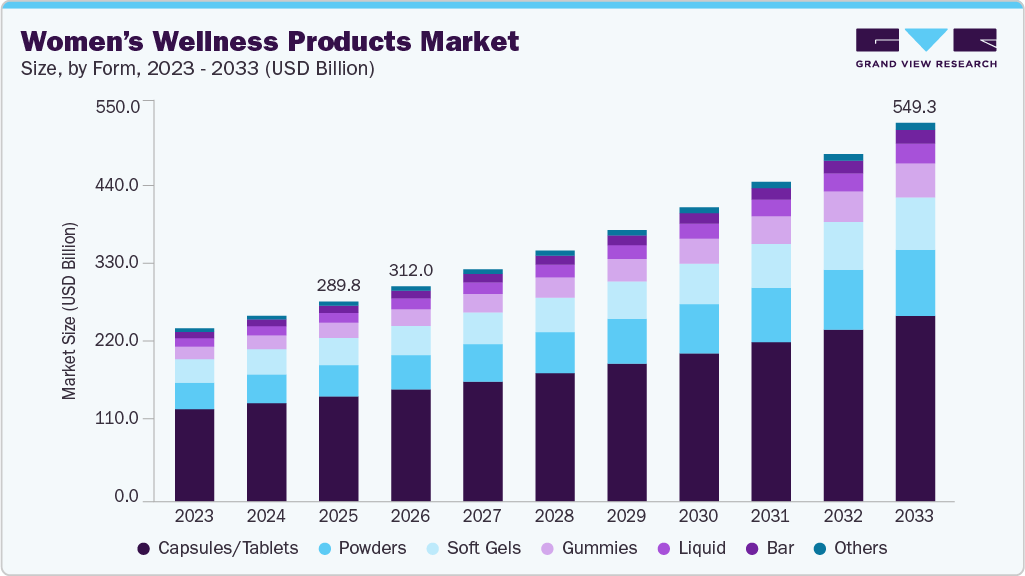
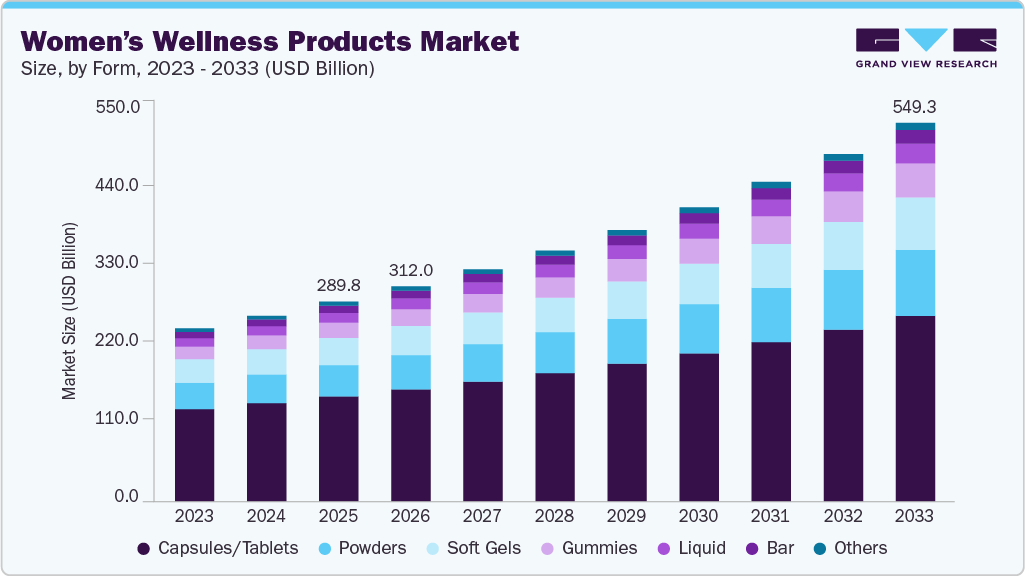
The global women’s wellness products market size was estimated at USD 289.77 billion in 2025 and is projected to reach USD 549.35 billion by 2033, growing at a CAGR of 8.4% from 2026 to 2033. The market is being propelled by a convergence of socio-economic, health, and technological factors that reflect shifting consumer priorities and broader demographic changes.
Key Market Trends & Insights
North America dominated the global women’s wellness products market in 2025 with a share of 35.48%.
The women’s wellness products market in the U.S. is projected to grow at a CAGR of 7.1% from 2026 to 2033.
Based on type, the functional food & beverages segment accounted for a share of 57.38% in 2025.
Based on form, gummies are expected to witness a CAGR of 10.7% from 2026 to 2033.
By application, the reproductive & hormonal health segment accounted for a share of 24.07% in 2025.
Key Market Trends & Insights
2025 Market Size: USD 289.77 Billion
2033 Projected Market Size: USD 549.35 Billion
CAGR (2026-2033): 8.4%
North America: Largest market in 2025
A primary driver is the growing awareness and proactive approach toward women’s health and preventive care. As education levels rise and conversations around reproductive health, menstrual hygiene, fertility challenges, menopause symptoms, and chronic conditions become less stigmatized, women are increasingly seeking products tailored to their unique physiological needs, from menstrual care and reproductive support to supplements that aid hormonal balance and bone health. This heightened health consciousness is supported by global health campaigns and information access through digital platforms, encouraging regular use of preventive wellness products and early screening tools.
The rapid expansion of femtech, including wearable health devices, mobile apps for cycle tracking, telemedicine interfaces, and AI-driven personalized wellness solutions, is redefining how women monitor and manage their health. Products that offer personalized insights based on biomarkers, hormonal cycles, or lifestyle data are gaining traction, especially among younger, digitally savvy consumers. E-commerce platforms and direct-to-consumer models have further enhanced accessibility and convenience, underpinning sustained growth in online sales and subscription services for wellness supplements and products.
Consumer preferences are also evolving toward natural, organic, and multifunctional formulations. There is a marked shift toward clean-label, plant-based options, especially in nutritional supplements, intimate care, and beauty-wellness hybrids that promise both internal health benefits and external aesthetic enhancements. Sustainability and eco-conscious packaging are increasingly influencing purchasing decisions, aligning with broader trends in conscious consumerism. At the same time, innovations addressing life-stage needs such as postnatal recovery and menopause support are expanding market scope and demographic reach.
Finally, rising disposable incomes and greater financial independence among women worldwide are enabling higher investment in premium wellness products. Emerging markets in Asia-Pacific and Latin America are witnessing rapid uptake as urbanization and healthcare infrastructure improvements increase product availability. Coupled with impactful social media advocacy and influencer-driven engagement, these trends collectively signal a robust future trajectory for the market.
Consumer Insight
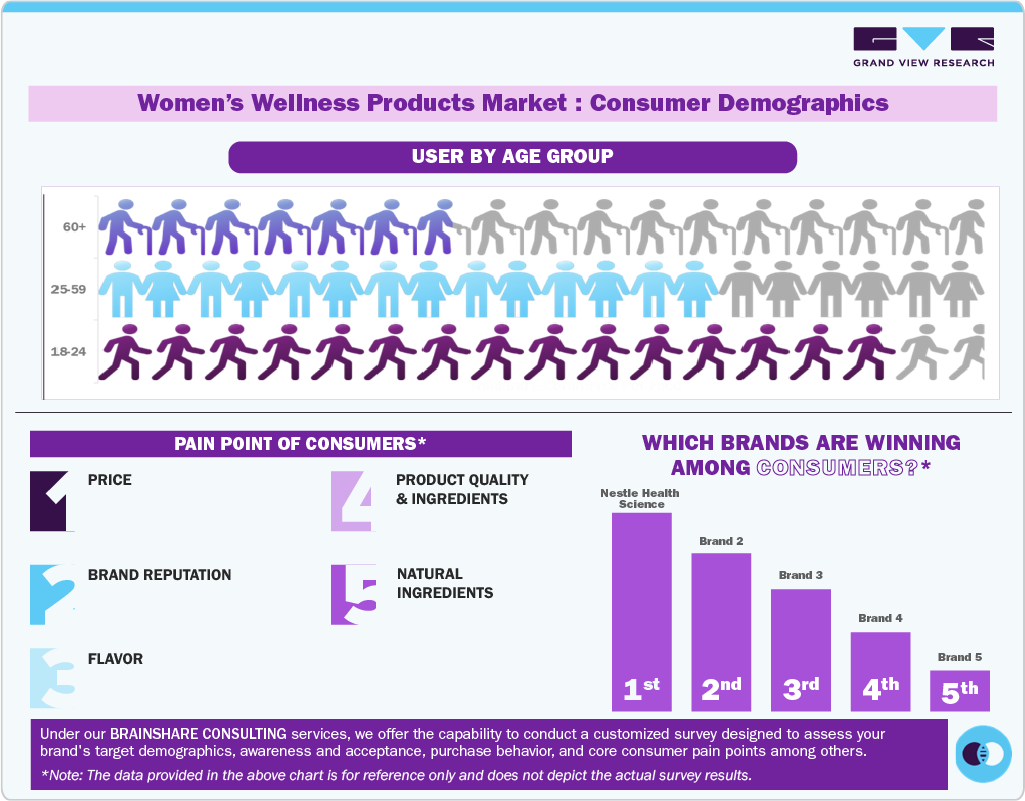
Consumer insights for the market by age reveal distinct preferences and purchasing behaviors across different age groups. Millennial women (25-40 years) are the largest adopters of wellness supplements, functional foods, and beauty‑from‑within products, prioritizing immunity, energy, and mental wellness, often influenced by social media, influencers, and e-commerce convenience. Gen Z consumers (18-24 years) are increasingly exploring plant-based, clean-label, and personalized wellness solutions, with a focus on sustainability and holistic self-care. Women aged 41-60 prioritize hormonal balance, bone health, and cardiovascular wellness, seeking clinically validated supplements and trusted brands. Older women (60+) focus on joint health, digestive support, and overall longevity, often relying on recommendations from healthcare providers. Across all groups, convenience, transparency, and scientifically backed claims are key purchase drivers.
Type Insights
Functional food & beverages for women’s wellness accounted for the largest share of 57.38% of the global revenues in 2025, driven by rising demand for convenient, nutrition-focused solutions addressing hormonal balance, gut health, bone strength, and energy management. Products such as fortified dairy alternatives, probiotic drinks, herbal teas, protein blends, and collagen-infused beverages are increasingly preferred as part of daily routines rather than medicinal interventions. Growing awareness of preventive health, clean-label formulations, and personalized nutrition has further accelerated adoption. In addition, strong penetration of functional beverages through e-commerce and modern retail channels continues to reinforce this segment’s market dominance.
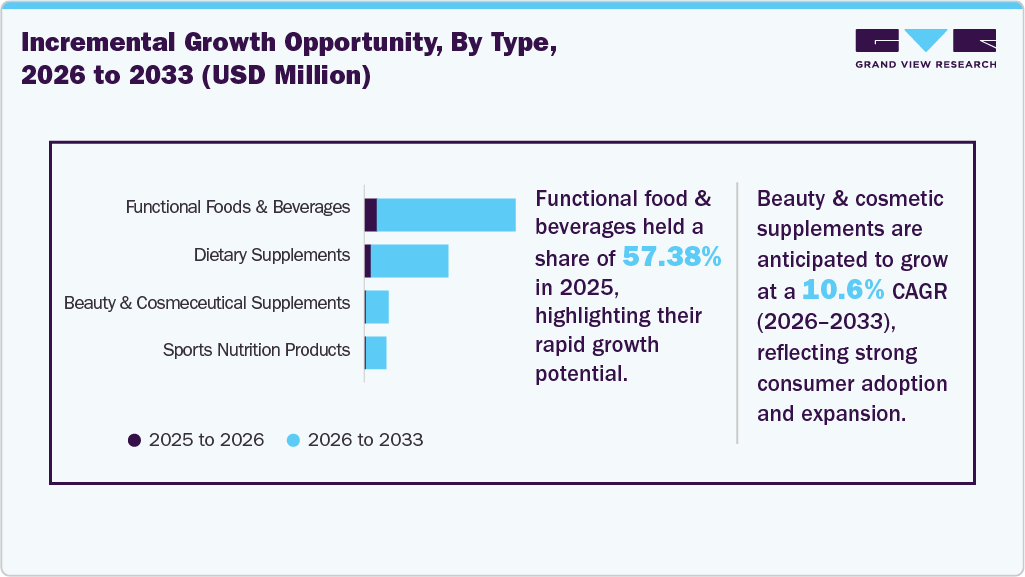
The demand for beauty & cosmeceutical supplements is expected to grow at a CAGR of 10.6% from 2026 to 2033 in the women’s wellness industry, driven by increasing consumer focus on holistic beauty, skin health, and age-defying solutions. Women are increasingly adopting ingestible beauty products such as collagen peptides, biotin, hyaluronic acid, and antioxidant blends that support skin radiance, hair strength, and nail health from within. The rising influence of social media, dermatologist-backed claims, and clean-label, science-driven formulations is further accelerating adoption, particularly among urban and digitally engaged consumers seeking preventive and long-term beauty wellness benefits.
Form Insight
The capsule and tablet form dominated the market, with a revenue share of 52.49% in 2025, owing to their convenience, precise dosage, and longer shelf life compared to alternative formats. These forms are widely preferred for daily supplementation addressing hormonal balance, bone health, immunity, and prenatal nutrition. Strong consumer trust in pharmaceutical-style delivery, ease of storage, and broad availability across pharmacies and online channels have further supported adoption. In addition, manufacturers favor capsules and tablets due to formulation stability, scalability, and cost efficiency, reinforcing their continued dominance across both developed and emerging women’s wellness markets.
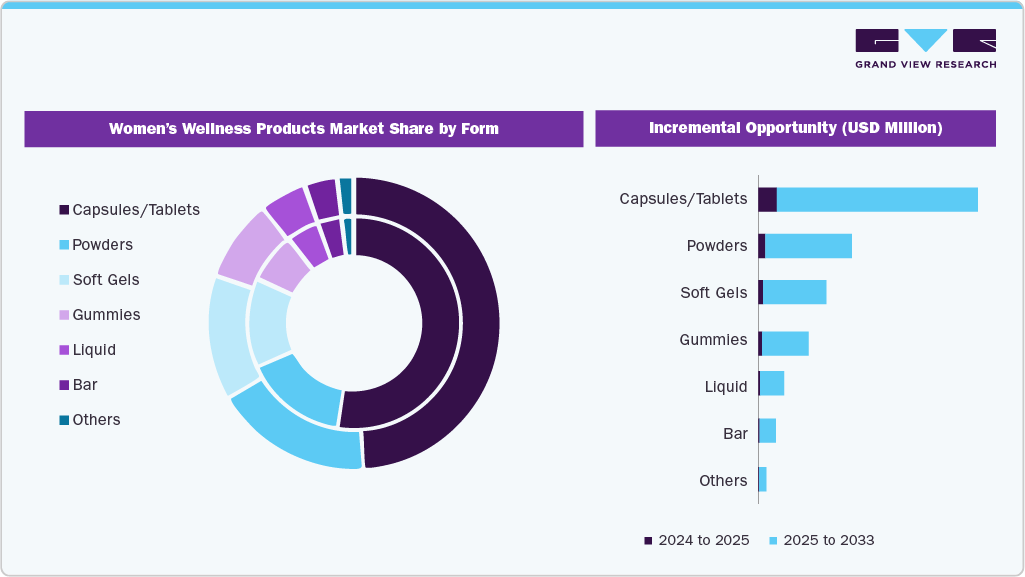
The gummies segment is expected to grow at a CAGR of 10.7% from 2026 to 2033, driven by rising consumer preference for palatable, easy-to-consume supplement formats. Gummies appeal strongly to younger demographics and first-time users who seek alternatives to traditional pills, particularly for beauty, immunity, and stress-relief applications. Innovations in low-sugar, vegan, and clean-label formulations have expanded their acceptance among health-conscious consumers. In addition, attractive packaging, flavor variety, and strong marketing through social media and e-commerce platforms are further accelerating the adoption of gummy-based women’s wellness products.
Distribution Channel Insights
The sales of women’s wellness products through the offline channel accounted for a share of 76.19% in 2025, driven by strong consumer trust in pharmacies, health stores, and retail chains for product authenticity and expert guidance. Traditional retail continues to dominate due to the widespread presence of supermarkets, drugstores, and specialty stores offering a broad range of dietary supplements, functional foods, and beauty-focused wellness products. Consumers often prefer in-store experiences for personalized advice, product trials, and immediate availability. In addition, established distribution networks, promotional campaigns, and loyalty programs reinforce offline sales, particularly in regions with limited digital penetration or where personal interaction remains a key factor in purchasing decisions.
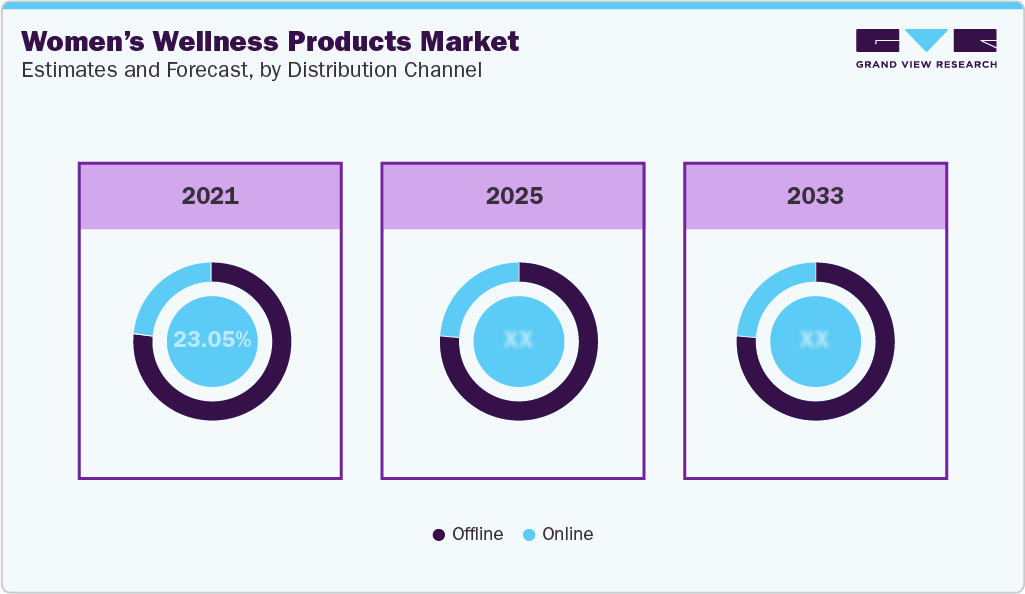
The sales of women’s wellness products through online channels are expected to grow at a CAGR of 9.3% from 2026 to 2033, driven by increasing health awareness, convenience, and the rising adoption of e-commerce platforms. Consumers are increasingly turning to online channels for purchasing vitamins, dietary supplements, probiotics, and beauty‑from‑within products that support hormonal balance, immunity, and overall wellness. Social media, influencer marketing, and personalized recommendation engines are further accelerating online sales. In addition, subscription-based models and direct-to-consumer strategies allow brands to engage with consumers more effectively, offering tailored wellness solutions and regular product deliveries, thereby boosting market penetration and fostering long-term customer loyalty in the women’s wellness segment.
Application Insights
The reproductive and hormonal health application accounted for the largest share of 24.07% in 2025, reflecting heightened awareness of menstrual health, fertility management, pregnancy support, and menopause care. Increasing diagnosis of hormonal imbalances, polycystic ovary syndrome (PCOS), and fertility-related issues has driven demand for targeted supplements, functional foods, and therapeutic products. Greater openness around reproductive health discussions, supported by digital health platforms and medical guidance, has further encouraged product adoption. In addition, growing emphasis on preventive care and personalized hormonal solutions across different life stages continues to strengthen this segment’s leading position in the market.
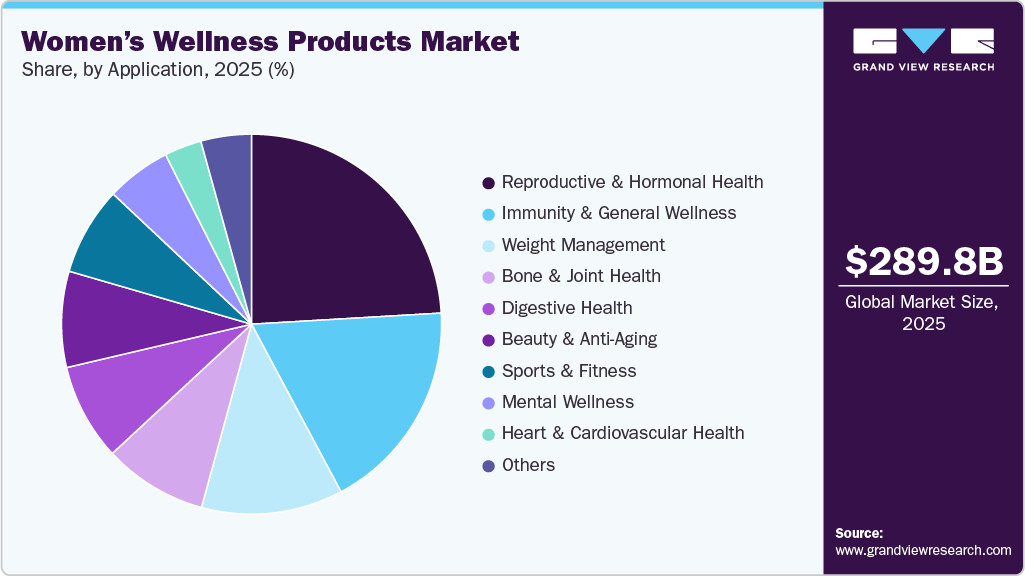
Women’s wellness products for mental wellness are projected to grow at a CAGR of 9.8% from 2026 to 2033, driven by increasing awareness of stress, anxiety, sleep disorders, and mood-related challenges among women. Rising workplace pressures, digital fatigue, and lifestyle changes have heightened demand for supplements and functional products containing adaptogens, magnesium, omega-3s, and herbal extracts. Greater acceptance of mental health care, along with growing preference for natural and preventive solutions, is supporting market expansion. In addition, endorsements from healthcare professionals and strong online marketing are accelerating adoption across diverse age groups.
Regional Insights
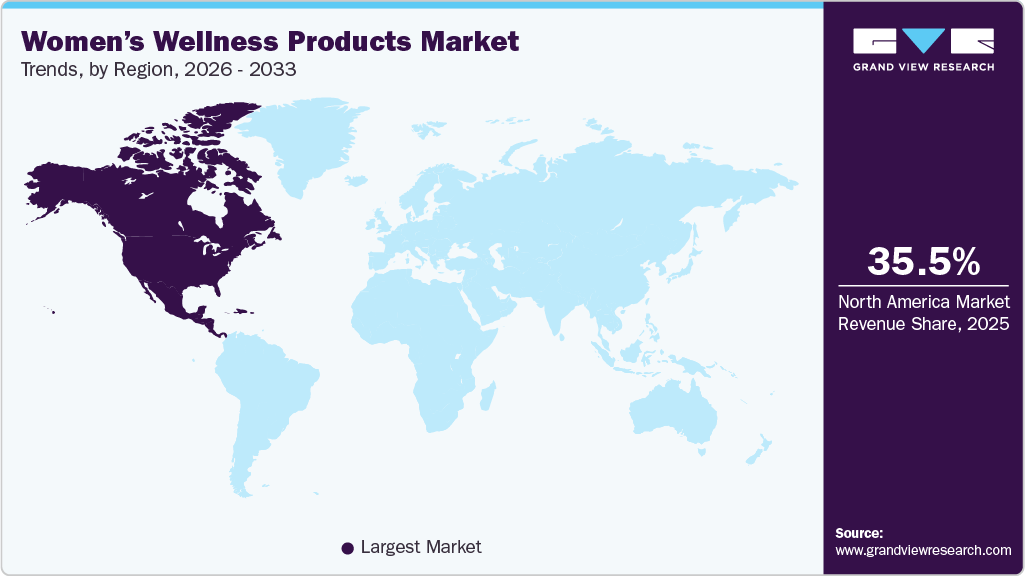
The market in North America accounted for 35.48% of global revenue in 2025, driven by high consumer awareness, strong purchasing power, and advanced healthcare infrastructure. Women in the region demonstrate a proactive approach toward preventive health, fueling demand for supplements, functional foods, mental wellness products, and reproductive health solutions. Widespread acceptance of personalized nutrition, clean-label formulations, and science-backed wellness products has further supported market growth. The strong presence of leading wellness brands, extensive product innovation, and effective marketing through digital platforms and influencers also contribute to regional dominance. In addition, well-established e-commerce channels and retail pharmacies ensure easy product accessibility. Growing focus on mental health, hormonal balance, and healthy aging, along with increasing participation of women in the workforce, continues to drive sustained demand, positioning North America as a mature yet rapidly evolving hub for women’s wellness solutions.
U.S. Women’s Wellness Products Market Trends
The women’s wellness products market in the U.S. is projected to grow at a CAGR of 7.1% from 2026 to 2033, supported by increasing emphasis on preventive healthcare and holistic well-being. Rising awareness of hormonal health, mental wellness, fertility management, and healthy aging is driving sustained demand for supplements, functional foods, and lifestyle-oriented wellness solutions. Consumers are increasingly seeking personalized, clean-label, and clinically supported products, encouraging continuous innovation among manufacturers. The strong influence of digital health platforms, subscription-based models, and e-commerce channels is enhancing product accessibility and engagement. In addition, growing acceptance of mental health support and beauty-from-within concepts continues to expand the scope of women’s wellness offerings across diverse age groups.
Europe Women’s Wellness Products Market Trends
The women’s wellness products market in Europe is projected to grow at a CAGR of 7.7% from 2026 to 2033, driven by increasing health awareness, an aging female population, and strong demand for preventive and natural healthcare solutions. European consumers show a high preference for organic, clean-label, and sustainably sourced wellness products, particularly in supplements, functional foods, and intimate care. Supportive regulatory frameworks, along with rising focus on menopause management, mental well-being, and hormonal balance, are further fueling growth. In addition, expanding e-commerce adoption, growing femtech innovation, and the strong presence of established wellness brands continue to strengthen market expansion across key European countries.
The UK women’s wellness products market is projected to grow at a CAGR of 7.8% from 2026 to 2033, supported by increasing awareness of preventive healthcare, mental well-being, and hormonal health among women. Rising demand for clean-label, plant-based, and science-backed supplements is driving adoption across reproductive, beauty, and mental wellness categories. The growing openness around menopause care and fertility management, along with strong support from healthcare professionals, is further accelerating market growth. In addition, expanding e-commerce platforms, subscription-based wellness services, and the influence of digital health campaigns continue to enhance product accessibility and consumer engagement across the market.
Asia Pacific Women’s Wellness Products Market Trends
The women’s wellness products market in the Asia Pacific is projected to grow at a CAGR of 10.0% from 2026 to 2033, driven by rising health awareness, rapid urbanization, and increasing disposable incomes across emerging economies such as China, India, and Southeast Asia. Growing participation of women in the workforce and changing lifestyle patterns are fueling demand for nutritional supplements, functional foods, and reproductive health products. Expanding access to digital health platforms, e-commerce, and social media education is improving awareness and product reach. In addition, strong cultural acceptance of herbal and traditional wellness ingredients, combined with ongoing product innovation, continues to support robust regional market growth.
Central & South America Women’s Wellness Products Market Trends
The women’s wellness products market in Central & South America is projected to grow at a CAGR of 8.6% from 2026 to 2033. supported by improving healthcare awareness and expanding access to wellness products across urban areas. Rising disposable incomes and a growing middle-class population are encouraging greater spending on nutritional supplements, beauty wellness, and reproductive health products. Increased focus on preventive care, along with the influence of social media and wellness education campaigns, is further driving demand. In addition, the gradual expansion of e-commerce and pharmacy retail networks is enhancing product availability, supporting sustained market growth across the region.
Middle East & Africa Women’s Wellness Products Market Trends
The women’s wellness products market in the Middle East & Africa is projected to grow at a CAGR of 8.8% from 2026 to 2033, driven by rising awareness of women’s health, improving healthcare infrastructure, and increasing participation of women in the workforce. Growing demand for nutritional supplements, reproductive health products, and beauty wellness solutions is supported by urbanization and higher disposable incomes in key markets. Cultural shifts toward preventive care, along with greater acceptance of natural and herbal formulations, are further accelerating adoption. In addition, the expansion of pharmacy chains, digital health platforms, and e-commerce channels is enhancing product accessibility across the region.
Key Women’s Wellness Products Company Insights
Established companies and emerging players in the market are fostering a highly competitive landscape by focusing on product innovation, quality enhancement, and strategic pricing strategies. This competition is fueled by continuous investments in advanced processing technologies, automation, and a skilled workforce to maintain operational efficiency and comply with stringent regulatory standards.
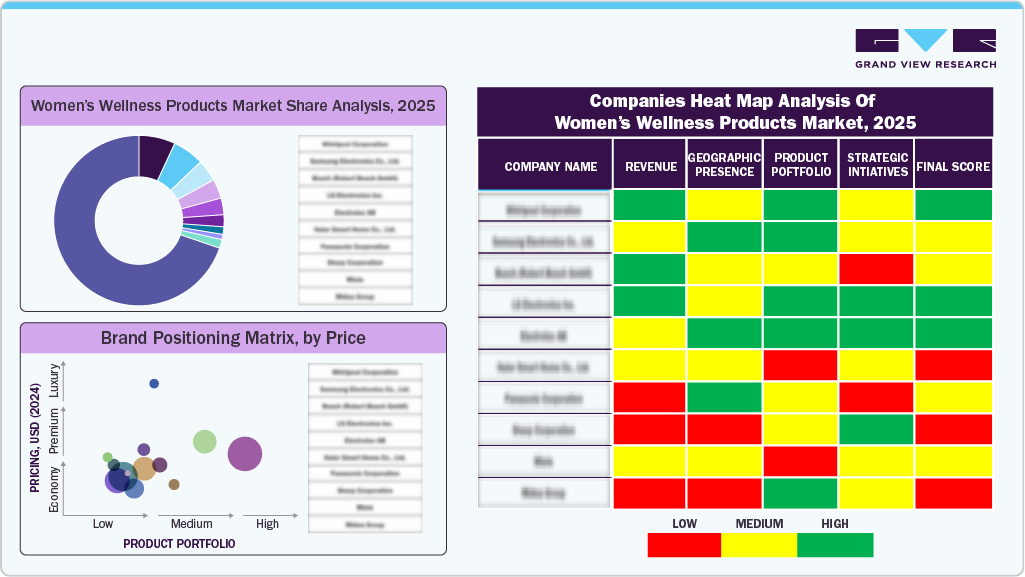
Key Women’s Wellness Products Companies:
The following are the leading companies in the women’s wellness products market. These companies collectively hold the largest market share and dictate industry trends.
Amway Corp
Herbalife Nutrition Ltd
GNC Holding, Inc
Bayer AG
Nestlé Health Science
Blackmores Limited
Swisse Wellness Pty. Ltd
Advanced Enzyme Technologies
Nu Skin Enterprises, Inc
Prozis
Recent Developments
In November 2025, GNC expanded its wellness portfolio with the nationwide launch of Mojo Energy & Focus Gummies, formulated with adaptogens and botanical nootropics for sustained energy and cognitive support.
In September 2025, Beacon Wellness Brands rolled out a new lineup of menopause‑focused products, including vaginal gels, libido patches, sleep sprays, and energy support patches, available online from Sept. 16 and in major retailers from Oct. 1, 2025. This collection targets peri‑, mid‑, and post‑menopause relief with hormone‑free, clean formulations.
In September 2025, Iris Nutrition launched an electrolyte drink mix tailored for women, formulated with vitamin B6, folic acid, magnesium, and a clinically studied myo‑ and d‑chiro‑inositol blend to support hormonal balance, energy, mood resilience, and gut health. The on‑the‑go mixes are offered in flavors like Blood Orange, Blackberry, and Lemon Raspberry, designed to make hydration and cycle support convenient.
Women’s Wellness Products Market Report Scope
Report Attribute
Details
Market size value in 2026
USD 312.02 billion
Revenue Forecast in 2033
USD 549.35 billion
Growth rate
CAGR of 8.4% from 2026 to 2033
Actuals
2021 – 2025
Forecast period
2026 – 2033
Quantitative units
Revenue in USD million/billion, and CAGR from 2026 to 2033
Report coverage
Revenue forecast, company ranking, competitive landscape, growth factors, and trends
Segments covered
Type, form, application, distribution channel, region
Regional scope
North America; Europe; Asia Pacific; Central & South America; Middle East & Africa
Country scope
U.S.; Canada; Mexico; Germany; France; Italy; UK; Spain; China; India; Japan; Australia & New Zealand; South Korea; Brazil; Argentina; South Africa
Key companies profiled
Amway Corp.; Herbalife Nutrition Ltd; GNC Holding, Inc; Bayer AG.; Nestlé Health Science; Blackmores Limited.; Swisse Wellness Pty. Ltd; Advanced Enzyme Technologies; Nu Skin Enterprises, Inc; Prozis
Customization scope
Free report customization (equivalent up to 8 analysts’ working days) with purchase. Addition or alteration to country, regional & segment scope.
Pricing and purchase options
Avail customized purchase options to meet your exact research needs. Explore purchase options
Global Women’s Wellness Products Market Report Segmentation
This report forecasts revenue growth at global, regional & country levels and provides an analysis of the latest trends and opportunities in each of the sub-segment from 2021 to 2033. For this study, Grand View Research has segmented the global women’s wellness products market based on type, form, application, distribution channel, and region:
Type Outlook (Revenue, USD Million, 2021 – 2033)
Dietary Supplements
Vitamins
Multivitamins
Vitamin D
B-Complex
Vitamin C
Standard Vitamin C
Liposomal Vitamin C
Others
Minerals
Iron
Calcium
Magnesium
Zinc
Others
Protein Supplements
Whey Protein
Standard Whey Protein
Grass-Fed Whey Protein
Plant Protein
Clear Protein
Others
Omega Fatty Acids
Krill Oil
Fish Oil
Flaxseed Oil
Others
Probiotics & Prebiotics
Herbal & Botanical Supplements
Ashwagandha
Maca Root
Evening Primrose Oil
Irish Sea Moss
Berberine
Rhodiola
Holy Basil
Others
Women’s Hormone Health Supplements
Amino Acids & BCAAs
NAC (N-Acetyl Cysteine)
L-Theanine
L-Tyrosine
L-Carnitine
Others
Nootropics & Cognitive Support
Bacopa
Lion’s Mane
Others
Longevity & Cellular Health Supplements
Others
Functional Foods & Beverages
Beauty & Cosmeceutical Supplements
Sports Nutrition Products
Pre-Workout Supplements
Post-Workout Recovery Products
Energy & Endurance Boosters
Muscle Building Supplements
Electrolyte & Hydration Products
Electrolyte Powders
Hydration Supplements
Others
Form Outlook (Revenue, USD Million, 2021 – 2033)
Capsules/Tablets
Powder
Liquid
Soft Gels
Bars
Gummies
Others
Application Outlook (Revenue, USD Million, 2021 – 2033)
Reproductive & Hormonal Health
Bone & Joint Health
Weight Management
Sports & Fitness
Beauty & Anti-Aging
Digestive Health
Mental Wellness
Immunity & General Wellness
Heart & Cardiovascular Health
Others
Distribution Channel Outlook (Revenue, USD Million, 2021 – 2033)
Regional Outlook (Revenue, USD Million, 2021 – 2033)
North America
Europe
Germany
U.K.
France
Italy
Spain
Asia Pacific
China
Japan
India
Australia & New Zealand
South Korea
Central & South America
Middle East & Africa
Frequently Asked Questions About This Report
b. The global women’s wellness products market size was estimated at USD 289.77 billion in 2025 and is expected to reach USD 312.02 billion in 2026.
b. The global women’s wellness products market is expected to grow at a compound annual growth rate (CAGR) of 8.4% from 2026 to 2033 to reach USD 549.35 billion by 2033.
b. Functional food & beverages for women’s wellness accounted for the largest share of 57.38% of the global revenues in 2025, driven by rising demand for convenient, nutrition-focused solutions addressing hormonal balance, gut health, bone strength, and energy management.
b. Some key players operating in the global women’s wellness products market include Amway Corp.; Herbalife Nutrition Ltd; GNC Holding, Inc; Bayer AG.; Nestle Health Science; Blackmores Limited.; Swisse Wellness Pty. Ltd; Advanced Enzyme Technologies; Nu Skin Enterprises, Inc; Prozis.
b. Key factors driving growth in the global women’s wellness products market include rising health awareness, hormonal care demand, preventive healthcare focus, and lifestyle-related wellness adoption.