For years, the wellness industry has played a game of “whack a mole” — solving one problem just for another to pop up, according to Caroline Weintraub, vice president at investment firm True Beauty Ventures. This year, the game is over.
“We are not at an equilibrium. People have been trying to individually target various different pieces,” she said. “This year, we’re going to start thinking about these things more holistically.”
Much like “longevity,” “holistic” is a term that crops up often within the wellness industry. But 2026’s overarching themes point to a broadening of how shoppers define their health. Widespread wearables tracking data, combined with a renewed interest in ancient practices like ayurveda and traditional Chinese medicine, has reframed the body as an interconnected system, highway or engine — not a random list of problems to solve.
It’s created a new wellness customer, who might tackle poor sleep quality with a magnesium-based supplement — but who will also look at high-tech solutions like system-regulating neuromodulators, as well as the basics, like curbing screen time.
Much like the body and its systems, this year’s key themes are interconnected. In 2026, the untetherable gut, brain, sleep connection will be common knowledge, while the knock-on effects of GLP-1 induced weight loss will crop-up in approaches to nutrition and overall wellbeing.
“Across all of these trends the common thread is regulation: blood sugar, digestion, stress, hormones, appetite and mood,” said Alyssa Williams, trend forecasting firm Spate’s wellness insights manager. “Consumers are prioritising steadiness and sustainability over extremes.”
Fibre as the New “It” Nutrient
The term “fibremaxxing” cropped up repeatedly in 2025, but 2026 will be the essential carbohydrate’s blockbuster year. According to Spate’s proprietary popularity index, which tracks interest and engagement across Google and TikTok, searches for fibre are up 43.8 percent year on year, with searches for fibre supplements up 62.3 percent.
The increased interest reflects fibre’s new positioning beyond nutrient to “multi-benefit wellness solution,” said Williams. “Beyond digestive health, consumers are increasingly associating fibre with hormonal balance (including PCOS), metabolic health, fullness and gut-brain support,” she said
Weintraub adds that the gut–brain–skin connection — “the expansion of gut health beyond digestion into cognition, mood, and visible skin outcomes” — will also be a key driver.
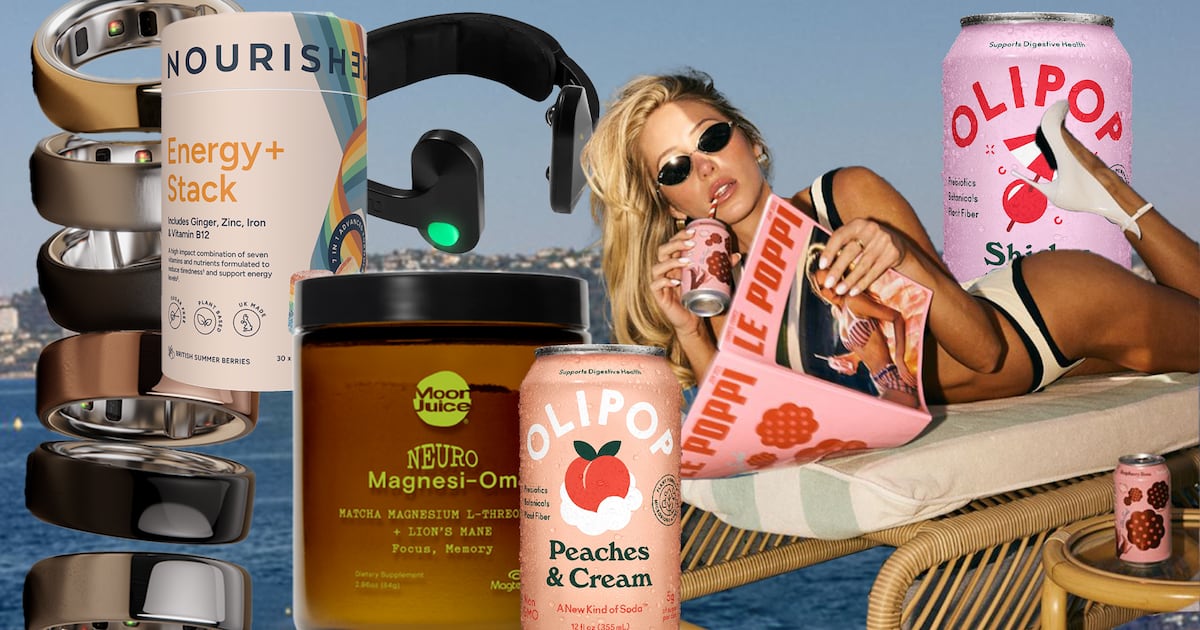
Fibre’s relationship to gut health is firmly on the mind, evidenced by the rapid ascension of prebiotic sodas, up 71.4 percent year-over-year, with interest from shoppers and investors alike. Independent soda brand Olipop, whose sodas contain six to nine grams of plant-derived fibre per can, was valued at $1.85 billion in a February 2025 funding round. Its biggest competitor Poppi, whose sodas contain around two to five grams of fibre per can, was acquired by PepsiCo for $1.95 billion in May 2025.
“Gut health is becoming a daily lifestyle habit, not a supplement routine, and we’re seeing both legacy CPG brands and supplement companies racing into the space,” said Williams.
The Oncoming GLP-1 Pill Wave
Between Novo Nordisk and Eli Lilly’s global battle to own the GLP-1 category, and US president Donald Trump striking a deal to slash prices, weight-loss drugs will become more accessible and convenient in 2026.
Per Spate, searches related to GLP-1 pill formats are up 993.2 percent year-over-year, reflecting not only interest from potential patients but also the closely watched race to bring weight-loss pills to market. On Dec. 22, the FDA approved Novo Nordisk’s Wegovy pill, which hit the US market this week. In late-stage trials, Novo’s pill showed an average weight loss of 16.6 percent over 64 weeks, comparable results to its injectable GLP-1.
The pill format, as well as increasing insurance coverage, indicate that in 2026, “every single person who wants to be on a GLP-1 will be,” Weintraub said.
Wider adoption will see a surge in side effects. “Say if you take it and you’re losing hair, or you don’t have the right nutrients because you’re not eating as much and then the supplements you take to support that. It compounds everything,” Weintraub said.
Tracking, Data and AI-Assisted Optimisation
Technological wearables that allow users to track their sleep, exercise and blood oxygen levels will become increasingly widespread in 2026. Big players such as Finnish company Oura (valued at $1 billion in 2025) and subscription-based Whoop (valued most recently in 2021 at $3.6 billion) will continue to show impressive adoption rates. Earlier this week, the FDA announced that it would be limiting any stringent regulation of the devices — a further boost.
“Interestingly, we’re now moving beyond passive observation. We’re not just looking at the data, we’re making new habits based on it,” said Olivia Houghton, head of beauty and wellness at consultancy the Future Laboratory. An average of two new healthy behaviours are being formed off the back of these devices, according to Pan European, with 87 percent reporting changes like improved sleep habits and increased exercise frequency.
Wearables’ endless insight into individuals’ precise health needs has created a supplement opportunity. According to David Hamlette, a wellness insights analyst at Mintel, personalisation and hyperspecificity will become increasingly key for vitamin and minerals brands from 2026 all the way through 2030. “There’s a focus on tailoring the supplement specifically to what someone needs,” said Hamlette.
In addition to this data, the specificity charge will be empowered by AI. Hamlette mentioned Nourished, a brand using AI to harness personal data in producing bespoke, individualised gummies. UK-based Healf, an AI-powered wellbeing company and retailer, has also found success by emphasising individualised routines: This week, it announced Claudia Schiffer as an ambassador and investor, after achieving an annual growth rate of 434 percent in 2025, per The Sunday Times.
Targeting Stress With a Human Touch
For Williams, the most surprising wellness breakout product is scalp massagers, with 48.1 percent YoY growth, and especially strong momentum on Instagram, up 183 percent YoY. “What’s notable is why people are searching,” she said: per Spate, search interest in and social engagement of scalp massagers directly linked to anxiety across Google, TikTok and Instagram are up 1,000 percent YoY.
Interest in at-home devices that purport to calm the nervous system using sound and vibration is also growing. Leading the charge is the headset-resembling Pulsetto FIT, stocked at Boots and Healf since late 2025, and the recipient of endorsement from biohacking entrepreneur Bryan Johnson. In 2025, Pulsetto reached $10 million in revenue — triple that of its previous year — according to the company’s CEO.
There is also the community factor. “You’re seeing more exclusive-experiences, more in-person events, because people crave that connection and community and real in-person touch,” said Weintraub. The handfuls of members-based wellness clubs cropping up in cities globally will continue to thrive — and Equinox executive Harvey Spevak recently told The Wall Street Journal the chain is expanding its lounge spaces “dramatically.”
Treatments like lymphatic drainage massages will once again be spotlighted as people seek touch-based energy invigoration, said Mallory Huron, head of beauty and wellness forecasting at Future Snoops. Globally, Google searches for lymphatic drainage massages have doubled since January 2025.
A Focus on Focus
Optimising brain power and boosting productivity will be huge focuses in the coming year, said Weintraub, who calls the trend a “focus on focus.” “We are so distracted as a population, our attention spans and brains have suffered,” she said. “The question is: What can I do to support that?”
In consumer goods, this will sustain demand for products targeting cognitive function like Moon Juice’s new Neuro Magnesi-Om mushroom matcha powder.
Traditional trackables also have a part to play here, as the prosaic steps to boost cognitive function — sleep, exercise — continue to be emphasised. But there are also new technological breakthroughs. Along with Elon Musk’s Neuralink and its competitor Synchron, tech company Neurable recently launched focus-monitoring, AI-powered headphones — a sort of wearable for tracking cognitive function.
Some are approaching the brain conversation differently. Chronodieting — timing eating to one’s biological clocks to boost energy levels — is gaining traction, as is the more old-fashioned concept of unplugging. “Brain health is linked to cognitive function. People need to put down their phones and pick up hobbies again,” said Huron.
Sign up to The Business of Beauty newsletter, your complimentary, must-read source for the day’s most important beauty and wellness news and analysis.