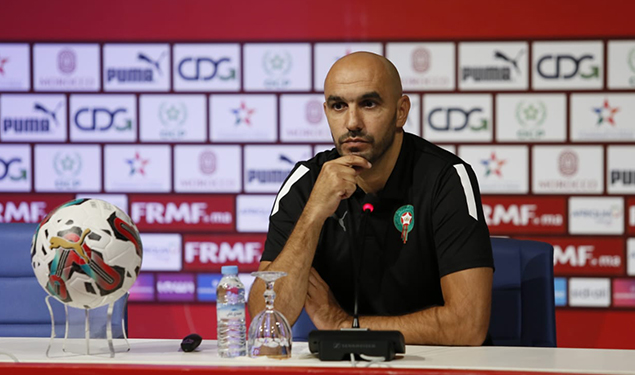
Rabat — Morocco head coach Walid Regragui offered an update on his squad’s condition on Thursday as the Atlas Lions finalized preparations for their Africa Cup of Nations quarter-final against Cameroon taking place on Friday night at the Prince Moulay Abdellah Stadium.
Speaking today during the pre-match press conference, Regragui confirmed positive news regarding Hamza Igamane, who has returned to full training after recovering from injury. The coach explained that the forward had been close to featuring in the previous round but was given extra time to ensure a safe return.
“We have Hamza Igamane back,” Regragui said. “He could have returned in the last match, but the additional five days allowed us to confirm his readiness.”
There was more caution, however, when discussing Sofyan Amrabat. The midfielder continues to deal with an ankle issue, and his availability will be assessed carefully ahead of kick-off.
“We wanted Amrabat to be fully available, but his ankle injury does not allow that,” Regragui explained. “We will decide whether he starts or comes on during the match.”
The coach also confirmed that captain Romain Saïss is progressing well in his recovery, offering reassurance about the team’s defensive options ahead of a physically demanding encounter.
Regragui explains players’ reluctance to face the media
Beyond team news, Regragui addressed questions surrounding player availability in the mixed zone, responding to criticism about limited media access during the tournament.
“We accept criticism,” he said. “We make a real effort to have players speak, but no one can be forced.”
Regragui pointed out that players aren’t always keen to talk to the media because of psychological and cultural reasons and that communication is not always straightforward or a simple thing for them.
“Some players are comfortable speaking, others are not,” he explained. “There are also language barriers. Some players speak only Darija and have been mocked for it, which makes them refuse to speak again.”
The Morocco coach also pointed to the mental toll of criticism, particularly after difficult performances.
“Sometimes a player is not in the right psychological state to speak,” he said. “You can’t criticise a player all season and then expect them to come and talk immediately after a match.”
Regragui concluded by saying that both the team and the media share responsibility in maintaining constructive dialogue.