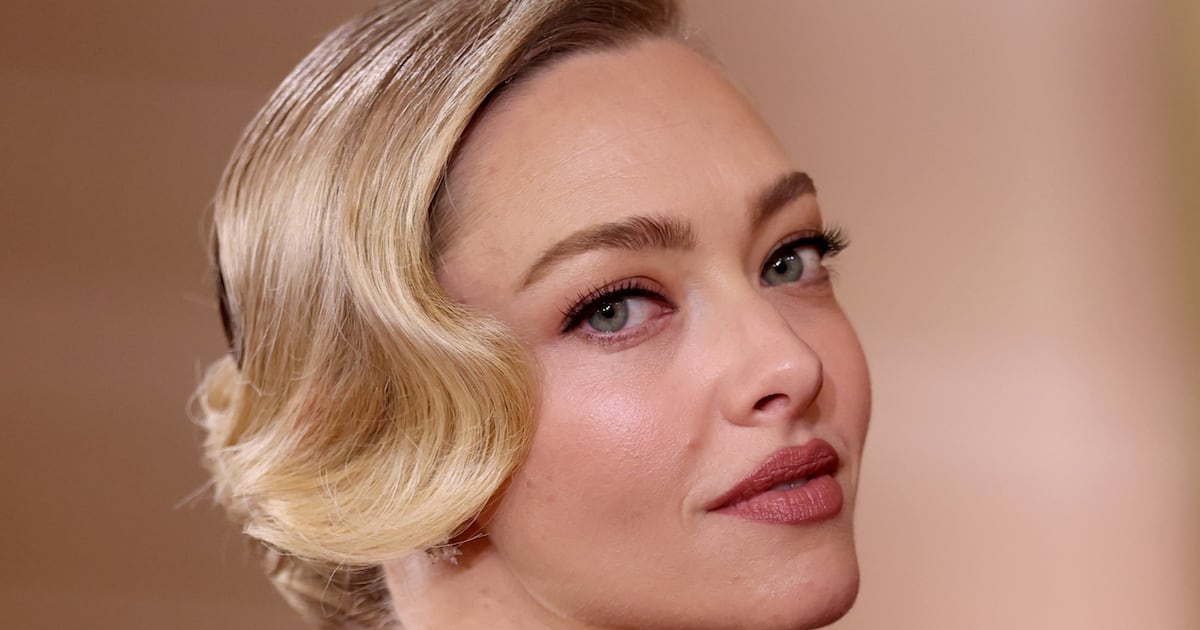
Something smelled musky on the Golden Globes red carpet.
It was the actress Amanda Seyfried, wearing a buttercream strapless gown and Parfums de Marly fragrance. Hours earlier her hairstylist Renato Campora misted her neck with the brand’s Valaya scent — a peachy, white musk — “to enhance both the mood and the energy in the room,” said Campora, who was sponsored by the French perfume house.
Marly’s sister label, Initio Parfums Privé, also scented Teyana Taylor, nominated for Best Supporting Actress in “One Battle After Another” through her hairstylist Nikki Nelms. Taylor wore the brand’s Atomic Rose hair perfume, as did Amal Clooney, while her husband George wore the men’s scent Oud for Greatness.
Beauty brands have been featured on the red carpet for decades, typically through sponsorships of makeup artists and hairstylists, who are paid to use a brand’s product and talk to press about the look. Perfume partnerships are a more recent development, as fragrance labels experiment with new ways to bring their products into the zeitgeist.
Parfums de Marly, founded in 2009, is an early adopter of the strategy. The brand first tried it at the 2025 Met Gala, lending its hair perfumes to attendees like the musician Tyla and actress Joey King via their stylists, explained Aymar de Chergé, vice-president of marketing for the Americas at Parfums de Marly.
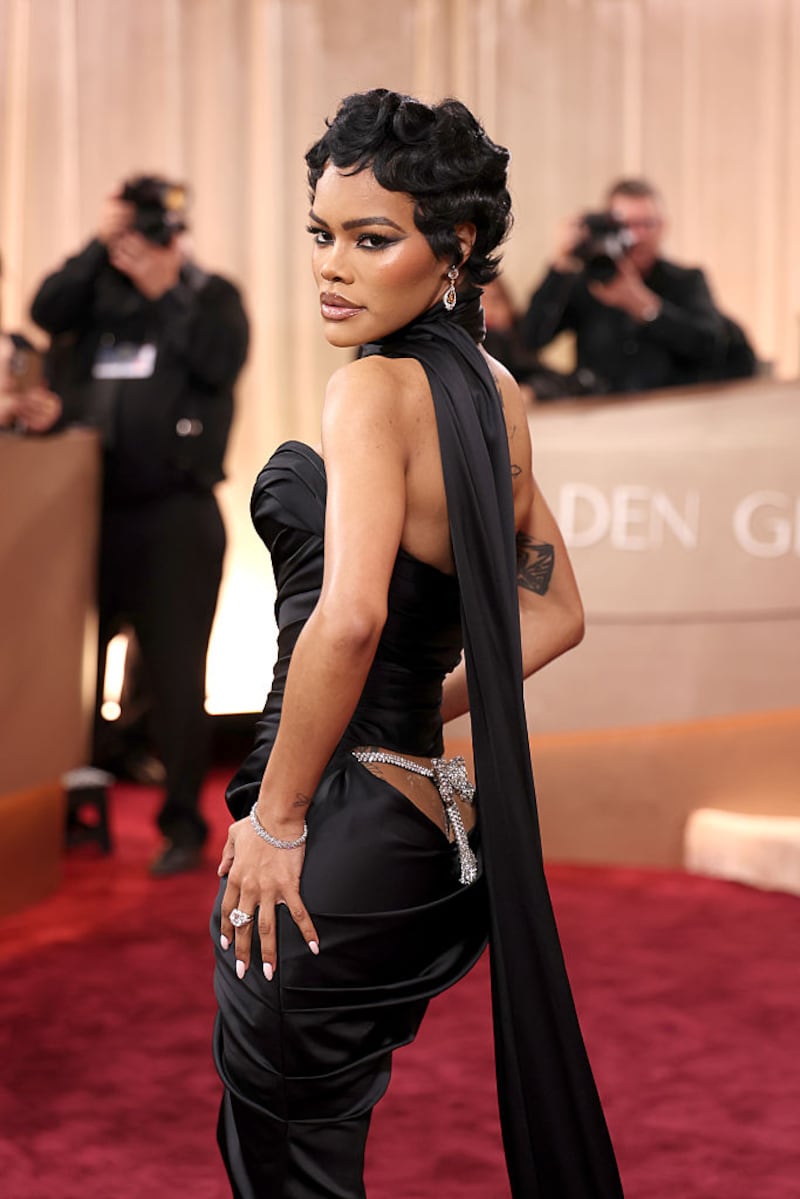 83rd Annual Golden Globe Awards – Arrivals Teyana Taylor, with hair by Nikki Nelms, and Amal Clooney both wore Initio Parfums Privé “Atomic Rose” hair perfume to the ceremony. (Getty/Kevin Mazur/Getty Images)
Red carpet beauty moments can generate genuine buzz, but are regarded as little more than a sideshow to the fashion on display, if they’re regarded at all. The analytics firm Launchmetrics has partnered with The Hollywood Reporter on its Red Carpet Power Rankings since 2023, measuring “media impact value” for fashion, jewellery and accessories brands but not beauty.
But as consumers are thinking about fragrance as part of their wardrobe, brands are encouraging stylists to do the same. “It’s an accessory,” de Chergé said, who bets that the editors covering red carpet and celebrity beauty would want to know everything about the look down to its invisible details — “a testament to their very thorough research,” he added.
Tyla’s hair perfume at the Met Gala got written up in Vogue, Allure, Cosmopolitan and Ebony. Whether the partnership yielded buzz or sales is hard to say: Data from analytics firm Spate shows slight peaks in the brand’s search traffic in May, but this is easier attributed to a contemporaneous product launch rather than the event.
The strategy “isn’t sales oriented,” de Chergé explained, “but about rooting the brand in the culture,” adding that more sponsorships are planned throughout awards season.
That Red Carpet Smell
Red carpet beauty is a small but nonetheless critical part of celebrity culture, and is similarly indispensable to awards season. Hollywood celebrities need to look their best, and beauty professionals need the work. Depending on a variety of factors like the scale of the event and the talent involved, beauty professionals can make between $3,000 and $10,000 for each sponsoring brand. Some of them rely on awards season for the bulk of their year’s income, a fact laid bare by the threat of cancellations during last year’s wildfires.
A perfume sponsor is a boon to a freelance stylist, especially when all it requires is a few spritzes and some phone interviews. (Seyfried’s hairstylist Campora was similarly double-sponsored by Joico in promotion of the hair brand’s newly launched Hero Hold Hairspray.)
It’s a calculated risk for the sponsors themselves, who are betting resources on the hope that viewers care enough about a famous person to wonder how they smell.
Luxury houses like Chanel and Dior routinely sponsor makeup artists, especially when their clients are also wearing Chanel or Dior. But despite their enormous fragrance businesses — and budgets — neither have scented any attendees to date.
On one hand, this feels like a missed opportunity. Timothée Chalamet, who will be touring this awards season as the star of Marty Supreme, has been the face of Bleu de Chanel since 2023, but is under no apparent obligation to bring it up in red carpet interviews.
On the other hand, the idea of actors pushing their fragrance contracts at every opportunity could end up devaluing the strength of their endorsement, or become just plain annoying.
It’s likely that fragrance sponsorships will multiply, especially as niche fragrance brands continue to compete against bigger labels and calibrate their marketing efforts for the highest impact.
De Chergé said that thinking is happening in real time. “Do you go with more hairstylists, or do you just focus on one?” he wondered aloud. “It’s been very much a learning journey.”
Sign up to The Business of Beauty newsletter, your complimentary, must-read source for the day’s most important beauty and wellness news and analysis.