Now that we’ve entered a new year, many people are beginning their journey of taking better care of their health, which might not only include losing a few pounds but also building muscle.
Working towards building lean muscle can improve your life in numerous ways, especially as you age over time. Having proper muscle mass can help you with everyday tasks, enjoy physical activities, and stay mobile as you get older. While the key to getting in better shape is a proper balance between exercise, a nutritious diet, enough sleep, and more, there are also additional steps you can take, like adding supplements to your routine. We spoke with health experts about two supplements that can help you build muscle, and one you should probably avoid. Read more about them below.

Struggling With Sleep? This Rechargeable Sound Machine Is A Total Game-Changer

Shutterstock
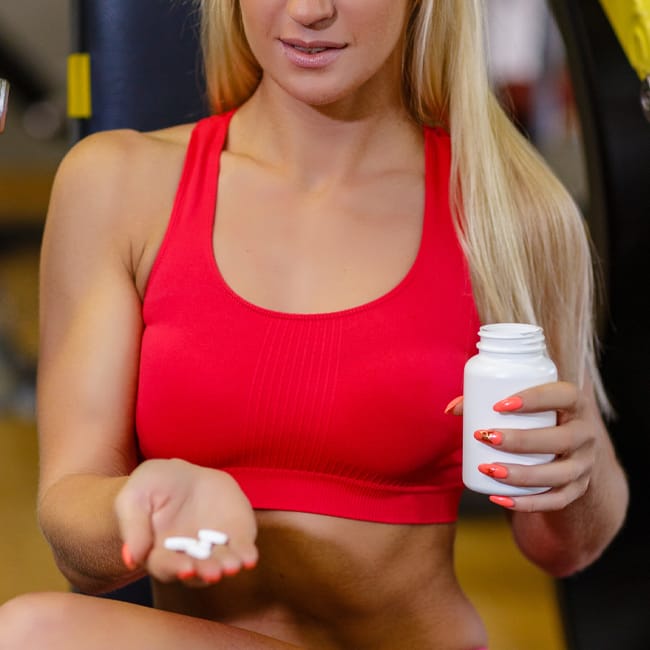
1. Creatine Monohydrate
If you’ve ever done any bit of research on building muscle and ways to make it happen, then there’s a good chance you’ve heard of creatine, as it’s quite popular in the health and wellness community.
“Creatine monohydrate is the gold-standard muscle builder in that it helps to supply more energy to the working muscles when we do resistance training, such as lifting weights,” explains doctor and trainer Dr. Gary McGowan. “More muscle energy means better workouts and, over time, this compounds to give us extra muscle and strength gains beyond what we’d get without creatine. Creatine is safe, relatively cheap, and very well-researched!”
Shutterstock
2. Protein Powder
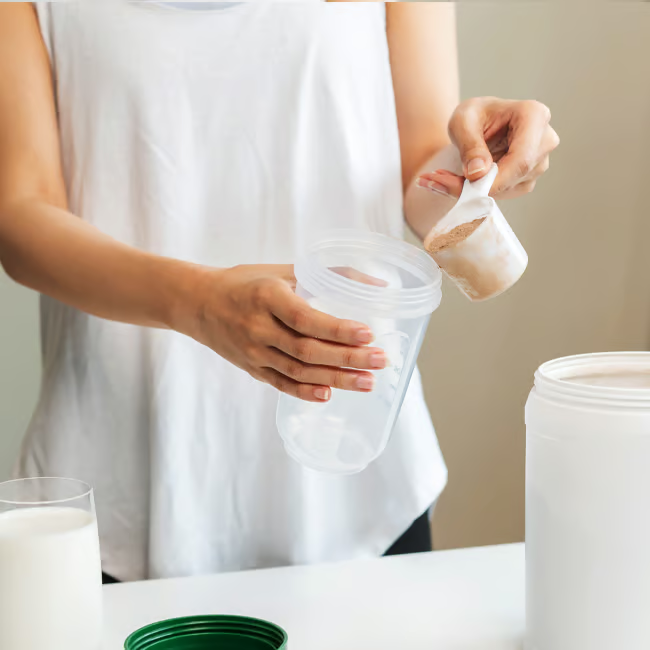
While it might not be the first thing that comes to mind when you think of supplements, protein powders can be an excellent addition to your routine, especially if you struggle getting enough of it in your diet and need to supplement it. It can be a time saver and make for the base of a tasty smoothie recipe.
“Protein powder is the next supplement I would recommend for muscle gain, and while it’s not a necessity per se, as we can just get protein through food, it does make for a convenient and high-quality way for us to meet our protein requirements,” adds McGowan. “If we work out without adequate protein to repair our muscles so that they can get bigger and stronger, we’ll be leaving some gains on the table. Whey or plant-based proteins (e.g., soy or pea) are best when it comes to muscle gain.”
Shutterstock
Which Supplements To Avoid For Muscle Building
As it is with any supplements, it’s advised to speak to your doctor or healthcare provider about which types of supplements would be right or ‘wrong’ for you and your personal health history. Still, there is one particular category of supplements that is often advised against.
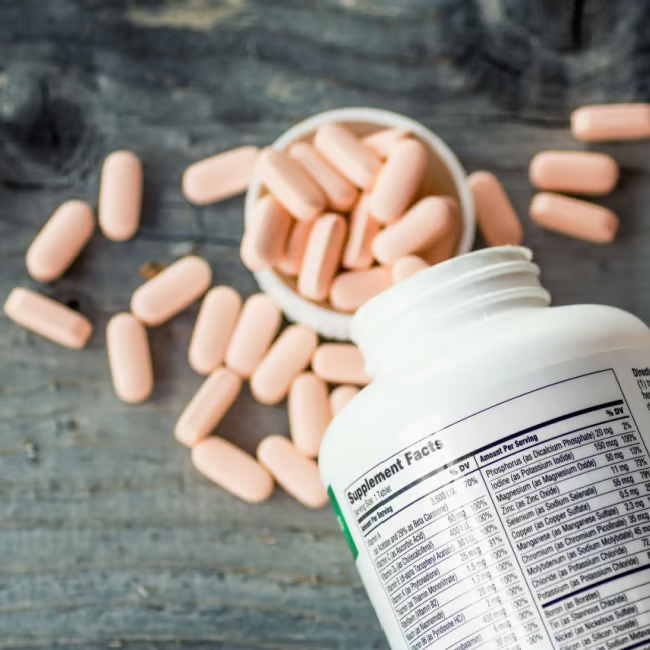
“Over-the-counter ‘testosterone boosters’ are almost all an expensive distraction from the real fundamentals of muscle gain: working out, nutrition & quality sleep,” warns McGowan. “These do not show meaningful increases in muscle mass in healthy individuals.”
Any supplements that sound too good to be true likely are, making certain promises that don’t sound quite natural, are often unregulated, meaning they haven’t been approved by the FDA for safety and effectiveness. Therefore, it’s safer to stick with FDA-approved supplements, often regulated by health experts.