Drunk Elephant would like you to forget about that whole Sephora tween thing.
The skincare brand was the unlikely face of the trend that saw hordes of 11 year olds ransacking beauty aisles across the US. Kids were attracted to its candy-coloured packaging rather than the souped-up active ingredients the line made its name on. (The cheeky name, Drunk Elephant, comes from the myth that oil-rich marula plants intoxicate large animals.)
But Drunk Elephant’s older customers didn’t want to be associated with the Roblox crowd. And when teenagers inevitably moved on, the brand was adrift. Sales plunged as low 65 percent in the first quarter of 2025 from a year earlier.
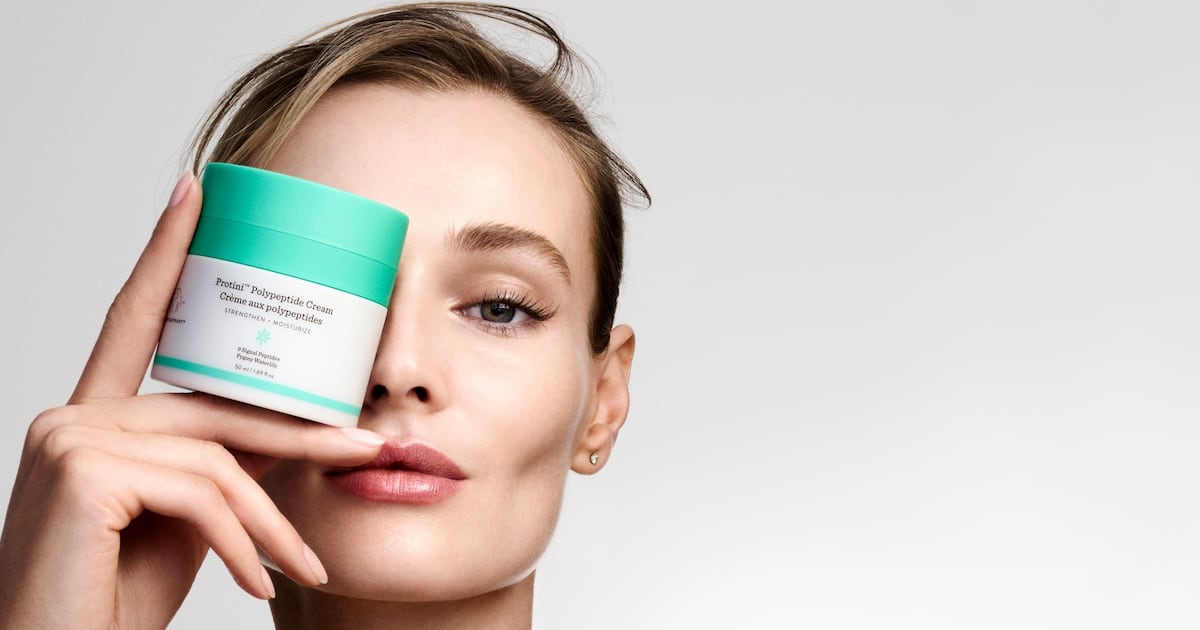
This week, Drunk Elephant is giving a glimpse of what life after Gen Zalpha looks like. The brand’s first-ever marketing campaign leans into its reputation for powerful formulations rather than its technicolor branding with bare-faced models and a new tag line that nods to another product intended for ages 21 and up: “Skin so good it should come with a warning. Please enjoy responsibly.” Clinical trials and active ingredients are touted throughout its new campaign and visual merchandising. There isn’t a teenager in sight.
Drunk Elephant is hoping to signal to customers who the line is for — women and men of a certain age — and that its founding principles are centred on results-driven skincare, not the packaging that it comes in. Or to put it bluntly, more “grown up,” said Barbara Calcagni, president of global brands for Shiseido, Drunk Elephant, Nars and Dr. Dennis Gross.
“It is a tongue in cheek reminder to approach skin care with intention,” she said of the campaign’s slogan.
Finding The Customer … Again
Though teens and tweens get a lot of the flak for Drunk Elephant’s woes, the brand faced other issues like inventory sell-outs around viral products and a crowded market where there were any number of new brands for disenchanted customers to try.
“It was a perfect storm,” said Calcagni.
It wasn’t anywhere near this complicated for most of the brand’s first decade. When the stay-at-home mom Tiffany Masterson founded Drunk Elephant in 2013, she was in her 40s and hoping to help women like herself find safe, efficacious skincare that made sense. She dubbed certain skin sensitisers — fragrance, dyes and essential oils among them — the “Suspicious Six” and vowed to never use them in her products.
That ethos, coming early in the “clean beauty” trend, resonated, as did Drunk Elephant’s irreverent messaging and innovative use of ingredients. Launches like Babyfacial, which launched in 2017 and dispensed an acid exfoliating mask through a bubblegum pink pump, helped it maintain a friendly but powerful skincare authority. Almost instantaneously, the brand was a Sephora skincare darling with dozens of imitators.
Masterson’s original mission of “demystifying skincare” remains relevant in the beauty industry today, said Cassie Cowman, co-founder and partner at beauty consultancy View from 32. (The line remains a top 10 prestige skincare line at Ulta Beauty.) “She paved the way for transparency and how to talk to your customers. It’s why lines like Dieux and Dr. Idriss exist now.”
Shiseido acquired the brand for $845 million in 2019. Masterston stayed on as chief creative officer, but stepped back from day-to-day duties in May 2025. She told The Business of Beauty she remains active with the brand as a “steward.”
Drunk Elephant sat out the beauty industry’s search for ways to connect with Gen Z and Gen Alpha. But the teens and tweens found the brand anyway, perhaps because its orange-capped C-Firma Day Serum and pink-accented T.L.C. Framboos Glycolic Resurfacing Night Serum stood out on Sephora’s shelves.
While initially turning the brand into a staple of skincare TikTok, the trend quickly turned against it. Older customers had plenty of options, and younger ones found new trends to explore from masstige brands like Byoma and a second wave of K-beauty brands. The brand’s search volume has declined 75 percent from its January 2024 peak, according to data from Spate, an artificial intelligence platform.
New Year, New Drunk Elephant
Rebrands are common in the beauty industry, where brands routinely rocket to the top of a category and are displaced just as quickly. Within the last year alone, lines ranging from Olaplex to Bread and Boy Smells have tried it.
Calcagni said Drunk Elephant worked fast, overhauling creative assets, visual merchandising and brand messaging in six months. The goal was to reclaim the brand’s voice.
“The whole [teen] thing was a cultural phenomenon,” said Calcagni. “But it was just evident that there was an opportunity and a need that had to be addressed, and that need was clarity. Drunk Elephant has never been age-driven; it’s always been skin-needs driven.”
Drunk Elephant’s new campaign feels decidedly more mature, centring on hero products and models that are clearly intended for adults. Colour is used sparingly, except when seen on the caps of products, and then, of course, there is the tagline that is a nod to the alcohol industry.
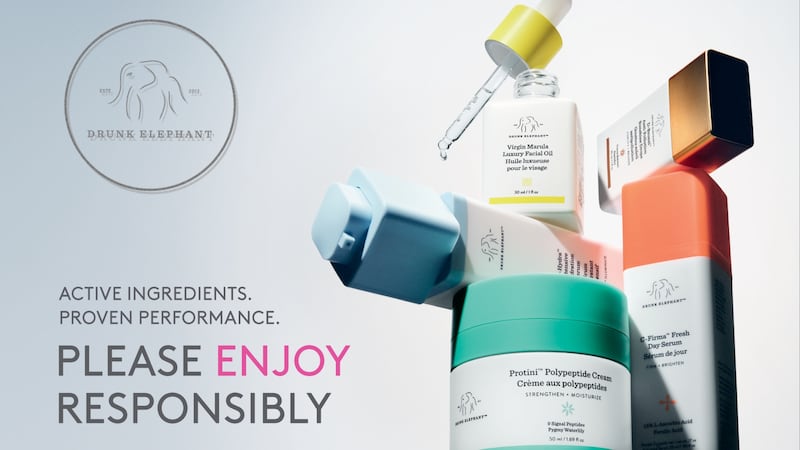 A pop of colour: the rebranded packaging has a more refined look than that of candy coloured, tween-focused lines. (Drunk Elephant)
Calcagni expects with the new creative vision and new product innovations set to launch in the second half of 2026, Drunk Elephant will return to growth within a year. There are already some signs of recovery; as of November, the brand saw sales only decline by 19 percent year-on-year in the third quarter.
Masterson agrees that it never hurts to “crystalise a position.”
“Customers are more educated than ever, they know more than ever, but the philosophy we’re reinforcing is what I established [with] the brand from day one,” she said. “It was always about approaching the skin in a proactive way, to support it and protect it over time.”
The business may have had a difficult time proactively anticipating the industry’s changing winds, but Masterson is confident that reshoring the brand’s original mission will help it grow to new heights.
When we say, ‘please enjoy responsibly, ‘ it’s clarifying the discipline we had from the beginning.”
Sign up to The Business of Beauty newsletter, your complimentary, must-read source for the day’s most important beauty and wellness news and analysis.