When it comes to the selection and hiring of our next generation of firefighters, physical fitness should never be left to chance. The fireground doesn’t care how you look in uniform or what you bench on chest day. It demands functional strength, power, and work capacity—all under pressure, often in the worst conditions imaginable. Yet for too long, fire departments across the country have relied on outdated or incomplete methods to assess the physical readiness of their applicant pool and new recruits.
The Firefighter Physical Fitness Test—or FPFT—was born out of a shared commitment to change that. Alongside Jesse Clark and Shawn Cope of the Boise (ID) Fire Department, we recognized an opportunity to develop a more comprehensive, job-relevant way to evaluate firefighter candidates. This wasn’t about criticizing what had come before. Tools like the CPAT and the 1.5-mile run had long served departments across the country. But through experience and observation, it became clear there was a better way forward.
What Is the FPFT?
The Firefighter Physical Fitness Test (FPFT) is a five-event assessment designed to evaluate the key physical abilities candidates and firefighters alike need to succeed—not just in the academy, but across their entire careers. It measures lower-body and upper-body strength, muscular endurance, anaerobic capacity, trunk stability, and cardiovascular fitness—all in a format that reflects the physical demands of the fireground while assessing their readiness to endure the rigorous demands of their fire academy should they be selected.
The test is completed in one session and consists of:
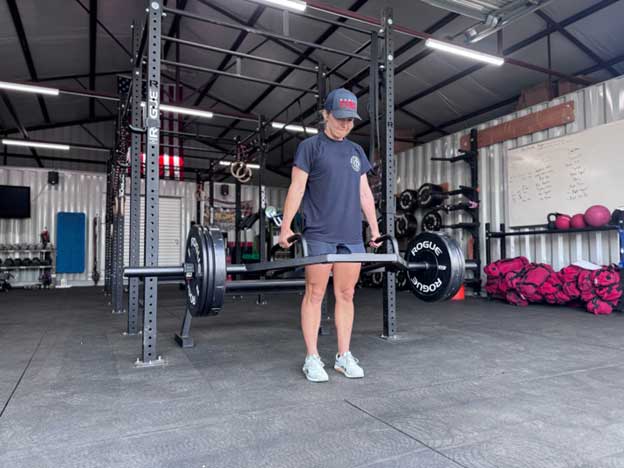
Deadlift
Push-Ups
Sprint-Drag-Carry
Plank Hold
1.5-Mile Run
Each event has strict standards, time caps, and scoring guidelines, and must be completed in sequence. The entire test is designed to challenge candidates physically and mentally while producing data that departments can use to compare candidates objectively.
Like the CPAT, the FPFT is also a pass/fail assessment. However, it sets itself apart by incorporating clearly defined minimum and maximum scoring thresholds for each event. This design allows candidates to showcase their full physical capability—not just meet the bare minimum. Test evaluators are encouraged to look for effort and performance above the standard, not just technical completion. This encourages a culture of excellence and gives departments better insight into a candidate’s work ethic, potential, and preparedness.
Why We Developed the FPFT
At the time of development, Nampa Fire was using the CPAT and Boise Fire relied on the 1.5-mile run as part of their hiring process. Both tests had strengths, but they didn’t provide a complete picture of candidate readiness. We saw inconsistencies in recruit performance, avoidable injuries during academy training, and a lack of actionable data for making hiring decisions.
That sparked a collaborative effort to build something better. Together with Jesse and Shawn—who played key roles in both shaping the vision and ensuring the test would meet operational needs—we created the FPFT: a tool designed to reflect real-world job demands and improve the way we select candidates and assess their general physical fitness as it relates to the occupation of firefighting.
Why It Works
The FPFT isn’t just more comprehensive—it’s smarter. Built on evidence-based research, the test evaluates a candidate’s ability to generate force, recover between efforts, stabilize under load, and sustain aerobic output over time. These traits are directly tied to successful fireground performance and injury prevention.
The FPFT was heavily influenced by the U.S. Army Combat Fitness Test (ACFT), which moved military fitness away from outdated endurance-only models and toward performance-based assessments. We adapted and refined that structure to suit the tactical needs of the fire service, then validated our version through research—including studies from the RAND Corporation and many others on firefighter performance.
The Boise Fire Department was instrumental in this process. Jesse and Shawn, along with the support of their administration, led the effort to bring in a third-party validation company and Boise Fire became the first department to officially adopt the FPFT. Their leadership helped establish the test’s credibility and sparked significant interest from other departments, several of which have since followed in their footsteps and adopted the FPFT as well.
The FPFT also stands out because it is:
Accessible – Uses common gym equipment (trap bar, sled, kettlebells, etc.)
Trainable – Candidates can prepare at commercial gyms and/or with personal trainers
Scalable – Easy to administer in a variety of settings
Data-driven – Provides meaningful and objective measures of performance
Validated – Built and tested to ensure fairness and job relevance
Event-by-Event Breakdown
Each event in the FPFT was chosen for its specific application to firefighting. Together, they create a full-spectrum test of physical readiness.
1. Deadlift (195 pounds for 7–15 reps in one minute)
What it tests: Lower body strength, trunk stability, and safe lifting mechanics
Why it matters: Firefighters routinely lift civilians, gear, and equipment. The deadlift mimics these essential movements and helps predict injury risk.
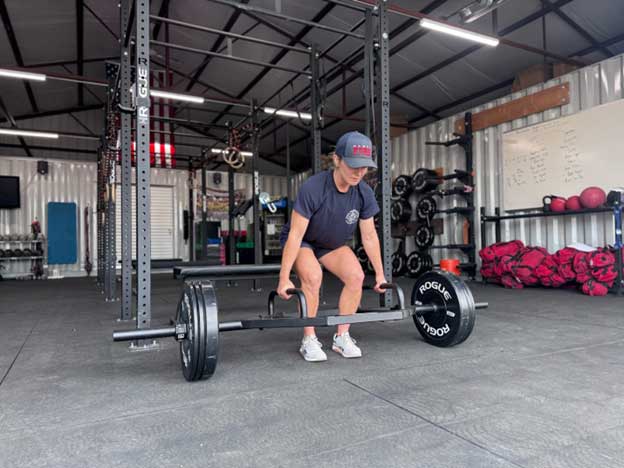 (1) Event 1 is the deadlift, using 195 pounds for max reps in one minute. Photos by author.
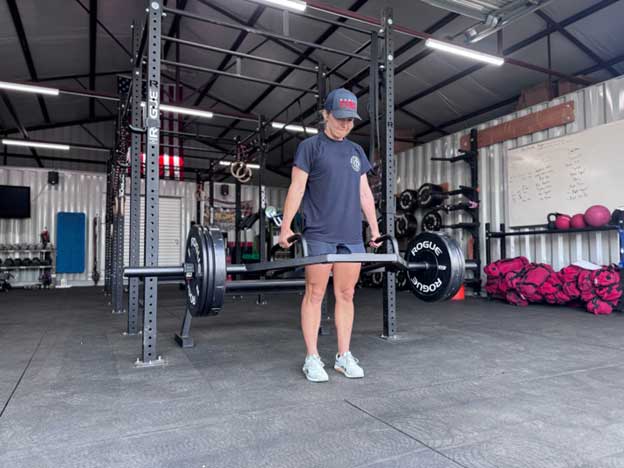 (2) The deadlift assesses lower body strength, trunk stability, and safe lifting mechanics.
2. Push-Ups (30–75 in two minutes)
What it tests: Upper body muscular endurance
Why it matters: Hose advancement, ladder raises, and forcible entry all demand upper body strength and stamina. The push-up is a simple but powerful measure of both.
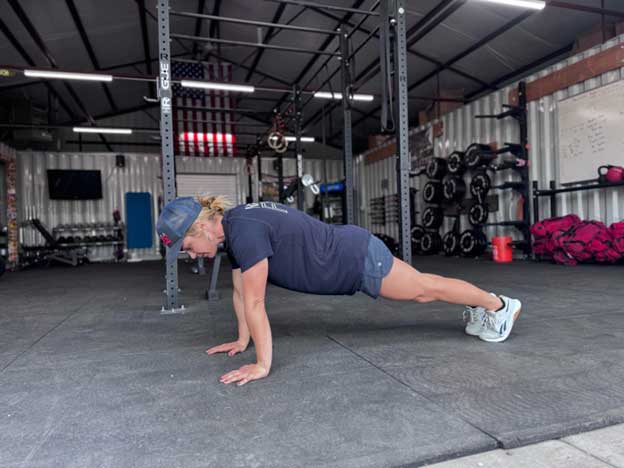 (3) Event 2 is the push up, max reps in two minutes.
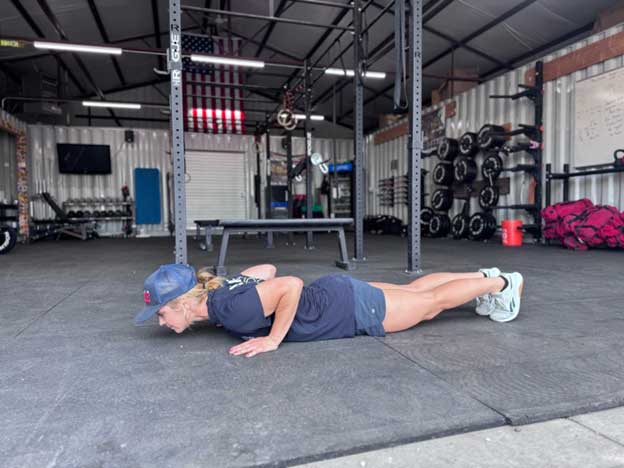 (4) The push up assesses upper-body muscular endurance.
3. Sprint-Drag-Carry (Timed: 1:20–2:15)
What it tests: Anaerobic capacity, agility, grip strength, and muscular endurance
Why it matters: This event simulates the intensity of fireground work—moving with a purpose and sense of urgency, sudden changes of direction, dragging a victim or hose, and carrying heavy tools.
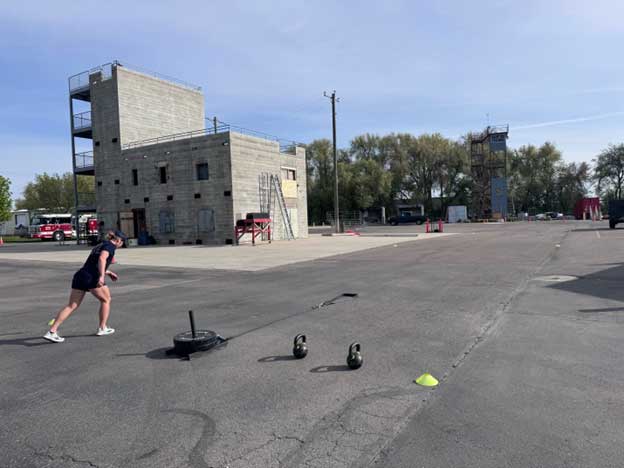 (5) Event 3 is the Sprint-Drag-Carry.
 (6) The shuttle run is 50 feet out and back, and then 100 feet out and back.
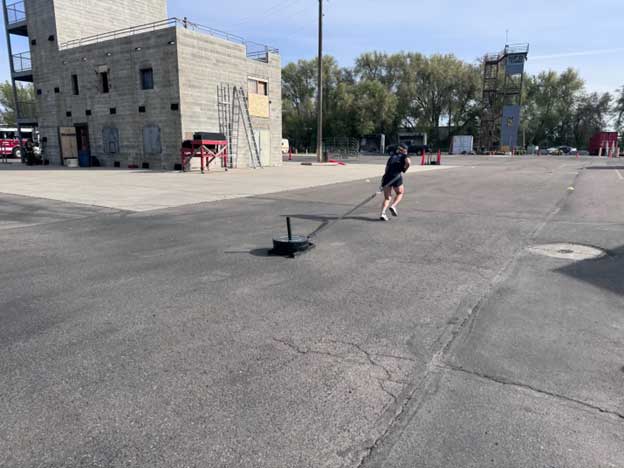 (7) The sled drag is 100 feet forward, and then 100’ backwards for 200 feet total.
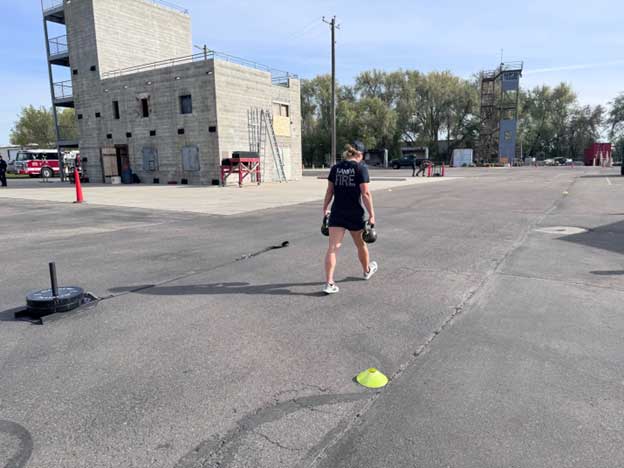 (8) The farmer carry is 50 feet out and then back for 100 feet total.
4. Plank Hold (1:20–2:30 max)
What it tests: Trunk strength, stability, and muscular endurance
Why it matters: Trunk/core stability supports every movement on the fireground and helps protect the spine from injury. This test ensures a strong foundation for all fireground movements, especially load-bearing tasks.
 (9) Event 4 is the plank.
5. 1.5-Mile Run (13:00 max)
What it tests: Aerobic capacity
Why it matters: Sustained cardiovascular fitness is essential for long-duration incidents and rapid recovery between high-effort tasks.
 (10) Event 5 is the 1.5-mile run.
Accessible, Trainable, and Transparent
The FPFT also stands apart as a superior physical fitness test specifically within the hiring process. Unlike the CPAT, which requires expensive, highly specialized equipment that is often inaccessible to most civilians, the FPFT is built around movements and tools available in nearly any gym. Additionally, the CPAT includes techniques and simulated tasks that most civilians have no prior experience with. Why would we evaluate an untrained civilian on a task they’ve never seen or practiced, then expect meaningful performance? That approach doesn’t reflect physical potential—it reflects familiarity with a niche test.
The purpose of pre-employment testing is to assess general physical preparedness, not job-specific proficiency. We aren’t hiring fully trained firefighters—we’re selecting the best civilian candidates to become them. The FPFT is designed to find those with the raw physical capability to handle the rigorous physical training of the fire academy, where they will be taught the tools, techniques, and tactics required on the job. It ensures that when we bring someone into our academy, they’re ready to become a tactical professional capable of performing at the highest level on the fireground.
Candidates can prepare for the FPFT using accessible equipment and familiar movements found in most gyms. This creates a more level playing field, allowing motivated individuals to train effectively and maximize their potential well before test day.
Candidates can even take the test standards to a coach or personal trainer and create a plan to improve their scores. This empowers candidates to train with intent and raises the caliber of applicants entering the hiring pipeline.
EventWhat It AssessesWhy It MattersEquipment RequiredStandardsDeadliftLower body strength, trunk stability, and safe lifting mechanicsFirefighters routinely lift civilians, gear, and equipment. The deadlift mimics these essential movements and helps predict injury risk.Hex/Trap bar, bumper plates195 pounds for 7–15 reps in 1 minutePush-UpsUpper-body muscular enduranceHose advancement, ladder raises, and forcible entry all demand upper body strengthNone30–75 in 2 minutesSprint-Drag-CarryAnaerobic capacity, agility, grip strength, and muscular enduranceSimulates the intensity of fireground work—moving with a purpose, sudden change of direction, dragging a victim or hose, and carrying heavy tools.Weighted sled (115 lbs), cones, 35 lb kettlebells2:15 – 1:20Plank HoldTrunk strength, stability, and muscular enduranceTrunk/Core stability supports every movement on the fireground and helps protect the spine. This test ensures a strong foundation for all fireground movements, especially load-bearing tasks.None1:20–2:301.5-Mile RunAerobic capacitySustained cardiovascular fitness is essential for long-duration incidents and rapid recovery between high-effort tasks.Track or measured course≤13:00 minutes
Injury Prevention and Academy Readiness
One of the most overlooked components of candidate evaluation is injury prevention. While many departments focus solely on who can “pass” a physical test, they miss the opportunity to use that test to prevent future issues. Recruits who enter the academy underprepared are significantly more likely to get injured—delaying their development, taxing department resources, and potentially ending careers before they begin.
The FPFT was designed not just to test, but to protect. By assessing the essential traits of strength, power, muscular endurance, and aerobic capacity in a general yet rigorous way, the FPFT helps ensure that those who enter the academy have the physical foundation to train hard without breaking down. Unlike the other tests, which masks physical deficits with low-speed, low-intensity simulations, the FPFT reveals them through near-maximal effort tests that are safe and effective in a controlled environment. That clarity is critical.
Departments that have implemented the FPFT report a notable drop in preventable injuries during their academies. That’s not just a win for training staff—it’s a game changer for recruit success and long-term career viability. Physical readiness is injury insurance. The better we screen, the better we protect our people from day one.
The Future of the FPFT
The FPFT was created to serve as a better tool for hiring, but its potential doesn’t stop at the academy gates. As more departments implement the FPFT, it’s easy to envision how this test could evolve into a standard part of ongoing firefighter assessments throughout a career.
Just as we wouldn’t certify a firefighter and never expect further training, we shouldn’t assume a single physical test during hiring is enough. Long-term health, resilience, and operational effectiveness rely on maintaining a high level of physical preparedness. The FPFT provides a consistent, validated framework that could be used not only to evaluate new hires, but also as an annual benchmark to ensure incumbent firefighters continue to meet the demands of the job.
It could also be incorporated into promotional processes, helping to reinforce that leadership in the fire service should include physical example as well as tactical and strategic knowledge. In time, the FPFT could become part of a broader national model for tactical readiness—one that helps protect both our people and the citizens they serve.
 (11) The Firefighter Physical Fitness Test (FPFT) is a tool designed to reflect real-world job demands and improve the way we select candidates and assess their general physical fitness as it relates to the occupation of firefighting.
A Better Standard for the Fire Service
The FPFT represents a step forward in how we evaluate readiness and select our next generation in the fire service. It’s grounded in science, validated by an independent third party, and already proving effective in identifying strong, resilient, and capable firefighter candidates.
This is not about tradition versus innovation—it’s about aligning our hiring practices with the real demands of the job. Firefighting is the most physically demanding job in the country [1]. Our testing should reflect that.
Widespread adoption of the FPFT could set a new national standard for firefighter selection. Departments across the country would not only benefit from reduced injury rates and improved academy outcomes, but they would also help shape a healthier, more capable workforce from the start.
Standardizing physical testing in this way would create more consistency in what “fit for duty” truly means, helping candidates understand expectations across jurisdictions and giving training professionals a clearer roadmap for success. As more departments follow the lead of Boise Fire and a growing number of others, the FPFT could become the gold standard in the hiring process, supporting a culture of excellence across the American fire service.
It’s time to expect more. The Firefighter Physical Fitness Test was built to select the best—those ready to meet the challenge head-on and serve with strength from day one.
Citation
Breeding, B. (2024a, May 29). Firefighting Named Most Physically Demanding Job. KTBS. https://www.ktbs.com/news/arklatex-indepth/firefighting-named-most-physically-demanding-job/article_cc3d2994-1de3-11ef-9468-c75152751952.html
MORE BY ERIC HASKINS
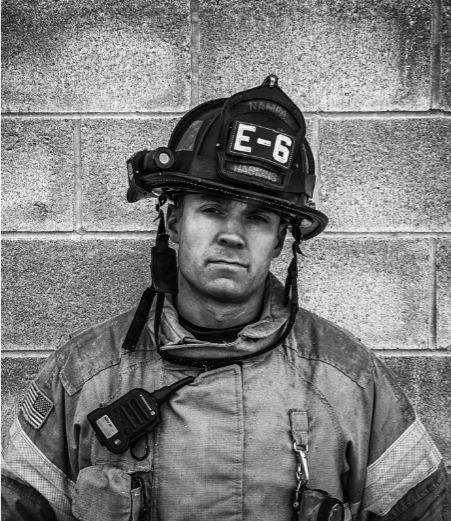
Eric Haskins is a senior firefighter with the Nampa (ID) Fire Protection District and founder of Firehouse Strength & Conditioning. He holds a bachelor of science degree in Exercise Science and is an NSCA Certified Strength and Conditioning Specialist (CSCS) and Tactical Strength and Conditioning Facilitator (TSAC-F). Haskins is Idaho’s first graduate of the Georgia Smoke Diver Program and has instructed at fire service conferences across the country. He specializes in firefighter fitness, performance training, injury prevention, and is a contributing author on tactical readiness and fireground performance.
To learn more about the Firefighter Physical Fitness test (FPFT), contact thefirefighterpft@gmail.com.