Public health experts and Pennsylvania health officials broadly condemned the Trump administration’s overhaul of childhood vaccine recommendations last week, raising concern about how the change could affect immunization against infectious diseases.
But new data from The Washington Post reveal a growing rate of unvaccinated children in Allegheny County schools that predates the new guidance from the Centers for Disease Control and Prevention.
One in three kindergarteners in Allegheny County were in a classroom with vaccination rates below the herd immunity threshold during the 2023-2024 school year, according to the data.
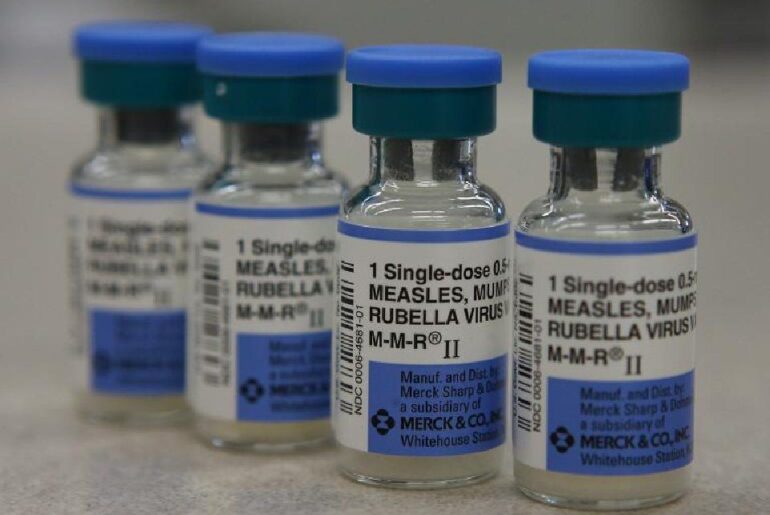
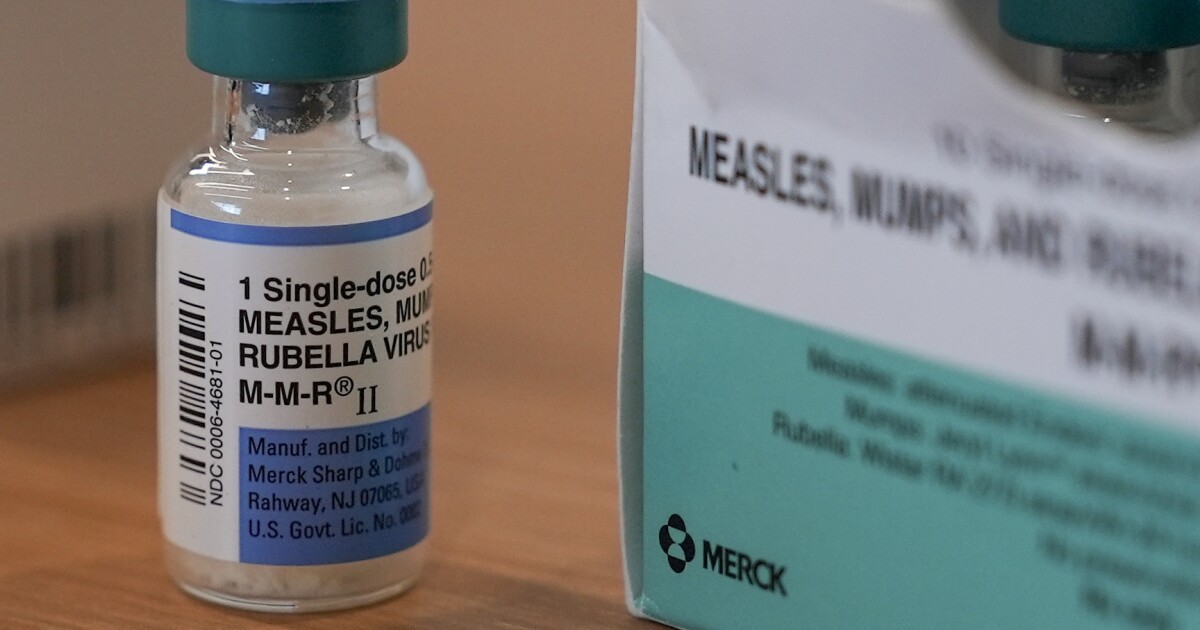
Herd immunity is the rate at which resistance to a disease among a community is strong enough that it doesn’t spread easily. For measles, mumps and rubella (MMR) vaccination rates must reach at least 95%.
“For a disease like measles, you want to have protection levels around 95% because it is so contagious,” said Amesh Adalja, a Pittsburgh-based infectious disease physician and senior scholar at Johns Hopkins Center for Health Security. “When you have even just a small chink in that armor … that means there are a lot more susceptible people around.”
In 2023, Allegheny County — as well as more than half of Pennsylvania counties — reported MMR vaccine rates among kindergartners that fell below the herd immunity threshold, according to the data. That trend continued through the following school year, as WESA reported in September.
School-level data obtained by The Post show traditional public schools in Allegheny County, on average, met the herd immunity threshold. But the average MMR vaccination rate among private schools was below it.
Of the five Allegheny County schools with rates of 75% or less, four were affiliated with religious institutions.
Pennsylvania allows for religious, philosophical or medical exemptions, which must be submitted in writing to schools. At Harvest Baptist Academy in Natrona Heights, more than a third of students received an exemption, with most citing religious reasons.
WESA reached out to Harvest Baptist Academy and other schools with lower-than-average vaccination rates for comment. Only Catalyst Academy Charter School in Pittsburgh, where 12.5% of kindergartners received personal exemptions, responded.
“In 2023, in addition to some likely lingering impacts in vaccination rates coming out of the pandemic, there may have been some administrative reasons for a lower declared rate,” school officials told WESA. “The report that year was filed with assistance from the Allegheny County Health Department and due to timing, some parents signed the exemption form for compliance expediency.”
The school added that its 2024 vaccination rate was 90%.
‘We’re already seeing the reemergence of these diseases’
Adalja said that the rates of MMR compliance can indicate the rate of broader vaccine sentiment overall.
“It’s highly effective and highly protective,” he said. “So if a parent doesn’t want their child to get the MMR vaccine, I think that speaks to their general sentiment on vaccines.”
Declining vaccination rates could likely mean more frequent outbreaks of infectious diseases, according to Dr. Raymond Pontzer, a professor of medicine at the University of Pittsburgh and board member of the Allegheny County Immunization Council.
“We’re already seeing the reemergence of these diseases,” Pontzer said. “It’s a shame because kids are going to die. They’re going to suffer and be hospitalized.”
Pennsylvania is among dozens of states monitoring measles across the country amid a growing number of outbreaks in recent years. In 2025, the state reported 16 cases of measles, including in Erie and Philadelphia. No measles cases were reported in Allegheny County.
In 2025, the United States reported the highest number of total measles cases since the disease was considered eliminated from the country in 2000. There were 2,144 confirmed cases and three deaths. About 93% of cases were among those who were unvaccinated or whose vaccination status was unknown, according to the National Foundation for Infectious Diseases.
Though measles can involve typical infectious symptoms like a fever, sore throat and a rash that spreads across the body, severe cases can lead to severe complications like brain swelling and death. North Hills family medicine specialist Dr. Kirsten Lin said public awareness about measles has waned as a result of the effectiveness of the MMR vaccine.
“We’ve become a little bit complacent because we don’t see it,” Lin said.
Pennsylvania’s declining vaccination rates are not unique. According to data from the Centers for Disease Control and Prevention, only 10 states had MMR vaccination rates at or above the herd immunity threshold for the 2024-2025 school year. The agency reported that nationwide, vaccination exemptions have reached an all-time high.
Whether to approve an exemption is up to the individual school, and the state doesn’t require schools to renew a student’s exemption from one year to the next. For some public health experts, Pennsylvania’s school immunization exemption policy is too lenient.
“There has been leniency because people are trying to avoid controversy, especially with the anti-vaccine movement,” Adalja said of school nurses and administrators who determine whether to permit an exemption.
While some states have eliminated non-medical exemptions for school immunizations, Pennsylvania has not. Adalja said doing away with non-medical exemptions would increase vaccination rates, but he stressed that such a policy change would require unlikely bipartisan agreement among Harrisburg lawmakers.
What’s driving the decline? Mixed messages and social media
Anti-vaccine sentiment has become a headline mainstay since Robert F. Kennedy Jr. was sworn in as the Secretary of the U.S. Department of Health and Human Services. But experts note that the anti-vaccine movement exploded from a niche corner of the internet into the mainstream years earlier, especially during the coronavirus pandemic.
Pontzer said “a lot of misinformation, disinformation and social media activity” during the pandemic gave the movement a new shot in the arm.
“If we had social media when Jonas Salk invented the polio vaccine, we would still be dealing with polio in this country,” he said. “It’s a difficult obstacle to overcome.”
Lin said that an explosion of social media influencers posing as experts without medical credentials has contributed to confusion and growing vaccine hesitancy.
“People are listening to these influencers for whatever reason and they may not have the best source of knowledge,” she said.
Many families avoided the doctor’s office during the pandemic, which set some children behind on their routine vaccinations. But Adalja said most kids have since caught up on their shots, making delayed compliance less of a driver in the overall decline.
According to the state, 93.7% of Pennsylvania kindergarteners got both recommended doses of the MMR (measles, mumps, rubella) vaccine before the 2024-2025 school year — lower than the recommended 95% vaccination rate for herd immunity.
Alongside unvetted information on social media, government health agencies are at odds with each other over public health policy. After the CDC recommended fewer childhood immunizations last week, several state health agencies issued guidance to ignore the change.
“There are no changes in vaccine recommendations and availability in Pennsylvania, including those for children to attend school,” said Pennsylvania Health Secretary Dr. Debra Bogen. “Health care providers have always used shared decision-making and informed consent with parents, and we will continue to provide the information needed to protect their children.”
Allegheny County health officials similarly reaffirmed their support of the previous vaccine recommendations.
“While national guidance has shifted in how recommendations are categorized, the science behind vaccines has not changed,” said Allegheny County Health Department Director Dr. Iulia Vann. “We continue to strongly encourage families to talk with trusted healthcare providers and make informed decisions that keep children, families, and communities healthy.”
Despite state agencies and medical organizations aligning, changing guidance at the federal level could still foster public confusion about vaccines, Adalja said.
“When you have the federal government with different recommendations than the state health department, it’s going to make parents wonder which one is correct, especially if they’ve not been following all of the ups and downs,” he said.
Federal agencies have also softened support for some vaccines, suggesting families consult their physician for guidance. That could yield unexpected disparities, according to Lin.
“With the recommendation being ‘We don’t necessarily recommend it, but we recommend that you talk with your doctor about it,’ — that requires the patient to have a doctor. And we know that a lot of patients don’t have a primary care doctor,” Lin said.
“Even when patients do get in to see a doctor, a lot of times the doctor only has five minutes to talk to them and that’s not really conducive to building trust with people,” she added.
At her practice, Lin said a growing number of patients are hesitant about vaccines. She said primary care doctors like her may have to spend more time going over the science with patients to ensure they’re making decisions based on the latest evidence.
“I would never try to force someone to receive a vaccine. I think we have to come about it more by educating people,” she said. “The more time that physicians and providers can spend talking to their patients about vaccines… Hopefully we can counteract a little bit of the misinformation that people are getting through other channels.”