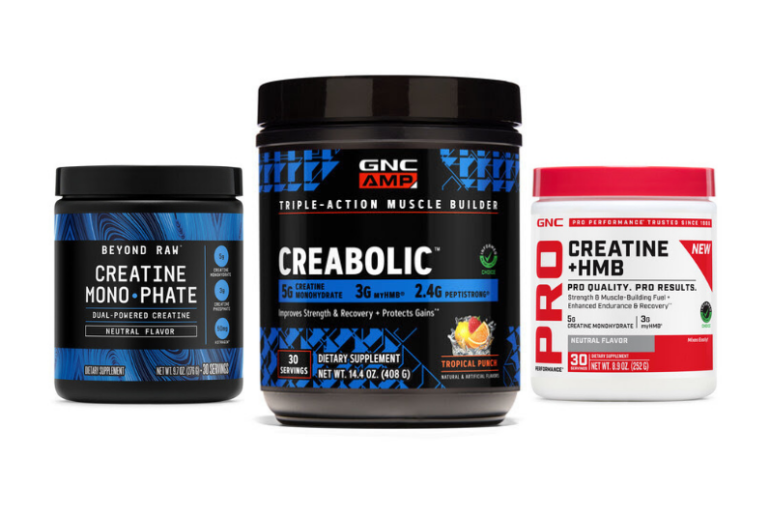
Most of us want to beat our personal best and sprint faster. Running doesn’t just boost our fitness; it also prompts the release of those feel-good endorphins, and for many of us, it gives us some time away from the day-to-day. While many supplements come with promises of boosting this and enhancing that, some are just hype and glorified marketing claims. Others are backed by research, like creatine and magnesium. I came across a study showing that the combo of magnesium and creatine could give you a little boost on the running track.
Creatine and magnesium for speed

Maridav / Shutterstock
Magnesium is an important mineral, and creatine is derived from amino acids. The studies are growing, and researchers have found this combo can improve sprinting speed, muscle strength during certain exercises, and more. Here’s the research for those with a need for speed.
The sprinting study
Gupta Sahil / Pexels
In a study published in the journal Nutrients, researchers explored how 16 weeks of taking a low dose of magnesium creatine chelate supplementation affected sprinting performance. The study included 16 trained elite soccer players, divided into two groups: the creatine-magnesium supplement group and the placebo group. The supplement group took a single dose of 5500 mg of magnesium creatine chelate (MgCr-C) split across four capsules per day, which was 0.07 g/kg/d (0.07 grams per kilogram of body weight per day). The placebo group took four identical daily capsules containing corn starch.
The trained soccer players completed the repeated sprint ability test (RAST) before and after the study, and researchers measured total time, sixth 35 m sprint length, average power, and max power. The study authors also evaluated lactate levels and other markers.
The research results

Zac Frith / Pexels
The study revealed that the creatine magnesium supplement group had significantly better results across all measures of the RAST (the repeated sprinting ability test), from their total time to their average power and max power. No significant changes were observed in the placebo group, who didn’t take the supplement combo. There were only insignificant changes in the first 35 m sprint, as well as the sixth 35 m sprint, for the placebo group. Importantly, even with supplementation for the full 16 weeks, creatinine levels remained within reference values, indicating no harm to the kidneys.
Concluding thoughts

Expressive Stanley / Pexels
It’s important to keep in mind that this was a small study including only elite male soccer players, so these results might not fully apply to everyone. In this study, the researchers concluded that just 16 weeks of taking a low-dose magnesium-creatine chelate supplement improved results on the repeated-sprint ability test, enabling the players to run faster and perform better during those repeated sprints. With a moderate daily dose split across four capsules, the soccer players accelerated their speed, which could level up their next game on the field.