Keshawn’s Korner founder and CEO Ricquesha Fuller believes bridging the gap between youth and adults can play a key role in tackling mental health challenges.
She started the nonprofit in memory of her son, Keshawn Fuller, who took his own life. The organization’s tailored support includes matching teens with mentors and peers who understand their mental health challenges.
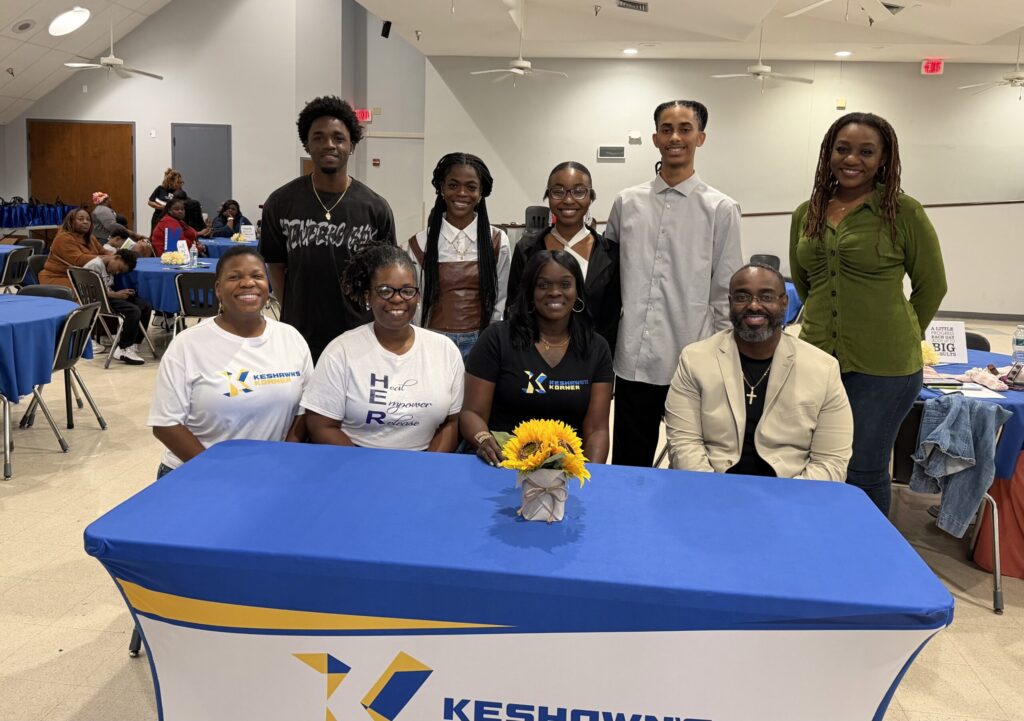
Keshawn’s Korner hosted a mental wellness panel event Jan. 10 at the Enoch Davis Center. Panelists include two licensed mental health counselors, Edward Settles and Denise Moore, and four young adults, Traverious Jenkins, Ta’Nayshia Grover, Kiana Favors and Aiymere Sanchez.
The conversation started with how to find passion and encouragement.
Favors, 20, argued that passion “changes with time” because life is consistently evolving. She believes it’s important to find passions that foster growth and help an individual become a better person.
“Being a youth in the community, I’ve bumped my head a lot. I’ve run into walls and have been in trouble,” said Sanchez, 19. “Constant reassurance and love and gratitude from my parents and people in my community constantly uplift me every time I fall down.”
Another key topic that was discussed was role models.
“I didn’t have a lot of men in my life. So, I had a best friend who had a lot of men in his life,” Jenkins, 24, explained. “I hung out with him most of the time so that I could see and observe what men actually did on a daily basis.”
Moore, who oversees a counseling practice in Tampa, stressed the importance of adult mentors.
“If we want our younger generation to be better and to be well, we have to be willing to talk to them,” she told the Catalyst. “We have to be willing to let them know about our experiences, and what we went through and what worked and didn’t work.”
Speaking with adults is just one aspect of seeking guidance. Many young people choose to talk to friends, cousins or siblings.
Grover, 20, and Favors discussed the importance of being surrounded by peers who are encouraging. More importantly, those who keep you accountable.
“How I knew my best friend was right for me was the space she holds for me,” Grover said. “She teaches me and inspires me and I can learn from her. Everything that is not right in her eyes, she can let me know.”
Favors added that it’s essential to have friends who support growth and understand that “my current situation is not my final destination.” Sometimes, she explained, all it takes is having a person who is there to listen and not gossip.
Settles spoke with Jenkins and Sanchez about vulnerability, particularly about the things they fear in regards to growing up and maturing.
Jenkins explained that if he ever has children, he wants them to experience more than just the neighborhood. He hopes they can see other parts of the country and the world. Marriage is “not big” in Jenkins’ family and he wants to break that cycle as well.
“My biggest fear is not being able to stand on my word,” Sanchez said. “I think compromise is big in society and you have to compromise to get to where you want to be and make sacrifices, but you have to know when to compromise yourself and when not to.”
Settles, who is in his 40s, added that he grew up in an era where men were not encouraged to be vulnerable and speak about their feelings.
“We’re not supposed to demonstrate what people used to think as feminine emotion,” he said. “But, men are super emotional creatures.”
The event was sponsored by the Tampa Bay Collard Green Festival, Handy Pros Residential Contractors, the Pinellas County Urban League and the Juvenile Welfare Board of Pinellas County.