Pt II: Where We’re Headed
The categories that follow trace seven high-level, high-signal trends. Wellness 2.0 principles still apply, with ample opportunity to serve subcommunities and design for forgotten demographics.
Exposome Awareness
Environment over effort.
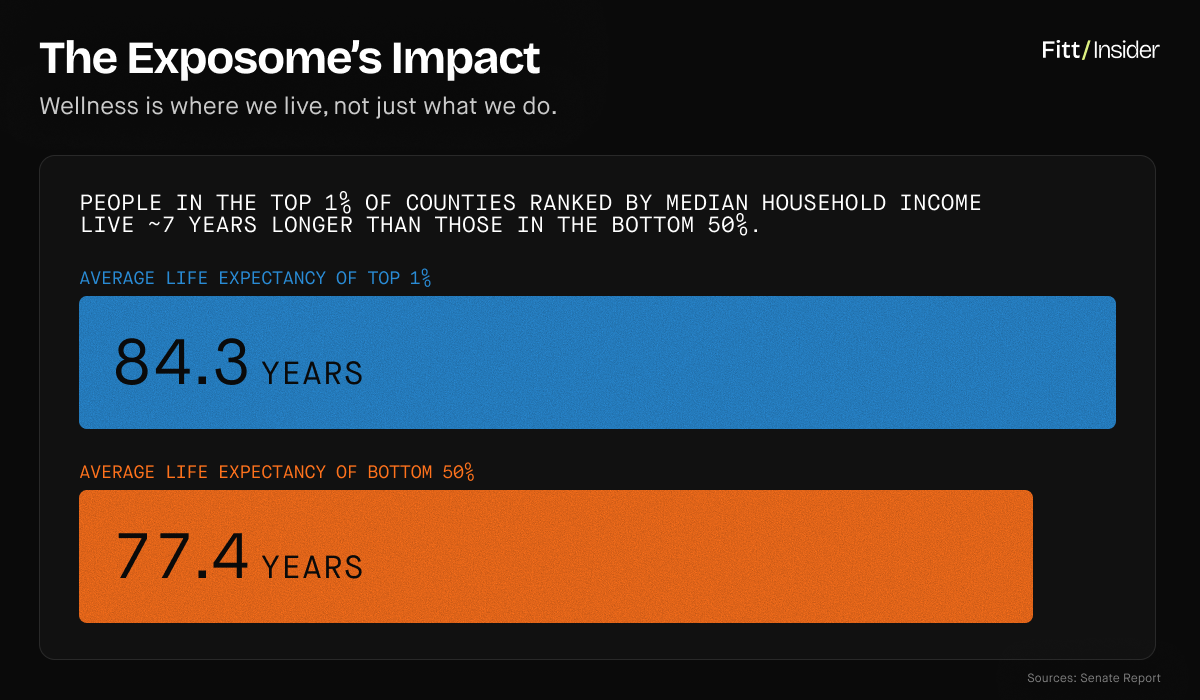
Nongenetic factors account for 80% of health outcomes. Zip code predicts lifespan, with those in lower-earning US counties dying seven years earlier than the top 1%. Systemic inequities aren’t the domain of consumer wellness, but self-preservation will shift attention to the exposome (lifelong effects of environmental exposures).
People are increasingly skeptical of expensive longevity products and the “wellness industrial complex.” The highest-risk populations won’t waste time and money without proof of ROI, making low-lift, environment-centered answers an easier sell. Elaborate routines will be reframed as self-care hobbies and productivity hacks, with science-backed home makeovers taking precedence.
Defining a healthy baseline, novel tests will measure contaminants in homes and bodies, delivering detox protocols and reduction tips. Rather than shaming and blaming, new products will address indoor ecology — air quality, mold, PFAs, and lighting.
Premium features like smart toilets and circadian design will influence real estate, modular solutions will win renters, and public spaces like airports, schools, and offices will eventually adapt to demand. Fixing invisible infrastructure will be the first line of defense.
NeuroWellness
Mind-body resilience.
There’s a shift happening across culture. The growing wealth gap and existential awareness are causing corporate ladders and status games to lose their grip — people just want stability, emotional regulation, relief, and something fun to focus on.
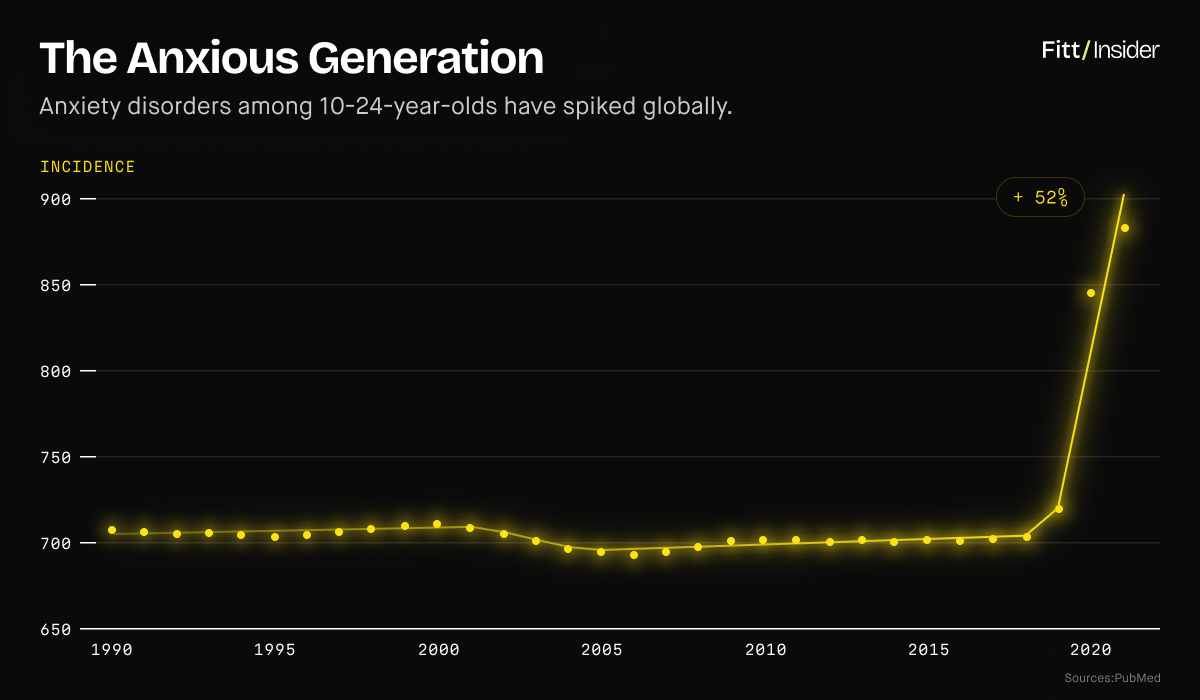
Still, overstimulation is a major pain point. With corporate greed, sensationalized media, and the attention economy pulling people toward misery, issues like ADHD and anxiety are rising. A calm nervous system has become this era’s ultimate flex, but the sympathetic branch is impossible to outsmart, and forced positivity an ineffective band-aid.
Mixing empathy and practicality, new therapeutic routes will combine interventions like CBT and meditation with somatics, biofeedback, and bioelectric medicine for bottom-up reprogramming. While psychedelics will play a role, the next wave of mental health won’t be mystical; it’ll be grounded in scientific rewiring, empowering consumers with self-regulation tools along the way.
Resetting expectations, an expanded cognitive comfort zone and consistent calm—not constant highs or happiness—will be the pitch, with data-driven resilience platforms pairing tools like brain stim, breathwork, binaural beats, and VR therapy to tame stress biomarkers.
Philosophical Fitness
Training for life.
A pendulum swing, fitness has trended toward softer modalities, but the real enemy isn’t intensity — it’s injury. More in touch with their bodies, people are moving with intention.
The future of fitness is as philosophical as physical. Auditing values, consumers are training with a purpose: to play with grandkids at 80, run a race next month, strengthen the mind tomorrow, or just look good today. Regardless, relentless intensity is being replaced by adaptable exertion, with routines reverse-engineered to meet meaningful milestones.
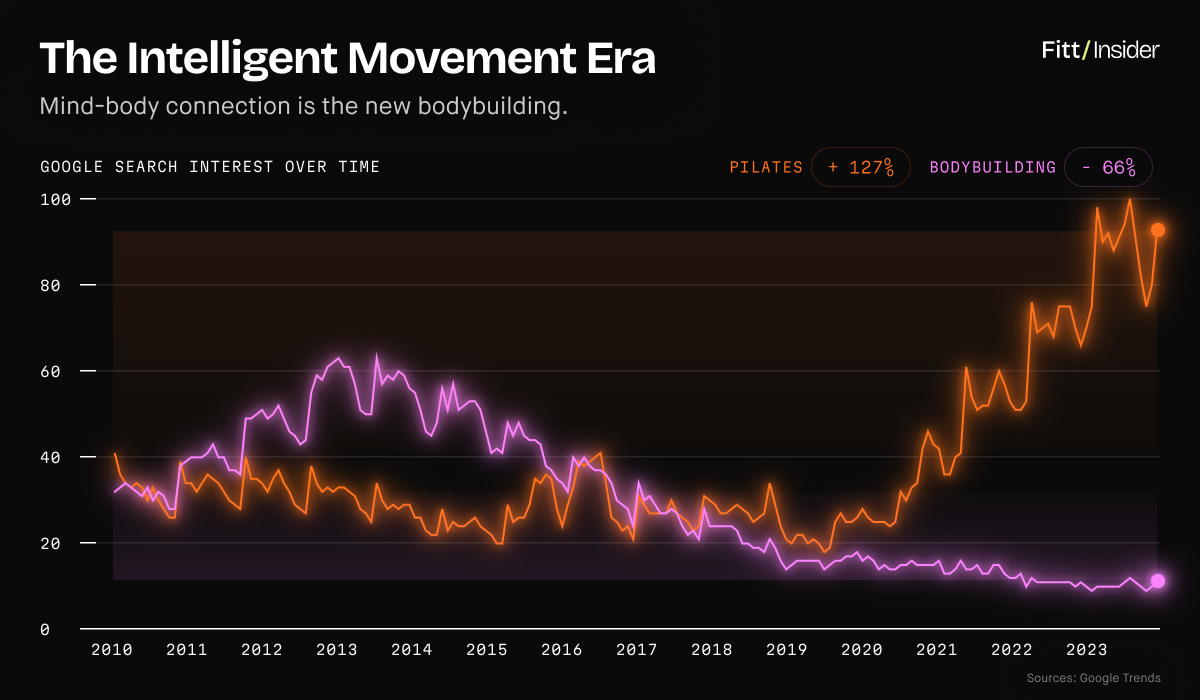
Helping guide, computer vision and wearables will chart biomechanics to proactively preserve mobility and highlight when mind-body connection is blocked. Movement literacy and durability will become the new performance metrics, and workouts a tool for temperance — not ego. As GLP-1s promote weight loss, fitness will teach physical intelligence.
Hybrid training will flourish, along with confidence-instilling competitions and races. A new model for movement health will emerge, normalizing preventative PT. Concurrent brain science breakthroughs will better explain links between the CNS x MSK system, making neuromuscular efficiency more bragworthy than hypertrophy.
SuperAge Economics
Silver-centric support.
The US is in the midst of a massive population shift, with the 65+ population set to surpass under-17s by 2030. Currently at $8.3T (40% of GDP), the 50+ cohort’s economic contributions will >3x to $27T by 2050, yet most wellness brands still market to the young.
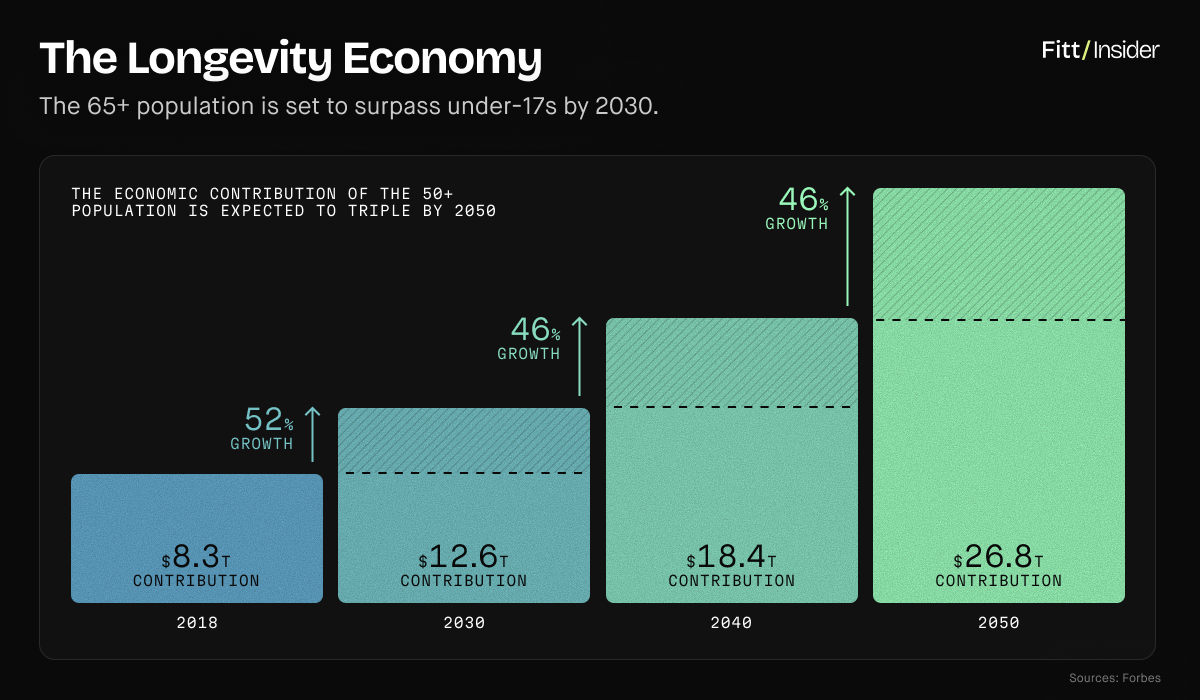
More Americans want to hit a healthy ~91 than live forever. As millennials and Gen Z—the Wellness Generations—age up, the longevity space will have to reckon with overpromises, shifting messaging from “anti-aging” toward terms like Modern Eldership. More than defying death, it’ll reorient around preserving spirit through joyful third acts.
Alongside biotech breakthroughs, SuperAging solutions will span specialized retreats, multi-generational third spaces, and wellness-centered retirement communities — a trend 71% of senior living providers already foresee. Prolonging independence, autonomous cars, exoskeletons, and health-monitoring smart homes will provide safeguards.
The most impactful answers won’t try to turn back the clock; they’ll relieve the anxieties that make aging scary to start: fears of irrelevance, cognitive decline, financial woes, loneliness, and being a burden. Addressing stressors that kill quality of life will keep these years golden.