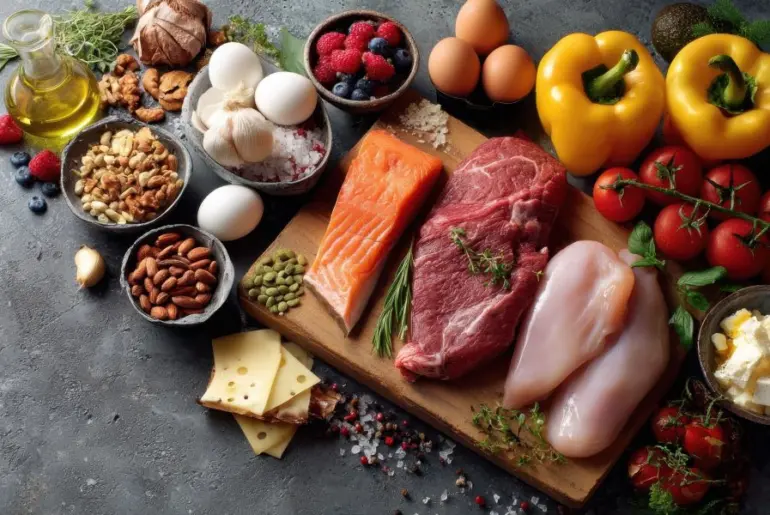
Amid growing access to GLP-1s, particularly in the US, the food and nutrition industries are exploring how to develop or adapt products tailored to the medication users. Nutrition Insight explores opportunities and challenges for innovations with Novonesis, WellVine, ofi, and Ingredion.
Riccardo Locascio, head of Partnering in Advanced Proteins at Novonesis, highlights the three levels of food and nutrition innovations according to the Three Horizons Framework. “Today, we’re still in its infancy — Horizon 1 — using existing tools to reformulate.”
“Just around the corner, we are seeing how we can take existing ingredients and tweak them to become more nutritious and bioavailable — like using enzymes to chop up proteins into peptides that bring value.”
“Then Horizon 3: if you had a white canvas, could you design personalized proteins that bind in the gut and provide the effects consumers need? This is something that the industry is starting to talk about; it will be 10–15 years to get there, but the interest is there.”
“We’re just at the beginning,” he adds. “Creating science-based ingredients takes time. We need to ensure that as corporations we do the right thing — lead with science — and maintain consumer trust.”
Opportunities abound
Scott Forsberg, chief operating officer at WellVine, notes that the GLP-1 era presents a “once-in-a-generation opportunity” to deliver better nutrition in the same product while keeping sensory aspects that consumers desire. WellVine has developed prebiotics from upcycled Chardonnay grapes that it combines with cocoa in Vine to Bar chocolate.
“People are looking for alternatives that give them more for the same calories or the same money. If you can deliver added value within that sector, you’re going to do well. That’s the opportunity.”
 Krishnaswamay says there is a trend in smaller portion sizes and mindful indulgence.Moreover, he spots an opportunity to understand non-users and change their diet toward that of people taking GLP-1s.
“Consumers who don’t use GLP-1 are still aware of it, understand what’s happening, and know how big a trend it is. If we could get them to pay as much attention to fruits, vegetables, and the like as GLP-1 users do, that would be a seminal change. We’re appealing to every consumer, not just users of anti-obesity drugs.”
“We have a chance to take some risks,” Forsberg underscores. “Consumers are open to the idea that food can be dramatically improved. They’re interested in clean labels, whole foods, and many things that used to be hard to get people to pay attention to.”
“We live in an extraordinary time, and these drugs are helping move the conversation faster than it otherwise would. We shouldn’t take for granted that we have a more receptive and better audience than we’ve had in a long time.”
Mindful indulgence
Brijesh Krishnaswamay, chief commercial officer for North America at ofi, highlights that there is a growing interest in quality over quantity. “We’re starting to see ‘less is better’: smaller portion sizes, but people want more packed into those portions.”
“The term we’re seeing is ‘mindful indulgence,’” he adds. “Consumers are still indulging, but with a purpose — they’re well-intentioned.”
“Coffee and cocoa consumption continues, but people align it more with health and wellness goals,” he adds. In snacks and beverages, people are looking for nutrient-dense foods, more protein, more fiber, and cleaner labels.”
“At ofi, we’re working closely with our customers to support them as they evolve with changing consumer needs.”
 Canene-Adams says GLP-1 users require the same things as somebody trying to lose weight or maintain lost weight needs.Krishnaswamay also notes that as an ingredient supplier, ofi also spots shifting patterns. “If you look at cocoa, consumption might be down in candy, but cocoa can show up in protein shakes.”
Reformulation potential
Although new product development tailored to GLP-1 users is underway, Kirstie Canene-Adams, director of Nutrition at Ingredion, notes that there are still few products on the market that focus specifically on this consumer group.
She says all consumers who are trying to lose weight or maintain lost weight have similar nutritional needs. Whether they are using GLP-1s or not, they focus on nutrient density.
“You need protein, fiber, and micronutrients,” she details. “Also, companies don’t want to pivot — think about the shelf space they have at the retailer level. They don’t want different SKUs for all these different consumers.”
Whether for clean eating, less processing, or GLP-1 user needs, reformulation is important, says Canene-Adams, as this can provide consumers with more nutrients. For example, reducing sugar, fat, or sodium and increasing fiber and nutrients as needed, such as protein.
She underscores the importance of understanding consumer needs, public health concerns, and trends. “In this case, pharma is coming over and impacting the food industry. We have to be aware of that, regardless of where we sit in the food supply chain.”
Moreover, Canene-Adams highlights the importance of making responsible health claims that are easy to read and understand for consumers while building on science that finds statistically significant and physiologically relevant changes in the right population and sample size.
 Locascio cautions that innovating and reformulating products to meet specific needs of GLP-1 consumers requires time and resources.“The holistic way we communicate claims to consumers is important; we’d never want to imply we’re doing the same as a drug in the food industry.
Investing in innovation
While experts identify substantial opportunities to innovate and reformulate products to meet the needs of GLP-1 users, Locascio at Novonesis cautions that this requires time and resources.
“In food, it takes a very long time to build the right amount of scientific evidence to support your products. There was a notion that food is faster — like software — but we’re realizing food takes as much time as pharma,” he details. “Being prepared with long-term timelines is essential if you want a solid clinical package with your ingredient.”
He adds that collaborating with companies closer to consumers is crucial to expand consumer insights needed for product development. While there are a few products specifically designed for GLP-1 users on the market, Locascio says it’s essential to assess how these products perform to inform further developments.
“More data and knowledge are needed,” he highlights. “But in an environment where research is tight, we need to come together with industry, academia, and foundations. Foundations will be crucial, because industry can’t always fund decade-long projects.”
“Now, more than ever, consumers request transparency,” adds Locascio. “That will take longer and more investment. Ultimately, the ingredients and companies that will make it are those with rigorous science behind them.”
Potential and challenges for small companies
According to Locascio, Novonesis invests a substantial amount of its revenues in R&D at the level of pharmaceutical businesses. However, he sees a challenge for smaller companies, which struggle to scale due to a lack of capital.
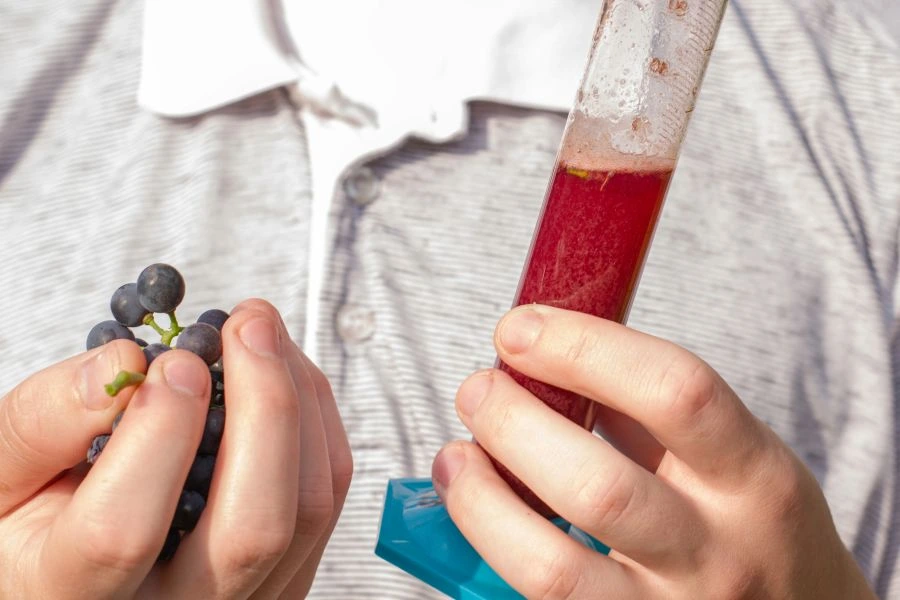 Forsberg says WellVine has studied grapes for 15 years and only commercialized a product when trends caught up with science.“We try to work with smaller companies to offer the scale and commercial access they need, like start-ups with something interesting but don’t have the runway to get to the next level.”
WellVine’s Forsberg adds that while smaller companies are strong in innovation, they have fewer resources and can extend themselves in terms of claims. Meanwhile, he notes larger suppliers have established businesses they don’t want to risk.
At the same time, he notes that many smaller companies that succeed have made significant efforts to prepare themselves. “They were either patient, smart, or adaptive enough to pivot when the timing came around in their favor.”
“In our case, we’ve studied grape chemistry for 15 years; for the last seven, we focused on oligosaccharides, gut health, and the microbiome. We’re just now commercializing the product; we’ve only been in the market for a year or two. All these trends started to catch up with this, and we were able to leverage that science, which formed the foundation.”
While some new companies primarily get their start to take advantage of an opportunity, such as supplements claiming to be a “natural GLP-1,” Forsberg doesn’t believe those businesses will still be around in three to five years.
“It’s the ones with a foundation that pivot and take advantage of an opportunity that do well,” he predicts.