The Trump Administration’s recently launched Dietary Guidelines for Americans 2025–2030 have gained mixed reactions from food, nutrition, and medical experts. Nutrition Insight looks at what some of the organizations that support the guidelines are saying.
dsm-firmenich has shared its support for the guidelines, especially the importance of nutrient-dense diets in supporting health at every stage of life.
“Through our leading vitamins business — the last remaining domestic vitamin manufacturing operation in the US — and our carotenoids, nutrition lipids, and food and feed ingredients businesses, we help make the foods Americans rely on every day healthier and more nutritious through fortification and supplementation.”
“We look forward to working with the Trump Administration to protect domestic vitamin manufacturing that enables our great farmers to produce healthy animal proteins and to advance nutrition policies that strengthen the health of all Americans.”
Nutrition Insight previously explored the criticisms of the Dietary Guidelines for Americans 2025–2030, which some argue oversimplify recommendations, such as increasing meat and dairy consumption, which are high in saturated fat and contribute to chronic diseases amid a health emergency.
Some critics questioned the scientific basis of certain recommendations, attributing it to ideological bias. Others oppose the guide’s rejection of several proposals made by the 2025 Dietary Guidelines Advisory Committee.
However, the Council for Responsible Nutrition praised the administration for giving more recognition for the role of dietary supplements in helping individuals achieve their nutrient needs.
Medical support
From the perspective of neurosurgery, the American Association of Neurological Surgeons praises the guidelines, as it believes excess calories, reliance on highly processed foods, and overconsumption of complex carbohydrates cause “collateral damage.”
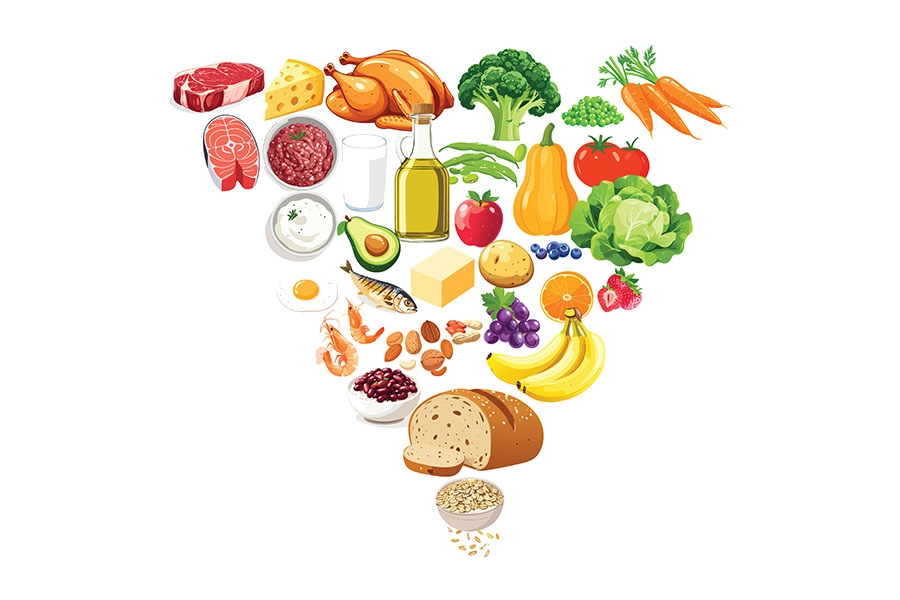 Food pyramid introduced with the Dietary Guidelines for Americans 2025–2030.“From obesity-related spine disease and stroke risk to diminished physiologic reserve in patients undergoing brain tumor treatment, we know nutrition lays the foundation for treatment success,” says the organization’s and Congress of Neurological Surgeons chair of the Washington Committee, Alexander Khalessi, M.D., M.B.A., FAANS.
“Our youngest patients are no exception. Many pediatric neurosurgical conditions stem from abnormalities in central nervous system development exacerbated by poor maternal and infant nutrition. Neural tube defects remain a well-established example of how nutritional deficiency, specifically folic acid exposure, can directly promote disease,” he says.
Additionally, he praises the guidelines for bringing attention to whole foods, protein, and the gut microbiome’s role in health.
Meanwhile, American Medical Association president Bobby Mukkamala, M.D., comments: “The guidelines affirm that food is medicine and offer clear direction patients and physicians can use to improve health.”
Additionally, the Coalition for Metabolic Health praises the move to whole foods, including plant and animal sources, while increasing protein and reducing grains, sugar, and refined carbohydrates. “We fully support the new option for Americans with certain chronic diseases to adopt therapeutic low-carbohydrate dietary approaches.”
Children and infant health
For children’s health, the American Academy of Pediatrics advocates the guidelines’ clear focus on child nutrition, focused on whole, minimally processed foods.
According to the guidelines, infants should drink breast milk or, if breast milk is not available, iron-fortified infant formula for the first six months after birth. At 12 months of age, it is advised that babies cease using infant formula and switch to whole milk.
“We commend the Dietary Guidelines for Americans’ inclusion of the Academy’s evidence-based policy related to breastfeeding, introduction of solid foods, caffeine avoidance, and limits on added sugars,” comments the organization’s president, Andrew Racine, M.D., Ph.D., FAAP.
 Organizations have offered mixed responses to the guidelines, praising whole-food messaging while raising concerns about heart health implications.Meanwhile, the Food Allergy Research & Education praises the guidelines for recommending the early introduction of various potentially allergenic foods, along with complementary foods, during infancy to reduce the risk of developing allergies.
Heart health, but with a grain of salt
The American Heart Association welcomes the guidelines for recommending increased vegetables, fruits, and whole grains and limiting added sugars, refined grains, saturated fats, and sugary drinks.
However, on the recommendation to increase meat intake, the association says: “We see an important opportunity to educate consumers about the scientific basis for certain recommendations.”
“For example, we are concerned that recommendations regarding salt seasoning and red meat consumption could inadvertently lead consumers to exceed recommended limits for sodium and saturated fats, which are primary drivers of cardiovascular disease. While the guidelines highlight whole-fat dairy, the American Heart Association encourages consumption of low-fat and fat-free dairy products, which can be beneficial to heart health.”
Wellness, dairy, meat, and fresh produce sectors
According to the coalition of grassroots organizations and stakeholders for a healthier world, Global Wellness Forum chairman Sayer Ji believes that the US food pyramid, to date, has contributed to the prevalence of chronic diseases.
 The guidelines have sparked debate across health, agriculture, and food sectors over how best to balance nutrition, disease prevention, and consumer choice.Commenting on the new pyramid, he believes: “A science-based, food-first nutritional framework incorporating ancestral foods has the potential to dramatically reduce diabetes, heart disease, autoimmune conditions, and more, while restoring metabolic and immune resilience at scale.”
Meanwhile, the International Dairy Foods Association applauds the administration for placing full-fat dairy products at the center of healthy diets.
National Milk Producers Federation president and CEO Gregg Doud adds: “Not all fats are created equal, and because the guidelines acknowledge this, dairy’s benefits are better reflected in this iteration of the guidelines.”
The International Fresh Produce Association says the focus on whole foods brings an opportunity to increase fruit and vegetable intake.
Plant Based Foods Institute executive director Sanah Baig suggests: “Stronger plant-forward guidance could advance public health while also serving as an economic opportunity for US agriculture.”
“Increased recognition of the important role plant-based protein- and fiber-rich foods have in our diets can help growers expand their farming operations, build durable markets for American-grown pulses and other crops, and keep more food dollars circulating in rural communities.”
The Meat Institute’s president and CEO, Julie Anna Potts, says: “Scientific evidence demonstrates that meat is a rich source of high-quality protein, essential vitamins, and highly bioavailable minerals that support human health throughout the lifespan.”
The National Fisheries Institute underscores that seafood can be a whole-food source of key nutrients, providing protein and healthy fats, specifically omega-3s.