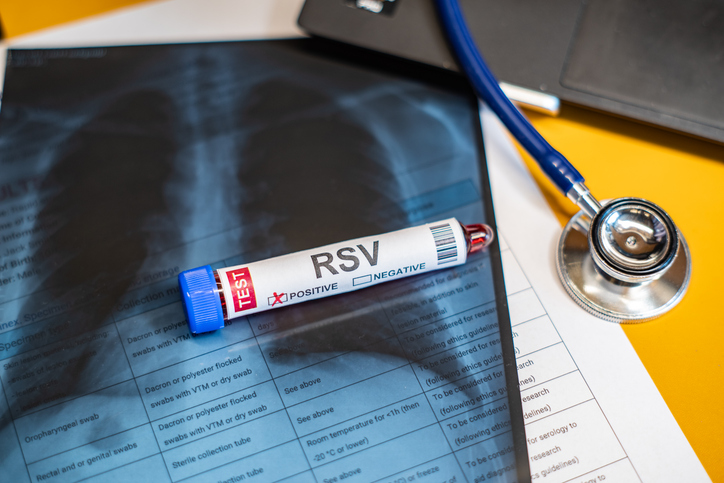
An observational study published in the American Journal of Transplantation evaluated the cellular and humoral immunogenicity of RSV prefusion F-based vaccines in solid organ transplant (SOT) recipients and patients with chronic kidney disease (CKD).
Investigators at Saarland University Medical Center in Germany assessed natural RSV immunity among 52 immunocompetent control participants and 197 patients with immunodeficiencies. Subsequently, 46 kidney transplant (KTx) recipients, 30 lung transplant (LuTx) recipients, and 19 patients with CKD received a single dose of either the adjuvanted RSVPreF3-AS01E or the nonadjuvanted RSVpreF vaccine. RSV-specific antibodies and T cells were quantified before and after vaccination by means of enzyme-linked immunosorbent assay and flow cytometry. Reactogenicity was self-reported via a standardized questionnaire.
At baseline, more than 90% of individuals had detectable pan–RSV-specific immunoglobulin G (IgG), and 30% to 58% had RSV-specific CD4 T cells, indicating prior RSV exposure. Vaccination was well tolerated and led to significant increases in both antibodies and polyfunctional CD4 T cells (P<0.0001). Vaccine-induced CD4 T-cell responses demonstrated cross-reactivity to both RSV-subtypes A and B, with similar T-cell levels observed toward F-derived peptides from RSV-A and RSV-B strains (P=0.262).
CD4 T-cell responses were comparable between KTx recipients and patients with CKD but were significantly lower in LuTx recipients (P=0.023) and in SOT recipients within the first year after transplant (P=0.005). The vaccine did not induce CD8 T cells. Multivariable regression analysis identified mycophenolate mofetil/mycophenolic acid intake as adversely affecting RSV-F-specific IgG induction, consistent with previous reports on the negative effects of these medications on vaccine responses.
Pain at the injection site was the most frequently reported adverse event. Kidney transplant recipients more frequently reported adverse events overall (P=0.0009), including fatigue as a systemic adverse event. No clinical signs of rejection were observed within 3 months after vaccination.
The investigators note that alternative strategies may be required to improve immunogenicity in heavily immunosuppressed SOT recipients, such as postponing vaccination to periods of lower maintenance immunosuppression or considering a multiple-dose primary series approach.