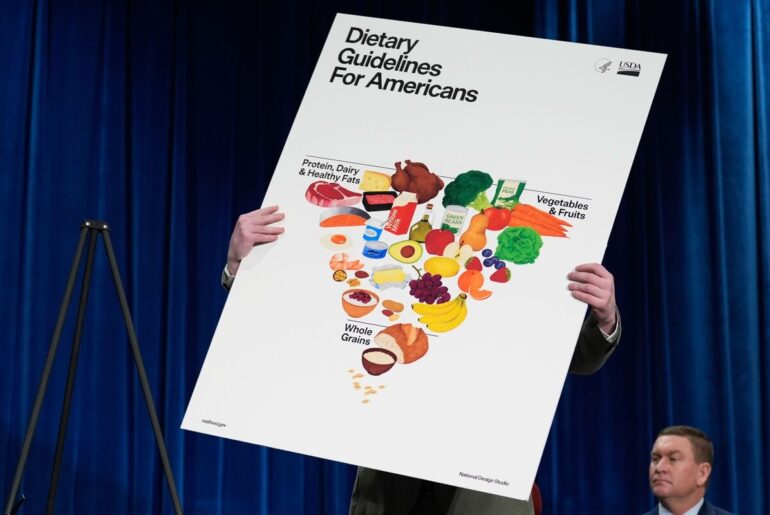
Last week, the Department of Health and Human Services released the 2025-2030 U.S. Dietary Guidelines for Americans, designed to provide nutritional recommendations and guide regulations in programs such as the National School Lunch Program and the Special Supplemental Nutrition Program for Women, Infants, and Children (WIC). These guidelines are released every five years, and, ever since the introduction of the MyPlate nutrition guide in 2011, have remained generally consistent. The new guidelines follow this trend with a few major deviations.
Some of these changes are strange, straying from other expert advice, and have insufficiently-studied scientific bases. For example, the new guidelines have greatly increased, up to doubled, the daily recommended amount of protein, from 0.8 grams of protein per kilogram of body weight to 1.2-1.6 grams per kilogram. Meanwhile, expert bodies, such as Mayo Clinic and Harvard Medical School, have not changed their recommendations from 0.8 grams per kilogram. It is estimated that most Americans already consume this much protein, if not more, every day.
The reason for this higher recommendation is left unexplained. While protein is needed to build and maintain muscle and tissue, consuming too much protein without an appropriate amount of exercise can lead to the excess being converted into fat. Nowhere in the document is this critical link to exercise mentioned, and considering that most Americans do not get the recommended amount of exercise either, this could lead to many people consuming far more calories of protein than they actually need. Despite having explicitly stated goals of fighting chronic disease, particularly heart disease and obesity, and “ending the war on protein” (was there ever a war on protein in the first place?), it seems these unclear recommendations may result in quite the opposite.
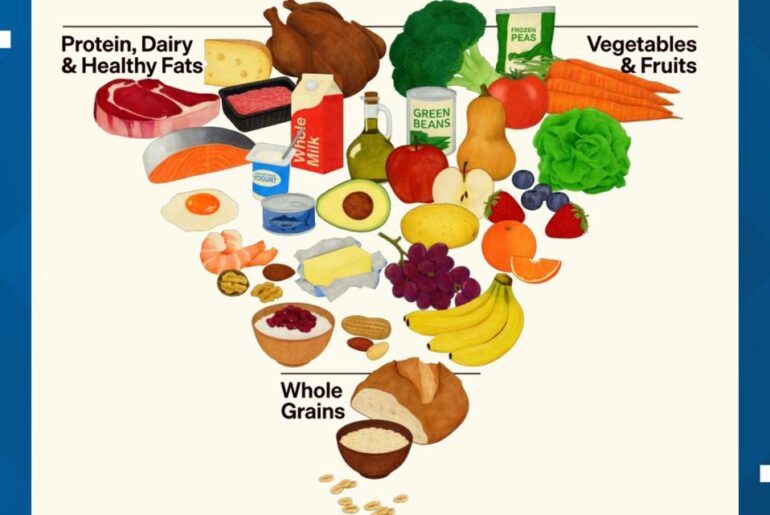
Additionally, some of these statements are completely contradictory. The stated recommended limit for saturated fat consumption is for it to not exceed 10% of daily calories, which aligns with expert recommendations. However, other parts of the document highlight the consumption of animal protein (especially red meat), full-fat dairy products over reduced-fat and the use of butter and beef tallow as “healthy fats,” with no scientific literature referenced to support the claims. These all have much higher amounts of saturated fats than other protein, dairy and fat alternatives. Butter and beef tallow, especially, are almost pure saturated fat. It seems rather difficult to expect Americans to limit their saturated fat consumption when the rest of the document suggests they should do otherwise.
While some of these individual recommendations are troubling, the biggest problem with the new guidelines is the distrust it builds between the government, health institutions and American citizens. In fact, the American Heart Association has already released a statement questioning the scientific basis of the full-fat dairy and red meat protein guidelines, citing studied links between saturated fat and increased risk of cardiovascular disease.
The lack of scientific detail in the report doesn’t help. Guidelines from previous years have been published as policy reports, with named authors, references and specific suggestions for different conditions and circumstances. The new guidelines, however, are far more brief, lacking in detail, with the total document being less than 10% the length of the 2020 edition. This change seems to be an attempt to make the guidelines more readable by the general public, but it hurts both health professionals and the public it is trying to help. People who need specific information are not able to see suggestions that fit their needs, and health professionals who need to read more in detail and fact-check have more trouble doing so. Ultimately, if these inconsistencies pit health professionals against the government, who should Americans believe?