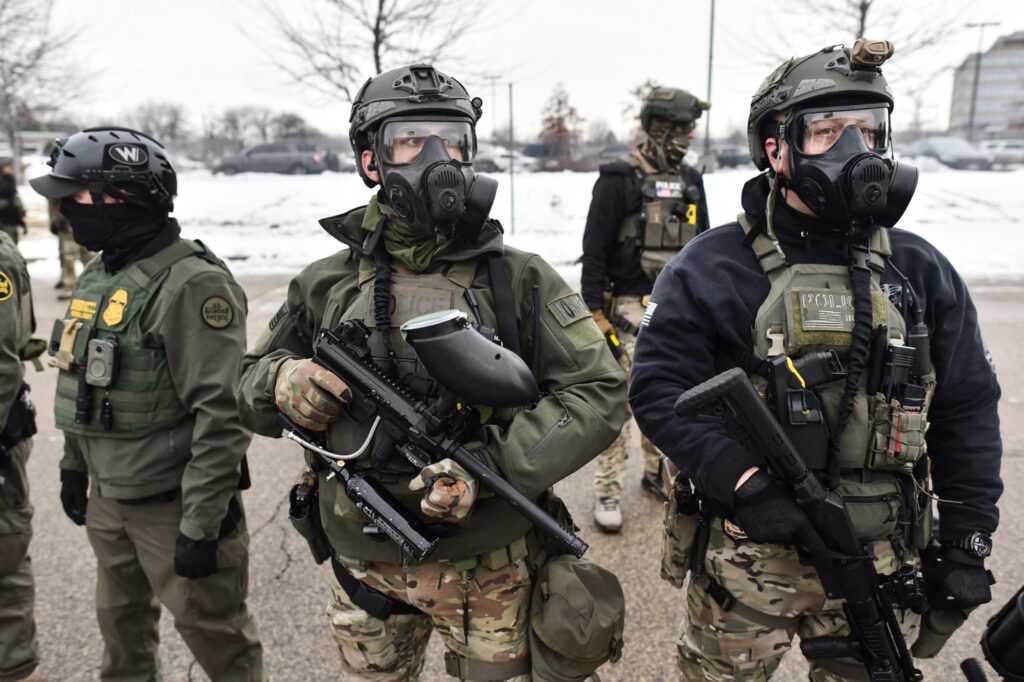
Minneapolis entered January with unusually mild weather and a sense of calm, but that was shattered two days later when a federal immigration officer shot and killed Renee Nicole Good.
Less than 24 hours later, a man and woman in Portland, Oregon, were shot and wounded by Customs and Border Protection agents.
As immigration crackdowns in both cities escalated, the shootings elevated questions about qualified immunity for law enforcement agents. The practice allows people in certain positions of authority to perform their duties without fear of civil, criminal, or personal consequences.
The homicide investigation into the death of Good, a Minneapolis mother of three, has been taken over by the FBI. Local officials were also considering their own investigations.
Portland Mayor Keith Wilson said there was once a time when the federal government was trusted, but “that time has long passed.” The state attorney general has launched an investigation.
In Good’s case, the Hennepin County Attorney is exploring all options to ensure that state officials can still investigate, and Minnesota Attorney General Keith Ellison, who has criminal prosecutorial authority, is also calling for a full investigation.
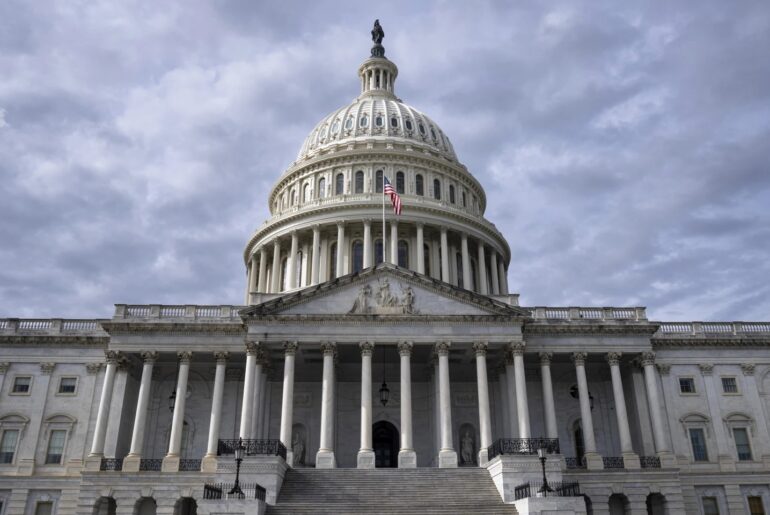
Separately, lawmakers in Washington, D.C., reintroduced legislation to end qualified immunity.
The bill will include the opportunity to grant “victims the right to sue federal law enforcement officers — not just state and local — for civil rights violations,” U.S. Rep. Ayanna Pressley of Massachusetts said of the Qualified Immunity Abolition Act’s reintroduction Tuesday.
The bill was first introduced by Democrats in 2020 and had been pending in the Senate Judiciary Committee since May.
“I cannot stand idly by while rogue federal agents — emboldened by the Trump White House — ravage our communities, brutalize families, and kill our neighbors on the street in cold blood,” Pressley said in a press release after the federal government took over the investigation into the death of Good.
Last week, Vice President JD Vance said the Immigration and Customs Enforcement agent who shot and killed Good is entitled to “absolute immunity” and “qualified immunity” for acting in self-defense. Good was shot and killed while turning her SUV away from Jonathan Ross, a veteran ICE agent.
The slain 37-year-old poet was killed within walking distance of where George Floyd was killed in 2020. Ellison’s office brought charges against the four officers, who have since been fired and sentenced.
Today, a community memorial stands at the site of Floyd’s murder. Former Minneapolis councilperson Andrea Jenkins said it was one of her last initiatives in connection to the legal justice reform systems and racial reckoning within communities across the country.
Before retiring, Jenkins had represented the residents of Brooklyn Park since 2018. It was the same neighborhood where Justine Damond, and Amir Locke were also killed by the police. Good’s killing was captured on several cellphone, neighborhood surveillance, and law enforcement-issued cameras, and was published on social media within minutes of the incident, much like Floyd’s had on May 25, 2020.
Before Floyd’s family settled the civil lawsuit, Black, brown, low-income, and other marginalized communities had not seen law enforcement held accountable for their actions, Jenkins said.
Jenkins said she would be remiss if she didn’t also include the 2016 death of Philando Castile across the Mississippi River in St. Paul. That officer, a white Hispanic, was acquitted.
Locke, 22, a licensed gun owner, was shot and killed while lying on a couch when a SWAT team entered the apartment.
What does this mean for accountability?
Including ICE agents into the bill increases most Democratic lawmakers’ efforts to deliver accountability for families abused by law enforcement and abolish the defense of qualified immunity in civil lawsuits. The George Floyd Justice in Policing Act was introduced in 2021 and has lingered in Congress since.
President Donald Trump has promised to protect law enforcement officials. In 2024, his campaign vowed to give them “immunity from prosecution” weeks after Sonya Massey was murdered in 2024 by a police officer in her Illinois home. Massey was holding a pot of hot water when she was shot and killed by Sean Grayson, who was convicted last October.
Civil litigation is another path to legal justice when impacted individuals and their families are affected by a law enforcement officers’ action, whether on duty or off. Floyd’s family holds the record for the highest pretrial civil rights settlement ever, said Ben Crump, a civil rights attorney behind many of the highest wrongful-death lawsuits, including in the death of Breonna Taylor in Louisville, Kentucky, that also included reforms for the city.
Minneapolis’ population is about 18% Black, and the city has a large Somali community. Twelve of the 18 individuals killed during an encounter with police in Minneapolis were Black men, ranging in age from as young as 20 to the 46-year-old Floyd, according to the Mapping Policing Violence database, which has tracked fatal police incidents that occurred since 2013.
Read More: