Reading time: < 1 minute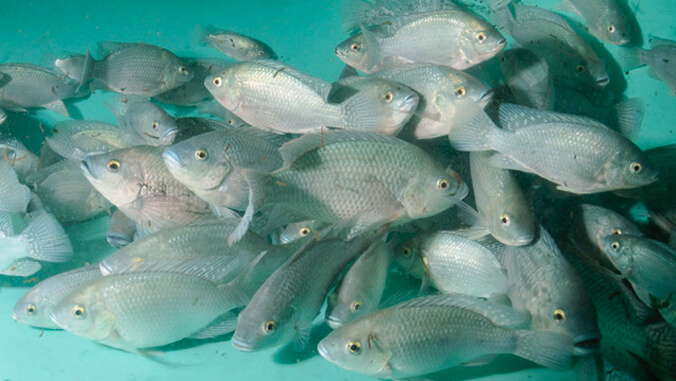 (Photo credit: Andre Seale)
As the state works to increase local food security, researchers at the University of Hawaiʻi at Mānoa are developing methods to naturally produce more nutritious, faster-growing fish.
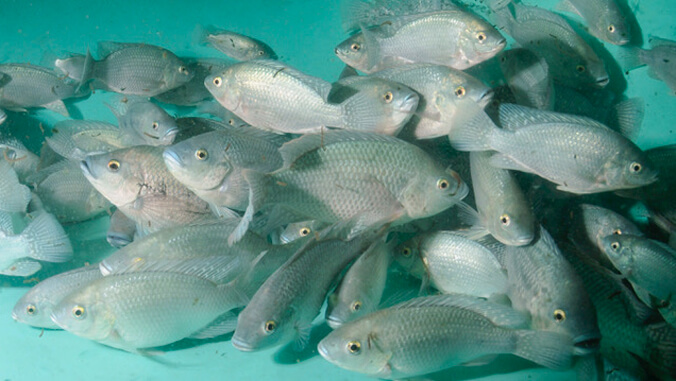
Building on recent tilapia findings, a study from the College of Tropical Agriculture and Human Resilience (CTAHR) reveals how water salt levels can be used to control the fish’s internal chemistry. The research, published in Biological Trace Element Research, was led by Andre P. Seale, professor in CTAHR‘s Department of Human Nutrition, Food and Animal Sciences. These findings could potentially lead to healthier farmed tilapia in Hawaiʻi.
Unlocking the ‘salt water advantage’
While aquaculture has long relied on changes in fish diets to improve production, the UH team is showing that controlled changes in salinity can naturally alter the composition of essential minerals in tilapia.
The study found that zinc concentrations are higher in the muscle of tilapia acclimated to seawater, while iron and manganese are higher in freshwater fish. The research also identifies “molecular gatekeepers” that manage the transport of these minerals when salinity levels change.
“We found that changing the salinity of water can change certain genetic pathways that regulate trace minerals in Mozambique tilapia,” said Seale. “This work opens the door for strategies to enhance the nutritional profile of fish, independently of changes in their diet composition.”
Sustainable production
The research was conducted at CTAHR’s Tuahine Aquaculture Research and Education Center and is part of developing strategies to improve the quality of aquacultured fish in Hawaiʻi.
Several federal agencies funded the project, including the U.S. Department of Agriculture National Institute of Food and Agriculture, the National Oceanic and Atmospheric Administration, the National Institutes of Health and the National Science Foundation.