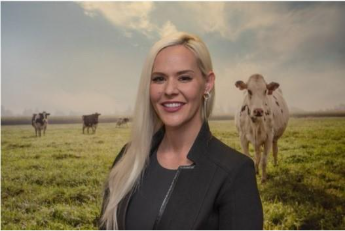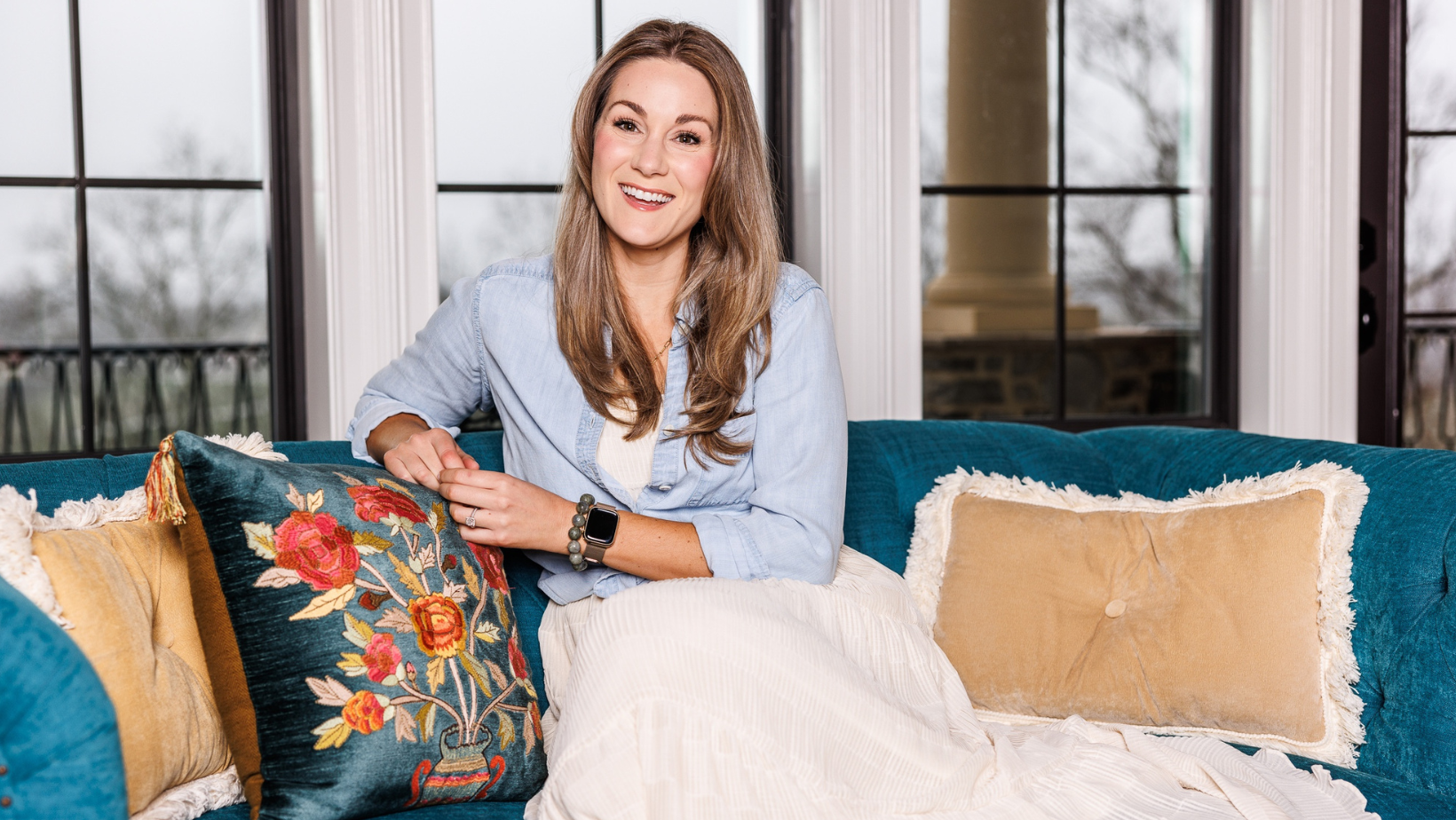
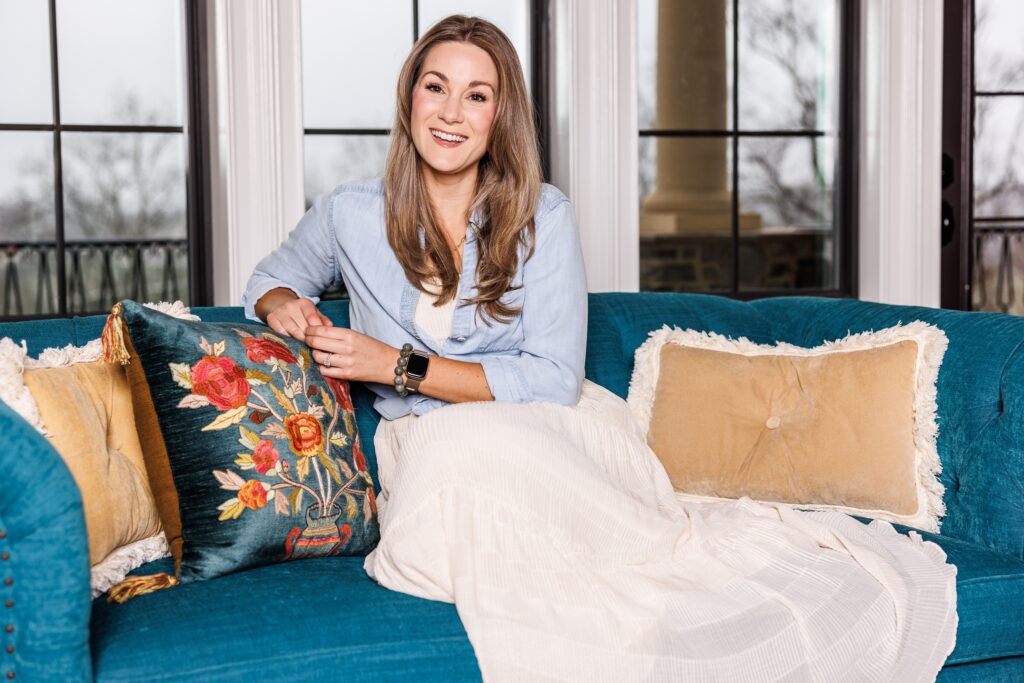
 Local Ashley Fletcher used her own healthcare scare to launch a health and wellness brand, Ashley Fletcher Wellness. She’s determined to teach women about the power of asking for support. | Photo Provided
By Tabitha Evans Moore | EDITOR & PUBLISHER
It’s 2013, and Ashley Fletcher’s going through some big changes.
Newly married, she and her husband, Chris, relocate from her hometown of Louisville, Kentucky to his hometown of Lynchburg, Tennessee so he can take over as the Assistant Master Distiller for The Jack Daniel Distillery. Together, they’re building a new house and she’s making a career shift.
Suddenly, she notices muscle and joint pain as well as near-constant fatigue. It’s new and getting worse. Doctors diagnose her with fibromyalgia and inform her that it’s a “lifelong” condition. It’s a moment that changes everything.
“I was shocked, and then worried when I began researching the medication I’d been prescribed,” Ashley says. “I knew there had to be a better path.”
That’s when she discovers the Summer Tomato podcast hosted by Dr. Darya Rose.
Created in 2009 by the PhD-trained neuroscientist, author of Foodist, and former chronic dieter, the podcast discusses what Dr. Rose calls a “healthstyle” or a set of healthy habits you actually enjoy. It focuses on mindful eating, smart choices, and non-restrictive dieting, and it inspired Ashley to change her relationship with food and commit to daily movement.
For Ashley, the shift wasn’t immediate or dramatic. It was incremental. She begins paying attention to how she eats. She adds consistent movement. She listens more closely to her body. Over time, the changes compound.
Within about 18 months, the joint pain and fatigue that once dominated her largely disappeared. As an added bonus, she lost weight, but more importantly, she regained clarity and a sense of stability — physically, emotionally, and mentally. What begins as self-preservation quietly reshaped how she understands healing itself.
“I learned what the mind-body-spirit connection actually feels like in real life,” Ashley says. “It’s something you can read about, but until you experience that moment when your physical health, mental wellbeing, and spiritual life begin working together, it’s hard to fully grasp its power.”
And that experience stayed with her.
Years later, after becoming a mother and navigating additional life transitions, that understanding continues to surface. When Ashley enrolls at the Institute for Integrative Nutrition, it’s initially to deepen her knowledge for her own health, life, and family. Halfway through the program, her motivation changes.
“I realized I was being led to share this work,” she says.
Today, through Ashley Fletcher Wellness, she supports women navigating some of the most vulnerable seasons of their lives: pregnancy and postpartum, perimenopause, high-stress careers, spiritual exploration, and major personal realignments. Her role, she says, is not to fix or prescribe, but to walk alongside. Her approach is intentionally structured, relational, and confidential. With clients, her bullseye is empathy and vulnerability — the two things she calls her superpowers.
“I’ve learned to embrace vulnerability because I feel like the edge of our comfort zone is where we have the biggest opportunity to grow,” Ashley says. “When I go first and put myself out there, it opens up a channel to connect more deeply with people — I love that.”
If vulnerability is the art of accepting yourself unconditionally then it’s flipside, empathy, is the art of accepting others unconditionally. Together, the two allow her to hold space for clients and meet them where they are instead of where they wish to be while giving them the building blocks to build change in a slow and sustainable way.
“I’ve always felt like I experience things a bit more deeply than some people — higher highs and lower lows,” she says. “I’m sensitive to energy, and in a coaching setting, that allows me to listen closely and help move the work forward in a meaningful way.”
Asking for help is the first step
Ashley’s careful to remind that health coaches aren’t meant to be healthcare.
“Wellness coaches aren’t doctors or therapists,” she explains. “I see myself as a bridge between what someone knows they need to do and what they actually do.”
She describes her role as holding a safe container — one built on clear boundaries, accountability, and consistent support. Clients meet with her every other week, work toward small, sustainable changes, and learn to reframe setbacks not as failures but as information.
In her experience, many women already understand what supports their wellbeing. The harder part is protecting the time, energy, and boundaries required to follow through — especially in cultures and communities, like southern rural towns, where self-reliance is deeply valued. Asking for help can feel like failure, when in reality, Ashley says, it’s often the turning point.
In the first month of coaching, Ashley says many clients notice subtle shifts: improved rest, reduced overwhelm, and the calming effect of knowing they are no longer carrying everything alone. Over time, those changes compound.
“It can help settle the nervous system, which then becomes a catalyst for bigger, longer-lasting changes.”
While measurable outcomes matter, Ashley says the deeper work often surprises clients.
“Someone might come in wanting help with exercise or nutrition and realize they actually need support navigating a toxic work environment,” she says. “The real win is learning to notice when something isn’t working — and feeling confident enough to change course.”
When we ask her for a highlight reel of what works in the wellness game, she’s quick to give a few insights.
She says many of the women she works with say they wished they had learned the importance of physical strength sooner — that we’re trained to look at the scale but that that number tells us very little about our overall health.
“Protecting muscle mass and looking at body composition supports metabolism, mobility, and resilience as we age in ways weight alone cannot,” she says.
She also explains that our inner dialogue can often be the sneaky thing that’s holding us back and that if we slow down and listen it might surprise us to learn we often aren’t that kind to ourselves.
“If I notice a lot of self-deprecation or negativity in session, I ask clients what would happen if they practiced speaking to themselves the way they would to a dear friend, or even to the five-year-old version of themselves,” she explains. “That kind of inner work takes courage and time, but it can completely change how a woman treats herself, and, bonus, how she allows others to treat her as well.”
Permission to let yourself be seen
One moment that affirmed her path involved working with a first-time mother throughout pregnancy. After the birth, hearing the woman recount her experience with pride and a recognition of her own strength left a lasting impression.
“It gave me a physical sensation of joy,” Ashley says. “It was the clearest confirmation that I was on the right path.”
At its core, Ashley’s work is about creating space — for honesty, for accountability, and for the courage it takes to ask for help. Not every woman needs a coach, she says. But many need permission. Permission to slow down. Permission to speak the truth of what they’re carrying. Permission to let themselves be seen.
Her hope is that readers recognize this: support exists and choosing it is not a weakness. Sometimes, it’s the most powerful and vulnerable step a woman can take.
Ashley offers a free, no-strings-attached 60–90-minute phone or in-person consultation to help her those interested in working with her to determine whether it’s the right fit. After that, clients typically sign up for a three- or six-month program. After the initial program, she offers hourlong a la carte sessions designed for in-the-moment support.
Ashley explains that her ideal of her perfect client is someone feels called to make a major shift but doesn’t know where to start. You can learn more about her at her website by clicking here. •
The Lynchburg Times is an independently-owned, small community newsroom located in Lynchburg, Tennessee. We are supported by voluntary reader donations, small business partnerships, and corporate underwriters. This small business profile is brought to you by First Community Bank, who are committed to giving back to the communities they serve by supporting local, small businesses. You can learn more about them by clicking here.