No can gets kicked down the road quite so well as the ‘get fit’ can.
‘Tomorrow’ is always the ideal time to finally get in shape: to lose those excess pounds you’ve collected around your midriff, or to take those first strides towards the big physical challenge you’ve always toyed with taking on.
‘Tomorrow’ might mean, literally, tomorrow, after one last weekend of indulgence, or an ill-defined point in the future that we don’t have to commit to right now.
Neat and tidy starting points, such as a Monday, the first day of a month or New Year’s Day (or, accounting for the hangover, the day after New Year’s Day…) are popular too. What they all have in common is that they’re not today.
So, how can we make sure that our long-promised lifestyle overhaul finally takes flight? And, more importantly, how can we keep it in the air and eventually stick the landing?
I called up personal trainer Ollie Reeve, who runs Origin Personal Training in Bristol, UK and has been in the business since 2008, to find out.
1. Think about hiring a personal trainer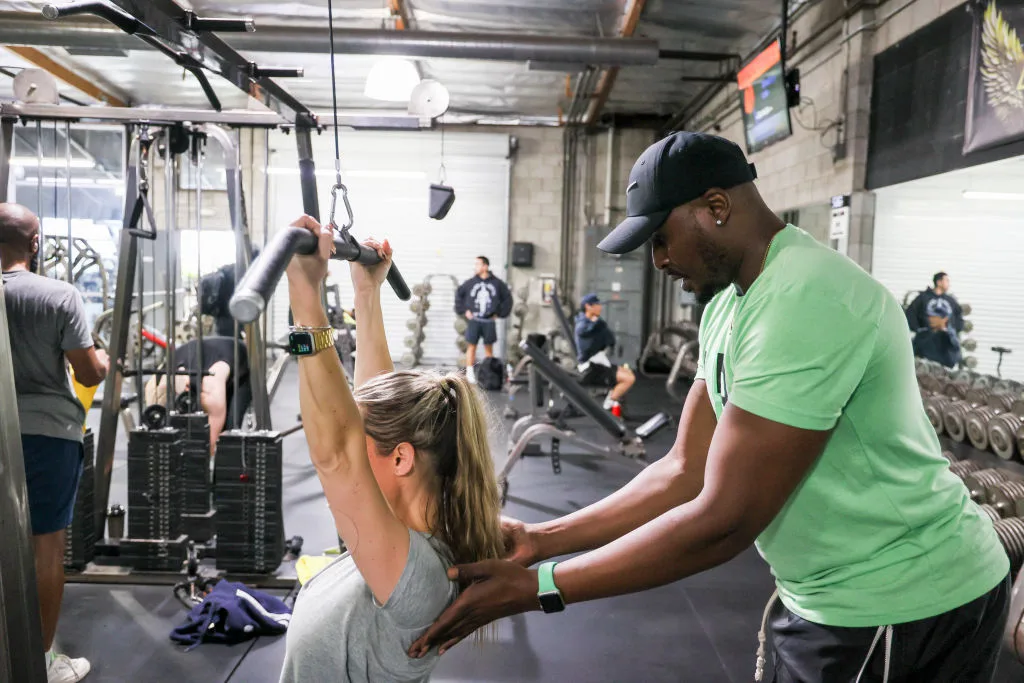 A personal trainer will help you improve your fitness. Juliana Yamada / Getty Images
OK, we might have guessed Ollie, a personal trainer, would say this, but there’s plenty of objective evidence that working with a coach, particularly if you haven’t done so before, after years of failed get-fit-quick schemes, will raise your chances of reaching your fitness dreams this time around.
If that well-known saying about insanity – ‘doing the same thing over and over again, and expecting a different result’ – is correct, then judging by how many of us approach fitness, we’re all going mad.
Hiring a trainer can provide you with “clarity”, says Reeve. “I can sit down with you, look at your life, the time you’ve got, your current fitness and abilities, and then create a plan around which you can stick to.
“The industry is full of so many conflicting ideas about the right ways to get fit and what you should be doing, but it’s not one-size-fits-all.”
“If you’ve got a thousand ideas and you try and do them all at once, you’ll go nowhere.
“I try and get people to achieve things early on, in the short-term, that they’re going to feel the most benefit from. That’s a motivator to push on.”
2. Be accountable
As well as detangling the complexity of getting fit, a coach also provides accountability.
The idea is that it makes you responsible for your fitness target and is a great motivator to encourage you to get your running shoes on.
“Your coach will know if you haven’t done the work,” says Ollie. “I’ll usually only see a client for one hour a week, so most of the time it’s on them [to hit the targets].”
Simply paying a weekly fee for a coach in these austere times will certainly motivate you to work harder, while taking time out of family life for something that’s your own can also encourage you to make the most of the opportunity.
3. Do age-appropriate work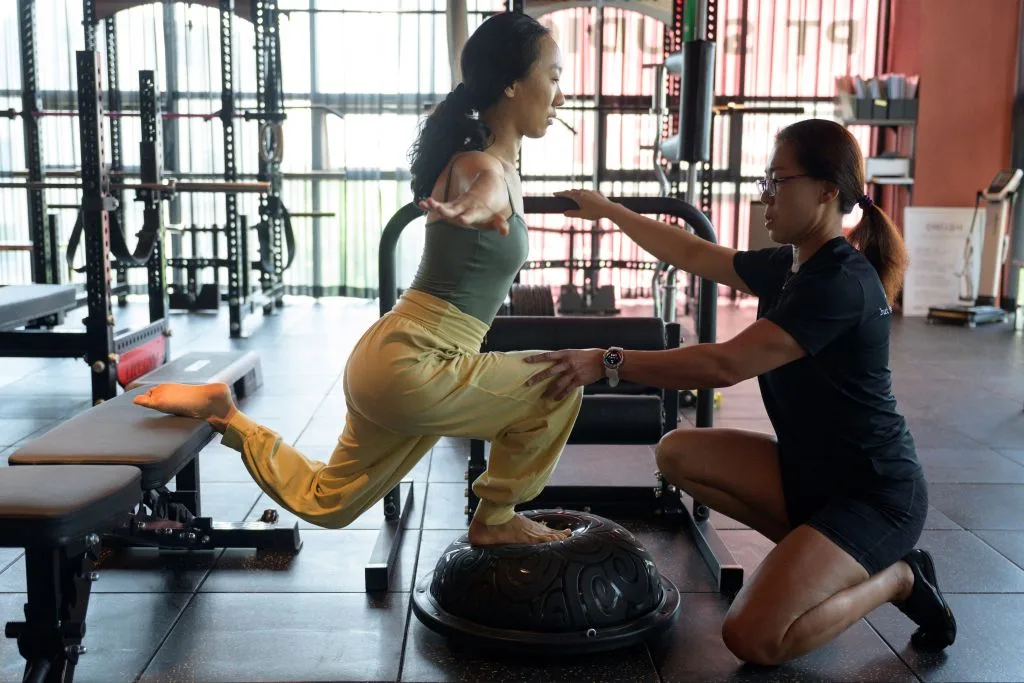 Getting fit will improve your libido, bone health and energy levels. Anthony Wallace / Getty Images
If you’ve tried many times to get fit, yet you’ve seen your best-laid plans fall apart, you may have got into the habit of trying the same routines each time.
This time, however, you may be at an age where those routines are no longer the best thing for you.
“If you’re getting older, don’t rely on cardio work. It’s now about lifting weights, building muscle and raising testosterone levels – that’s where you’re going to feel the benefits,” says Ollie.
Lifting on resistance machines – not heavy weights but enough to encourage muscle building – helps to turn the tide on the drop in muscle mass and quality that happens to all of us through middle age.
This tells the body to produce more testosterone, which helps to repair and build muscle, and can help increase libido, bone health and energy levels.
4. Don’t try to change who you are Set realistic expectations to avoid disappointment. Ying Tang / Getty Images
In our modern world, with bottomless fitness content and adverts online, it’s easy to get influenced and overwhelmed by it.
The abundance of six-packs and muscular physiques might put you off the whole idea of getting fit in the first place or give you unrealistic expectations of what is possible for you.
“Understand who you are and work your fitness around that,” says Ollie. “The mistake people make all the time is in trying to fundamentally change who they are.”
If you’ve never been a fitness lover and aren’t naturally strong or flexible, it’s best to accept that’s not who you are, he argues, and come up with a plan that works for you.
“All you can do is try and be a better version of yourself – not try and be someone else. Otherwise, you’ll not be happy.”
5. September is the new January
Many people pin unreasonable expectations on getting fit in January. Christmas indulgence leaves many of us with a desire to lose weight and get fit in the New Year, but the odds of doing so successfully are stacked against us.
A massive 80% of New Year’s resolutions are said to have been binned by February, which leaves little time for a fitness overhaul.
It’s easy to see why.
For most people in the northern hemisphere, the weather is as bad as it’ll be all year, the nights are long, our wallets are empty, and January is the month of the unofficial ‘unhappiest day of the year’.
‘Blue Monday’, the third Monday of the year, was coined by Cardiff University psychologist Cliff Arnall in 2005 to explain our collective low mood at this time of January hitting its nadir.
All this perhaps explains why Ollie now gets more business in September than in January.
“September is the new January. For people with school-age kids, the schools have gone back and everyone’s overdone it on the food and drink in the summer.”
You’ve also got Stoptober – quitting alcohol for October – becoming the new Dry January. Everyone’s realising that January is pretty miserable.
“You still get people kicking it into January, of course, and it remains a good time to pick up your fitness – there is still a new energy. But I would say September has become more of a reset month.”
6. It’s good to have a long-term goal Long-term goals require long-term fitness plans. Andy Lloyd / Our Media
Goals near and far are vital to any new fitness regime.
Both will get you out of the house; short-term goals lay the foundations for a strong body in the long-term.
But it’s only distant goals that enable you to dream.
“I’m always big on people signing up to an event. I’ll always ask where people would like to be in a year, because it takes time, right? It’s not a quick fix. Where would you like to get to where you can look back and be really proud of yourself?”
7. Forget your distant-past fitness peaks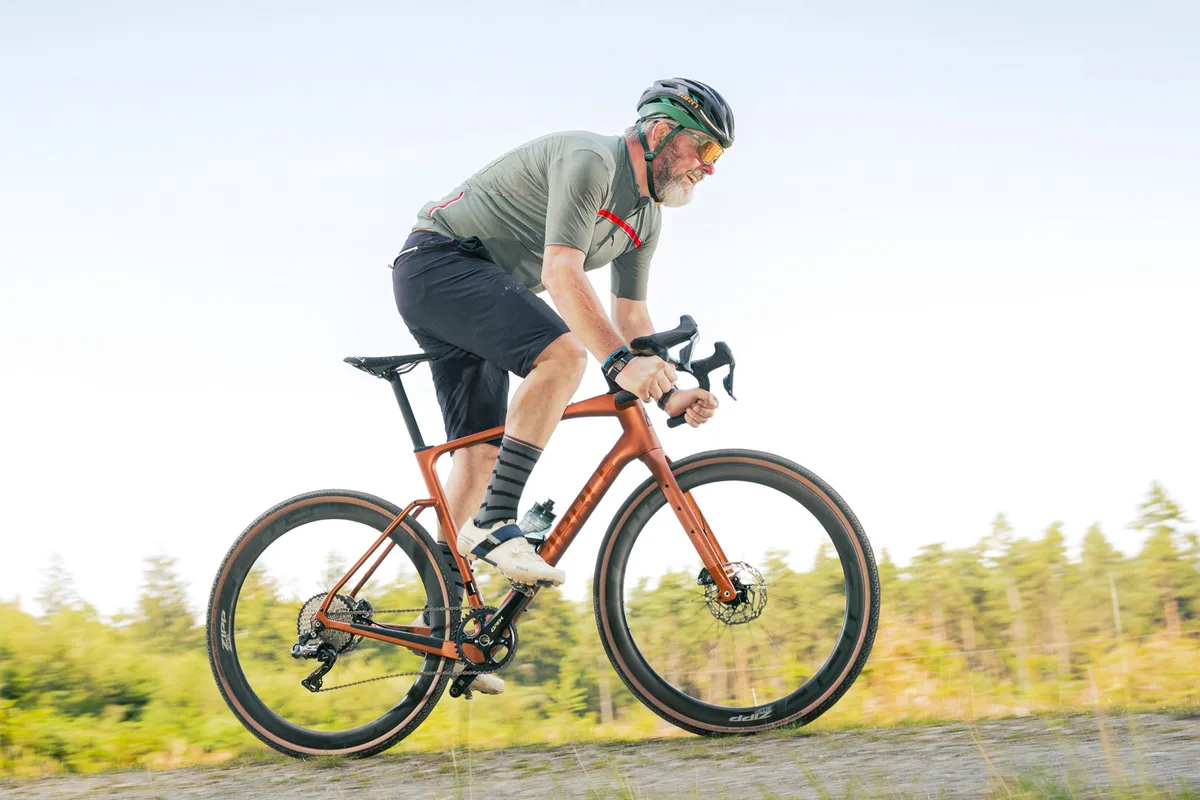 It’s important not to compare your fitness to your younger self. Russell Burton / Our Media
If you’re middle-aged and have sepia-tinged memories of fitness achievements of yore, it’s time to leave them in the past.
The you of today is a different animal from back then.
“The clients that I have who struggle the most with fitness refer to themselves as a 20-year-old all the time,” says Ollie. “They’ll talk about the things they were capable of at school.”
“But the people that are fit, who have lived it for a long time, are only talking about the past 12 months,” he says.
“[Reliving the past] is a dangerous trap to fall into, because none of us can do what we did 20 years ago – you can’t go back there. You have to reset your goals all the time.”
“When I was playing rugby in my 20s, I used to lift heavy weights all the time – split days of push days, pull days, shoulder days – but my body can’t take it anymore. I just do full-body strength training now. Every time I go in, I hit every muscle group once. My body can tolerate it. I still get good results, and I’m still in good condition from it. But I’ve had to change.”
“It’s not worth lifting 150kg and lifting as heavy as I can; it’s just not worth it anymore. I’m happy as long as I can lift my kids up!”