 Collagen creams offer temporary surface hydration, while serums with ingredients like vitamin C and retinol encourage natural collagen production for long-term improvement. Oral supplements, broken down into peptides, support collagen synthesis from within. A combination of these, alongside healthy habits and sunscreen, yields the best anti-aging results. If there’s one word the beauty world refuses to let go of, it’s collagen. It’s on jars, bottles, sachets, gummies, even coffee mixes now. Everywhere you look, something is promising firmer skin, fewer lines and that “bounce” we all remember having without trying.But it gets confusing fast. Do you apply collagen on your face? Do you drink it? Swallow it in capsule form? Or do all of them and hope something sticks?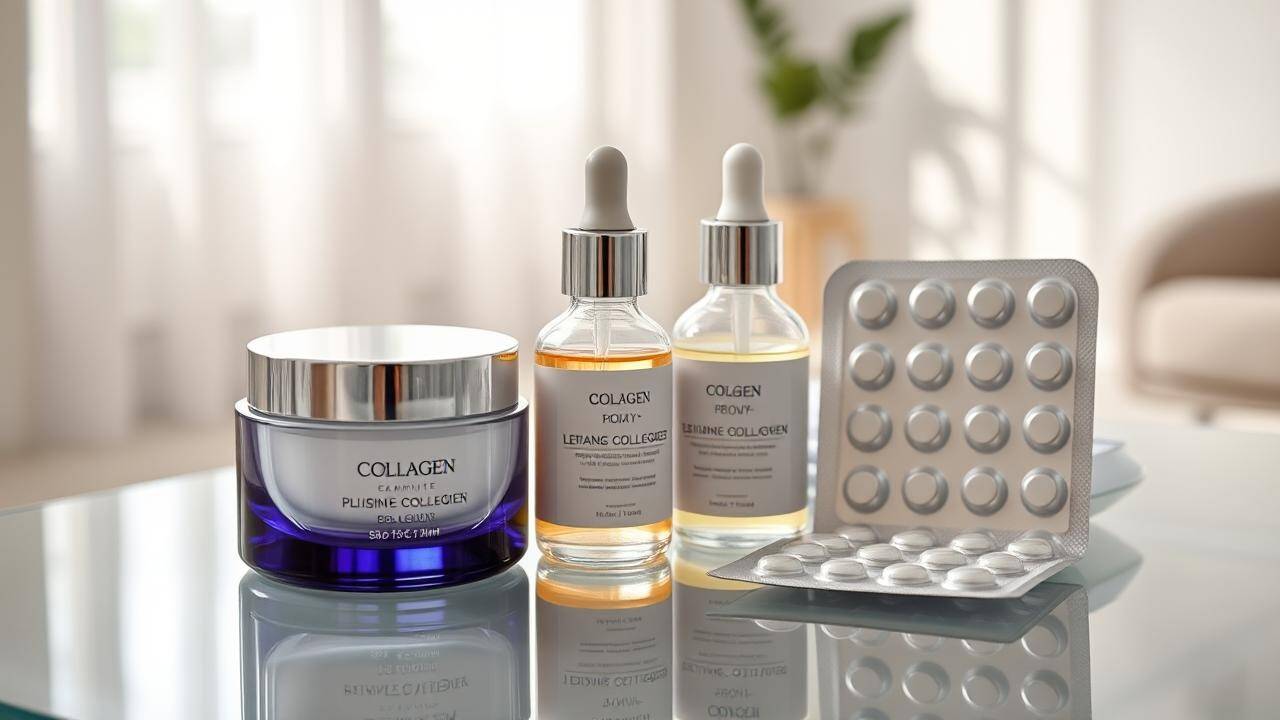
I present a high-angle close-up of luxurious collagen products, artfully arranged on a clear glass table, showcasing their premium quality and efficacy.
So let’s slow this down and talk about what actually helps, without the fluff.First, collagen itself. What is it and why do we care so much?Collagen is basically the framework of your body. It’s what keeps skin firm, joints moving smoothly, hair strong and nails from breaking every other day. When we’re younger, our bodies make plenty of it. Skin snaps back. Fine lines barely exist. Things just… hold up better.
Secrets to anti-ageing: 7 simple daily habits that give us healthy skin
Then somewhere in our mid to late twenties, collagen production starts dipping. Slowly at first. You don’t notice it right away. But throw in sun exposure, pollution, stress, late nights, sugar-heavy food, smoking or zero sunscreen, and collagen starts breaking down faster than your body can replace it.That’s when skin begins to look thinner, duller and less elastic. So yes, collagen matters. The real question is how to support it properly.Let’s start with collagen creams, because that’s usually the first thing people reach for.Here’s the honest truth. Collagen molecules are big. Too big to sink deep into your skin. When you apply a collagen cream, the collagen mostly stays on the surface.But that doesn’t mean it’s pointless.Collagen creams are very good at hydrating. They help trap moisture, soften the skin and make fine lines look less obvious for a few hours. Skin looks smoother, plumper and fresher. Especially if your skin is dry or dehydrated, a collagen cream can feel comforting and make your face look healthier.What it won’t do is rebuild lost collagen. Once you wash it off or stop using it, that effect fades. So think of collagen creams as a good outfit for your skin. They make things look nicer, but they don’t change the structure underneath.Now, collagen serums are a slightly different story.Most serums marketed as “collagen serums” don’t rely on collagen itself to do the work. Instead, they include ingredients that encourage your skin to make more collagen on its own. Things like vitamin C, peptides, retinol, niacinamide or hyaluronic acid.These ingredients are small enough to penetrate deeper layers of skin. And that’s where the real action happens.A good serum doesn’t just make skin look smoother for the day. With regular use, it can help improve firmness, texture and fine lines over time. But it needs consistency. And sunscreen. Always sunscreen. Without that, you’re basically undoing all the work.Serums can be powerful, which also means they’re not always gentle. Sensitive skin might need time to adjust. Results don’t show up overnight. But when people talk about topical anti-ageing that actually makes a difference, serums usually sit higher than creams.Then there are oral collagen supplements. And this is where opinions get loud.Collagen powders, capsules and gummies are usually made from hydrolysed collagen peptides. That just means the collagen is broken down so your body can absorb it more easily. When you consume collagen, it doesn’t magically travel straight to your face. Your body breaks it into amino acids and uses them where needed.Skin is one place. Joints, bones and muscles are others.Some studies do show improvements in skin elasticity, hydration and even wrinkle depth after consistent collagen supplementation, especially when it’s taken with vitamin C. Nails grow stronger. Hair feels thicker. Joints feel a bit happier too.But it’s not instant. You’re usually looking at eight to twelve weeks before you notice anything. And quality matters a lot. A poorly formulated supplement won’t do much. Neither will collagen taken alongside a diet low in protein and nutrients.So if someone tells you collagen supplements don’t work at all, that’s not entirely true. But if someone promises dramatic results in two weeks, that’s also nonsense.Now comes the big question everyone wants answered. Which one is actually best?Here’s the real answer. None of them work brilliantly on their own.Creams make skin look better on the surface. Serums help skin behave better over time. Supplements support your body from the inside. They’re doing different jobs.If you had to choose just one, serums probably give the most visible skin-related results. If you’re thinking long-term skin health and ageing overall, supplements can be helpful. Creams are great for comfort, hydration and that “my skin feels nice today” feeling.But the best results usually come from mixing things sensibly, not piling everything on at once.And here’s something that matters more than any collagen product.You can’t out-collagen bad habits.If you’re skipping sunscreen, sleeping badly, eating mostly sugar and stressing constantly, collagen breaks down faster than any cream or supplement can fix. Sun exposure alone destroys more collagen than people realise. That’s why sunscreen quietly does more anti-ageing work than half the skincare aisle combined.Supporting collagen isn’t just about what you add. It’s also about what you stop doing to sabotage it.A simple routine works better than an overwhelming one. Something you’ll actually stick to. A decent serum in the morning, moisturiser, sunscreen. At night, maybe a retinol a few times a week, followed by moisturiser. And if supplements suit you, collagen with vitamin C, alongside proper meals.Nothing fancy. Just consistent.At the end of the day, collagen creams, serums and supplements aren’t rivals. They’re tools. Each does something different. The mistake is expecting one product to erase ageing completely.Ageing happens. Skin changes. That’s normal.The goal isn’t to look frozen in time. It’s to look healthy, cared for and comfortable in your skin as the years pass.And when it comes to collagen, slow, steady and realistic always wins over hype.