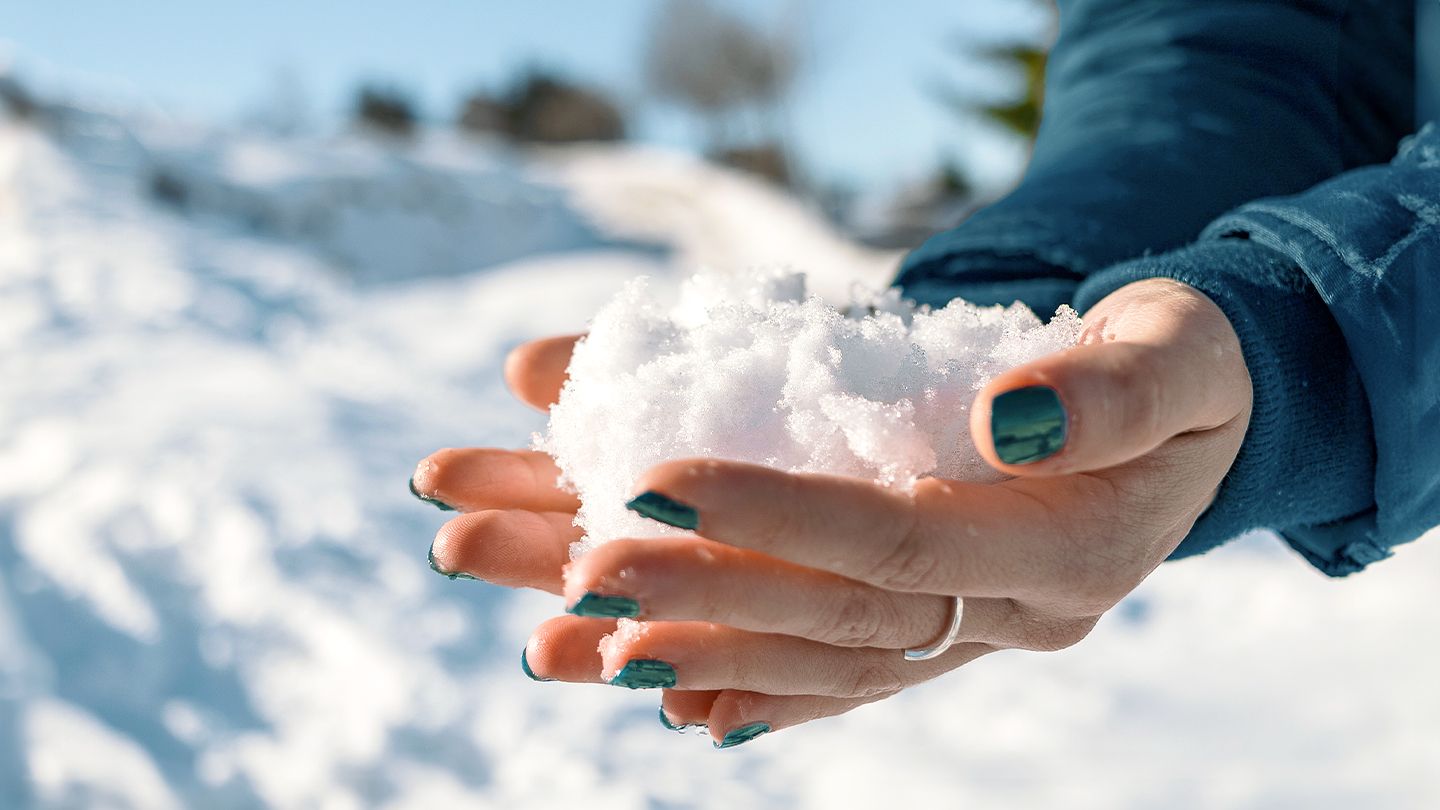
Catching snowflakes on your tongue is a childhood rite of passage, and lately, social media has revived interest in using snow for everything from snow cones to homemade snow cream on TikTok. But is eating snow actually safe?
“In small amounts, under the right conditions, yes,” says Sarah Crockett, MD, an emergency medicine physician at Dartmouth Health in Lebanon, New Hampshire.
But before you get out your ice cream scoop, there are some factors you need to consider.
Snow Is Beautiful — But Not Sterile
As snowflakes form high in the atmosphere, they grow around tiny airborne particles. As they fall, these intricate crystalline shapes act like nets, capturing material from the air.
By the time snow reaches the ground, it can carry traces of dust, fine soil particles, soot from car exhaust and industrial emissions, pollen, bacteria, fungal spores, trace metals, and even microscopic plastic particles, says Dr. Crockett. “Snow is beautiful, but it’s definitely not sterile,” she adds.
Once snow hits the ground, there are additional risks: Just because you don’t see dog poop or chemical sludge nearby doesn’t mean it’s totally absent. Animal feces in particular carries a risk of E. coli and other potential harmful bacteria.
That doesn’t mean every bite of snow is a risk to your health. But it does mean snow should be viewed like untreated environmental water that hasn’t been filtered or disinfected.
A helpful way to think about it is to ask yourself whether you’d drink from a rainwater puddle in the same spot, says Sheldon Campbell, MD, PhD, a professor of laboratory medicine at Yale School of Medicine in New Haven, Connecticut.
“If the answer is, ‘Ew, no,’ then you should apply that same response to snow,” says Dr. Campell.
Is It Okay to Eat Snow If You’re Not in a City?
Theoretically, places with more air pollution will have greater concentrations of contaminants in the snow crystals, says Campbell.
Cities and areas with heavy traffic or industry tend to have poorer air quality than rural regions, which can affect which airborne contaminants snow collects as it falls.
But the real risk happens once snow makes contact with the ground, Campbell says. Snow can mix with dirt, road salt, fertilizer, oil, animal feces, and other unsafe-to-ingest substances — even if it still looks white.
When It’s Safest to Eat Snow — and When to Skip It
If it’s important to you to taste snow, be picky and seek out perfect snow.
“Stick to pristine, white, undisturbed snow, and only from the top layer,” Crockett says.
Never eat snow that’s been walked on or shoveled, plowed into a pile, or sitting on the ground collecting debris.
Color matters, too. Beware of the yellow snow for obvious reasons: A dog or other animal has likely peed on it. You’ll also want to avoid snow that’s red, green, orange, gray, or black snow — which could signal pollution, algae, or chemical contamination. “If the snow isn’t white, don’t take a bite,” Crockett says.
Timing also matters. Snow that’s freshly fallen, within an hour or two, is less likely to have mixed with surface contaminants, Campbell says, though uncertainty remains even then.
For people who want to be extra cautious, Crockett suggests putting a clean bowl outside to catch falling snow, which helps minimize ground contamination.
How Much Snow Is Safe to Eat?
Snow, like water, is calorie-free — but it’s still best to eat small quantities, says Julie Zumpano, RD, a registered dietitian at Cleveland Clinic.
Eating too much snow can actually lower your body temperature. If you’re staying out in the freezing cold, that can be dangerous and can contribute to hypothermia, says Crockett.
Who Should Avoid Eating Snow?
Eating snow isn’t a good idea for people with a weakened immune system, says Zumpano. Snow can carry bacteria or fungi that are harmless to most people, but risky for those who are immunocompromised.
Is It Safe for Pets to Eat Snow?
Snow can pose the same risks to pets as to humans, especially dogs that may ingest snow from roadsides or areas treated with salt or chemicals.
“Most of the same rules apply to pets: Avoid discolored and contaminated snow — especially if you suspect that ice melt or road salt may have been used,” says Crockett.
A few bites of white, undisturbed snow from the top layer is likely safe, she says.
Eating a Little Snow May Be Good for Your Mental Health
For most healthy people, eating a bite or two of fresh, undisturbed snow is probably not harmful, says Campbell.
“You can do a lot riskier things, like driving home on I-95 in heavy traffic or eating cookie batter that you just mixed up,” he says.
The greatest benefit of eating snow is really the joy of it, says Crockett.
“Catching a few flakes on your tongue can be a magical part of winter play for children and adults alike,” she says.
Time in nature supports mental health, reduces stress, and promotes well-being, especially for kids, says Crockett. “Connection to nature isn’t just a childhood pastime. It’s a lifelong source of resilience,” she says.