Remember Goji Berries? Chia seeds? Coconut? Amaranth? At various points in time, all these were the trending superfoods that held the power to fix you — your health in particular. All of New York was sipping coconut water as pre-, intra- and post-workout drink in the mid-2010s. Just before the pandemic, Goji Berries had become the hottest food item. Many are still eating chia seeds but that is more in hope than a strong belief in their fantastic qualities. During the pandemic, ginger and turmeric had gained a cult status for their healing and immune-boosting powers. This year as “functional coffees” relegate the bulletproof variety into history books, mushrooms have emerged as the superfood of the year. They are in everything from your main course to chocolates and coffees and no, we aren’t talking about the mind-altering magic ones.
From managing stress and calming one down to improving brain function and lowering cholesterol, mushrooms are being singled out for being one food that has the power to improve your health and life. The University of California Los Angeles Health (UCLA Health) lists lowering cancer risk, helping cut sodium intake, protecting brain health, source of Vitamin D, healthier gut and support for a robust immune system among the direct benefits of including mushrooms in your daily diet.
Also Read | Plan to eat better this year? Here’s what nutrition experts recommend
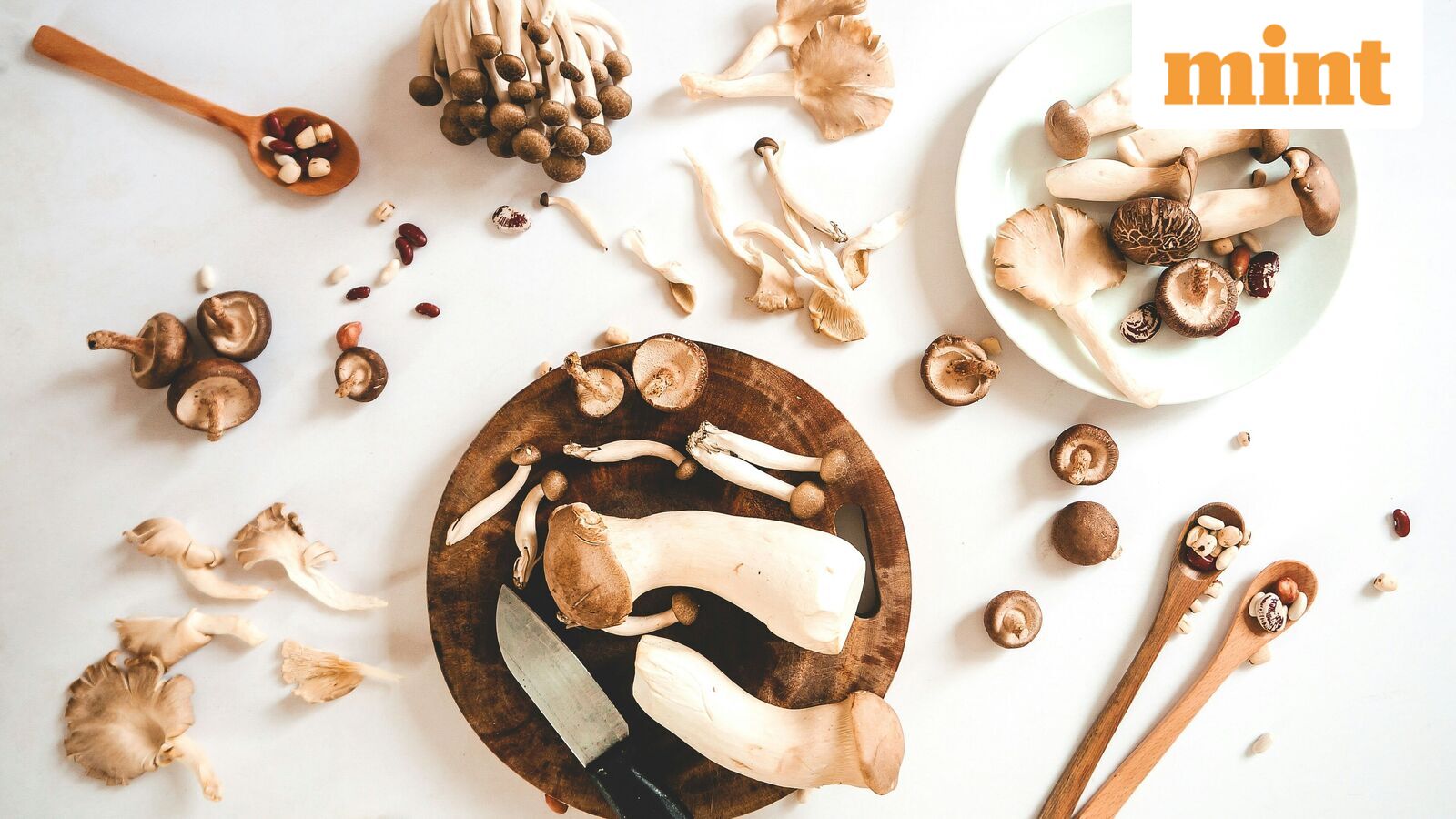
Lion’s mane mushroom — in powder form added to a cup of coffee — is all the rage at “functional coffee” shops across the United Kingdom and the United States these days as its proponents believe no other single food item helps them think more clearly or improves their ability to focus on a task. Shiitake, long a staple of Japanese food and popular in India in ramen, gyozas and Japanese curries, is said to lower cholesterol if you were to believe influencers and unverified info floating around on the world wide web.
This mushroom trend superfood is driven by younger millennials and Gen Z, who are a lot more health conscious than the preceding older millennials and Gen X adults at a much younger age, according to a McKinsey & Company’s Future of Wellness report.
SUPERFOOD MYTHS
A superfood is a term commonly used to describe “supposedly” nutrient-dense foods that provide high levels of vitamins, minerals, antioxidants, and other beneficial compounds relative to their calorie content, says Madhura P Behki, a nutrition expert at Cult Fit. However, medical experts and nutritionists clearly point out that no single food in the whole wide world has the power to satisfy anyone’s entire nutritional needs.
“Scientifically speaking, a superfood does not exist. It is more a marketing term than a scientific definition. There is no single superfood. Since there is no scientific definition of a superfood, superfoods change from time to time driven by marketing trends, social media influence and emerging research,” says Fiona Sampat, clinical dietician, Kokilaben Dhirubhai Ambani Hospital in Mumbai. Goji berries, chia seeds and coconut water, coconut oil and, now, mushrooms are all rage trends triumphing over basic science these days, warns Behki.
A co-founder of a nutraceutical company told me just before the covid-19 pandemic that powerful food industry executives meet at annual global food expos and that they usually decide what would become the following year’s superfood thanks to a deliberate and concentrated marketing push. As it is most of us are looking for shortcuts and quick-fixes for our health and fitness. “Naturally, people are attracted to quick fixes… to that one magical food that promises better health, weight loss, or more energy,” says Behki.
Social media and influencers amplify the superfood myths through their massive reach. The foods are carefully selected and they usually have some data linking them to health benefits. “These foods are considered especially supportive of health because they may help improve immunity, energy levels, heart health, gut health, and overall wellbeing. All these foods are known for their benefits but some influencer or public figure promotes them and boom… everyone wants to have them. When expectations aren’t fully met, attention shifts to the next ‘miracle’ option,” explains Behki.
Also Read | What’s pushing the steady rise of ‘mushroom wellness’?THERE IS NO SINGLE MAGICAL SUPERFOOD
Your best bet for good health is to focus on a diverse and balanced meal supplemented by physical activity, regular sleep pattern and maintaining good gut health instead of sticking to a solitary “superfood” in the hope of better health. There is no magical superfood, only consistent smart eating patterns, emphasise doctors and nutritionists.
The future of diet lies in balance, personalisation, cultural foods and long-term sustainability. Sampat advises eating a variety of nutrient-rich foods as a single “superfood cannot compensate for poor quality of food, inadequate protein intake, irregular meal timings, excess intake of sugar or ultra-proccessed foods, lack of physical activity and irregular sleep patterns.” “These supposed superfoods are rich in various vitamins, minerals, antioxidants and fibre, but their benefits come from being a part of a balanced, diverse diet when eaten regularly,” she adds.
There is, indeed, some scientific research to back up the healing and soothing powers of mushrooms but there are no extensive studies that demonstrate the superpowers of mushrooms on human health and wellbeing. “Emerging research and new studies, often in their initial stages, can highlight the benefits of a specific nutrient or compound in a food. However, this early hype is based on a single nutrient in isolation rather than in a clinical setting,” warns Behki.
Nowadays, everyone is looking for an easy way out – for quick solutions for complex health problems. The notion that a single food can help prevent or treat a chronic disease is appealing and the industry capitalises on this with new superfood products every year. While, these trends focus on a single nutrient, experts insist it is much more beneficial to focus on one’s dietary and lifestyle patterns. This not only delivers better results, it also ensures a variety of superfoods find their way into in your diet on a regular basis.
For now, eat your mushrooms with a pinch of salt.
Shrenik Avlani is a writer and editor and the co-author of The Shivfit Way, a book on functional fitness.