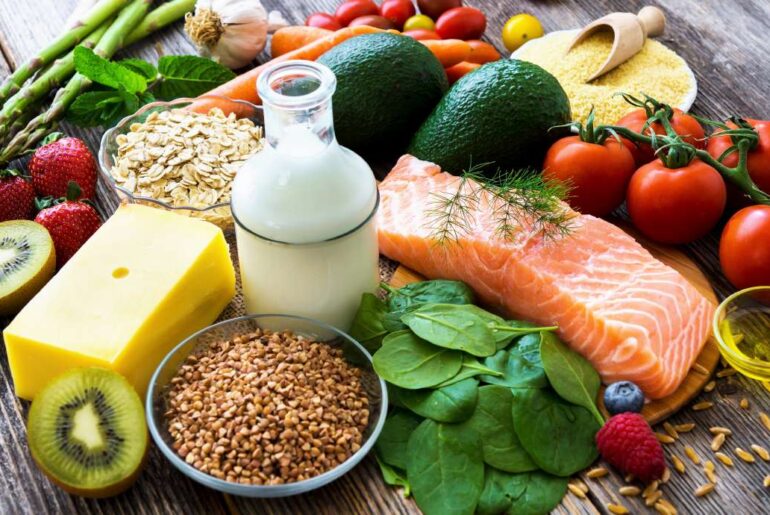
The hype around protein is booming, especially with the US 2025–2030 Dietary Guidelines for Americans explicitly encouraging greater protein intake. The US health administration has placed meat and dairy high on the food pyramid, leaving questions about the role of plant protein, the quality-versus-quantity debate, and the industry influence underlying the guidelines.
Nutrition Insight speaks with plant-based meal kit provider Purple Carrot and Soy Nutrition Institute Global to explore why plant-based proteins should be central to healthy diets and whether they are being sidelined by the food industry.
The guidelines call for high-quality protein without elevating plant staples, stresses Purple Carrot’s CEO, Dan Goldstein. He questions, “Where are the beans?”

“Tofu and beans are affordable, nutrient-dense, real foods rich in protein and fiber, and better for the planet. If we’re serious about improving Americans’ health, we need to put plants, especially legumes, at the center of the conversation and the plate.”
However, the public conversation keeps circling back to more protein. “America doesn’t have a protein problem; we have a priorities problem,” he adds.
“Heart disease remains the number one cause of death in this country, yet the guidelines continue to sidestep the clear science supporting plants as the heart-healthy pillar of a balanced and sustainable diet.”
The Physicians Committee for Responsible Medicine’s president, Neal Barnard, M.D., agrees: “The ‘cholesterol cartel’ has insidiously manipulated federal diet guidelines and needs to be thrown out. Industry’s pernicious promotion of beef, pork, milk, and cheese is the reason so many Americans are sick today.”
Athlete-level protein recommendations
Michelle Braun, Ph.D., director of Nutrition Research at Soy Nutrition Institute Global, tells Nutrition Insight that the guidelines enable choosing nutrient-dense protein sources from animal and plant foods.
“This reinforces the value of prioritizing high-quality protein across various sources, including beans, peas, lentils, nuts, seeds, and soy. Because many plant-based protein foods are naturally lower in saturated fat and cholesterol, they can help people meet protein needs while staying within saturated fat limits.”
Additionally, she points out that dietary quality and intake vary across populations and groups. For instance, physically active people consume more protein, while older adults are encouraged to increase their intake.
“The recommended amounts in the latest guidelines for (all) Americans are now reflective of what athletes and older individuals have been encouraged to consume to meet their unique needs. The recommendations shifted from 0.8 g/kg body weight to 1.2–1.6 g of protein per kg of body weight per day.”
“It has always been challenging to move beyond simply meeting protein quantity goals, which have now doubled, to also considering protein quality. Protein sources are unique in that each protein source, whether plant- or animal-based, has a distinct amino acid profile that can be thought of as a fingerprint. This specifically relates to how well different proteins supply the amino acids needed to maintain and repair tissues and muscles,” Braun details.
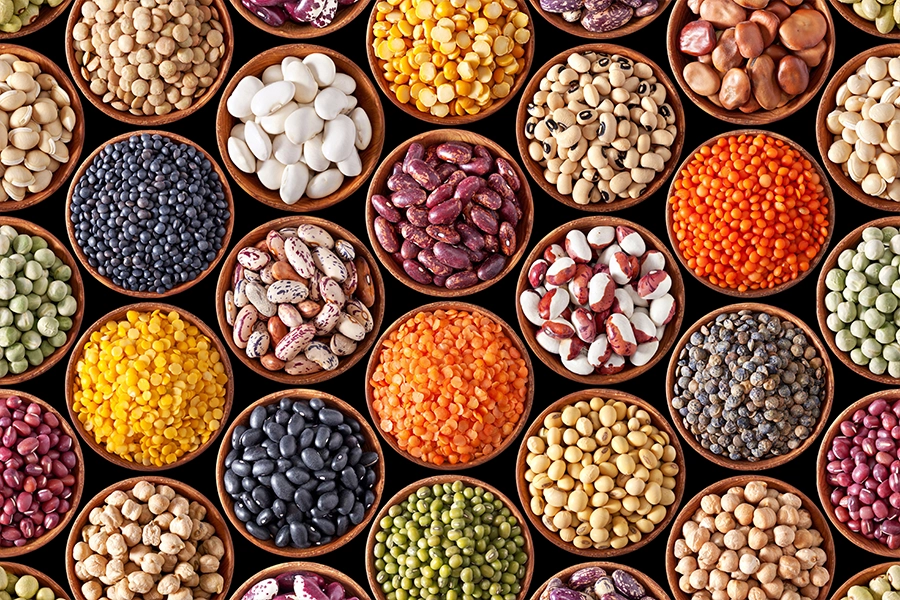 Plant-based proteins such as beans, lentils, and tofu offer fiber-rich, low-saturated-fat alternatives as US dietary guidelines continue to spotlight protein intake.Moreover, she states that protein quantity receives greater attention because protein quality is less well understood. Legumes, nuts, seeds, and soy foods, also mentioned in the guidelines, are well-established sources of high-quality plant protein.
Protein dominance risks overshadowing nutrient variety
As people are encouraged to eat more protein, some nutrients or dietary patterns risk being displaced. The macronutrient has become central at a time when evidence-based messaging shows that most people already consume sufficient protein. Braun notes the challenge will be purposefully selecting foods that also provide fiber, vitamins, and minerals.
Goldstein adds: “Protein is very on-trend, politically and otherwise, but when it’s the headline, it crowds out broader dietary needs that actually drive health.”
“A diet drawing heavily from plants benefits from the clean energy of protein plus fiber. Cravings subside, and sluggishness melts away. This all happens when plants are rightfully dominating the top of the inverted pyramid.”
Nutrition Insight recently spoke to an expert whose team is calling for fiber’s recognition as an essential nutrient for its ability to slash chronic disease risk. He points out that the US dietary guidelines are at odds with the rising trend toward high-fiber eating.
According to the American Heart Association, US citizens consume about 15 g of fiber/day, falling short of the WHO-recommended 25–30 g/day.
“Fiber is found in plant foods (including soy), and while dietary guidelines continue to recommend three to five servings of fruits and vegetables per day, putting that guidance into practice has long been difficult for many Americans,” says Braun.
“Plant-based foods that contribute protein can also contribute fiber, though the amounts vary widely. In one-half cup of edamame, you will consume 9.9 g of protein and 6 g of fiber. Whereas about one-third cup of almonds delivers 6.4 g of protein and 3 g of fiber.”
According to Braun, this emphasizes the importance of consuming a variety of protein sources, which are often regarded as the “center of the plate,” as they also provide a diverse range of nutrients. For example, a review points out the potential cardiometabolic benefits of soymilk.
“When diets rely too heavily on just one or two foods, there is a risk of missing out on important nutrients. The same principle applies to vitamins and minerals: food variety matters.”
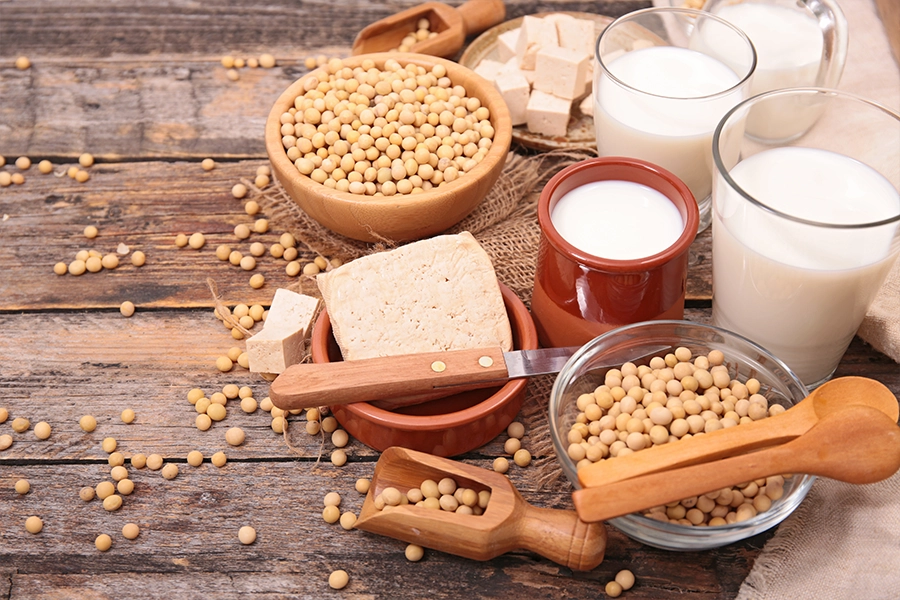 Soy foods, nuts, and legumes provide high-quality plant protein while supporting heart health and dietary diversity, experts say.“Fortified soymilk offers protein, calcium, and vitamin D comparable to cow’s milk and has similar meal use. Cow milk is widely recognized for the protein (~8 g/cup), calcium (~300 mg/cup), and vitamin D (~100 IU/cup) it provides,” she details.
Food industry versus science
Goldstein points out that the sidelining of plant protein is partly an industry-driven issue.
“Big food conglomerates don’t make a lot of money on the non-processed real food that is plants. So no one is lobbying for a plant-heavy diet. Industry can reinforce bias in long-standing cultural norms.”
“Ultra-processed food companies have benefited from the high-protein bandwagon, and processed meat and dairy continue to receive disproportionate attention. This is why vegetable proteins and fiber, despite clear scientific support, remain underrepresented. Plants don’t have the lobbying power, but they do have the science.”
Furthermore, the Physicians Committee for Responsible Medicine wants the guidelines withdrawn and reissued due to “rampant” meat and dairy industry influence. It recently filed a petition against the Health and Human Services and the Department of Agriculture.
Eight of the nine authors of the scientific report underlying the guidelines are funded or compensated by the National Cattlemen’s Beef Association, the Texas Beef Council, General Mills, the National Dairy Council, and the National Pork Board, among others.
Bringing plants back to the top
If the food pyramid were designed based on health outcomes, Goldstein believes the real shift would come when plants are placed back at the top of the inverted pyramid.
“If we’re talking about the healthiest, cleanest, most real food out there, we should also be talking about the backbone of America’s agriculture. The US is the second-largest producer of soybeans and other critical crops, and tofu and other plant-based products are among the most efficient, safest, and cleanest ways to obtain the nutrients your body needs.”
“If we want a healthier, higher-energy nation, we must stop treating plants as a side dish and start treating them as the solution. At Purple Carrot, our mission is to simplify that path and help people make plants the foundation of their diet.”