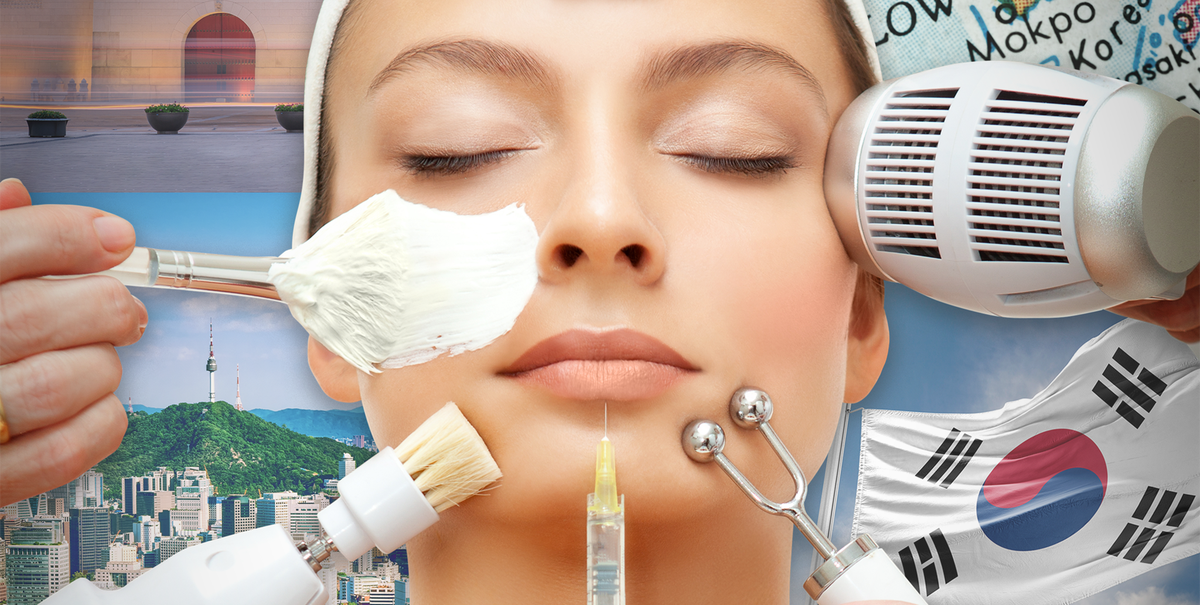
Ladies and gents, I’ve just returned from Seoul, South Korea, where all roads lead to luminous skin perfection. While there, I learned that trout sperm, collagen banking, and lasers with names like “XERF” are not sci-fi, but self-care. And I’m passing all my intel on to you.
My travel companion and partner in (anti-aging) crime was Jamie Sherrill—or as the media and her devoted celebrity clientele affectionately call her, “Nurse Jamie.” A highly trusted nurse practitioner, Jamie attracts patients from around the world to her upscale spa in Brentwood, tucked just north of Sunset Boulevard in L.A. There, she masterfully combines advanced skin therapies, lasers, and injectables to deliver the kind of glow that keeps her clients coming back. She’s also one of my dearest friends, and when she told me she was heading to Seoul to meet the masterminds behind Korea’s newest laser, I did what any self-respecting skincare enthusiast would do: I invited myself. “Research trip?” I asked innocently. “I’ll hold the camera.”
This was last September, and Jamie’s spa had just been selected as the first on the West Coast to receive that latest and greatest laser from Korea. Called the XERF, it promises painless (I repeat, painless) skin tightening and is customizable to target all three dermal layers. Within hours of her telling me the news, I was deep in a Google search for flights to this tiny country redefining modern beauty as we know it. Jamie told me she planned to meet the team behind the launch of this groundbreaking new laser technology and study their techniques firsthand through a few clinic appointments they’d organized. My goal was to tag along, try some cutting-edge procedures that are not available in the U.S., and take copious notes. But before I go any further, let’s get some things straight:
Am I in the medical field? Nope.
Am I a skincare expert? No. I’m an interested patient, everyday consumer, and skincare enthusiast.
Is Korea ahead of the US market in terms of innovation? Yes, by leaps
and bounds.
Is the Korean market less expensive than the US market? Yes.
Did I have surgery, or was I put under general anesthesia? No.
Did I receive treatments that aren’t yet FDA-approved? Maybe…
Did I come home with the same face, only tighter, brighter, and tighter,
brighter? You bet your dewy cheeks I did.
Do you want to know who I saw, what I tried, and how much I paid at these
Korean beauty clinics? Then stick around, baby!
A Culture That Starts SPF Before Solid Food
Once in Seoul, I learned something that blew my mind: Korean kids grow up religiously applying sunscreen. Korean parents slather their babies with sunscreen, then their toddlers, and then their kids. We met 20-year-old boys who’ve applied SPF every day since kindergarten. Can you imagine convincing an American teen to do that before school? In our culture, sun worship signals leisure and good health. The opposite is true in Korea. There, a healthy glow isn’t about bronzing, it’s about luminosity. The ideal is glass-skin perfection: clear, even, and poreless.
Also, forget cheeks so over-filled they inhibit vision. The goal in Korea is to look natural, lifted, and softly youthful, not contoured and taut. To achieve that, they use bio-stimulators, which are injectables that trick your skin into making its own collagen (a phenomenon they call collagen banking). The hottest bio-stimulator right now is a little…wild: Enter salmon or trout sperm. (Salmon sperm is trending in the U.S. right now, but in Korea right now, trout DNA is preferred because of better quality control and cleaner farming.) The technical name for this fish sperm is PDRN (polydeoxyribonucleotide), which is a DNA fragment derived from the fish’s sperm, which is remarkably similar to human DNA. The brand name is Rejuran; and while it’s injected into your skin like a filler, and it will indeed plump skin, it’s really not like the fillers we know and use in the States. It’s more of a cheerleader, encouraging your own body to manufacture collagen on its own. This bio-stimulator is often paired with a treatment using a radio frequency device, which sends heat down to the dermal layer of the skin to spur your cells to produce new collagen and elastin. The eventual result is a firmer, smoother, non-puffed-up face—the kind of “Did she? Or is she just sleeping better?” glow we all dream about.
As for combating wrinkles, neurotoxins (like Botox Cosmetics, the top brand in the States, and Jeuveau, number one in Korea) are still widely used, though they often cost less there. As Jamie explained to me, Korea’s drug approval process is less stringent and time-consuming than the U.S.’s FDA, so there are many more brands there, and competition drives prices down. Despite their affordability, we passed on the neurotoxins; I wanted to try what I couldn’t get in the U.S.
Another emerging trend, which we didn’t try, is human tissue injections. The main ingredient in brands like Re2O and CellREDM is hADM, or human acellular dermal matrix. Yes, human. This is where the industry is heading: extracting skin from other people. According to the pamphlet, it’s “the first human-derived ingredient in the aesthetics market for dermatological allogeneic dermal products.” In essence, hADM is a skin booster that contains the stuff in the skin we want more of (collagen and elastin), minus the stuff we don’t (the actual live skin cells). So, basically, you can inject salmon sperm to get your skin to produce more collagen itself, or you can inject actual collagen. It’s not FDA-approved in the U.S (yet).
Six Clinics in Four Days
Jamie and I hit six clinics (the local term for “med-spas”) in less than a week. All were a 15-minute drive from our hotel in the city center. In Korea, only doctors are permitted to treat patients—unlike in the U.S., registered nurses are not allowed to perform laser treatments or administer injectables. Because of this, you need to schedule one-on-one consultations and treatments well in advance, especially if you’re hoping for multiple procedures or booking with a friend. In our case, everything worked out beautifully. We wanted to observe each other’s treatments, and Jamie was eager to learn about different techniques, so it made perfect sense for us both to be present at each session.
One thing that really stood out: Wearing sterile gloves is not a universal practice. Many doctors and aestheticians worked with bare hands, so don’t be alarmed. It’s simply a different cultural norm and didn’t concern us; the environments were very clean, and everyone washed their hands before each treatment. And with that, here’s my report from the K-beauty trenches.
1. Dr. Han at The Eraser Clinic
The charming Dr. Han, an English-speaking general practitioner specializing in family medicine, leads the Eraser Clinic, a modern, welcoming space known for its professionalism, warmth, and foreigner-friendly vibe. You can find Dr. Han, whose energy is like a shot of espresso with a medical degree, on Instagram at @doctor.eraser or book an appointment directly via WhatsApp at +82 10-2733-0319. (And yes, he’ll actually text you back on WhatsApp.) The staff is excellent, and the treatment rooms are modest yet well-equipped; it’s very clearly a medical-grade clinic, and has earned a celebrity following thanks to its high standards. During our visit, Jamie received a tightening treatment for her upper arms using the XERF laser, followed by the Titanium laser, a tightening device that combines three wavelengths to brighten, firm, and rejuvenate the skin. Combining these laser treatments has been shown to deliver painless, visible results for all skin types. Her treatment took approximately 45 minutes and cost around $3,000 USD, which is within the average range of $1,500–$3,000 at other clinics in Seoul.
2. Dr. Rhee at Heal House Dermatology
Our next stop was Heal House Dermatology, led by the renowned dermatologist Dr. Rhee. The clinic’s website beautifully reflects its refined, peaceful vibe, but it’s entirely in Korean, so you’ll need to use Google Translate or reach out directly via Dr Rhee’s Instagram, @dr.rhee50. I also suggest hiring a translator (the hotel can help) to attend the appointment with you so you are completely clear on what treatment you’re getting and how much it costs. Dr. Rhee is calm, brilliant, and clearly in love with lasers. She exudes science-professor energy when discussing what she calls the ongoing “laser wars” in Korea’s fast-evolving aesthetics scene. During my visit, I had a XERF treatment on my neck. And then I went for the trout sperm injections on top. I know! But with Nurse Jamie by my side, I felt confident to take the leap.
The combined treatment of laser and injections took all of 45 minutes and was completely painless. The injections were administered using a Mirajet multi-injector, which stamps the solution into the skin using very fine needles that don’t hurt or bruise the skin. I was red for a few hours and then saw very good results, including tightening and improved texture. Dr. Rhee recommends a follow-up laser session in about six weeks for optimal results. Like most things in aesthetics, there’s rarely a “one-and-done” miracle, but with consistency, the payoff is real. That is the drawback to offshoring your beauty treatments to Korea—you might not be able to go back for regular follow-ups. You can, however, schedule virtual post-treatment appointments so your doctor can see how you’re healing.
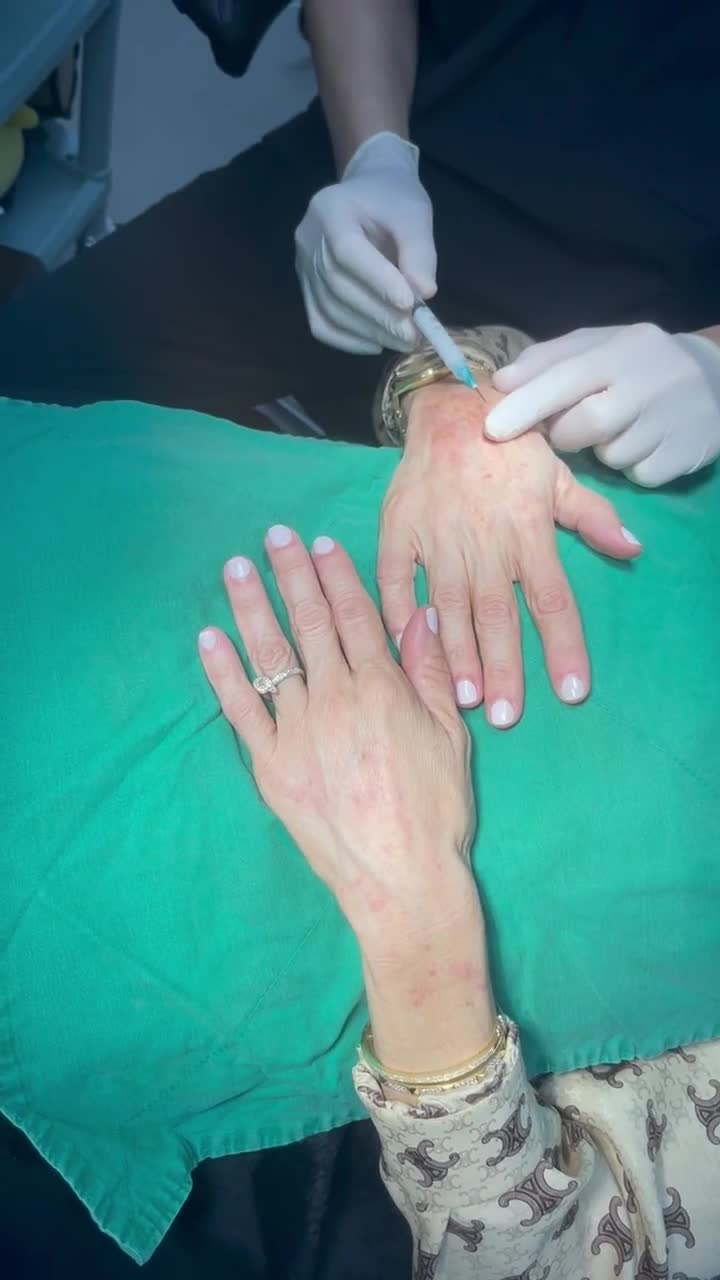
With a bit of time left, I also treated myself to a hand rejuvenation session to address pigment that had developed on my right hand after wearing a cast last year. It combined IPL (Intense Pulsed Light) for pigment correction and injections of LaFullen, a filler that’s widely used in Korea but not yet FDA-approved in the U.S. The IPL felt “spicy” but manageable, and I didn’t have pain or swelling afterward. It did take about ten days for the scabs and dark spots to slough off, but the result is pretty spectacular: smooth, supple skin with no dark spots or wrinkles. The pricing at Heal House was very reasonable for such advanced care. The XERF Laser on my neck was $1,683. Adding on the PDRN injections was $306. Then, IPL plus LaFullen equaled $1,490.
3. Dr. Vivian at L’Medique
Third on our clinic crawl was L’Medique Clinic, and what an experience it was. You can connect directly with the staff on Instagram at @l_medique_official or through Dr. Vivian’s own page, @viviansquee. We were greeted by the luminous and totally badass Dr. Vivian, or Dr. Vivi as we came to call her. She runs one of Seoul’s most high-end clinics, with a waiting list of two to three months. The vibe is feminine and effortlessly luxurious: Think soft light, warm tones, and plush velvet seating in the reception area. There’s something utterly inspiring about seeing a confident woman leading with both grace and expertise in this industry—let’s just say that we were collectively vibing heart-eye emojis for Dr. Vivi. She’s known for having “golden hands,” and after our visit, we couldn’t agree more.
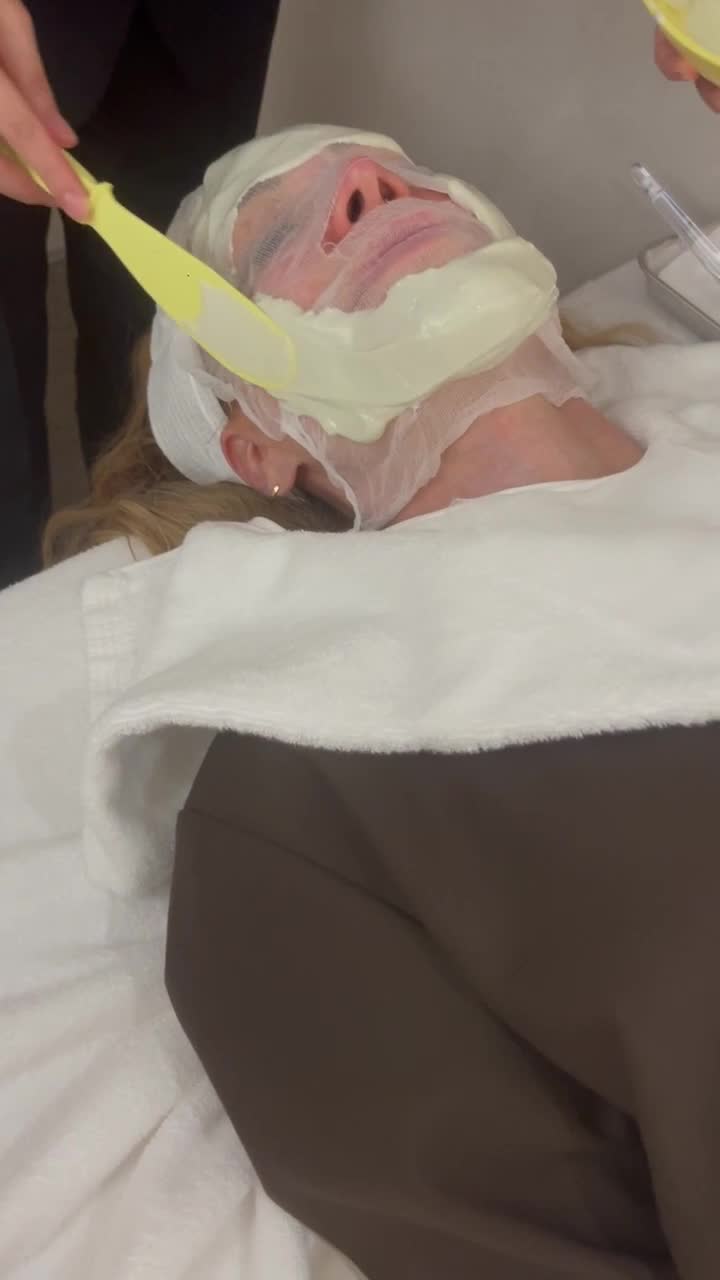
After a thoughtful consultation in her office, where she discussed the current Korean beauty ideals of “egg-shaped faces” and “glass-like skin,” I was ready for my close-up. I started with the XERF laser (which I’d tried on my neck the day before), but this time we focused on my face, followed by the treatment L’Medique is famous for: stem cell therapy. Girls, it was a game-changer. In the U.S., stem cell therapy is only approved for orthopedic use, but in Korea (and Mexico City), it’s cleared for aesthetic use as well. I had done my research and was eager to try it, especially since L’Medique is known for its age-defying results. Here’s how it works: Stem cells are harvested from your own body; in my case, via a quick blood draw, and then processed in a centrifuge, which separates the stem cells from other blood components. The rejuvenating extract is then injected into the face using a Mirajet multi-injector, and any remaining serum is administered via IV infusion, sending healing factors back into the body to stimulate regeneration and repair from within. The entire procedure took about three hours, with the last 45 minutes spent tucked into a cozy, heated bed, enjoying aromatherapy, a face mask, and a relaxing massage. My skin looked brighter and tighter immediately afterward, and my whole body felt energized. The clinic recommends that you get these procedures twice a year for full results. The visit was one of the priciest on our trip, so definitely ask for the total cost before the blood draw so you don’t experience my “Oops, WHAT?” moment. Here’s the breakdown:
● XERF Full Face: $2,065
● Stem Cell Therapy: $7,651
4. Dr. Sung at Doctors Dermatology
Next, we visited a franchise clinic run by Dr. Sung, widely touted as Korea’s leading authority on anti-aging. (You can book via WhatsApp at +82 10-6721-1637 or send a message on Instagram @doctors_eng.) We visited the main location, which spans several floors of a sleek building in the heart of Seoul. It felt like a well-oiled operation: bustling yet calm, with a large, friendly staff and an inviting, relaxed atmosphere. Dr Sung himself is instantly likable and exudes the quiet authority of a seasoned professor. There’s something almost paternal about him, which immediately put us at ease. He also treats many well-known Korean actors and actresses who come regularly for maintenance treatments.
During Jamie’s consultation, the conversation turned to the difference between the U.S. “Zoolander ideal” (chiselled, sculpted) and Korea’s softer, rounder aesthetic. Before long, he was leaning across his desk and gently lifting and adjusting areas of Jamie’s lower face. They decided to do a XERF laser tightening treatment on her jawline. Jamie and I watched as he performed the procedure, narrating his techniques as he methodically guided the laser’s handpiece in an upward motion along her neck and lower face, covering every inch from ear to ear, and explaining the nuances of each setting of the laser as he worked. It was fascinating to observe his mastery and precision, and the pricing was very reasonable, given his reputation. One caveat: I recommend bringing a translator to bridge the language gap; this is your face, after all. Jamie’s experience was both lovely and deeply informative, and we left feeling grateful (and a bit in awe) of Dr. Sung.
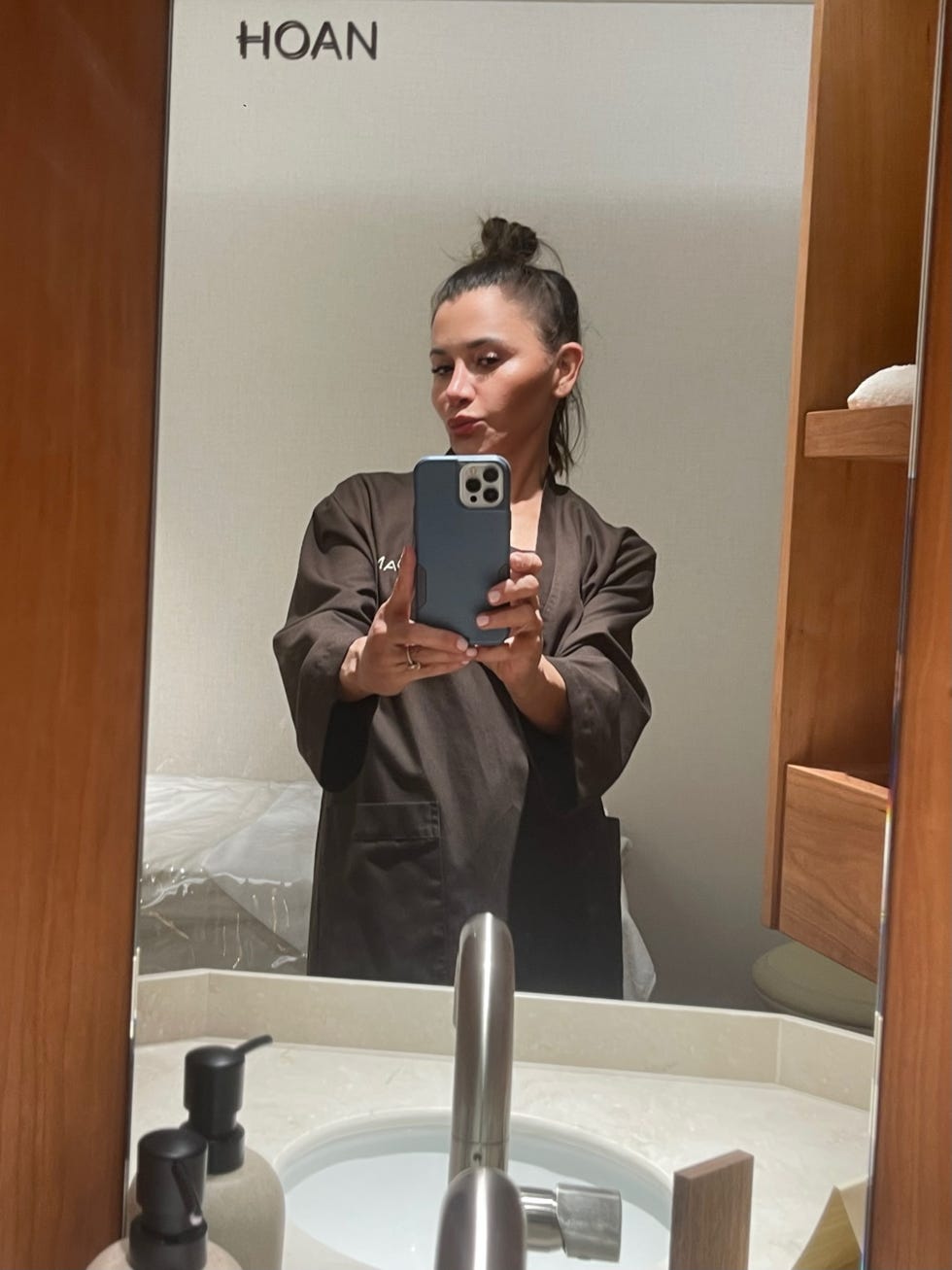
5. Hoan Clinic
This is the place Kim Kardashian tagged during her trip to Seoul. Her visit sparked a tidal wave of beauty tourism, and Hoan Clinic didn’t miss a beat. Their website is in English, and booking is easy via WhatsApp (+82 10-4379-9950; the team responds quickly). You can also check out its Instagram @hoanclinic_global. What struck me is the refreshingly transparent pricing: Services are sold as packages, and the descriptions detail the number of laser pulses included in each treatment. I chose the Body Slimming package ($800), which combined two radio-frequency lasers, the Body Onda and the Linear Z, for a painless tightening session on my stomach. Jamie chose the Pore Refining package ($600), which included a Potenza treatment (microneedling with radio frequency device that pricks the skin with tiny insulated needles and delivers energy below the top layer of skin to stimulate collagen and elastin); Calecim exosomes (a serum that’s painted on the skin; exosomes are special molecules that tell your collagen-making cells to work harder and inflammatory cells to calm down); and a soothing facial.
After pre-paying at reception, we were ushered into separate private treatment rooms to change into robes. My session lasted about 30 minutes, while Jamie’s took closer to 90 minutes. The female doctor who treated me didn’t introduce herself—she got straight to work, no small talk. The whole process was efficient and professional, and our results were mild but noticeable. It was clear that the place is very busy, and honestly, I can see why. Call it the Kardashian Effect.
6. Dr. Ko at Amred Clinic
Final stop! This clinic’s website is clear and user-friendly, even listing some prices (always appreciated). You can also visit its Instagram @amred_clinic or book via email at amredworld@gmail.com. Amred is a major operation, with eight doctors working across three facilities on a single block. There’s one for regular folk like us, a discreet VIP clinic with a private entrance, and a men’s clinic. Interestingly, in Korea, the male beauty ideal emphasizes a hairless face and body, contrasted by thick, healthy hair on the head, paired with porcelain skin and a soft, round face. So hair removal and hair growth treatments are equally popular.
Dr. Ko, who speaks perfect English, is clearly in high demand but was generous with his time, walking us through each step and explaining the options. I opted for their most popular laser combination: the Tune Accent Prime by Alma followed by the Titanium laser to tighten and lift my décolletage (I should be exhausted from all this lifting!). Jamie chose the same lasers for her jawline. Soothing music played in each private treatment room, and my aesthetician prepped my skin with a gentle cleanse and massage before Dr. Ko came in to wield the lasers himself. While the staff required a translator, Dr. Ko’s English made communication seamless.
My sense is that Amred Clinic is not a “pop in once to see a difference” kind of place. They encourage clients to come in regularly to maintain lasting results. My session cost $896, and Jamie’s was roughly the same. (Normally, this laser combination costs closer to $1,000 there, but they were running a special.) Our treatments were pain-free and required zero downtime, and we both finished the week feeling rested and rejuvenated.
Insider Tips for Beauty Tourists
Want to go to Seoul? Here are a few final pointers:
Book ahead. These clinics fill up fast, especially the Insta-famous ones.
Bring a translator to your appointments. English isn’t a given.
Hire a driver. You can book one through the hotel concierge. Some clinics are harder to find than others; the last thing you want after a treatment is to be outside searching for an Uber (and when we did book Uber drivers, they didn’t speak any English).
Stay near Parnas Mall. The Intercontinental Hotel was a perfect home base: endless food, great shopping, and fun people-watching post-treatments.
It is one thousand percent worth it! Korean beauty isn’t about chasing youth; it’s about preserving what’s yours in the most advanced, elegant way. I came home looking refreshed, not “done,” and my husband didn’t even flinch (which is saying something). If you’ve been curious about the buzz around Korean skin clinics, I can confirm: It’s not hype. It’s a whole new world that’s part self-care, part science, and totally addictive.
Happy tightening, y’all.