Photo courtesy of Grodnoenergo Company
MINSK, 2 February (BelTA) – The immunity of calves begins with the proper care of pregnant cows and in the mild freezing cold temperatures that are typical of our latitudes calves can be kept in special outdoor cages for the sake of cold exposure training, BelTA learned from Mikhail Karpenya, Doctor of Agricultural Sciences, Professor, Head of the Department of Animal Hygiene at Vitebsk State Academy of Veterinary Medicine.
One of the strategic matters at any dairy complex in the country is the preservation of young stock. While private farms in villages keep newborn bull calves and heifers in warm barns with the cows, which lick them with their tongues, thus giving them their first natural massage, according to established regulations, agricultural enterprises take the “babies” away and place them separately from their mothers. This winter has brought many surprises to the whole country from blizzards to bitter frosts. How do little calves cope with such cold weather?
“We cannot forget that calves need to develop their own immunity after birth and it depends on many factors. A calf’s immunity begins with proper feeding and care of the pregnant dry cow, its mother. If the animal has enough bedding and good feed, she will calve normally and produce high-quality colostrum, which can be used to feed the newborn calf. This is the basics. The next important stage is calving. It has to take place in special maternity wards or in special sections of large dairy complexes. In the first hour of its life the calf must be fed high-quality colostrum, which means that it must contain a sufficient amount of immunoglobulin. If it has the density of 1,050-1,060kg/m3, then it can be used. If the parameters are lower, it will not give immunity to the calf. The amount of colostrum is calculated based on the live weight of the calf. The standard number is 8-10%. In other words, if the calf weights 30kg at birth, then in the first hour it needs to drink 3 liters of colostrum,” said Mikhail Karpenya.
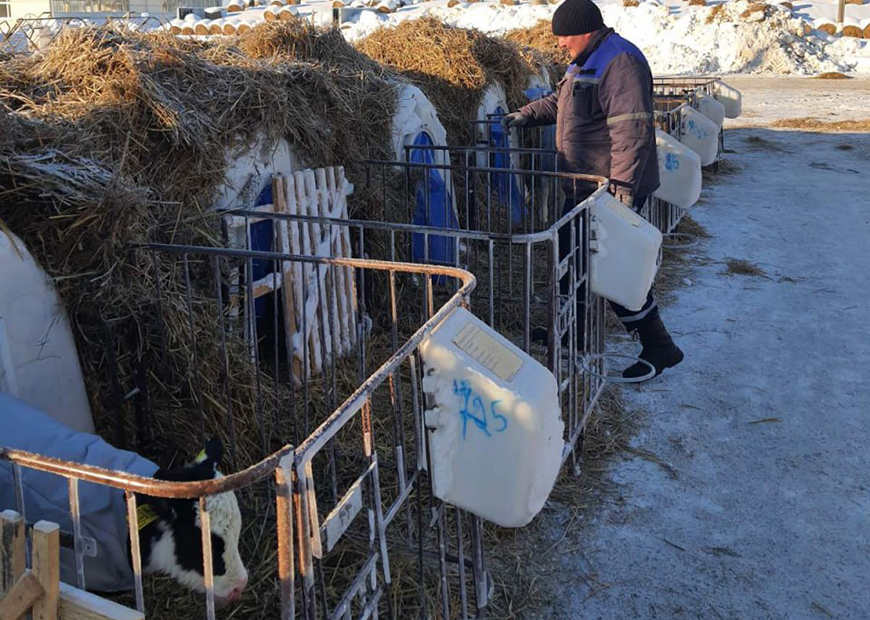
The scientist noted that on the first day of its life the calf can be sent for so-called hardening. For this purpose it is first placed in a special cage under a heating lamp to dry, and then it is put into an individual hut outdoors. “If the calf is sated and dry, then the change in temperature stimulates the strengthening of its immune system. Figuratively speaking, it is hardened. It is believed that calves that have stayed in an outdoor calf nursery develop better thermoregulation. In the mild frosts typical of our latitudes, averaging 12-14C below zero, calves feel quite comfortable. With the onset of even colder weather, they should be transferred to permanent calf nurseries in ordinary farm buildings. The key thing is that the relative humidity over there should be up to 70% and there should be no drafts, since calves are very sensitive to them,” Mikhail Karpenya explained.
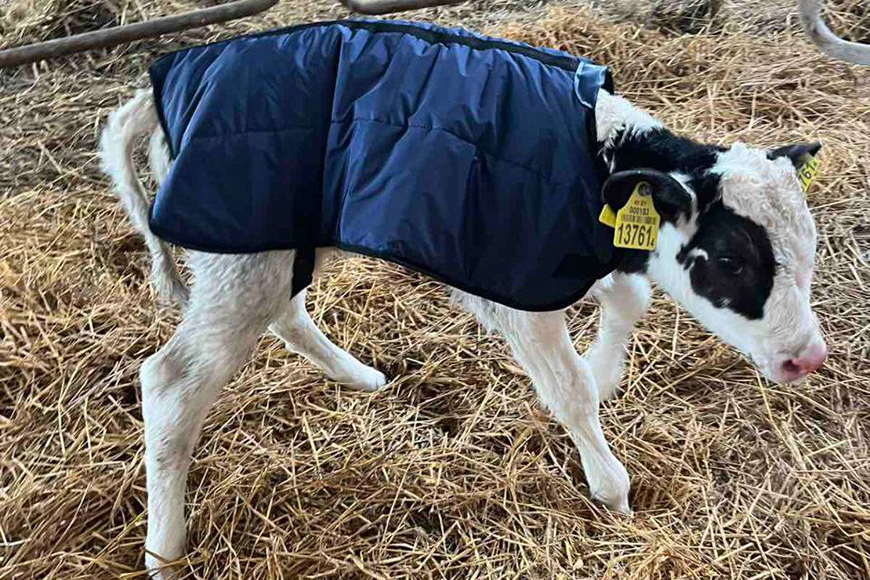
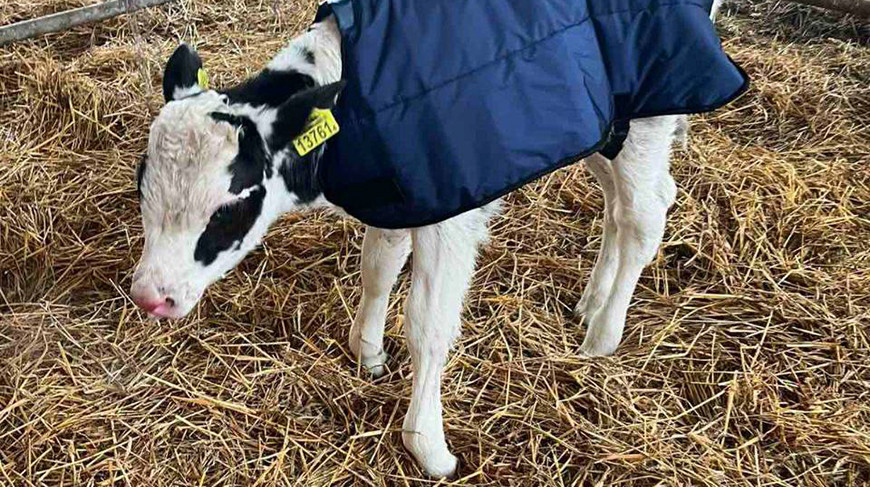
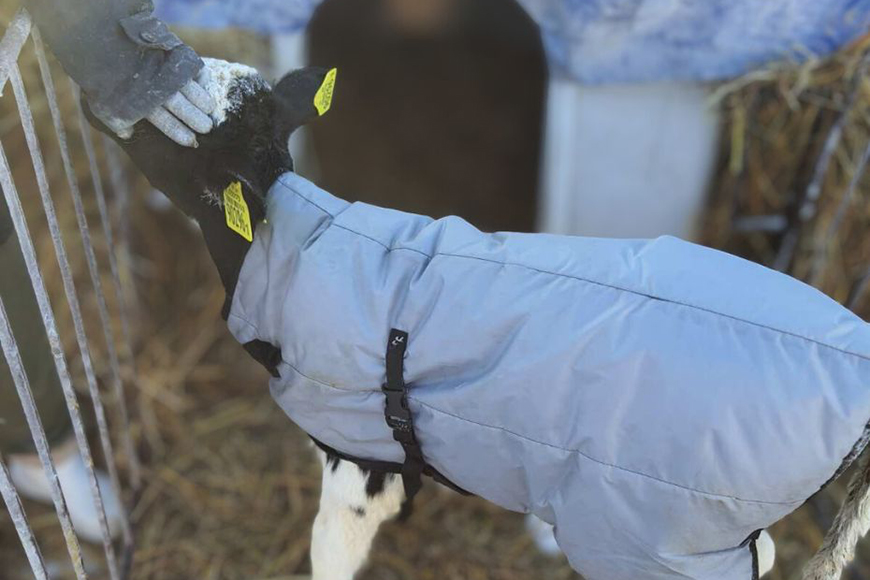
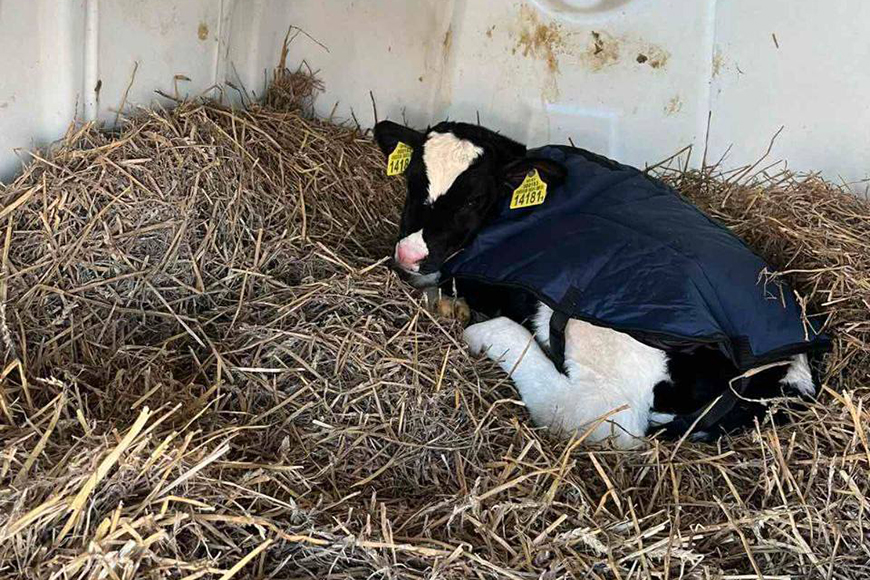
What additional measures are implemented to keep calves warm at agricultural enterprises? Many farms use so-called jackets, which allow calves to tolerate freezing weather more comfortably. For example, in Gomel Oblast and Grodno Oblast dairy complexes run by energy industry enterprises clothe calves at temperatures of 25-30C below zero.
Sergei Primachenko, Chairman of the Agriculture and Food Committee of the Minsk Oblast Executive Committee, said that taking into account the complicated weather conditions and abnormally freezing weather, which the industry has not faced for many years, the necessary measures have been taken in the region during this period in order to prevent harm to the animals. “Those include maximum thermal insulation of premises, increased feed rations for animals taking into account their energy exchange, warm water for drinking, more bedding, and the use of hot air blowers, which also improve working conditions for livestock farmers. Sometimes seven or eight hot air blowers are used to heat a single calf nursery. And if necessary, farms also use covers for calves,” he noted.
Sergei Primachenko also stressed that it is very important to preserve young stock. “These are children, the future cows that will produce milk. Everyone understands perfectly well that the economy of any agricultural enterprise and the dairy farming industry as a whole depends on the future generation, which has to be kept healthy,” he said.
According to the chairman of the Agriculture and Food Committee, there are currently 425 calf nurseries in the central region for keeping calves in modern conditions. “These are cold-type nurseries made of reinforced concrete and wooden structures. They house more than 59,000 calves. To meet the full demand for such facilities, it is necessary to build another 111 modern calf nurseries for more than 20,000 calves,” Sergei Primachenko informed.
Photos courtesy of Grodnoenergo Company and Gomelenergo Company
Follow us on: