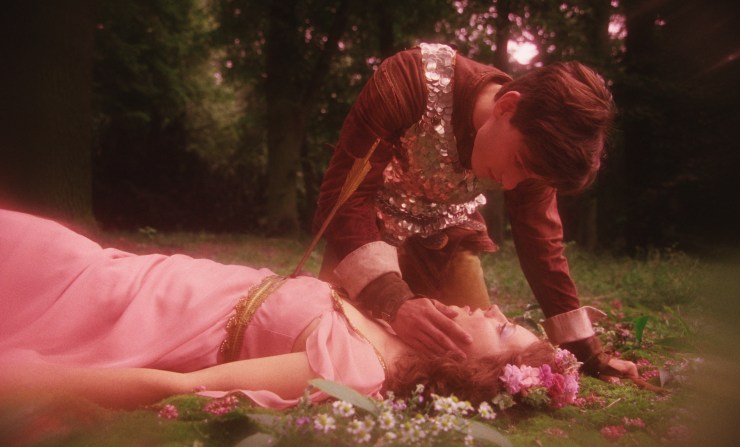
The modern Cinderella story has been told for over three centuries, and yet its subject matter remains both entertaining and enlightening. There are plenty of films — especially in the horror genre — that push the Cinderella narrative to dark, harrowing places. That being said, 2025’s The Ugly Stepsister, the debut feature film of Norwegian filmmaker Emilie Blichfeldt, is a startling salve that shatters any preconceived notions. The film’s bold body horror works in tandem with the ornate artistry of a period piece drama to create a one-of-a-kind experience.
The Ugly Stepsister made waves in Norway and on Shudder, but it’s also broken through to the big leagues with an Oscar nomination for Best Makeup & Hairstyling at the 98th Academy Awards. It will be competing against some heavy-hitters like Sinners, Frankenstein, and The Smashing Machine, yet it seems like it could still take home the win as the ultimate underdog.
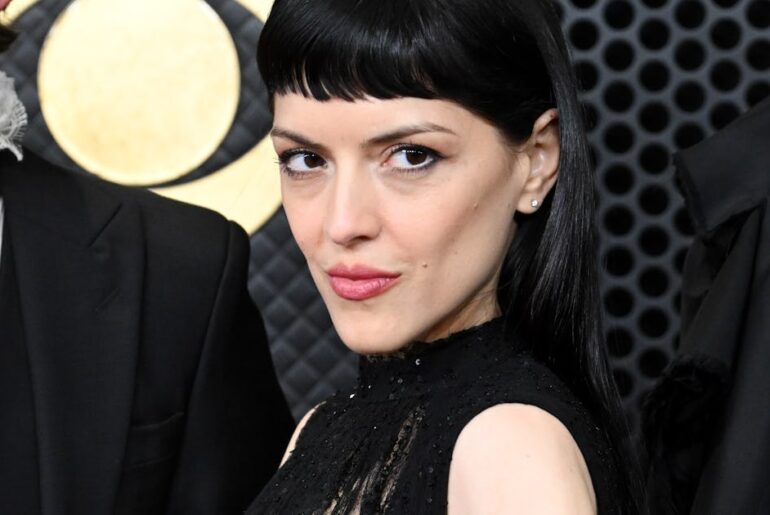
To celebrate The Ugly Stepsister’s Academy Award nomination, writer/director Emilie Blichfeldt, alongside Hair & Makeup Designer, Anne Catherine Sauerberg, and Prosthetic Makeup Effects Designer, Thomas Foldberg, open up on crafting the film’s uniquely heightened aesthetic, the importance of intentionality with body horror, and why we’re all the outcast.
BLOODY DISGUSTING: I remember reading Grimm’s Fairy Tales as a child and how there was such a surprising casual brutality to those stories. The Ugly Stepsister perfectly taps into that dissonance and then goes even further. Was part of the aim to have the audience wincing through what is supposed to be a quote-unquote beautiful fairy tale?
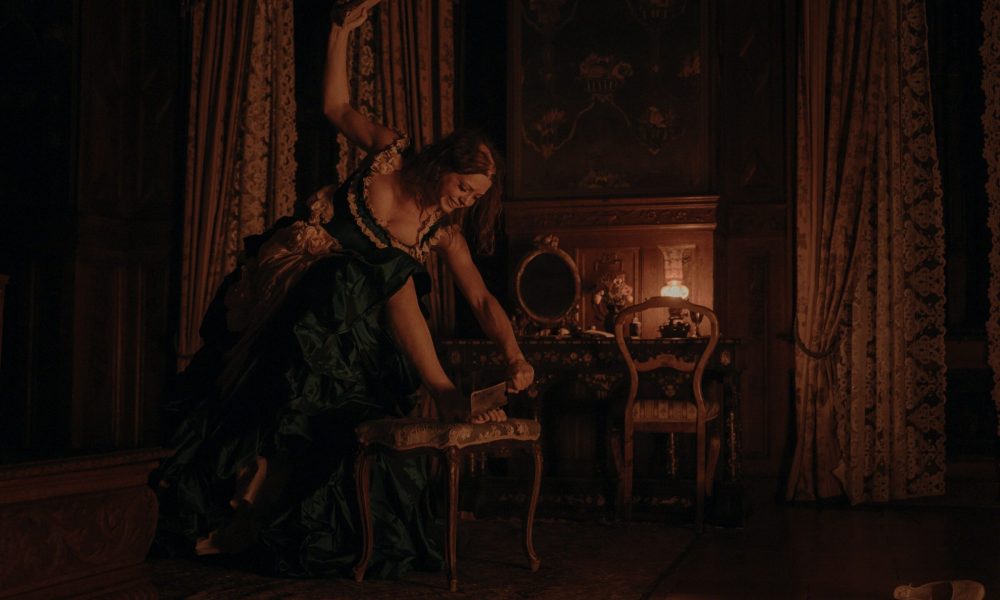
EMILIE BLICHFELDT: Thank you for that. I love to make the audience wince. I think there’s a paradox in this. Cinderella is the most girly story about being chosen by the prince, and it’s all fluff and pink cotton candy. But really ,there’s this bloody, dark story behind it. When I got the idea, it was all about how I could totally relate to the stepsister cutting off her toes to try to fit the shoe. It suddenly struck me that I’m not the only one who can relate to that. Actually, most of the girls growing up reading Cinderella do not end up like Cinderella and marry the prince. They end up like the stepsister, mutilating their bodies, or putting themselves through pain to try to change it to fit within this shoe and this grander beauty standard.
So I really wanted to not subvert the story too much. It was very important that it was still relatable to the known material — Disney, Grimm’s, and all the versions, really. I wanted to make sure that no one could see or watch or hear a Cinderella story again without thinking about my movie. But it’s really about relating to the stepsister. And I think relating to her bodily trauma through the film’s body horror.
On the subject of body horror, I’ve heard you cite other directors like David Cronenberg, Julia Ducournau, and Lucio Fulci as influences and how there’s a distinct difference between body horror and gore alone when it comes to intention and theme. Can you elaborate on that a little more?
EB: For me, blood, gore, and all that can be great. But what really got me into body horror in the first place is how you empathize with and relate yourself to the characters through their bodily harm. You can have intellectual ideas delivered to you through this bodily connection. So the big difference for me is that the gore in body horror, or the bodily harm, is always filled with an intention, a metaphor, or a message that you want the audience to pick up on. When I wrote the script, I didn’t allow myself to put something in it that wouldn’t be carrying a message. It’s not maybe something that you pick up on the first time you see the movie, but it can grow on you as you leave the cinema. That was really a big part of it for me.
Anne, period pieces can be such intricate productions in their own right. Is it an exciting change of pace to throw yourself back to that era and play with these elements that are a little out of time, especially in a story like this that already feels removed from reality?
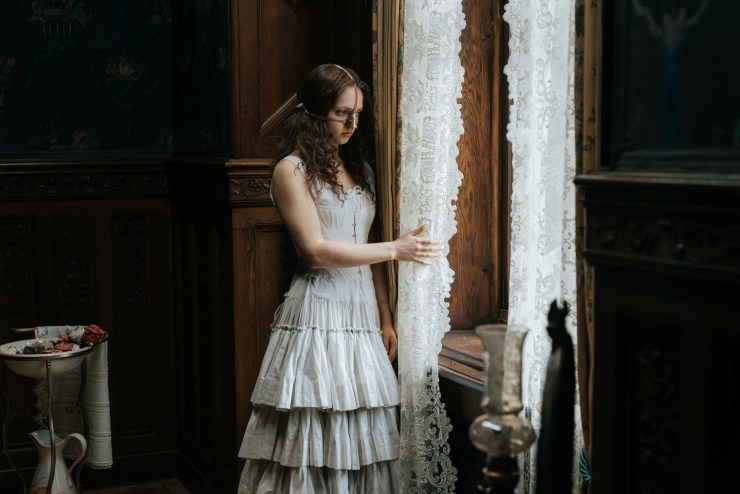
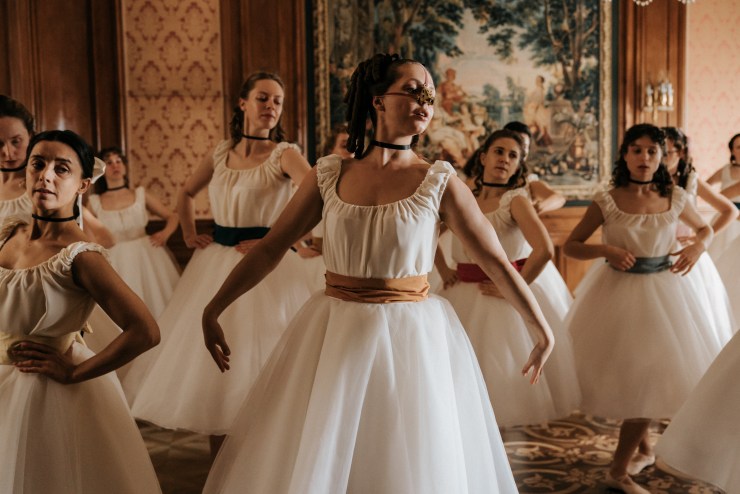
ANNE CATHERINE SAUERBERG: Well, it’s a fairy tale, and I think it connects to several different periods. In a way, it takes all the things I really love and makes them a little bit larger. Emilie had some wonderful visual material. It’s often very obvious which year a movie was filmed, but it was fun to play with that idea and make it feel a little bit like it’s a period piece that was being made in the ’70s or something. I think we developed our own visual style somehow, like with the eyelash sequence, which became so important for the movie and its look. The whole ball element and the score are the closest we get to actual beauty standards in this universe. I think, in a way, that was a very special look that somehow emerged. I really like that look. So it’s like a period piece, but it’s also its own period piece.
There’s this really freeing quality where you’re obviously riffing on actual touchstones of the past, but remixing it how you see fit — like this more disturbing version of Bridgerton. It’s so effective. I was also just truly impressed with how much you were able to do with a fairly limited budget of just over four million dollars. What were some of the greatest challenges you faced in this regard, and were there any sequences that you wanted to push even further, but couldn’t?
ACS: The budget obviously influenced some of the voices that I had to make. I can get a little insane when I do movies — Thomas knows this — because I have a way that I want things to look. I think one of the ways that The Ugly Stepsister looks more lavish than what we could actually afford is because I had such a raw connection with everyone. I had a wonderful Polish crew that I worked with on The Girl With the Needle, so I knew them quite well. I think that also helps when there’s familiarity there, and it’s a universe that you craft together.
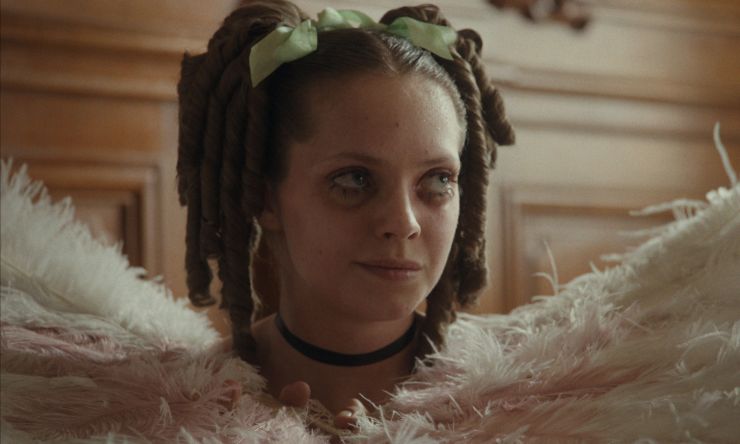
So there were many challenges, but there will always be with any movie. Here, it was a financial one, but it’s also something that you want to fight against. If there’s something that’s impossible and out of budget, then you just want to do it. But you could still take all that away and be left with a quirky period drama. It really works because everything is a little lifted and exaggerated. The beauty is lifted. The bows in the hair are a little too colorful compared to the costumes. Everything is just a little heightened in that sense. It was fun.
Thomas, can you talk at all about the research that was done regarding historical beauty treatments and bringing those practices to life through makeup and prosthetics, while also altering them to make them your own?
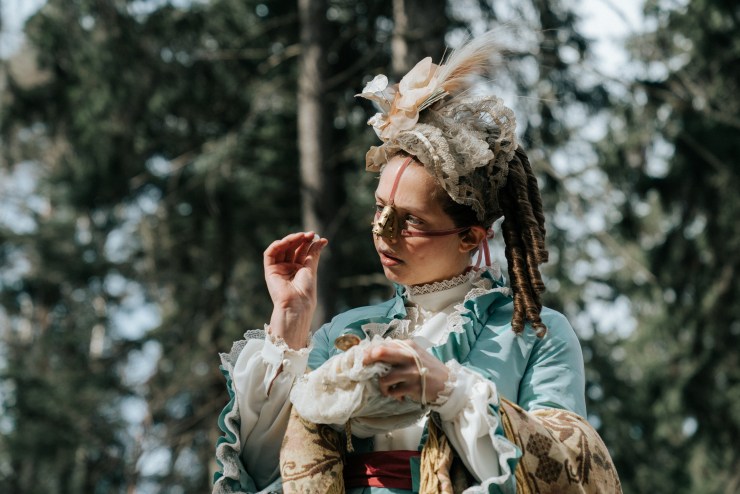
THOMAS FOLDBERG: It was very surprising when Emilie came to me with these notes about old beauty treatments with both the eyelash stitching and the broken nose. I mean, it was kind of a surprise that this actually somehow happened. So it was just like taking it from there and then reimagining what it could be and what it could not be. However, one thing that touches on the whole fairytale aspect of it all is in regards to the gore effects. From the beginning, Emilie was very specific about wanting a specific look. When we had our first meeting, she talked about Cronenberg stuff, but also like ’80s horror movies and fantasy films, too. It was very surprising. She has such a specific idea about all this.
One thing that kept popping up all the time when we spoke was that she wanted these gore effects to look fake, but in a good way, which was so difficult for me to initially grasp. I’m used to doing things that look very, very realistic. Hearing that this needed to be a little camp and a little cheeky, but still look good, was really hard for me to comprehend. I had to process it for a long time, and it wasn’t until I saw the first edit of the film that I actually completely understood. I need to see the whole context, even though I was on set every day. It really worked, even if in the moment I had problems with how the toes were cut — like a straight cut — almost like a marzipan toe or something. It was hard for me to go down that broad route while still having a prosthetic leg that was super realistic and had some movement to it.
Also, extreme close-ups on top of everything. There are some very, very tight shots during the eyelash stitching. That was what made the movie interesting for me to get into because it has so many elements. It has the whole character thing with Elvira, with that big prosthetic makeup that she wears for like half the film. That’s probably what I’m most proud of in the movie. But then there’s also all the gore stuff based around Elvira, like the dead dad puppets, the rotting corpses, and the whole tapeworm thing. The physical tapeworm and the little egg. So there were so many things to navigate through and to figure out what we were doing and how.
EB: And some pimple popping!
TF: It took a lot of energy to hit the right look for these things and to also know when to scale back.
I’ve seen a surprising amount of stories that use tapeworms to disturbing effect, but The Ugly Stepsister is by far the most effective. It’s such a terrifying idea that’s still steeped in reality. Thomas, talk a little about developing that sequence and making it a reality.
TF: Lea [Myren]’s acting made it so horrible because it made you almost want to vomit yourself when you were on set, because she did it so well. It was a tough one. She was pulling these slimy worms out of her mouth and all this stuff. So that was very special.
EB: She’s a puking genius. I don’t know how she does it.
It feels especially poignant to be making a film like this during this current moment in society, when beauty has never been more coveted, and celebrities are literally getting their teeth shorn down for veneers, getting buccal fat removed, or their eyelids altered to look younger. What do you think about the cyclical nature of all this?
ACS: I think it’s kind of been there all along. Some people actually get their legs broken to just become a little bit taller, and all these terrible, terrible things that people have done to look more beautiful. I think it goes back a long time. When I was first being taught about period makeup, we would laugh about how in 1700, they made powder out of lead, and they would get really sick, and there would be poisonous lipstick. It made me think, “Oh my God! What are we doing today that somebody could criticize 100 years down the road?”
When I walk around different cities — we’ve traveled a lot lately to promote the film — and in almost every city, there will be huge shops in central areas that have medical aesthetics and fillers. I know that there are different opinions on all this, and it’s a difficult topic to completely get into because many believe it’s a viable means of expression. However, one thing I know about fashion is that at some point it’s going to be unfashionable again. It’s different to go buy low-waisted or high-waisted jeans than it is to alter your looks.
This is also one of the reasons why this movie is so close to my heart. You don’t have to step far out of the present before you can see everything in a different way. It’s all about accepting yourself as you are. Of course, you can wear whatever clothes you want. You can wear all the jewellery in the world. And of course, you can do surgery as well. You just need to think really hard about it.
EB: It’s not the action of these surgeries in itself. It’s the motivation behind it, just like Anne Catherine said. I think many people don’t want to admit to themselves or to people around them that they do this because they put value in their looks. And they’re really, really scared of not being loved. I think what’s really great about The Ugly Stepsister is to take a character that’s been there all along and make her human and treat her like she’s one of us. Hopefully, that also makes people feel a little bit less lonely with their feelings.
ACS: I think it’s very much about self-hatred, which is super interesting because I think it’s a topic that we don’t really touch on enough. It’s something that so many people carry in them, but they’re a friend to look at deep, deep within.
Emilie, the difficulties of being a woman in such a superficial world that’s driven by the male gaze are baked into not just The Ugly Stepsister, but several of your short films. Do you see this as a running theme through the rest of your filmography?
EB: That’a great question. I’m turning 35 this year, yet somehow I felt like I was 18 when I was making this movie. As you said, it’s a theme. It’s something that I’ve carried with me for a long time. The Substance came out last year, which also treats these themes in a very on-the-nose manner. As I’ve grown into a woman and out of girlhood, I think I want to tell more complex stories, which may or may not be about women. Of course, being a woman in a patriarchy will always be a part of the stories of the women I talk about. But I don’t think I’ll do another on-the-nose movie about this theme anytime soon. How women relate to their bodies in different ways is still very interesting to me, though.
To that point, have you started to think about your next feature and the type of story and space that it might occupy?
EB: Yeah, I’m writing a little bit. It’s very early days. It’s something totally different. What I will say is that I love world-building and I love maximalism. There’s also a lot of herring in this movie.
Will it be a horror movie? Do you want to keep doing more in that genre?
EB: I see myself as genre agnostic. To me, it’s more about connecting with a character and a story than building a world and a mood. I think maybe the one thing that you’ll always get in a Blichfeldt movie is the bodily part of being a human, humor, and hopefully even deeper emotions.
‘The Ugly Stepsister’ is currently streaming on Shudder.