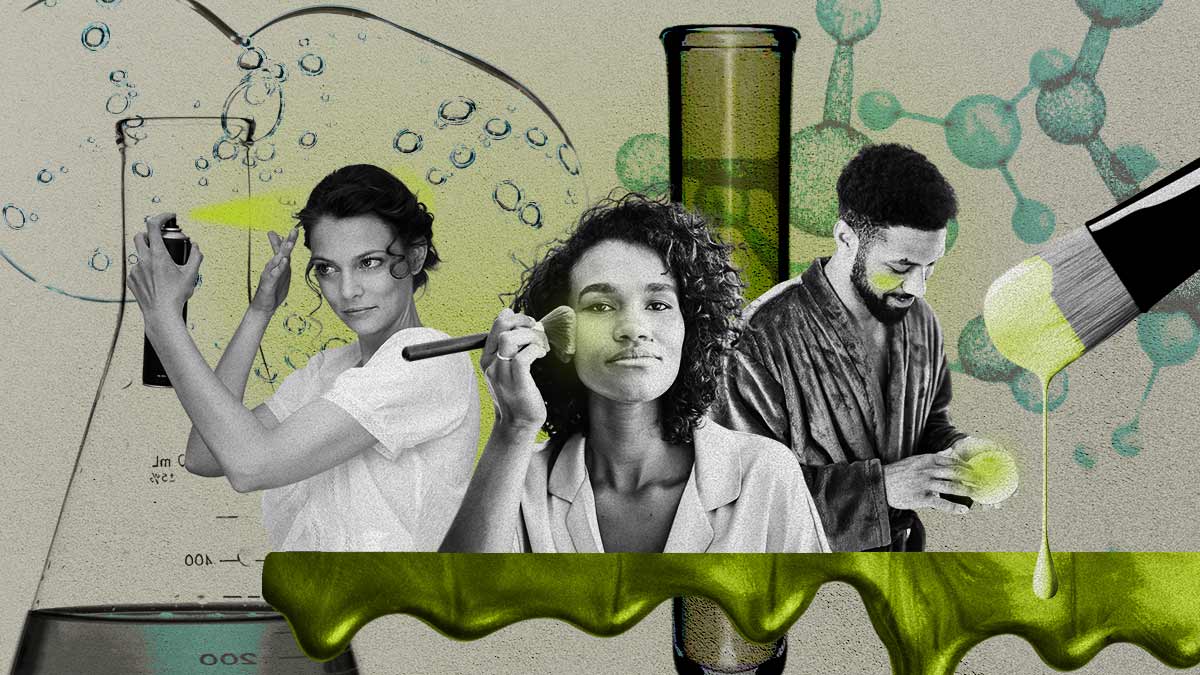
Phthalates are a group of chemicals that help make plastics more flexible. They can also make fragrances last longer and can improve the texture of cosmetics. Because of their wide range of uses, phthalates have, over decades, made their way into many consumer products—and, as a result, into many of our bodies. While the U.S. has in recent years restricted some uses of phthalates, such as in children’s toys and baby bottles, the underregulated cosmetics industry still uses them widely.
It may not always be immediately clear which products contain phthalates. Beauty and personal care products, unlike many other consumer items, must list each individual ingredient on their labels, but there’s a major exception: fragrance. Because the FDA considers companies’ fragrance formulas “trade secrets,” manufacturers are not required to disclose the ingredients of those mixtures, which could include thousands of potential chemicals—including, commonly, phthalates.
“It creates a real buyer-beware situation for consumers, because they have no idea what the fragrance is composed of,” Nudelman says.
Phthalates are known endocrine disruptors, and their interference with hormone production has been linked to an increased risk of serious health issues including breast cancer, decreased fertility, preterm birth, cardiovascular problems, and asthma.
One 2025 study in the International Journal of Hygiene and Environmental Health found that pregnant people and children are especially vulnerable. And women of color are disproportionately exposed. A 2018 study found high levels of endocrine-disrupting ingredients, including diethyl phthalate (DEP) and other fragrance chemicals, in hair products commonly used by Black women, for instance.
If there’s one bright spot, it’s that phthalates move through our bodies quickly, so reducing exposure can have a big—and fast—impact. “Some of these chemicals have a very short half-life . . . and changing something day-to-day, you could see changes in your levels tomorrow,” says Jasmine McDonald, PhD, associate professor of epidemiology at Columbia University’s Mailman School of Public Health in New York City.
Indeed, a September 2025 study—part of a California-based project called Taking Stock that’s investigating the impacts of beauty products on Black and Latina women—found that a group of Black women who avoided fragranced products for one week had less than half the levels of a particular phthalate in their urine compared with women who did not avoid products with fragrance during that same period.
“You’re not looking at phthalate on the label,” says Robin Dodson, ScD, an exposure scientist at Silent Spring Institute who co-authored that study. “I’ve looked at thousands of ingredient lists, and I’ve only seen it [listed] in one or two products. But one way you avoid phthalates is to choose fragrance-free products.”