New programs set up future health and wellness coaches for success
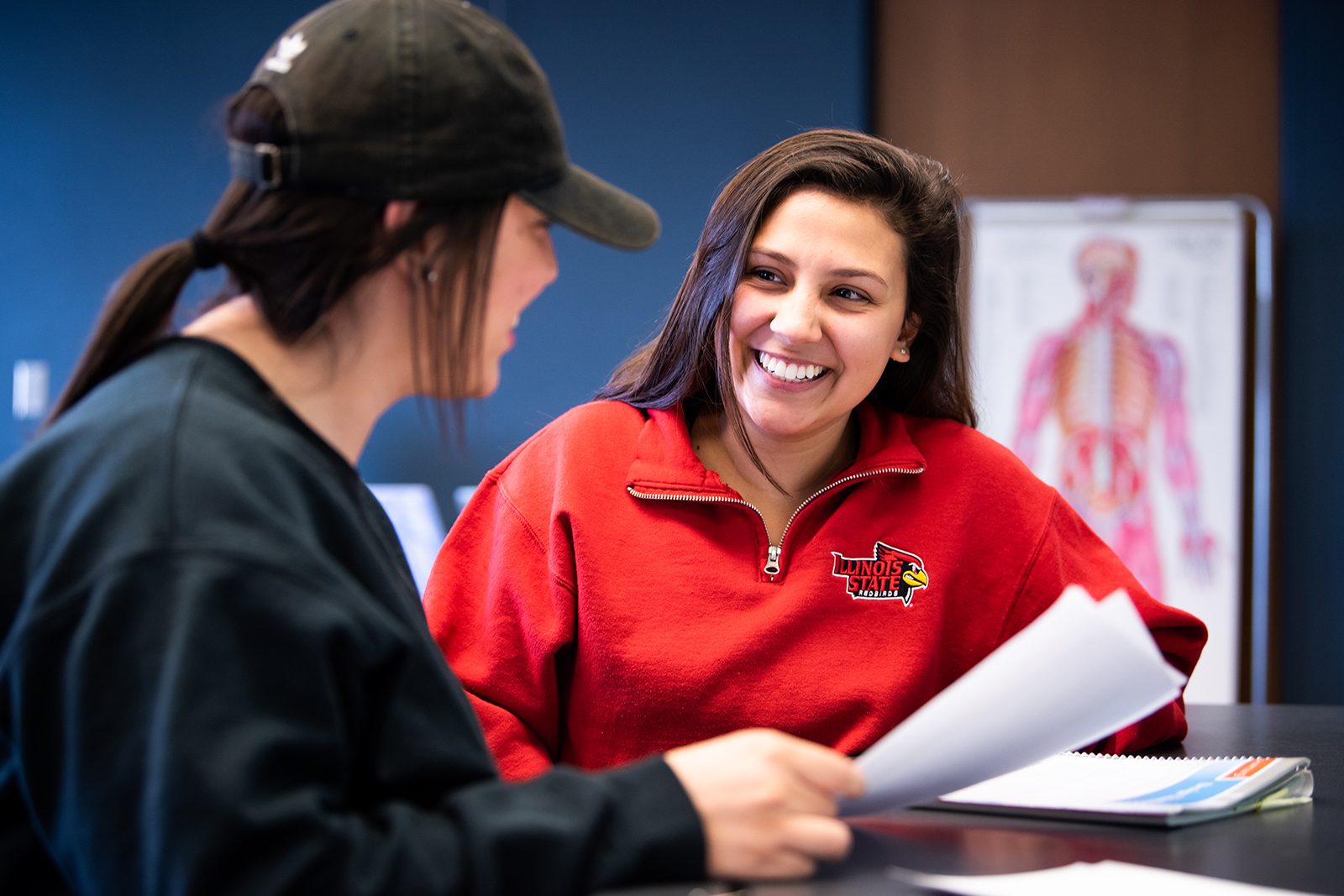
The Department of Health Sciences recently launched three new programs: a health and wellness coaching certificate, an integrated health and wellness sequence, and a coaching minor. The curriculum for these programs overlaps, and it is designed to prepare students to become a National Board-Certified health and wellness coach. After completing one of these programs, students will be able to meet the board qualifications and sit for the national exam.
Students focus on curriculum such as integrative mind/body health, health behavior, behavior change theories, nutrition, and personal fitness. In addition, students complete a coaching mentorship, where they participate in a mentor coaching situation with their own clients. This gives them the opportunity to experience communicating with clients and design an experience that will work for each client. The mentorship provides valuable practical application of skills learned in the classroom.
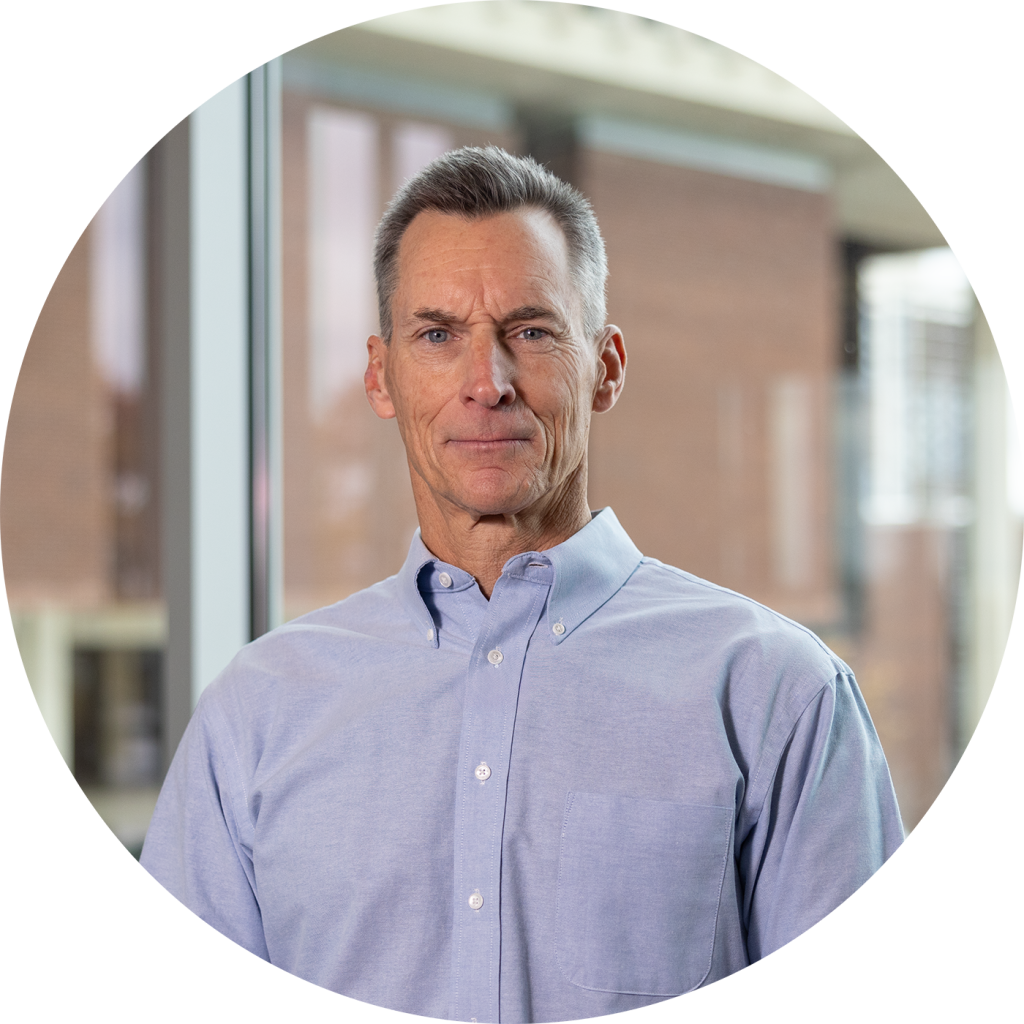
“This is a real area of potential growth as we live in an era of chronic disease,” explained Dr. Jim Broadbear, professor of health promotion and education. “Our students will be involved in the fight against chronic disease; there is no shortage of need. Sixty percent of adults in the United States have at least one diagnosed chronic health condition. There’s no one fix. I firmly believe that for an awful lot of people, having a one-on-one relationship will make a difference—the science of evidence-based behavior change would make an impact. The evidence is there: The only sure change is behavior change.”
Graduates of this program will be able to make an impact in the way that they see fit.
“We provide them with a very scalable skill set,” said Broadbear. “Graduates might start a coaching business as a side hustle, become a full-time entrepreneur, or work for a hospital or company. There is a lot of variety and a lot of flexibility when you choose coaching as a career.”
It’s also a career that students can make their own.
“No one health and wellness coach will have the entire breadth of knowledge for all health issues,” said Broadbear. “Students in this program will be able to think about how they want to present themselves, what constituents they’d like to serve, and how they can make an impact. There is lots of nuance in coaching; it is not a paint-by-numbers situation.”
“Students in this program will be able to think about how they want to present themselves, what constituents they’d like to serve, and how they can make an impact. There is lots of nuance in coaching; it is not a paint-by-numbers situation.”
Dr. Jim Broadbear
These courses are also beneficial to students entering other health-related fields, such as nursing or athletic training.
“This is a huge opportunity for anyone interested in working in health and medical fields,” said Broadbear. “Having this knowledge will make them a more effective clinician and practitioner.”
Broadbear said there is a great need for coaches in the community.
“Behavior change is incredibly effective, but it is really hard and very difficult to implement,” said Broadbear. “Let’s look at cigarette users, for example: the data shows that 50% of smokers will try to quit in a year, but only 10% will be successful.
“In addition, we know that only 20% of people get the recommended amount of exercise. Diet, sleep—as a population, we are suffering. There is a real need for tools, and coaches can provide those tools.”
There are some common misconceptions about what health and wellness coaches do, according to Broadbear.
“Coaches are not here to tell you what to do but to provide the structure for change,” explained Broadbear. “There is a misconception that the coach directs the behavior change when they are actually providing an allyship and will be alongside you as you navigate the behavior change.
“They work with individuals that are striving toward a certain health outcome and help those people to put systems in place within their lives. Change is a process. A lot of people benefit by having someone figure out what that process looks like.”
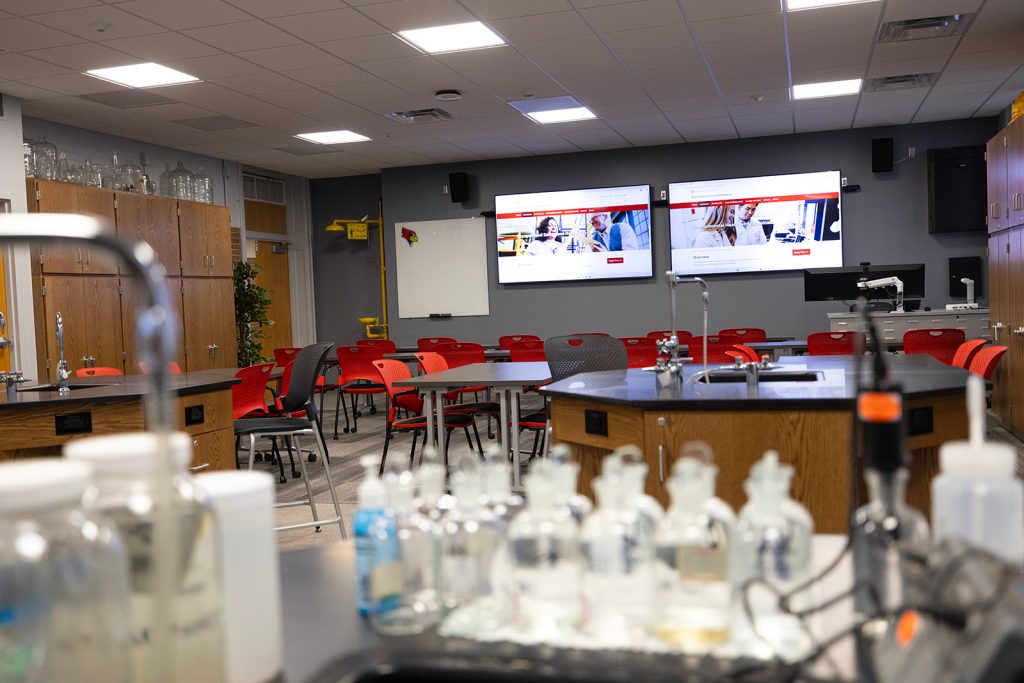 Room 313 CLASSROOM / LABORATORY: A multiuse space that serves both lectures and labs using one system. Half of this room also has a sustainable epoxy floor that should never require replacement.
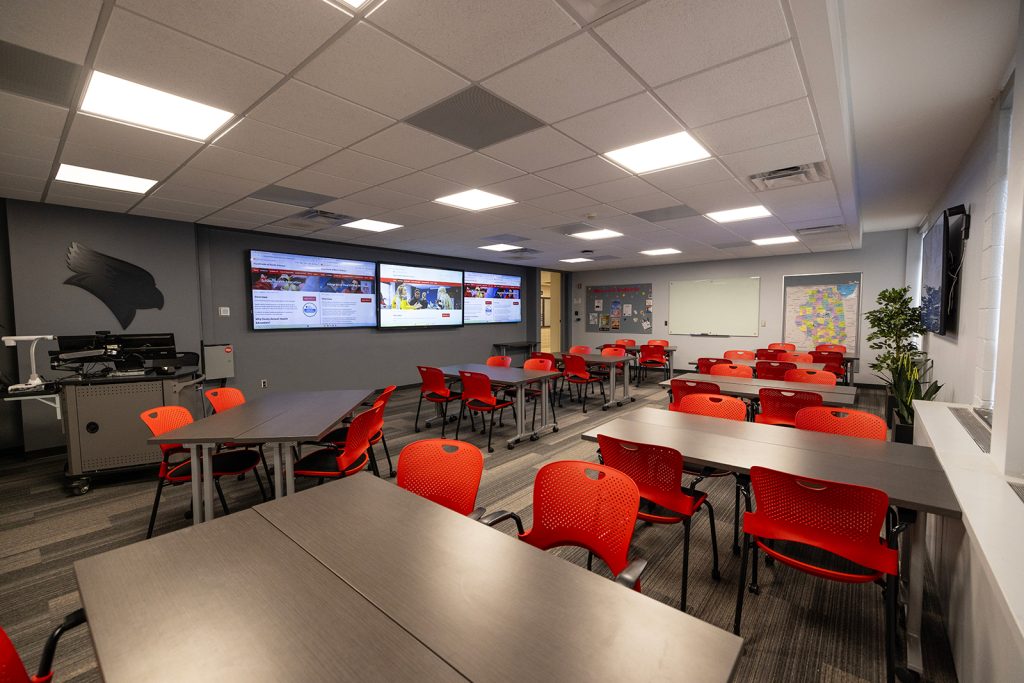 ROOM 325 CLASSROOM: This was the first big renovation project featuring advanced technology.
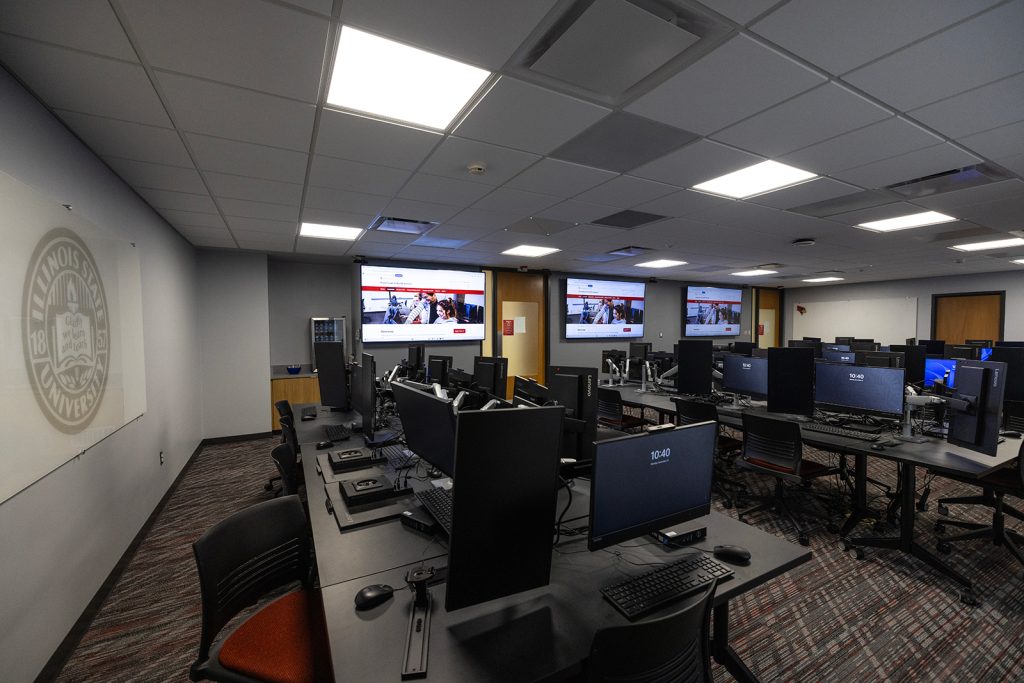 ROOM 421 COMPUTER CLASSROOM / LABORATORY: Upgraded technology and a more functional space will serve the health information management students well.
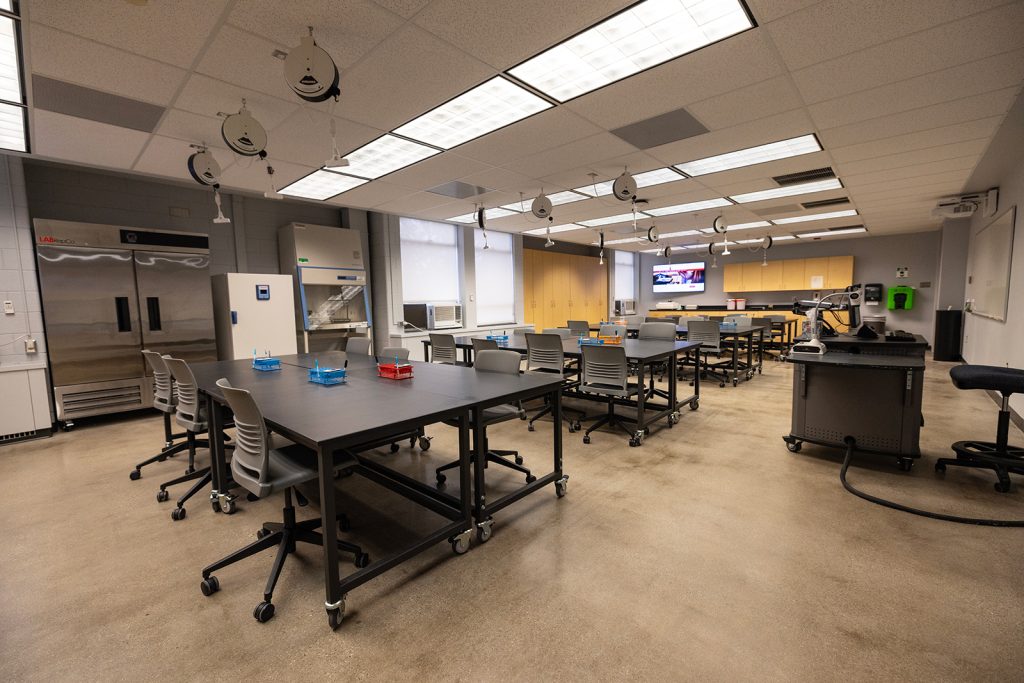 ROOM 336 LABORATORY: Converted from a relatively unused computer lab into a lab for medical science, this space features polished concrete floors that are sustainable and easy to clean in a lab that uses numerous spillable consumables.
Learn more at HealthSciences.IllinoisState.edu/Academics.