Some of the participants at the trivia event looked unsure, while others sat up straight, confident they knew the answers. As the questions kept coming on a cold January evening, the only thing everyone knew for certain was they had all promised to be sober for at least 48 hours prior.
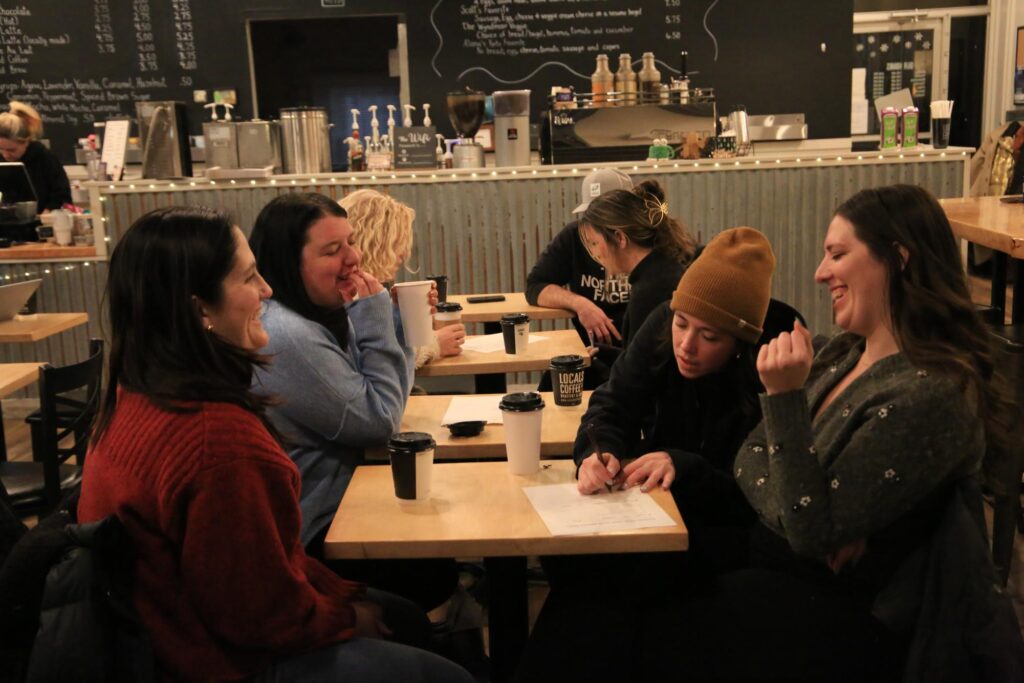
Some friends, some strangers, the group of 15 had broken into small teams around tables inside Locals Coffee – Roastery & Café in Wyndmoor, Pennsylvania, holding onto the promise of trivia victory “bragging rights” and a gift card to Locals Coffee if they won.
The event, held Jan. 23, was organized through the Philadelphia chapter of The Phoenix, a national nonprofit that provides no-cost, substance-free in-person and virtual activities for people in recovery and those interested in sober social spaces. The events are all volunteer-led, and the only requirement is for participants and volunteers to abstain from alcohol and other substances for at least 48 hours before an event.
Beryl Cohen, a teacher in the Philadelphia School District, served as trivia host, firing off the history, pop culture and Philadelphia-themed questions. He has been a volunteer with The Phoenix for three years.
“The Phoenix means community and connection with other people looking to live a sober lifestyle, have fun and stay active,” Cohen said.
Origin of The Phoenix
The Phoenix was founded in Colorado in 2006 by Scott Strode, who overcame substance use disorder by adopting a more active lifestyle through activities like biking, ice climbing and boxing. Strode’s mission is to build an active sober community that “fuels resilience and harnesses the transformational power of connection” to enable people to “rise, recover and live” together.
Although Strode created The Phoenix as a result of his experience with substance use disorder, anyone can participate.
“It’s not just for people in recovery from drug and alcohol abuse but for allies of people in recovery, people in recovery from other challenges and anyone who supports a sober lifestyle,” said Cohen, who got involved in the organization after being introduced to it through his gym, Fearless Athletics, where The Phoenix was hosting free fitness classes for people in recovery.
In its early years, The Phoenix primarily offered CrossFit. The organization, however, has since expanded to include film clubs, book clubs, rock climbing, pickleball and music events, among others.
Lauren Johnston, the manager for the Philadelphia chapter of The Phoenix, said this expansion came a few months before the covid-19 shutdown when The Phoenix launched its in-house app, now called New Form, that allowed people all over the country to get connected virtually. This, Johnston said, contributed to the impact and reach of The Phoenix nationwide.
“The virtual component has been huge, and it serves as a one-stop-shop mental health, wellness resource,” Johnston said. “There are partner organizations outside of Phoenix that are on there so that people can experience different things. There’s support groups on there, there’s fitness classes on there. There’ll be workshops, seminars.”
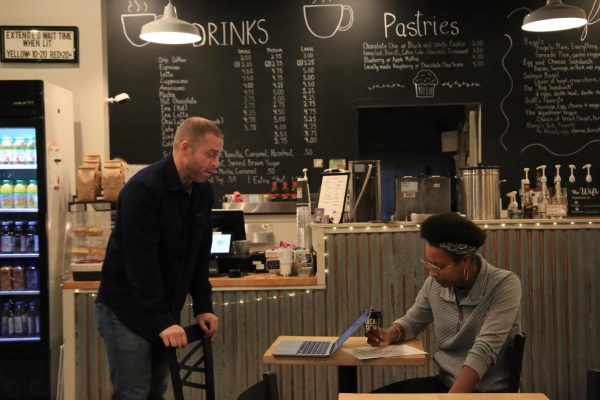 Beryl Cohen (left), The Phoenix volunteer trivia host, reads out the correct answers for a round of trivia while Lauren Johnston (right), Philadelphia manager for The Phoenix, tallies each team’s score Jan. 23.
Landing in Philadelphia
Since 2006, The Phoenix has introduced chapters to cities in all 50 states, officially arriving in Philadelphia in 2017 when the owner of a South Philly gym, who was in recovery, wanted to bring in-person fitness programs to Philadelphia, according to Johnston. From 2017-2023, the Philadelphia chapter of The Phoenix was largely exercise-focused, offering CrossFit, rock climbing and yoga.
When Johnston joined The Phoenix team as a volunteer in 2023, she helped with expanding activities in the Philadelphia region outside of gyms.
“I wanted to encourage other volunteers to lead events that made them happy,” Johnston said.
Johnston said her goal for future expansion includes increased collaboration with college campuses in the Philadelphia area. The Phoenix is currently working with the collegiate recovery programs for Ursinus College and Harcum College and worked with St. Joe’s Collegiate Recovery Program in 2023.
“[We’re] always looking for ways to engage different age demographics,” Johnston said.
In 2024, Johnston became the organization’s manager for the Philadelphia area. She said her background in public health and substance use policy in her undergraduate and graduate studies drew her to the role.
“When I came across a role posting for The Phoenix, I was like, ‘This is perfect,’” Johnston said. “It’s everything I wanted to do and work within communities as well.”
Johnston’s experience as an athlete in recovery and dealing with the difficulty of the associated stigma also influenced her decision to get involved.
“I’m not a 12-step person, and, for me, fitness was such a crucial part of my identity … and so when I found The Phoenix, I was like, ‘This is awesome that this exists and encourages people to take charge of their life and their wellness journey and make it their own,’” Johnston said.
Regardless of experience level, anyone can attend classes offered by The Phoenix.
“The great part about attending a Phoenix class or Phoenix event, especially the fitness ones, are whatever level you are — if you’ve done a sport before, if you are brand new to the gym — they’ll scale and tailor the class to you,” Johnston said. “It gives you this self-accountability measure to progress at your own rate.”
Jennifer Carroll, an attendee at the trivia night, said seeing “all levels” under physical activities on the New Form app is motivating.
“I can show up as I am,” Carroll said. “This encourages me to try things I’ve never done before. The volunteers leading the events have demonstrated that sentiment of ‘all levels welcome/come as you are.’”
Carroll works for a nonprofit that provides recovery support services in Philadelphia. She joined The Phoenix as a participant a year and a half ago after Johnston stopped by her office to share the work of The Phoenix. After attending a few events, she became a volunteer.
Most of the activities Carroll hosts are culinary-based. She has collaborated with CrossFit T1 gym, Wolfpack Fitness, and Flow Wellness Center, bringing protein mocktails and seasonal mocktails to their events. Carroll has also brought a culinary series to Ursinus College, where she has done a quick pickling and DIY spice blend session.
For Carroll, cooking has been an outlet in her own recovery journey.
“I found cooking and food prep to be something that helped me channel and release anxiety into a productive, and delicious, outcome,” Carroll said.
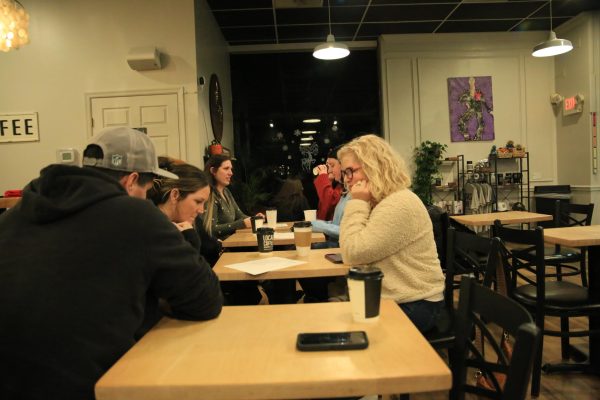 Trivia teams huddle over answer sheets as questions are read Jan. 23.
Building community
As of 2025, The Phoenix has served one million members and hosted 93,000 volunteer-led events, according to its website.
Amy Allen Collins, a nonprofit association management professional who also attended the trivia night, said events through The Phoenix serve as a great opportunity for people who are sober to connect with one another.
“The Phoenix means a safe space and community for those who no longer drink alcohol to meet with other people who are sober and enjoy activities without the pressure of drinking,” Collins said.
Collins joined The Phoenix as a participant last year when members of The Phoenix asked to collaborate with her organization, SoberinMontco, an alcohol-free community group in Montgomery County for women who seek connection, friendship and support, as a way to share events for those in recovery in the Philadelphia suburbs.
Now, Collins is a volunteer for The Phoenix.
“I have always believed in the importance of community and giving back, and this seemed like a natural way to positively contribute to the recovery community in my part of the world,” Collins said.
Collins’ favorite activity she has hosted was a “boozeless brunch” at Terrain Cafe in Doylestown in late 2024. She said she enjoyed being able to connect with like-minded individuals and enjoy an activity often associated with drinking.
Johnston also echoed the importance of community, calling it a “critical component” of life, especially after the isolation many people experienced during the covid-19 pandemic.
“[When] we’re on so many screens and a face-to-face interaction is less prevalent on a daily basis, it’s important to have people with similar situations that you can connect with and do activities and fun things outside of just focusing on recovery,” Johnston said.
Looking ahead, Johnston said she hopes to make The Phoenix’s in-person offerings easier to access for people across the region, not just online.
“I want to continue expanding, offering more free events throughout the community,” Johnston said. “My goal is, we have these virtual programs, but, ultimately, for everyone to have a Phoenix chapter in walking distance or easily accessible to them.”
This is the third story in a series by Cara Santilli ’24, M.A. ’26, about issues related to substance use disorder in the Philadelphia community, how the media reports on those issues and what community members can do to help.
Members of the St. Joe’s community seeking support are encouraged to contact the following resources:
Counseling and Psychological Services (CAPS), 610-660-1090
Campus Ministry, 610-660-1030
The Office of Student Outreach & Support, 610-660-1149
The Jesuit community, 610-660-1400
Employee Assistance Program, 866-799-2728
 GRAPHIC: ANASTASIA KUNICKA ’28, LUKE SANELLI ’26 AND CARA SANTILLI ’24, M.A. ’26/THE HAWK