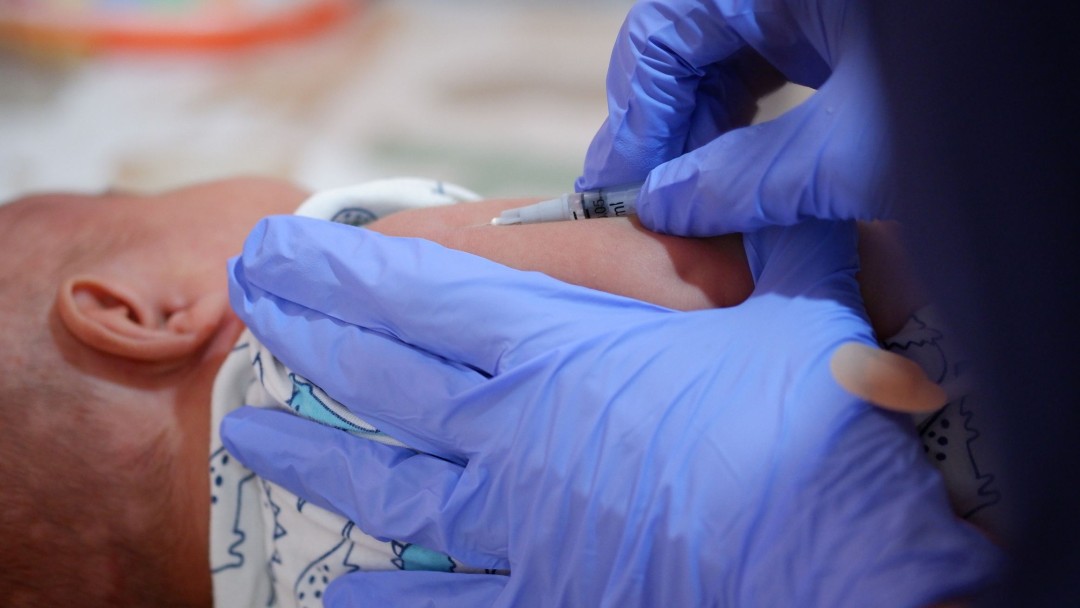
Pediatric providers say that newborns in the United States are increasingly leaving the hospital without a long-standard vitamin shot that prevents dangerous bleeding, reports the New York Times. The injection delivers vitamin K, which infants lack at birth and don’t get in sufficient amounts from the placenta or breast milk. Without it, babies are at risk of a bleeding disorder that can cause anything from mild umbilical-cord oozing to fatal gastrointestinal or brain hemorrhages. A single dose given shortly after birth has been routine in US hospitals for more than six decades and is highly effective at almost eliminating this risk.
Yet electronic medical records show that the share of newborns not receiving the shot has risen from under 3% in 2017 to more than 5% in 2024, per a recent study. Doctors say the increase appears tied to broader anti-vaccine and anti-medical-intervention sentiment, even though vitamin K isn’t a vaccine—a Texas Children’s Hospital pediatrics professor explains to NBC News that vitamin K is a plant-derived supplement—and the shot is recommended for all newborns by the American Academy of Pediatrics. Several clinicians report that rhetoric from political leaders, including President Trump and Health Secretary Robert F. Kennedy Jr., has amplified skepticism.
Providers across the country say they’re now fielding more refusals and finding it harder to change parents’ minds. Many hesitant parents describe the injection as “unnatural” or not needed, or they request an oral version, which in the US isn’t FDA-approved for infants and requires multiple doses over weeks. Others raise concerns about benzyl alcohol, a preservative in the shot, though studies haven’t found harm from the small amount used. Research from the early 1990s that hinted at a possible leukemia link has been contradicted by larger studies, but misinformation still circulates online.
Clinicians try to explain that bleeding from vitamin K deficiency, while relatively rare, can be catastrophic and unpredictable. Estimates suggest that 0.25% to 1.7% of untreated infants bleed from a lack of vitamin K in the first week of life, with additional cases seen up to six months; some studies place mortality around 20% for severe cases, and many survivors of brain bleeds are left with permanent disabilities. “By not doing something, you are doing something wrong to your child,” says Boston neonatologist Dr. Timmy Ho, who recently treated his first case of vitamin K-preventable bleeding in the brain.