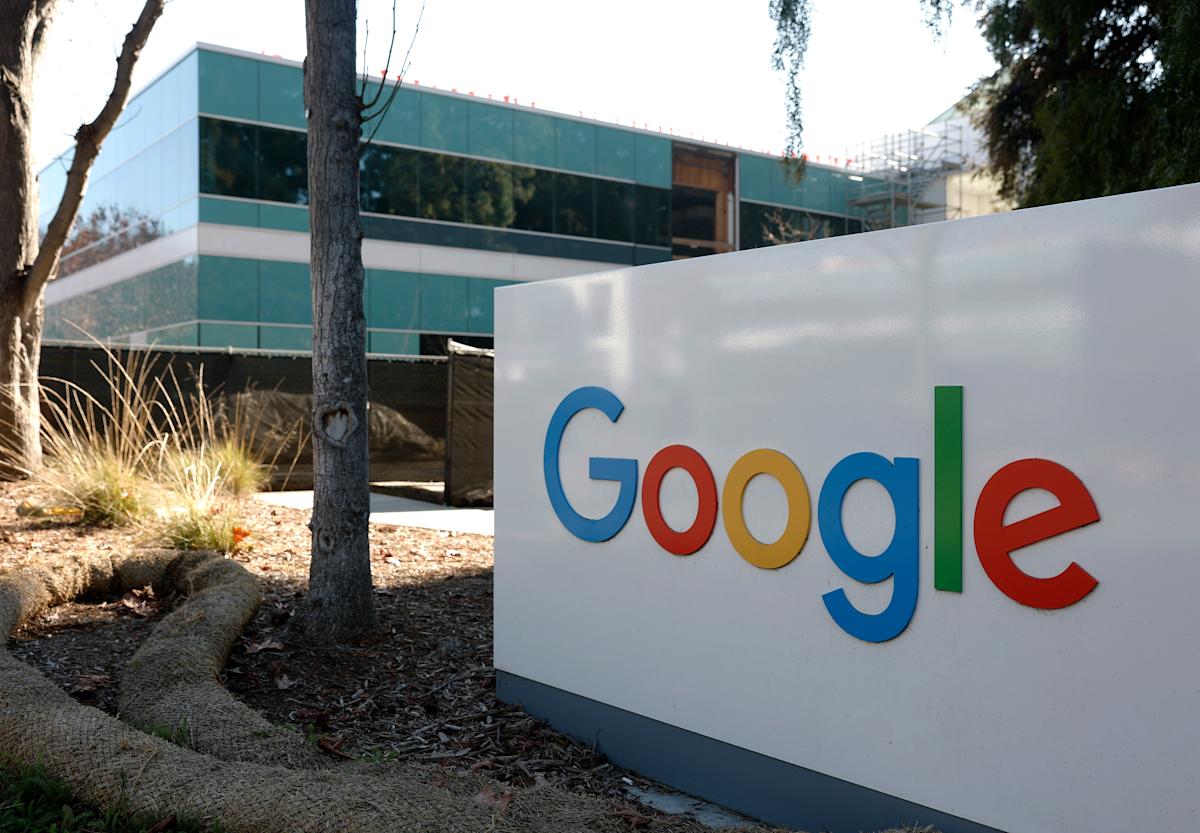
Shares in Google-parent Alphabet (GOOG, GOOGL) were down nearly 1% in pre-market trading on Thursday, after the tech company forecast spending in the year ahead that was well above Wall Street expectations.
In fourth quarter results, released after the bell on Wednesday, Alphabet (GOOG, GOOGL) CEO Sundar Pichai said that the company expected capital expenditure (capex) for 2026 to land in the range of $175bn (£128bn) to $185bn. That forecast was well above $119.5bn projected by analysts tracked by Bloomberg and would be roughly double the $91bn Alphabet saw in capex in 2025.
There has been increasing scrutiny over the amount big tech companies are spending, particularly on AI, and whether these investments are paying off in growth.
Read more: Stocks mixed ahead of BoE and ECB decisions
Alphabet’s (GOOG, GOOGL) fourth quarter results beat expectations, with revenue increasing 18% to $113.8bn, compared to the $111.4bn anticipated by analysts. Earnings per share (EPS) for the period rose to $2.82 from $2.15 a year ago and topped estimates of $2.65.
Derren Nathan, head of equity research at Hargreaves Lansdown, said: “Alphabet is one name that’s been more than holding its head above water this year. But a blowout on cloud growth wasn’t enough to lift the shares in after-hours trading as operating profits fell slightly short of the mark.”
He said that Alphabet’s (GOOG, GOOGL) capex guide is an “eyewatering number but one that has the potential to cement Alphabet as one of the outright winners in the AI landgrab, if execution remains on point”.
Alphabet’s (GOOG, GOOGL) capex guidance helped lift the shares of AI infrastructure-linked companies, such as chipmakers Nvidia (NVDA), Broadcom (AVGO), which were up 2% and 5.8% respectively in pre-market trading.
Another tech stock in focus on Thursday morning is Qualcomm (QCOM), with shares sliding 11.2% in pre-market trading, after the company’s forecast for the current quarter fell short of expectations.
In its first quarter results, released on Wednesday, Qualcomm (QCOM) reported a 5% increase in revenue to $12.3bn, which was ahead of consensus estimates for $12.1bn, according to S&P Global Market Intelligence. EPS also rose to $2.78 and topped forecasts of $2.75.
Read more: Silver price plunges to $80 as demand for safe-haven assets wanes
However, for the second quarter, Qualcomm (QCOM) said it expected revenue to be in the range of $10.2bn to $11bn, with analysts having hoped for $11bn as the midpoint. Adjusted diluted EPS is expected to be $2.45 to $2.65, which would be below analyst expectations for $2.87.
Story Continues
Cristiano Amon, CEO of Qualcomm (QCOM), said: “While our near-term handsets outlook is impacted by industry-wide memory supply constraints, we are encouraged by end-consumer demand for premium and high tier smartphones, and remain on track to achieve our fiscal 2029 revenue goals.”
Fellow chip stock Arm (ARM) was down 7% in pre-market trading on Thursday morning, after its quarterly licensing revenue missed expectations.
While licensing revenue in Arm’s (ARM) third fiscal quarter increased 25% year-on-year to $505m, that was slightly below expectations of $519.9m, according to FactSet data reported by Reuters.
Stocks: Create your watchlist and portfolio
Total revenue for the quarter came in at $1.24bn, which was up 26% year-on-year, and topped an estimate of $1.22bn.
Arm’s (ARM) fourth quarter guidance for total revenue of $1.47bn was also ahead of an estimate of $1.44bn, according to LSEG-compiled data reported by Reuters.
More positively, outside of the tech sector, shares in e.l.f. Beauty (ELF) jumped 7.4% in pre-market trading on Thursday, after the affordable cosmetics maker reported an earnings beat.
On Wednesday, the company reported a 38% increase in net sales to $489.5m in its fiscal third quarter, besting estimates of $461m, according to S&P Global Market Intelligence. EPS of $0.65 was also better than the $0.55 anticipated by Wall Street analysts.
The company also raised its outlook for full-year sales to a range of $1.6bn to $1.61bn, from previous guidance of $1.55bn to $1.57bn. In addition, e.l.f. Beauty (ELF) said it expected to report EPS of $3.05 to $3.10 for the year, up from a previously guided range of $2.80 to $2.85.
In the UK, telecoms giant BT (BT-A.L) was in focus, with shares edging nearly 1% higher after the company said it remained on track to achieve full-year guidance.
BT (BT-A.L) reported third-quarter revenue of nearly £5bn ($6.79bn), which was down 4% year-on-year, and was slightly below expectations of £5.08bn, according to company-provided consensus estimates.
Adjusted earnings before interest, taxes, depreciation and amortisation (EBITDA) came in at £2.078bn for the quarter, which was 1% lower year-on-year and compared to expectations of £2.08bn.
Read more: Shell misses profit expectations but launches another $3.5bn buyback
Matt Dorset, equity research analyst at Quilter Cheviot, said: “BT’s (BT-A.L) latest results highlight its financials remain challenged, with its UK service business revenue down 2% compared to last year, 0.5% behind expectations, albeit this is partly due to phasing of business revenues and some small disposals.”
“BT (BT-A.L) has reiterated all other full-year and mid-term guidance, with cash flow to increase to £2bn next year and £3bn by the end of the decade,” he said.
“The valuation continues to remain attractive thanks to that fibre rollout and despite the recent rally in the shares, and with a significant cash flow inflection to come as capex peaks, BT (BT-A.L) looks well placed to weather its current challenges.”
Read more:
Download the Yahoo Finance app, available for Apple and Android.