We live in turbulent times, times especially exhausting if you are a political junkie like I am.
With the internet bringing news from anywhere on the globe to our computers within minutes, and with so much tension between nations rising and falling every day, the world can feel too much with us.
There are many ways to gain some distance from all the turmoil. Some people play video games. Others watch sports, while others take hikes or bike rides. Still others curl up with a book.
While some of these activities can distract us from the news of the world, I have been drawn lately to the power of beauty to offer more than distraction. I am talking about the power of beauty to heal our wounds.
Beauty comes in many forms.
Studying a painting by a master is a cure for many people.
The beauty of nature does the trick for others.
By the time this column appears, we might all be tired of the recent snow and the problems it brought. Think back, however, to the recent Saturday night and Sunday morning when the streets and fields were covered in pristine snow. Weren’t the scenes out our windows beautiful?
My wife is an artist, among other gifts, and she has a keen eye for beauty.
On the Sunday, while I was working on my computer, she kept saying, “You have to look outside at the birdbath.” Eventually, I did, not expecting much. I was mistaken. Snow had formed a perfect cone shape at least a foot high atop the birdbath. It was perfection, a masterpiece in miniature.
Recently, I have been attracted to the healing power of music, particularly the healing power of slow, meditative music. No, I am not talking about Muzak or “elevator music.” Let me offer some examples. For Christmas, my wife gave me a vinyl copy of Arvo Pärt’s “Spiegel im Spiegel.” If I listen to that record with my eyes closed, I feel within seconds that I’m on a raft drifting slowly down a peaceful river.
Last fall, I discovered Peter Maxwell Davies’ “Farewell to Stromness.” I don’t know enough about music to analyze it, but, for me, this piece is filled with the longing that comes when we remember a place that once soothed us. And in remembering that place, we find ourselves soothed again.
Many of the pieces that have healing powers for me, I discovered by accident. That was the case with Alan Hovhaness’ “The Prayer of St. Gregory.” Like the pieces of music listed above, it is a short piece, but powerful.
A longer piece that I recommend is Paco de Lucia, accompanied by orchestra, playing Joaquín Rodrigo’s “Concierto de Aranjuez.” That serene piece of music leaves me in awe.
If you are interested in listening to these pieces, you can find them all available for free on the internet.
Sometimes, it’s tempting to think that our world is one big mess. Yet, this same world is filled with incredible beauty — just what we need when we feel wounded and frazzled.
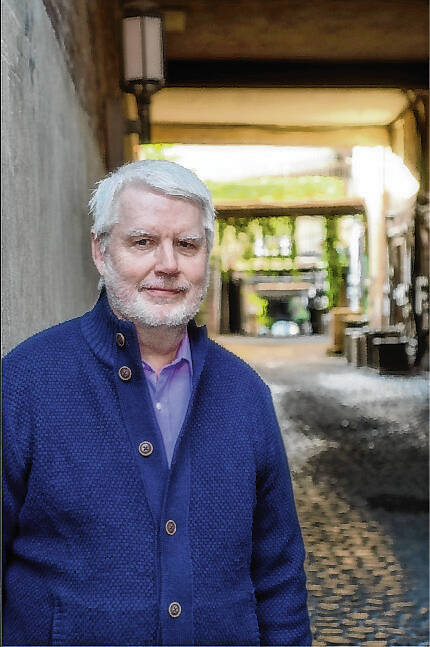
David Carlson is a professor emeritus of philosophy and religion. Send comments to [email protected].