“Ultra-processed food linked to harm in every major human organ.”
“Hidden food additives linked to early death.”
“Ultra-processed foods may help explain rising bowel cancer in under-50s.”
The headlines keep coming, and we keep eating, a lot. Up to half of the average diet in the Republic is now estimated to be ultra-processed, but we have few firm conclusions on how it is affecting our health. What are consumers to do?
They could start by reading a chilling piece of research produced by The Lancet medical journal at the end of last year. This found that a cumulation of evidence points to ultra-processed foods (UPFs) being a “key driver” in growth in multiple diet-related and chronic diseases all over the world, ranging from obesity, heart and kidney disease to various cancers and depression.
It is enough to put anybody off their (likely) ultra-processed breakfast cereal; even porridge-eaters who use plant milks might shudder once they realise these non-dairy alternatives are classed as ultra-processed, too.
Do the Lancet conclusions mean for sure that UPFs can harm our health, beyond carrying the obesity-related risks we might expect?
That is what researchers are looking at, but theories are hard to prove, with so many variables in the mix.
The Lancet’s review of more than 100 studies found a long list of “plausible mechanisms for harm” in diets dominated by UPFs. These include overeating, nutrient imbalances, toxic contaminants from processing and/ or packaging and harmful additives.
[ How Ireland got hooked on ultra-processed foodsOpens in new window ]
And then there’s a reduction in the health-protective benefits of food that UPFs are replacing.
All in all, this would seem to put a question mark over many packaged products on supermarket shelves. But with so much of our diet now based on UPFs, avoiding this type of food entirely is clearly unrealistic for most people. The average shopper must wonder how to even start to load their shopping trolley if UPFs are all “bad”.
Zoom out, not in, is a common theme in advice from registered dietitians.
Take a broad view of individual and family eating patterns. Cooking at home from scratch gives control over ingredients, portions and seasonings (recognising that this is not always possible). A loose 80:20 approach is a common recommendation, ie aiming to eat healthier foods 80 per cent of the time, for which a Mediterranean-style diet is a proven, reliable guide.
And remember, almost all foods we eat are processed to some extent; what pushes them into the “ultra” bracket is a matter of contention, with no agreed definition. This is where our shopper might be forgiven for throwing up their hands in despair.
Going back to the start, we encounter Brazilian Carlos Monteiro, professor of public health nutrition at the University of São Paulo in Brazil, who introduced the term UPF when developing a food classification system called Nova. It has four categories.
The first is “unprocessed or minimally processed food”, such as fresh meat and fish, fresh, frozen and dried fruit and vegetables, nuts and seeds.
Second, we have “processed culinary ingredients”, such as butter, vegetables oils, sugar, honey and vinegar.
Third is “processed foods” such as tinned food, cured meats and freshly made bread and cheese.
And finally, “ultra-processed” covers ready-to-eat, industrially formulated products, containing substances derived from foods and additives – ingredients not typically used in home kitchens. Examples of these include mass-produced hamburgers, ice-cream, biscuits and infant formula. Also muesli, if it contains barley malt extract.
Nova measures degrees of processing, not the nutritional quality of food. Monteiro, who was also a lead author in the Lancet series, contends that profit-driven, ultra processing makes food “intensely appealing and intrinsically unhealthy”.
However, critics of Nova argue that to lump, for instance, wholegrain sliced bread, flavoured yoghurts and baked beans into the “ultra” category, along with reformulated potato snacks, fizzy drinks and confectionery, is too indiscriminate and confusing. For example, the late renowned Irish food scientist Mike Gibney wrote a book, In Defence of Bread, which was published posthumously last year, to highlight the flaws he saw in the Nova system.
Eight easy ways to shift your diet away from ultra-processed foods
Here are a few moves away from UPFs suggested by dietitians interviewed for this article:
Add fresh/frozen fruit to plain yoghurt (Greek for extra protein) instead of flavoured, sweetened varieties. Cook “fake away” dishes at home, such as stir-fries, in the time it takes to order a takeaway. Assemble chicken fajitas, incorporating onions, peppers and other veg options, instead of serving processed breaded chicken and potato waffles. Bake potatoes in an air-fryer for about 20 minutes, with a variety of fillings such as tuna, cheese, sweetcorn, instead of frozen pizza. Try sparkling water instead of sugary or diet fizzy drinks – or just tap water if you can do without the bubbles. Snack on nuts rather than crisps. Buy one bar for a treat instead of a whole packet of biscuits, which may be quickly consumed once opened. Home-made chicken goujons are better but if taking a bag out of the freezer for convenience, look to what you can add in, such as peas, cucumber, sweet corn. In the same spirit, nutritionally enhance bolognese and stews with ingredients such as beans, lentils and mushrooms – perhaps leaving no room for dessert.
These differences between scientists, when accompanied by non-scientists being overly free with theories and a general information overload, could quickly become bewildering.
Perhaps it’s time to step back and assess the bigger picture.
We have to learn to live with ultra-processed foods all around us, says Josh Percival, dietitian and co-founder, with rugby international Andrew Porter, of the Three State personal training gym in south Dublin.
While Percival believes we need more restrictions on how some of these products are advertised and placed for sale he can’t see our food environment changing for the better any time soon. Public demand for improvements is growing but systemic change is invariably slow.
Be mindful, he says, that companies know we’re biologically designed to eat foods that are high in energy and they want to make foods that we will consume quickly and in large quantities. Indeed, Chris van Tulleken’s delving into the tactics of food corporations in his bestselling book, Ultra-Processed People; Why do we all eat stuff that isn’t food … and why can’t we stop, is an eye-opening and anger-inducing read in this regard. He argues that exercise and willpower cannot save us from the effects of eating too much convenience food, which is engineered for taste appeal and pushed at us by clever marketing.
Percival does not like the “black and white categorising of non-processed and ultra-processed” because it covers such a wide spectrum of foods. He advocates that people simply look at their plate and consider is there enough protein; what sources of fibre and carbohydrate are there; does it include vegetables. For those who want to make dietary changes, he would always start with what they currently eat and then suggest tweaks, rather than a whole new plan, for gradual, sustainable change.
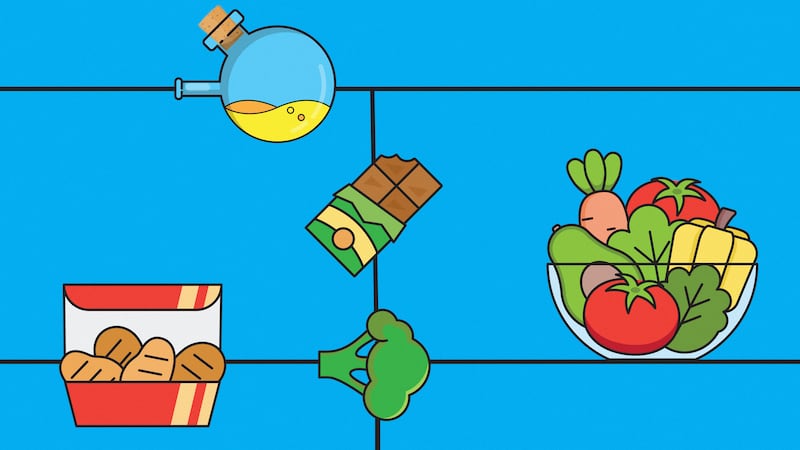 Ultra-processed foods: Up to half of the average diet in the Republic is now estimated to be ultra-processed
“I always say to people, bread’s not good and bad; it falls on the continuum of very nutritious bread all the way down to lower nutritional quality bread – and there’s lots of different choices in between.” He does not recommend using apps that give individual products rating out of 100, based on their ingredients list, due to lack of context or nuance.
“I think it can potentially worsen people’s relationships with food. It doesn’t take in things like affordability, convenience, taste; all these factors that matter as well as nutritional quality.”
A preoccupation or obsession with dietary purity is known as orthorexia nervosa. It is currently not a formally diagnosable eating disorder, although it is a condition that more people are identifying with, says Ellen Jennings, communications, research and policy manager at Bodywhys – The Eating Disorders Association of Ireland. “It can contribute to significant dietary limitations due to the drive to consume only foods that they perceive to be ‘healthy’.”
It is likely to involve a lot of self-imposed rules, that may have a negative impact on a person’s social life. Any breaking of these “rules” can contribute to feelings of guilt, anxiety and shame, and lead to more stringent diet behaviours, she says.
There has been a lot of scaremongering around UPFs, says dietitian Jess Willow, who takes a practical, all-inclusive dietary approach. “There’s no foods that we absolutely have to cut out, unless you have an allergy or an intolerance, or you don’t like [them].” Where UPFs are predominant in somebody’s diet, the problem is what these foods are replacing, she says. Often that is vegetables, whole grains, and lean protein foods. “Whole foods essentially, which we know are the foundations of a very healthy, balanced diet.”
The variety of the diet needs to be considered, along with exercise, sleep, stress management. Then it is a question of what can be added in to be beneficial, rather than saying you can’t have any UPFs.
In her own practice, Willow Nutrition, she specialises in intuitive eating, an evidence-based, 10-step framework. “It’s about tuning into our internal cues of hunger, fullness, satisfaction and moving away from the concept that certain foods are off-limits or that we should be pursuing weight loss.”
You’re asking people to learn how to swim harder when you’re in a water that’s toxic, instead of saying, what is this water?
— Norah Campbell, lecturer in critical marketing at Trinity College Dublin
The idea that any food deemed ultra-processed is bad for you is not supported by science, says dietitian Sarah Keogh, who does some work with food processors as well as running a private practice, Eatwell. Although people can get hung up about the potential effect of additives, she regards UPFs displacing less processed options as the chief concern. The impact of that includes appetite satisfaction.
[ Bread, cereals and yoghurts: 11 foods you might not realise are ultra-processedOpens in new window ]
“If you’re eating your whole foods, you’re getting your fruit and veg in, you have to do a lot more chewing. And chewing by itself signals the brain to make you feel full a little earlier.” UPFs are also typically lower in fibre, which has a satisfying effect too, not to mention being essential for good gut health. There is nothing new about the advisability of not eating too much food with high levels of sugar, fat and salt, such as cakes, biscuits, crisps, pastries or chocolate, says Keogh, who believes there is only so much dietitians can say about balanced, healthy eating before people get bored. It is the novelty of the latest fad and self-styled health influencers peddling scary notions that grab attention.
Keogh hears people say they just don’t know what to eat any more. They are frightened of sugar, food additives, seed oils (“they’re totally fine”), nightshade vegetables, eg aubergines and potatoes … the list grows ever longer. Then there is palm oil; yes we should look for sustainable sources but, that aside, it is just another saturated fat, she says, “not arsenic”.
She describes popular advice to avoid a food product with more than five listed ingredients as “a silly, arbitrary thing … it’s this year’s ‘clean eating’.”
Her advice on which UPF products to avoid most of the time are the types found on the top shelf of the food pyramid. And if choosing a ready-meal, look for one lower in salt and saturated fat.
Individuals who follow “extreme healthy eating”, are often well physically she says, “but mentally, their relationship with food is very poor”. They never get time off their preoccupation. “The rest of us understand that you need to eat your fruit and veg, but it’s okay if you have chips now and again.”
It is one thing adults informing themselves and making conscious decisions. Trying to steer children away from too many UPFs is a whole other challenge in our current food environment.
[ Ultra-processed food: ‘They are essentially designed for us to overeat’Opens in new window ]
“I would never, ever ban foods with kids because you just make them special and dangerous,” advises Keogh. Children need to be taught to have a healthy relationship with the high-fat, high sugar products. “I call them ‘sometimes’ foods.”
When Deirdre Doyle of The Cool Food School goes into primary schools to promote healthy eating, she is struck by the lack of knowledge about real food. If she asks about sources of protein, “protein powder”, “protein bar”, “protein shake” comes back about 70 per cent of the time.
“Some kids will know that it comes from eggs or cheese or whatever; nobody knows that it comes from beans; very few would know that it comes from milk.” She sees a difference between children coming from disadvantaged backgrounds and their more privileged counterparts, reflecting the economic-social inequities in food consumption. The €300 million hot school meals programme for primary schools was introduced to help address health inequities. However the ultra-processed nature of much of the food served has been criticised.
Children, says Doyle, want what they see in our “obesogenic” environment, where UPFs predominate in supermarkets, corner shops – and don’t get her started on garages. A ban here on advertising of “junk food” being applied only to broadcast media and just up to 6pm has long been criticised as insufficient to protect our “digital native” children. In the UK, since January 5th, junk food advertising has been banned online and up to 9pm on television.
At home, Doyle advises parents to make foods they would like their child to eat easily available – fruit needs to be out on the kitchen counter; vegetables and salad in serving bowls on the dinner table. Children may try something up to 20 times before liking it, so quiet perseverance in putting tiny amounts on their plates is essential.
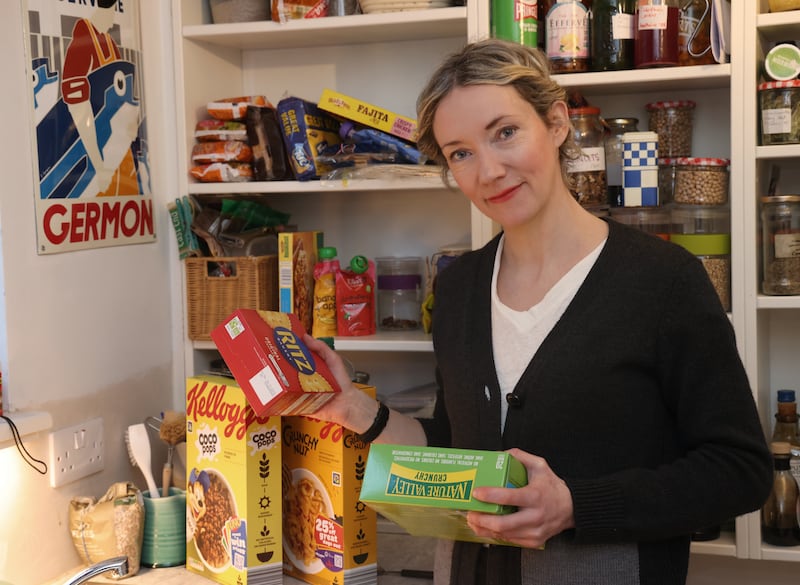 Dr Norah Campbell, Associate Professor of Business, Trinity College Dublin Business School in her larder at home with some examples of the food she writes about. Photograph: Bryan O’Brien/ The Irish Times
To harp on about sliced bread when discussing UPFs is a classic case of “whataboutery”, says Norah Campbell, lecturer in critical marketing at Trinity College Dublin. “You see it in a lot of cultural political activity. They take the most difficult grey case and say you’re demonising everything.” There is a difference between a particular food and a dietary pattern.
In Ireland, taxpayers subsidise the promotion of junk food brands, she points out, because the costs are tax deductible. “If they had to pay for their advertising, we would generate millions.” She argues that this is money that could be diverted into, say, subsidising local bakeries to produce affordable whole bread.
As the Government drafts a new 10-year strategy on obesity, Campbell believes there is a greater appetite for structural change. Exercising choices as consumers is not the answer because our food environment has become so difficult.
“You’re asking people to learn how to swim harder when you’re in a water that’s toxic, instead of saying, what is this water?”
Campbell believes every single person has to change from being a consumer to being a citizen about how our food is processed. She advises consumers to ask people who come to their doorstep looking for votes, why, for instance, do junk food companies not have to pay tax on advertising? Why is there no choice in school meals providers except for a handful of large processing kitchens?
It’s not a huge challenge to reform our UPF-dominated food system, according to Campbell.
“The thing that is huge is finding the political parties that are willing to see what a huge benefit this would be economically, for food security in this country and for people’s health.”