When people think of nutrition, their first thought may not always be its relationship with emotional well-being.
Mental health is often left out of the food equation because it is not as visible or easily measured as physical health, according to the Food Science Club’s president, Emma Whitney, a senior majoring in food science.
“Nutrition conversations tend to focus on weight, fitness or physical appearance, while mental health can be harder to quantify,” Whitney said. “Because of this, the connection between food and mental well-being is often overlooked.”
Whitney observes the direct effects on her well-being when she does not maintain a balanced diet. When she depends on fast food or does not fuel her body properly, she feels more “tired and overwhelmed.”
“When I prioritize eating foods that provide the nutrients my body needs, my energy levels and overall mood feel much more stable,” Whitney said.
Aline Kobayashi, a senior majoring in nutrition and vice president of the Undergraduate Nutrition Student Association, admitted that she notices changes in her emotional state, especially during busy or stressful semesters, that are connected to her eating habits.
“When I skip meals or don’t prioritize balanced eating, I notice more brain fog and stress,” Kobayashi said.
There are five core food groups — grains, proteins, fruits, dairy and vegetables — which offer a plethora of benefits for the body. With a healthy diet, these food groups may support weight management, digestion and reduce risk of chronic diseases.
“Consistency and balance are just as important as the specific foods themselves,” Whitney said.
Whitney added that nutrients such as proteins and carbohydrates help regulate normal bodily processes, including those that support brain health.
“When our bodies are properly fueled, we tend to feel more balanced, focused and energized. When we don’t consume enough nutrient-dense foods, it can lead to fatigue, irritability and difficulty concentrating,” Whitney said.
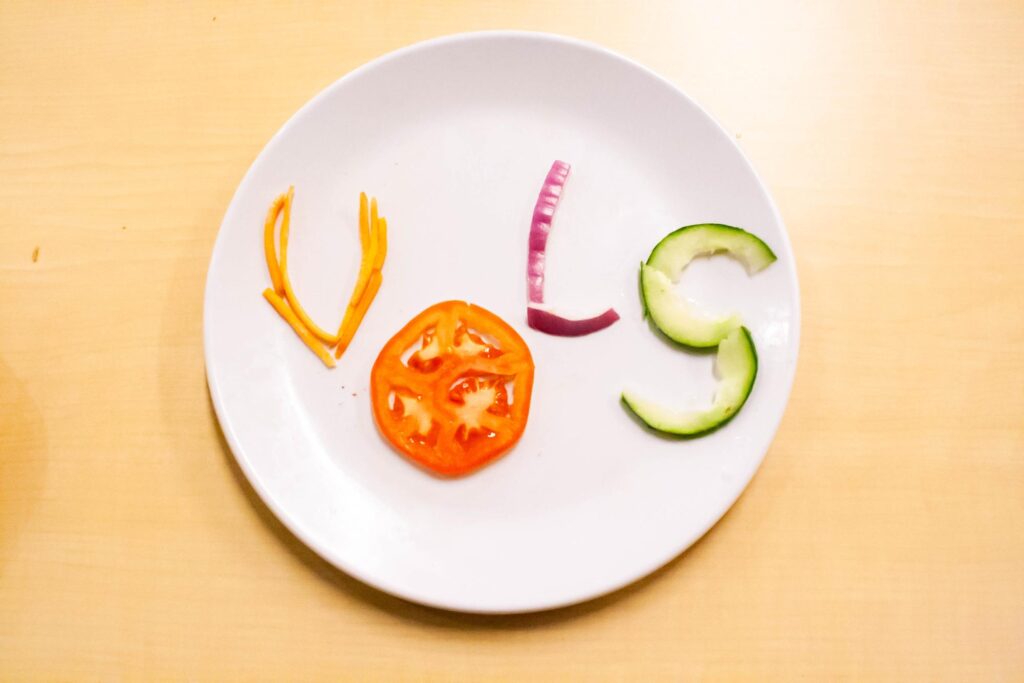
“Eat the Rainbow” is a recent health initiative that embodies the nutrient-dense food concept — meaning consuming fruits and vegetables from each color of the rainbow. Some benefits of this initiative include less inflammation and a reduced risk of chronic diseases.
Eating a balanced diet with a focus on the core food groups does not have to lack palatability. Bella Peach, a senior majoring in nutrition and president of UNSA, focuses on a well-rounded diet but also makes room for her favorite foods.
“Enjoying the food we eat is also important for mental health,” Peach said. “When meals are tasty and satisfying, it can help boost our mood.”
Kobayashi emphasized that college students face high levels of stress, time pressure, and economic difficulties, which affect eating habits and mental health.
College-related pressures related to food can resemble those faced by students who experience food insecurity or have demanding schedules and are unable to find time to eat a healthy meal.
Smokey’s Pantry provides non-perishables, produce and other goods for students and faculty in need. The Big Orange Pantry is another resource that provides food and other items, simulating a grocery store experience.
“Talking about nutrition and mental health together helps normalize these struggles and encourages students to take care of themselves in a more balanced and realistic way, rather than seeing food and mental health as separate issues,” Kobayashi said.
Whitney added that addressing both nutrition and mental health encourages a holistic approach to wellness and can help students better manage stress and academic demands.
UT organizations like UNSA are changing the conversation by addressing mental health and nutrition in tandem. UNSA hosts several speakers who raise awareness of the importance of fueling one’s body and participate in the fall harvest market, which helps educate students and staff about nutrition.
“We provide nutrition tips that encourage people to make mindful choices, which helps support healthy relationships with food,” Peach said.
The Food Science Club educates students beyond the classroom and provides academic and professional support.
“We host guest speakers from various areas of the food industry and help students connect with professors and professionals who can guide them toward internships, research and career opportunities within the field,” Whitney said.
Food science classes that emphasize food chemistry and its effects on the body resonate more deeply with Whitney.
“Understanding how nutrients support our organs and overall health has helped me recognize the importance of fueling my body properly, especially during stressful times,” Whitney said. “This knowledge has changed the way I think about food as not just nourishment for the body, but also support for mental well-being.”