As consumers increasingly seek healthier foods that taste great with minimal ingredients, Novonesis is leveraging biosolutions such as enzymes, cultures, and probiotics to help food producers naturally enhance nutrition, texture, and taste while meeting evolving sustainability and cleaner label demands.
Nutrition Insight dives into the company’s toolbox with Johan Weimann, regional president and SVP of Food & Beverage Europe at Novonesis.
“There’s clearly momentum building around health, with consumers looking for healthier foods and healthier living in general.”
He highlights transparency as another key trend, since consumers want to understand what they eat, what’s in a food product, and whether it’s beneficial to their health.
Utilizing Novonesis’ toolbox of biosolutions — such as cultures, yeasts, enzymes, and advanced proteins — Weimann says the company helps customers “create amazing foods in a more natural way.”

“This is where science has come a long way and gives us the tools to make biosolutions even more targeted and able to solve specific tasks.”
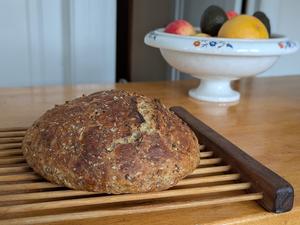
“Whether it’s creating yogurt with higher protein, improving texture or taste, developing cheese with an improved yield, or using enzymes to improve bread freshness, all these parameters can be adjusted,” he notes.
Back to basics
Weimann notes a shift to “going back to basics”: how to create the same great food with convenience and nutrition using nature’s toolbox, biology.
“Dairy is a great illustration,” he highlights. “People are rediscovering that dairy has inherent nutritional properties and supports health with protein and beneficial bacterial cultures.”
“For thousands of years, food was made through biology. You used nature’s own processes. For example, milk would start fermenting to become yogurt or cheese.”
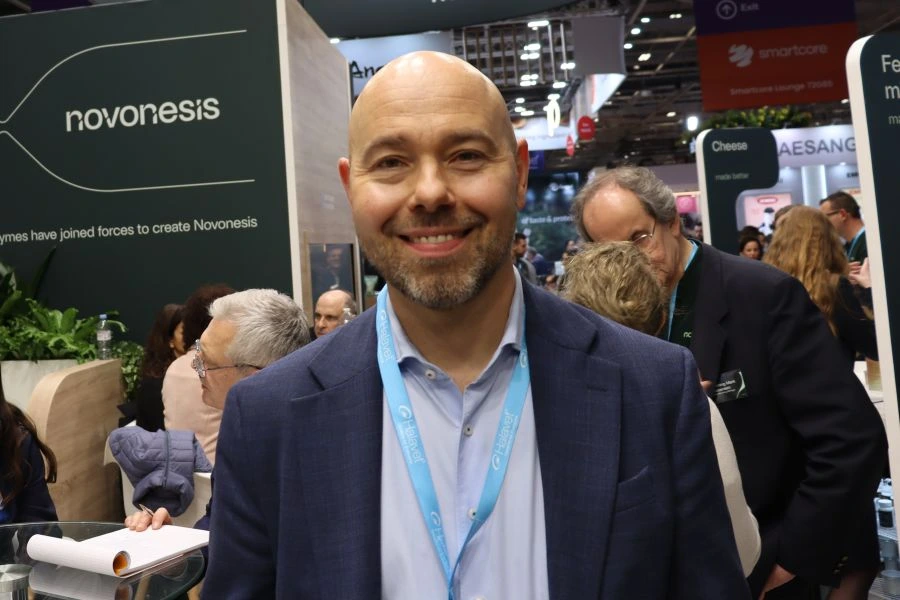 Johan Weimann, regional president and SVP of Food & Beverage Europe at Novonesis.He notes that during industrialization, the focus shifted to cutting costs for producers, and consumers demanded convenience as they spent less time preparing food. “That’s when many new types of ingredients came in, and labels became very long.”
A toolbox of biosolutions
As the planet’s population continues to grow, so does demand for nutrition, especially protein.
“The food industry as a whole needs to find ways of meeting this demand sustainably, with products that taste great, are attractive and convenient to eat, and provide health benefits,” says Weimann.
Although it’s easy to add protein to food products, high levels can compromise texture, taste, and thickness, leading to a grainy mouthfeel or off-flavor. Weimann notes that biological solutions can help address that.
“We recently launched an enzyme called Galaya Smooth, which enables a high-protein yogurt. The enzyme adjusts proteins, so the texture becomes smooth instead of heavy and gritty,” he details.
“The same applies to plant-based products. Whether you use fava bean, pea, or oat; higher protein can bring off-flavors or unappealing texture, which enzymatic solutions can help address.”
He explains that an enzyme is a type of protein with a specific function that acts as a catalyst. It can catalyze a process, such as breaking proteins into smaller pieces to obtain a new one. “You can control exactly what type of protein or peptides you want.”
According to Weimann, Novonesis finds its inspiration from nature, which is also where the company sources its cultures, yeast, and other microorganisms that produce enzymes.
“You need high variety in your strains, either as cultures or for enzyme production,” he details. “We have a vast bank with different strains of microorganisms and microbial cultures that can express all types of enzymes, and we keep expanding it. It’s an ongoing journey.”
Probiotics beyond dairy
When working with probiotics, Weimann asks two crucial questions: “Does it work, and does it stay active during a food’s shelf life?”
 Novonesis’ Galaya Smooth enables high-protein yogurt, the enzyme adjusts the proteins, so the texture becomes smooth instead of heavy and gritty.“Scientific evidence is critical to determine if something works,” he details. “We have some of the world’s best-documented strains, like LGG (Lactobacillus rhamnosus) and BB-12 (Bifidobacterium lactis), with extensive clinical trials and studies in the literature.”
The company is also building a stronger evidence base for other strains. For example, while ProbioBrain (B. longum 1714) offers mental wellness benefits, a recent study also found it positively impacts the immune system and reduces proinflammatory cytokine responses.
“Consumers are becoming more knowledgeable and critical, so you have to demonstrate the evidence behind a product,” notes Weimann.
Stability is the other key challenge — probiotics need to remain viable in food. As many probiotic cultures originate from dairy, such as Lactobacillus, they naturally fit into those products. In other food matrices, Weimann cautions that it may be more challenging to ensure a strain stays active, surviving processing steps and shelf life.
“Some cultures can work beyond dairy, across a wide range of foods and beverages, including plant-based drinks, soda water, kombucha (which already has a microbial element), and different types of snacks,” he says.
“One example is our ProSilience HU58. It is a very robust organism, which means it can be added to all types of matrices beyond dairy, such as soda water, nonalcoholic beer, or a chocolate snack.”
Merging taste and science
Taste, texture, mouthfeel, and the eating experience are crucial to creating a successful product, says Weimann. No matter the trend, these aspects “never go out of fashion.”
“Trends will change in the next five to 10 years. Although we don’t know what they will be, we believe biosolutions can meet them,” he notes. “That means continuing to improve and maintaining a great eating experience while adding health elements and functionalities.”
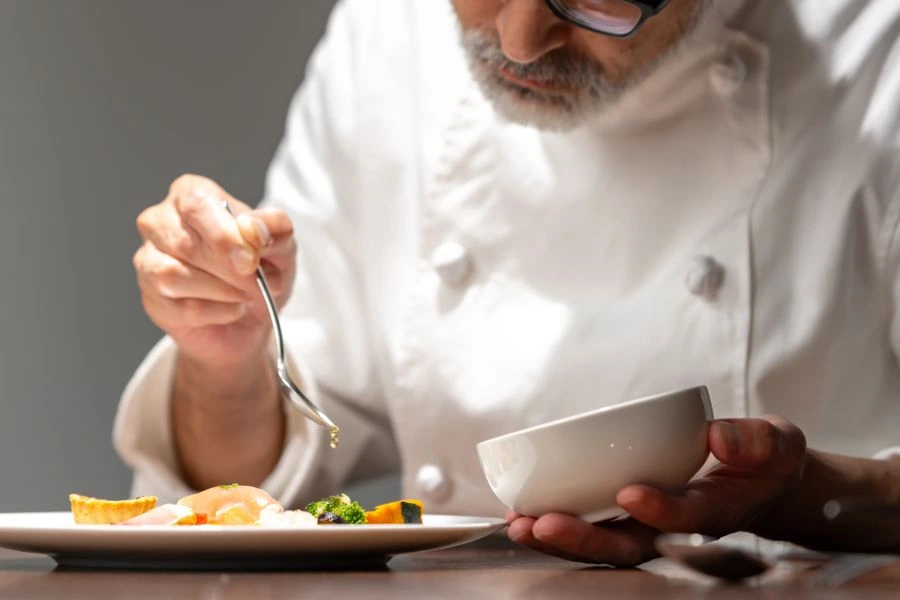 Novonesis is partnering with the Danish restaurant Noma to explore the potential of biosolutions for developing new products.He details that Novonesis combines science, local insight, and craftsmanship to develop its ingredients. The company collaborates with customers and academic institutions to advance science and technology.
Moreover, as a global company, the biosolutions supplier has developed an understanding of local preferences. “Food is culture, and culture is local. Globally, there’s no one-size-fits-all.”
“Craftsmanship of producing food matters,” Weimann adds, “Which is why we have bakers, dairy technologists, brew masters, butchers, and oenologists across our Novonesis teams.”
“Scaling deliciousness”
Last year, Novonesis announced its partnership with the Danish restaurant Noma to explore the potential of biosolutions for developing new products within Noma’s pantry product line.
As both companies share a passion for fermentation, Weimann notes that they hope to inspire food and beverage producers and the industry as a whole by showing “how science and deliciousness can come together.”
“We hope to inspire people to get excited about what fermentation can do, which is one of the most ancient processes of nature. Co-creating healthier foods, more creative types, and delicious foods is what drives us.”
According to Weimann, the partnership brings “the best of both worlds,” combining Noma’s practical experience in fermentation and the creation of tasty foods with Novonesis’ science, scale, and local insights around the world.