How measuring movement health enables fitness businesses to unlock longevity-related revenue
Longevity is no longer a fringe concept reserved for elite athletes or medical journals. It’s rapidly becoming the defining direction of the fitness industry. Many of the big players already have or are developing their own programs. At the same time, the market for measuring fitness biometrics — smart rings, smart clothing and wearables, and specialized businesses offering advanced biometrics — is expected to grow to $137 billion by 2030, according to Grand View Research.
Consumers are measuring everything and the market is big.
The opportunity to lean into consumer desires to measure everything in order to live longer and better is not just for the big players. For any fitness and wellness provider, longevity presents a massive opportunity to lead, differentiate and grow their business.
How to Get Started
According to several leading thinkers in this area, the place to start for any longevity program is at the beginning: movement health.
“The goal of the longevity movement is not just to live more years,” said Dr. Marty Miller, DHSc, ATC, and Master Instructor for the National Academy of Sports Medicine. “It’s to live more healthy years. You can’t do that if you can’t move well.”
 Dr. Marty Miller (credit: Kinotek)
Dr. Miller has spent more than 30 years studying and helping humans improve their performance, everyone from elite athletes, including the New York Yankees, to everyday gym and club members. He’s lectured worldwide on the ways fitness professionals can help their clients and members perform better. He views movement health as a key indicator of longevity, the fifth vital sign and a critical health biomarker.
“We can measure things like VO2 max, body composition and bone density,” Dr. Miller said. “However, all of these tests require the individual to perform exercise and to increase intensity overtime if their goal is to make improvements, or even to maintain their current level of performance.”
According to Dr. Miller, without a good movement health assessment:
Strength is built on dysfunction
Cardio is performed inefficiently
Injury risk increases as intensity rises
“Here’s the bottom line,” he said. “You can’t move with intensity if you can’t move well. The start of any longevity program today is with an accurate assessment of your client’s movement health.”
Measuring Movement Health with Technology
There’s a saying among fitness and physical therapy professionals: if you are not assessing you’re guessing. In other words, without the proper data, you run the risk of implementing an exercise program that could exacerbate an underlying movement quality issue.
Experts confirm these statements. According to the research conducted by Dr. Darin Padua, PhD, ATC and Distinguished Professor of Exercise and Sport Science at the University of North Carolina at Chapel Hill, if you add strength on top of a dysfunctional movement pattern (e.g. knee valgus), you aren’t making the athlete better, you are just making a “faulty engine” faster, which leads to a breakdown.
Most fitness professionals have learned to assess their client before starting a program using visual observation — a manual approach. Not every trainer has the same skills, and given the manual methods, the results will naturally vary.
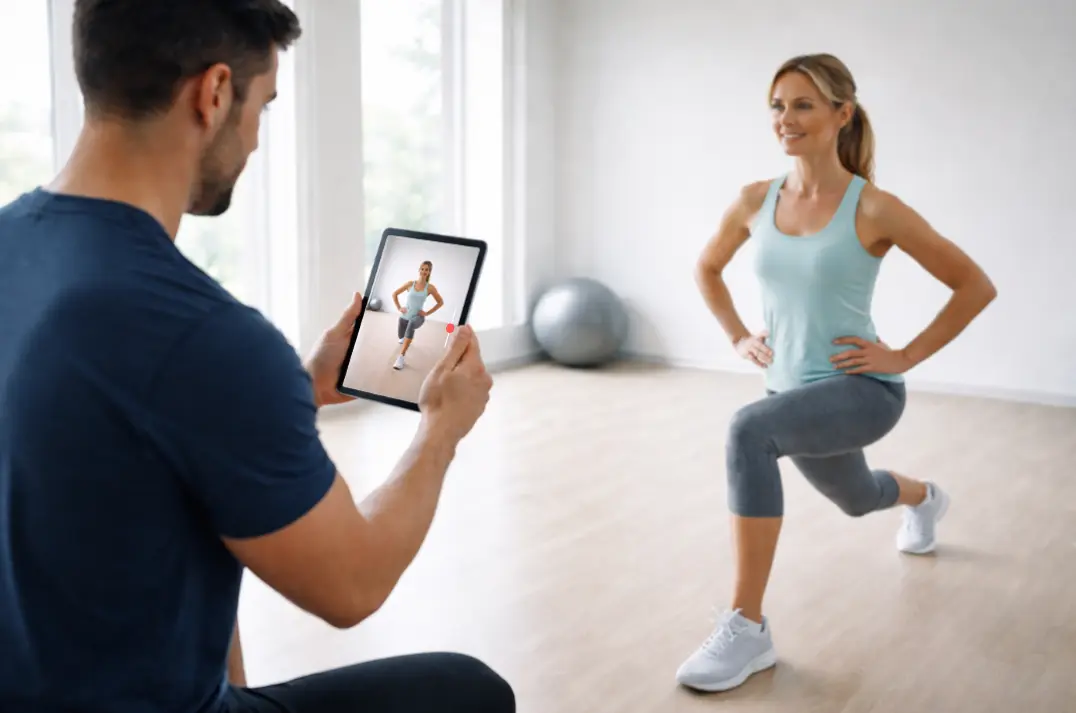
“I’ve been doing this for 30 years,” said Dr. Miller. “I cannot as accurately perform an assessment as fast as Kinotek’s technology can perform a movement health assessment.”
 credit: Kinotek
Also, Dr. Miller shared that even he can’t tell with his eye the mathematical variation of someone’s ankle dorsiflexion, but the technology can.
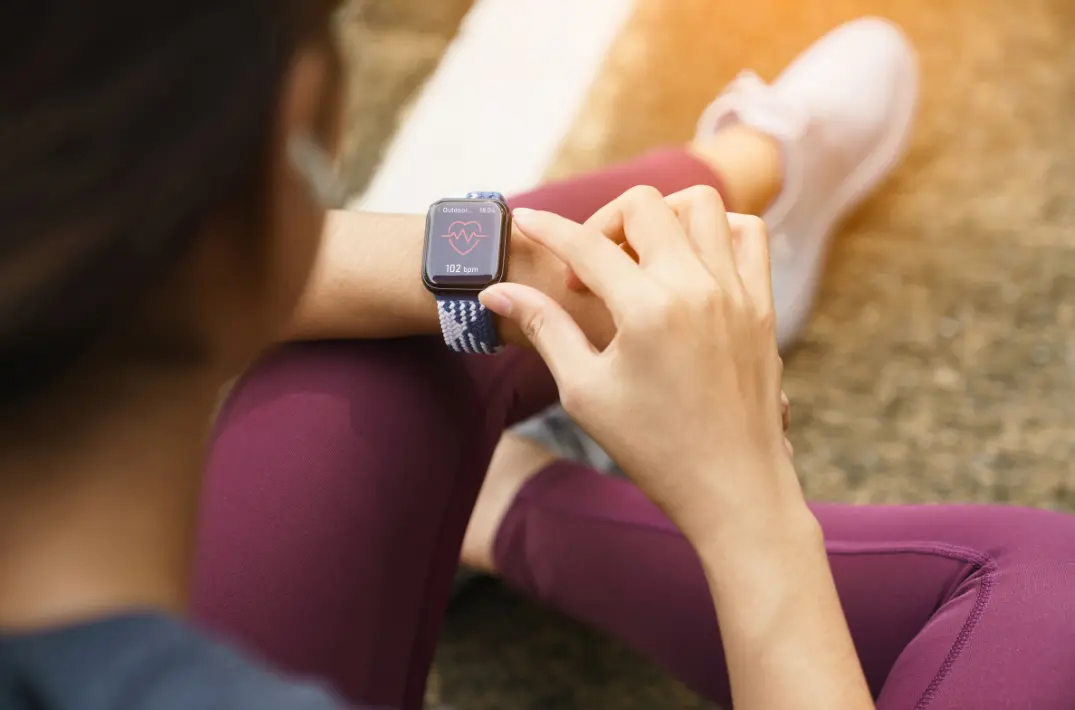
“Consumers are measuring things so they can have a baseline to compare and improve,” he said. “Today, because of technology, we’re digitally measuring steps, heart rate variability (HRV), blood oxygen, etc. Why wouldn’t we use the same advanced approach for something as critically important to our longevity as our movement health?”
Dr. Miller’s drive to help measure and improve movement health led him to become the chief movement officer at Kinotek, a leading company that offers technology with the means to do so. Over the past year, he worked with the brand’s research and development team to advance its analytics to provide movement health scores to the masses.
The Latest Movement Health Technology
Kinotek is a cloud-based app that ingests data using LiDAR or a tablet. Its 3D mapping algorithms and AI-driven analytics analyze a client’s entire body in seconds while they perform a series of movements. The algorithms have been refined and validated over years of research and development and include:
Mobility
Symmetry
Overall Movement Quality
The comprehensive data is summarized in an overall movement health score, while key dysfunctions are identified. Kinotek’s reports provide 3D and other visualizations to help professionals communicate more effectively with their clients.
There are major benefits of using technology to measure movement health:
Assessments take seconds, leaving more time to interact with your client
Results are objective, visual, documented and easy for clients to understand
The baseline movement health score presents a retest opportunity
Client-specific analytics help professionals develop highly personalized programming
Gyms can now scale best practice assessments across all trainers — from experienced ones to those who are new to their profession
 credit: Kinotek
Driving New Revenues and Retention With Movement Health + Longevity
According to Kinotek, fitness and wellness providers across the globe have incorporated Kinotek’s movement health screening into their service offering with a measurable impact on revenues.
“While not all providers are offering explicit longevity programs yet, the framework of starting with movement health to attract clients to such programs applies,” Dr. Miller said.
Here’s how the revenues follow baseline movement health screens:
Attracting brand new members, upselling existing
Healthtrax added $580,000 in brand new revenues using Kinotek as the entry point to its health and wellness personal training services.
Improving close rates, and filling schedules across trainers
Chad Bryant, fitness director at Raintree Athletic club, reported close rates to upsell additional services across the company’s 12 trainers doubled and tripled using Kinotek. Bryant called Kinotek “the best new tool for fitness he’s seen in a decade.”
Leveraging the Ultimate Retention Tool
Starting with a baseline movement health score, professionals can shift the client perspective to a long-term view. With data, trainers can now say, “Here’s how you move today, here’s how we improve it, and we’ll be able to actually measure your changes over time.” It’s built in motivation and gamification.
Looking to the Future
Dr. Miller shared that with advances in movement health assessments, fitness professionals have the opportunity today to use technology to get in the longevity business. The appeal is those demographic groups who are committed to taking control of their own health.
However, because movement health affects every human, new markets will open. Consider, for example, the impact of GLP-1s on muscle mass. How to attract these individuals who may or may not be directly interested in joining your club? Movement health, of course.