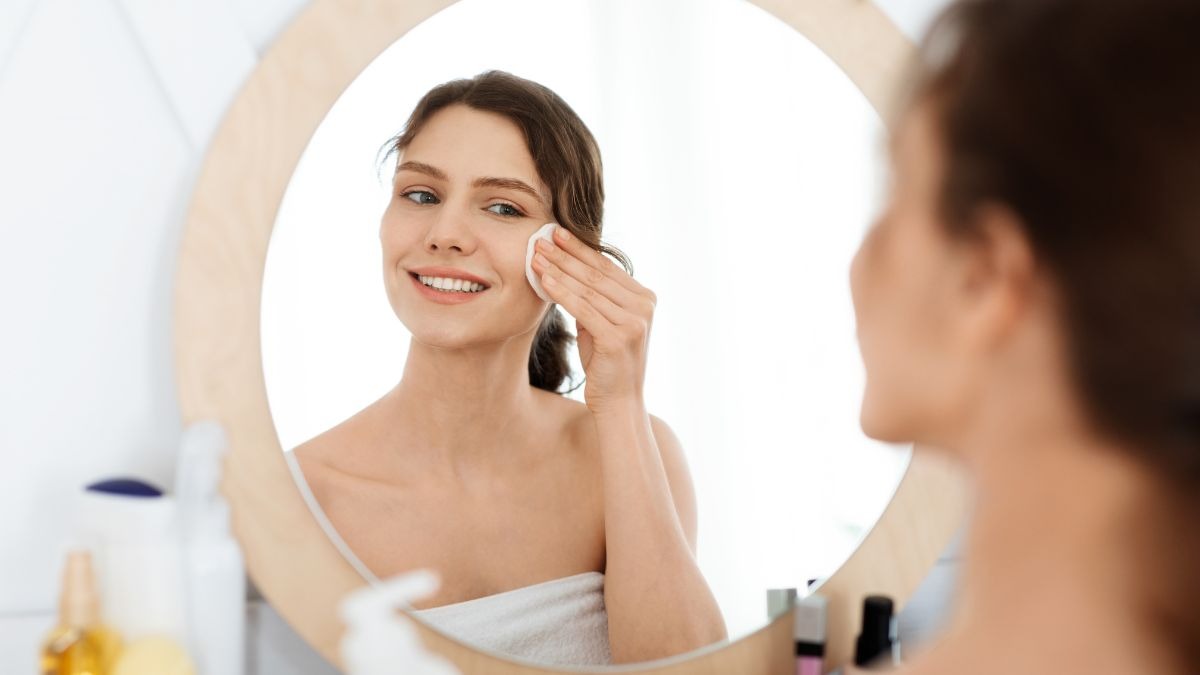
 Once dismissed as indulgent or optional, night-time skincare has moved to the centre of modern self-care. What was earlier a hurried cleanse-and-cream routine has evolved into a thoughtful, almost sacred bedtime ritual, which is layered, intentional and science-led. From serums timed to circadian rhythms to products designed specifically for nocturnal repair, the beauty industry’s focus has shifted to the hours after sunset.
The reasons are as cultural as biological. “Our skin today lives under siege. Pollution, blue-light exposure, chronic stress, erratic sleep schedules, air-conditioned environments and extreme weather keep it in a near-constant state of defence. Daytime skincare, once the star, has become largely protective—SPF, antioxidants, pollution shields. Night, by contrast, is now seen as the only true window for repair,” says Arti Gaur, founder of Quinta Essentia Organic.
This shift reflects a growing understanding of the body’s internal clock. Skin, like every other organ, follows the circadian rhythm. At night, when sensory input drops and the nervous system slows, the body releases melatonin and growth hormones, improves microcirculation and prioritises cellular repair. In simple terms, the skin doesn’t work harder while we sleep, but works smarter.
This science has fuelled the rise of “circadian beauty” wherein products and routines are designed to align with the body’s natural rhythms instead of overpowering them. “The emphasis is moving away from aggressive treatments towards calming, restorative formulations that support the skin’s innate intelligence,” says Gaur. Light, non-occlusive textures, barrier-repair ingredients and inflammation-reducing actives are replacing the old belief that night creams must be thick, heavy and indulgent.
This evolution is also pushing back against maximalism. While social media has popularised multi-step night routines, experts increasingly stress that more is not necessarily better. Skin, especially at night, needs clarity rather than complexity. Intelligent sequencing, such as cleanse, treat and repair, matters far more than piling on products. Over-layering, particularly with rich emulsions, can disrupt the skin’s natural processes rather than enhance them.
At the same time, night-time skincare has taken on a deeper emotional role. “In an always-on culture, bedtime rituals are becoming a form of stress regulation. This is where psychodermatology, the link between mental state and skin health, comes into play. A thoughtfully formulated night routine does more than deliver actives; it sends signals of safety and care to the nervous system,” says Gaur.
When the brain perceives that the body is being looked after, physiological processes—from digestion to repair—work more efficiently. Night skincare, in this sense, has become emotional care delivered through the skin.
Technology has amplified this trend, though not without debate. LED masks, sleep trackers and skin-monitoring apps promise to optimise night routines by quantifying rest and recovery. Used wisely, they can help people draw meaningful connections between sleep quality and skin health. But experts caution against treating devices as shortcuts. No technology can replace sleep, stress management or consistent habits. At best, these tools function as adjuncts—useful, but secondary to biology.
What’s particularly fascinating is how global science is intersecting with local traditions, especially in India. “Long before the term ‘night-time skincare’ existed, Indian self-care practices emphasised evening rituals—oil massages, herbal applications, quiet reflection—designed to calm the body and prepare it for rest. What we are witnessing now is not a return to ritual for ritual’s sake, but a modern reinterpretation of these practices, translated into contemporary language and backed by scientific understanding,” suggests Gaur.
This cultural shift also reflects a broader redefinition of beauty. Night routines are no longer about waking up flawless; they are about longevity, resilience and balance. Skin health is increasingly viewed as a reflection of overall well-being, not just cosmetic effort.
Subscribe to India Today Magazine
– Ends
Published By:
Akshita Jolly
Published On:
Feb 11, 2026