SEOUL – At 91, Ms Kim Jeom-hee has little interest in the usual gifts for grandmothers. Herbal tonics, health supplements and even expensive nutrition packs leave her unimpressed. What she wants instead are a visit to the beauty clinic.
Ms Kim dislikes anything that makes her look “old” – sagging skin, deep wrinkles, age spots. She swims regularly at a local sports center, where she keeps a close eye on fellow swimmers her age. When someone suddenly looks noticeably firmer or younger after a cosmetic procedure, she takes a mental note and considers trying it herself.
“Fifteen years ago, my mother was diagnosed with colon cancer, but she now feels more stressed about her ageing appearance than she did back then,” Ms Kim’s daughter, surnamed Lee, told The Korea Herald.
“What can I do? She feels such a strong sense of satisfaction after receiving the procedures.”
In South Korea, appearance has long carried social weight and cosmetic procedures are widely accepted.
ranked the world’s top country for cosmetic surgery per capita
. According to data from the International Society of Aesthetic Plastic Surgery analysed by US investment outlet Insider Monkey, 8.8 out of every 1,000 Koreans underwent a cosmetic procedure, accounting for nearly a quarter of the global market.
Once largely associated with younger generations, the desire to look youthful is increasingly shared by older adults, including those in their 70s, 80s and beyond.
Although there is no official data tracking cosmetic procedures among seniors, dermatologists interviewed by The Korea Herald said demand has steadily increased over the past decade.
A dermatologist in her 40s who runs a clinic in Seoul’s central Yongsan district said family visits have become increasingly common.
“In the past, siblings would come together for treatments,” she said. “These days, parents and adult children often visit as pairs. Children try a procedure first, like the results, and then recommend it to their parents. We’ve seen a clear rise in middle-aged and older patients receiving treatments like botox.”
Public attention has also been drawn to older celebrities openly undergoing cosmetic procedures.
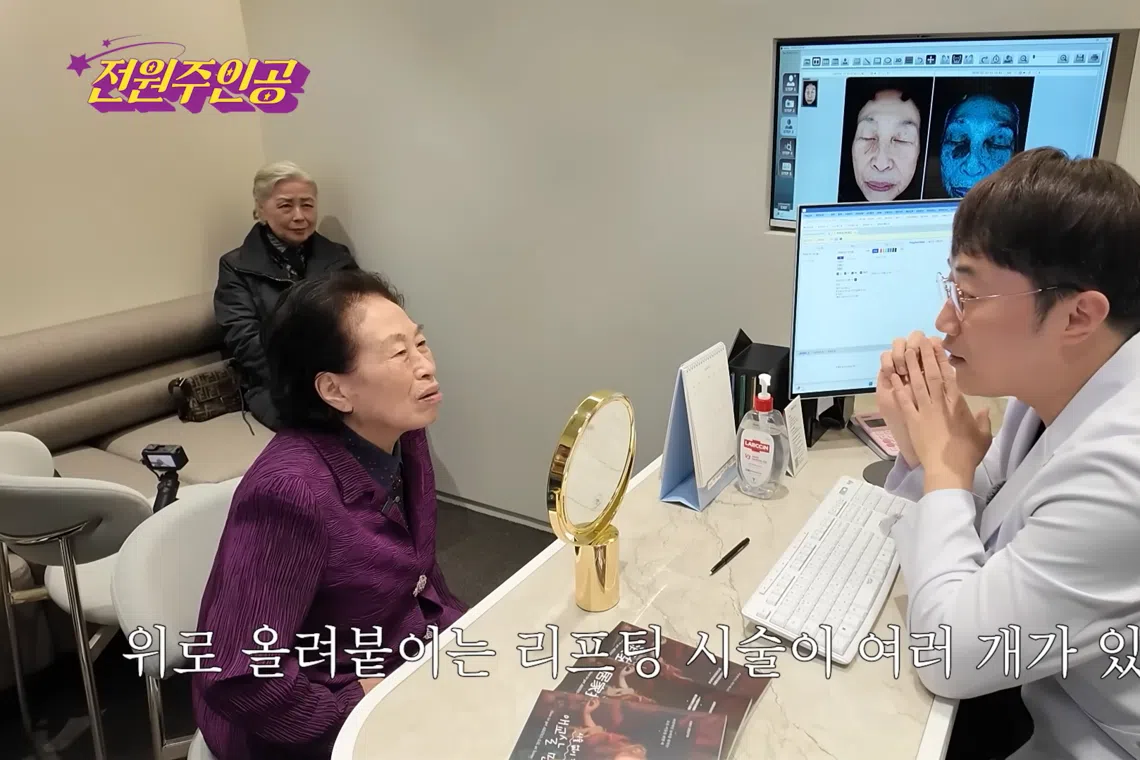
Actress Jeon Won-ju, 87, recently made headlines after revealing she had undergone multiple lifting treatments at a dermatology clinic in Cheongdam-dong, Seoul, at a total cost of around 5 million won ($4,300).
In a video posted to her YouTube channel, Ms Jeon said she wanted to age gracefully, but admitted to feeling anxious when she saw her deeply wrinkled skin in the mirror.
“I think, ‘They won’t cast me anymore because I look old,’” she said. “I just want to look 10 years younger.”
She ultimately opted for a combination of non-surgical procedures, including pigmentation removal, ultrasound-based lifting and botox injections.
Experts say the trend among older patients favours subtle enhancement over drastic transformation.
“Rather than procedures that significantly change facial features, most parents want treatment that slow the ageing process while preserving their original appearance,” said Ms Chae Gyu-hee, director of the Nowon-gu branch of 365mc, a franchise clinic offering beauty and slimming treatments.
Ms Jung Sun-hee, 37, booked treatments for her mother’s neck wrinkles and age spots as a Lunar New Year gift.
The idea came after Ms Jung underwent a non-invasive ultrasound lifting procedure herself. Her mother, in her late 60s, immediately noticed the change and grew envious.
“Every time she looked in the mirror, she said her facial lines seemed to be collapsing and her skin felt less firm,” Ms Jung said.
Ms Jung accompanied her mother to several dermatology clinics for consultations and ultimately chose a lifting procedure known for causing relatively little discomfort, costing about 1 million won.
“She loved the results so much that I think this will become a regular gift,” she said.
Older men are no exception.
Mr Park Hyeong-sub’s father in his early 70s had a pronounced M-shaped hairline for years. As his hairline kept receding, he took to wearing a cap almost every day.
When Mr Park first mentioned hair transplantation, his father dismissed the idea, saying he no longer had anyone to impress.
But once the father received a non-incisional hair transplant involving 4,000 grafts, he is now highly satisfied with the results.
“He now looks at the mirror more often, looking satisfied and confident. I spent nearly 10 million won, but I don’t feel like I wasted money seeing my father look happy,” said Mr Park.
Several dermatology clinics promote their services online using the phrase “filial piety cosmetic procedures” as a marketing slogan.
Despite growing acceptance, critics warn of potential downsides.
Some argue that cosmetic procedures are increasingly encouraged under the banner of filial duty, even when unnecessary. Large clinics in Seoul often launch “filial piety plastic surgery” promotions around major holidays.
Professor Lee Eun-hee, an expert in consumer studies, expressed concern over excessive treatments and aggressive marketing.
“Even when there is some effect, hospitals have become extremely aggressive in their marketing targeting the elderly,” she said. “Older patients are particularly vulnerable during consultations.”
“Once they meet an experienced counsellor, they are often guided toward expensive packages,” Prof Lee said. “Many end up spending a significant portion of their savings after just one visit.” THE KOREA HERALD/ASIA NEWS NETWORK