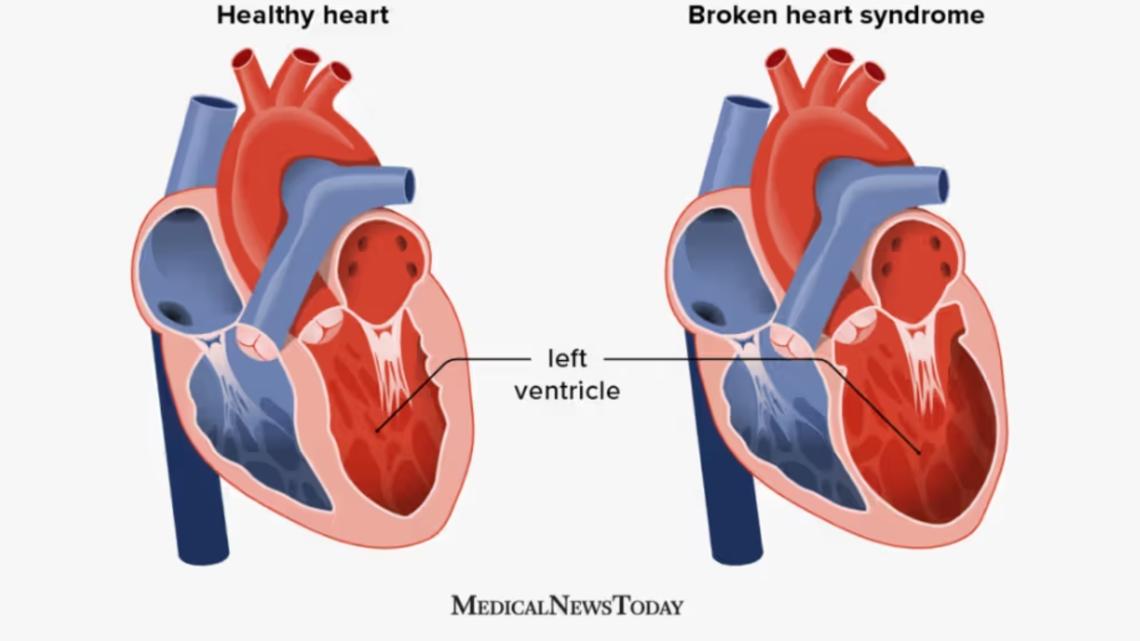
Broken heart syndrome, or Takotsubo cardiomyopathy, is a physical condition where intense emotional stress or grief causes the heart to literally change shape.
HUNTSVILLE, Ala. — We often dismiss the pain of a broken heart as something that just needs time, some comfort food, and a box of tissues. However, medical professionals are warning that the stress of grief is far more than just an emotional hurdle—it can actually alter the physical shape of your heart.
Known medically as takotsubo syndrome or Broken Heart Syndrome, the name sounds poetic, the physical reality is a medical emergency.
It often starts with a shock to the system: a devastating phone call, a sudden loss, or a relationship ending you never saw coming. For many, that emotional weight quickly transforms into a physical crisis.
“It physically hurts me. And it will,” says Monretta Vega, a therapist with Huntsville Psychotherapy and Counseling Services. “We literally go through this entire process and we’re like, ‘Oh my gosh, I’m having a heart break.’ Not only are we experiencing a bit of grief and loss, we also are experiencing the physical symptoms associated with this major change.”
According to the Cleveland Clinic, the technical term for this condition is Takotsubo cardiomyopathy.
While the symptoms—such as intense chest pain and shortness of breath—mimic a traditional heart attack, the cause is entirely different. In a heart attack, arteries are blocked. In Broken Heart Syndrome, the arteries remain clear, but the heart muscle is “stunned” by a massive surge of stress hormones, like adrenaline.
This causes the heart’s left ventricle to temporarily balloon outward, preventing it from pumping blood effectively.
Mental health experts note that the condition is “psychosomatic,” meaning the mind’s distress creates real-world physical symptoms. When the brain is overwhelmed by trauma, the fear of the unknown can put an immense strain on the cardiovascular system.
“We start to really analyze it and that fear sits in, and it starts to give us heart palpitations,” Vega explained. “It’s like, ‘I am dying on the inside because I don’t know what happens next.’”
Data from the Cleveland Clinic highlights that this condition does not affect everyone equally:
Women are significantly more likely to experience Broken Heart Syndrome, making up about 90% of reported cases.
Post-menopausal women (typically between ages 58 and 77) are the most at-risk demographic.
Triggers aren’t always negative. While grief and divorce are common, “Happy Heart Syndrome”—triggered by sudden positive shocks like winning the lottery or a surprise party—can also cause the same physical reaction.
The good news is that Broken Heart Syndrome is rarely fatal, and most people make a full recovery within a few weeks with the help of medication. However, doctors emphasize that it should serve as a wake-up call to take mental health seriously.
Because the symptoms are nearly identical to a heart attack, the Cleveland Clinic stresses that you should never self-diagnose. If you experience sudden chest pain or fainting after a stressful event, go to the emergency room immediately to ensure your heart is physically secure.