One student’s trash has become another student’s research sample at Robertson School.
Manitoba schools are feeding more than 90,000 students daily through the province’s universal nutrition program.
Principal Jude Guzzi said new funding is allowing children to try new foods and maintain energy throughout the day, as well as creating a “culture of care” at the elementary school.
But one of the consequences is garbage piles are growing.
“We have to take care of our students, but we also have to take care of the planet,” Guzzi said, adding she’s incredibly proud of the initiative her students have taken to tackle the issue.
The kindergarten-to-Grade 6 building has received about $33,500 to serve students whole fruits and other foods throughout the 2025-26 school year.
Concerned about the prevalence of single-use packaging tied to snack program, first piloted last year, the environmental club recently pitched a schoolwide investigation.
The project began with Grade 3, 4 and 5 students researching the lifespan of different materials.
They hung up a poster in a main hallway to share their lessons — such as the fact it can take up to 500 years for a plastic utensil to decompose — with their peers.
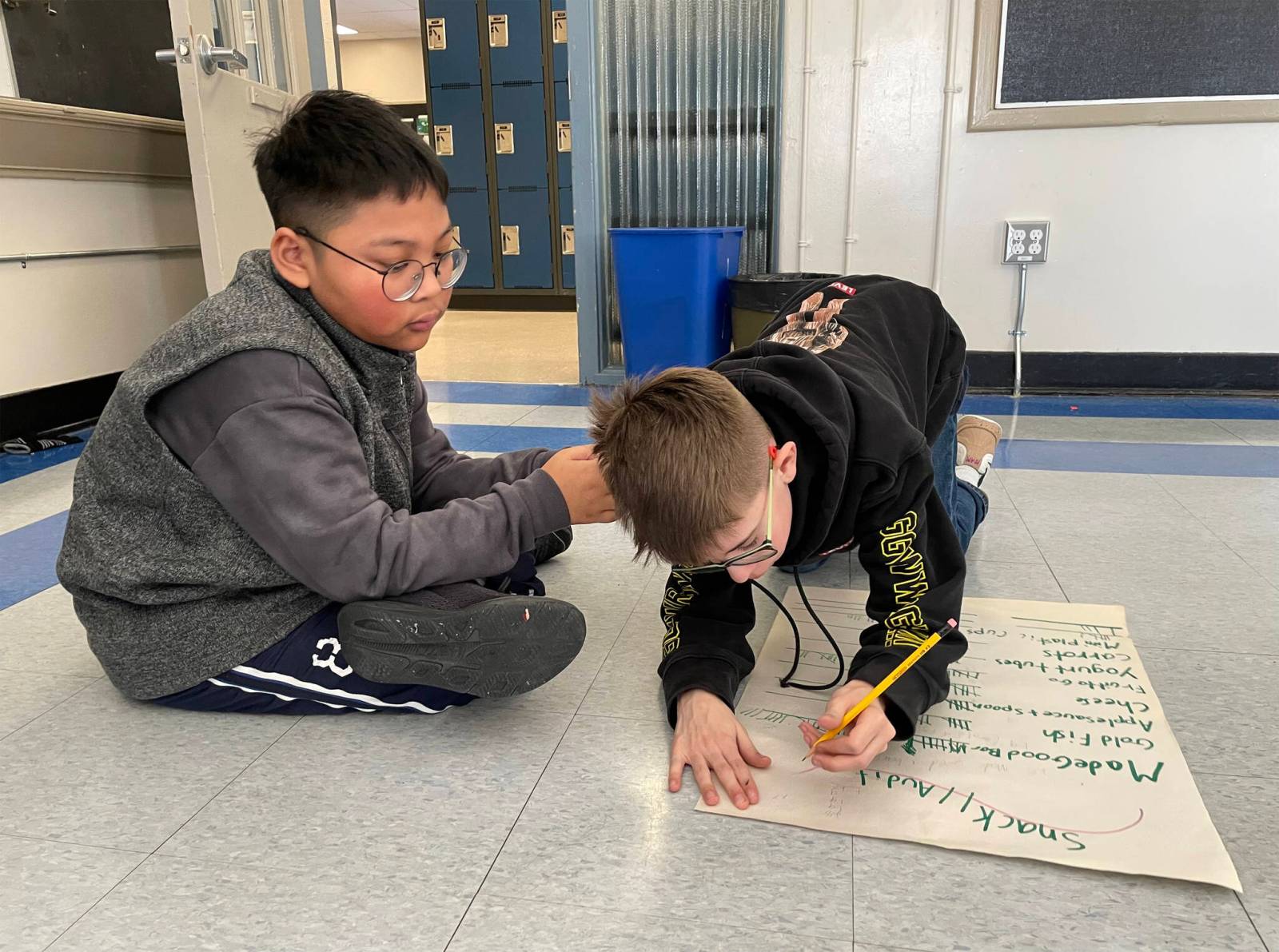
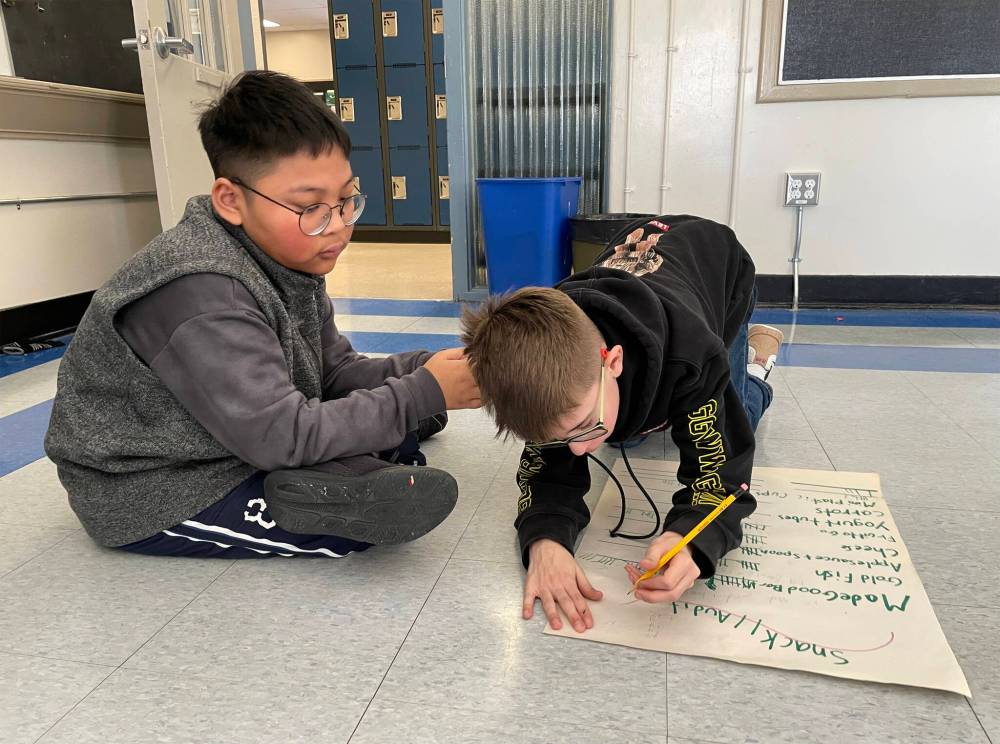
Elementary students then led a “snack audit” last week to uncover exactly what’s ending up in garbage bins.
“It’s horrifying — and we’re just one school in Winnipeg,” said Kate Bisquera, 10, after tallying up the results with fellow members of Robertson School’s Education for Sustainable Development committee Wednesday.
“It makes me want to help our school be more sustainable.”
The Grade 5 student and her peers handed out tracking sheets to every classroom.
They asked children to monitor and record their snack-specific waste, from yogurt tubes to plastic bags, between Jan. 30 and Friday.
The student body, which includes about 350 children, reported throwing out 1,921 items.
Based on that data, the committee’s calculations suggest students will dispose of more than 75,000 pieces of garbage this year. That estimate doesn’t include organic waste.
There were more Fruit To Go wrappers tossed out — 439 of them — than any other item.
The leftovers of Made Good granola bars were next in line, followed by bags of Goldfish crackers.
What stuck out to Grade 5 student Milo Dooley was the fact other children are tossing out mini plastic cups.
“We’re going to have to make an announcement,” Milo said, noting that these utensils, often used for smoothies, should be rinsed and recycled.
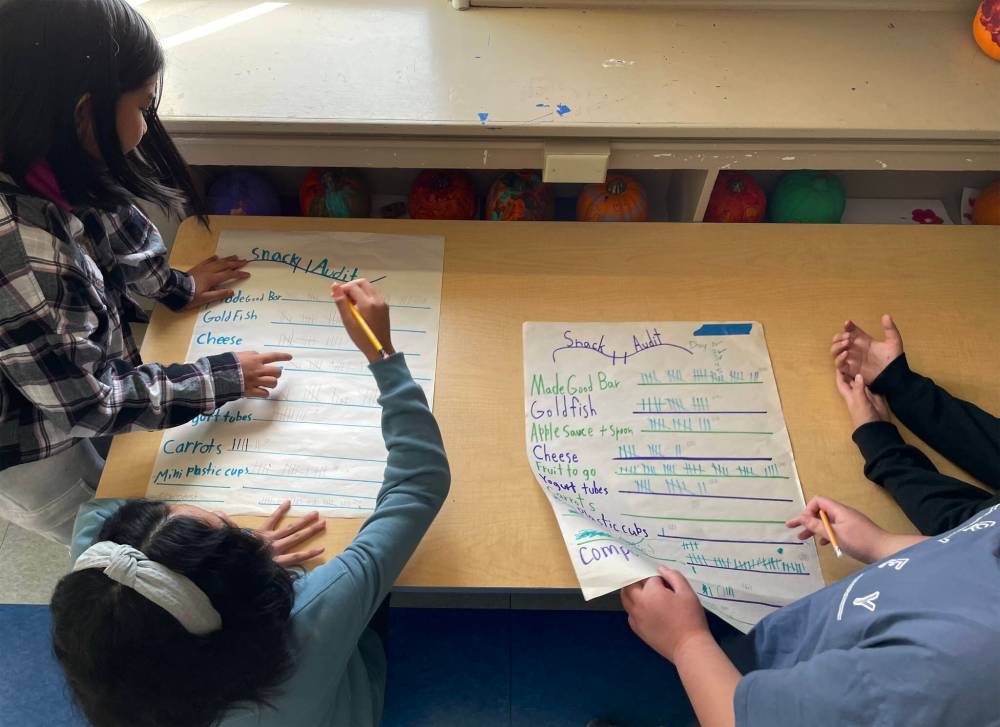
MAGGIE MACINTOSH / FREE PRESS
Robertson School’s environmental club initiated a building-wide audit of snack-related garbage this month.
He said the findings reveal his team needs to ramp up education efforts. Milo suggested his school could also do a better job of labelling.
Teacher-supervisor Ashley McLennan said her goal is to empower students to find small and actionable ways to make a difference.
“We stopped handing out plastic spoons for apple sauces — we’ve encouraged families to start sending reusable spoons in their lunches,” McLennan said. “That’s one small thing we’ve done already.”
Her committee’s snack audit findings will ultimately be shared with “the snack man.”
Robertson School was assigned a part-time nutrition coordinator this year to order groceries, make menus and oversee food handling.
“Compost collection needs to be instituted as a regular part of school waste management systems,” said Kristen Malec, director of operations at the Green Action Centre.
Not only do these programs divert waste from landfills, but they also teach students about the science of decomposition, conservation and civic engagement, Malec said.
She noted there are few of them up and running at present because the onus is on teachers, who are juggling numerous responsibilities, to volunteer.
Compost Winnipeg services 16 schools around Winnipeg. Its team, which has been operating since 2016, has collected about 13,085 kilograms of organic material from these sites since Sept. 1.
Winnipeg Free Press | Newsletter

Starting up a composting program is one of McLennan’s priorities as she continues to work with students on environmental-related initiatives.
The Grade 5/6 teacher said she’s excited to hear about how her colleagues are tackling waste at the Winnipeg School Division’s Climate Action Summit on March 4.
Earlier this week, the province announced plans to allocate $30 million to support school nutrition programs in 2026-27.
The Children Nutrition Council of Manitoba has been promised an extra $3 million via proceeds of U.S. liquor sales.
maggie.macintosh@freepress.mb.ca

Maggie Macintosh
Education reporter
Maggie Macintosh reports on education for the Free Press. Originally from Hamilton, Ont., she first reported for the Free Press in 2017. Read more about Maggie.
Funding for the Free Press education reporter comes from the Government of Canada through the Local Journalism Initiative.
Every piece of reporting Maggie produces is reviewed by an editing team before it is posted online or published in print — part of the Free Press‘s tradition, since 1872, of producing reliable independent journalism. Read more about Free Press’s history and mandate, and learn how our newsroom operates.
Our newsroom depends on a growing audience of readers to power our journalism. If you are not a paid reader, please consider becoming a subscriber.
Our newsroom depends on its audience of readers to power our journalism. Thank you for your support.